
A 3/16-inch steel plate refers to a steel sheet with a thickness of 3/16 inch, equivalent to approximately 4.76 millimeters in the international metric system. It is a widely used medium-thin gauge steel plate in industrial production. In terms of material classification, 3/16-inch steel plate is not a single-material product but a product line covering stainless steel (316, 316L, 316Ti, etc.) and ordinary carbon steel (1018/A36, etc.). Different materials correspond to distinct performance characteristics and application scenarios.
It should be noted that 3/16 inch is a thickness standard in the imperial system. When procuring in China, it is necessary to clarify the corresponding national standard specifications. For example, a 3/16-inch steel plate made of 316 stainless steel corresponds to the national standard grade 022Cr17Ni12Mo2, complying with domestic standards such as GB/T 24511.
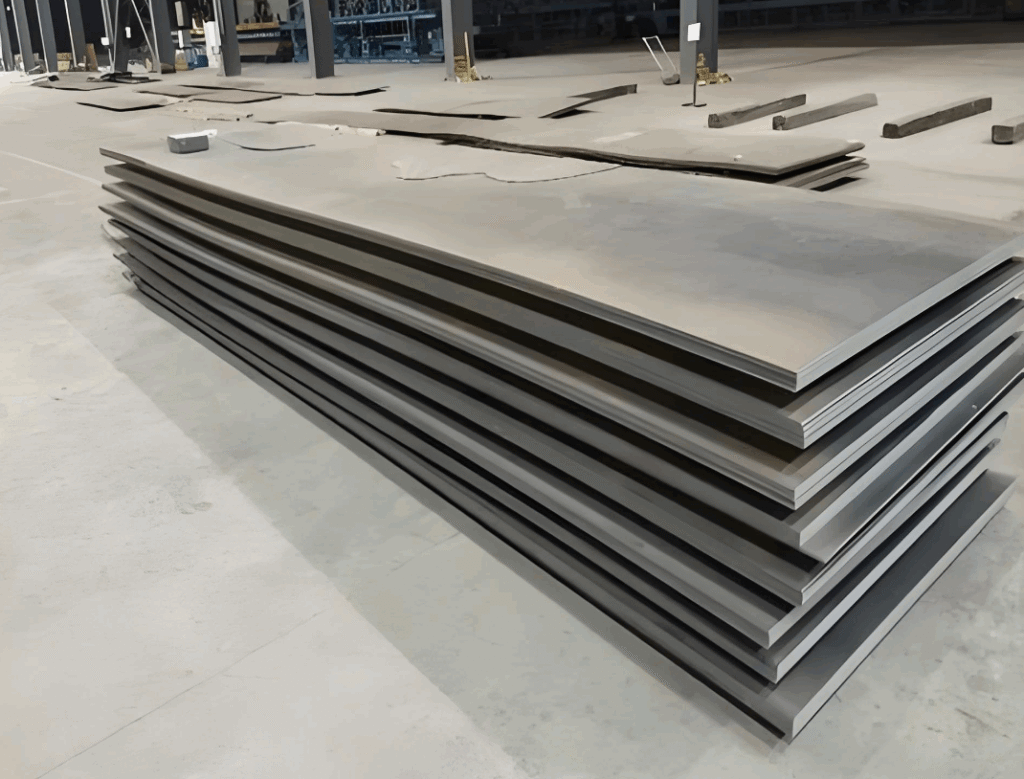
With its core advantage of excellent balance of light weight and structural strength, 3/16-inch steel plate combines durability and processing flexibility, making it a fundamental material in various fields including industrial manufacturing, construction engineering, chemical equipment, and precision machinery. From the perspective of market demand, this type of steel plate maintains stable procurement popularity all year round due to its high specification versatility and wide applicability, especially in the manufacturing of small and medium-sized equipment and component processing, where it is a key focus for procurement personnel.
I. Core Characteristics and Material Classification of 3/16-Inch Steel Plate
1、316/316L Stainless Steel Plate
As a high-end material category among 3/16-inch steel plates, 316/316L stainless steel plate features an austenitic microstructure. Its key advantage lies in the addition of 2%–3% molybdenum, which significantly enhances corrosion resistance—especially its resistance to chloride ion-containing media (such as seawater and chemical solutions), far exceeding that of ordinary stainless steel. Among them, 316L is a low-carbon variant with a carbon content ≤ 0.03%, which can effectively reduce carbide precipitation after welding, lower the risk of intergranular corrosion, and is suitable for scenarios where heat treatment cannot be performed post-welding. In the solution-annealed state, this material is non-magnetic and boasts excellent processability, allowing for various processing techniques such as cutting, bending, and welding. It complies with international standards including ASTM A240, with a tensile strength ≥ 485 MPa and a service temperature range of -270°C to 870°C, making it the preferred material for corrosive environments.
2、1018/A36 Ordinary Carbon Steel
Ordinary carbon steel 3/16-inch steel plates are highly competitive due to their cost-effectiveness. Among them, A36 is a commonly used grade in construction and general machinery fields, offering basic strength and toughness with a tensile strength of 400–550 MPa and a maximum service temperature of 350°C. This type of steel plate is suitable for conventional applications without corrosion resistance requirements, such as general building structural components, mechanical housings, and non-precision parts. It features low processing difficulty, enables mass production, has sufficient market supply, and is relatively affordable.
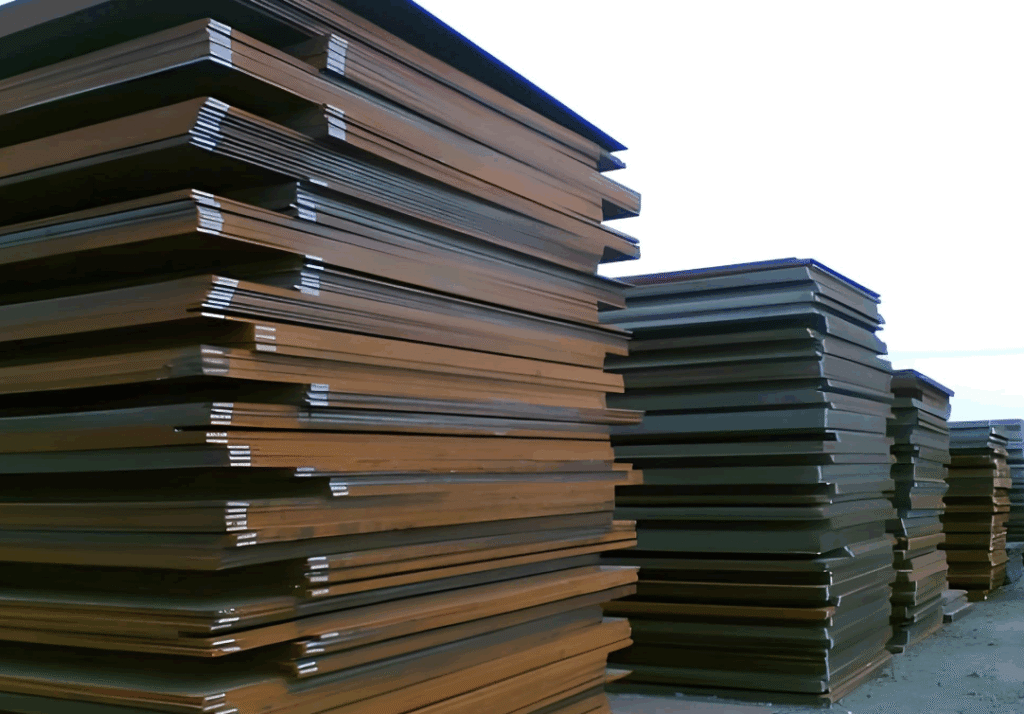
II. Typical Application Fields of 3/16-Inch Steel Plate
316/316L Stainless Steel Plate
Thanks to its excellent corrosion resistance and hygienic properties, 3/16-inch steel plates of this type are widely used in seawater desalination equipment, chemical storage tanks and pipelines, food processing machinery (e.g., dairy equipment, brewing equipment), medical devices (e.g., surgical instrument supports), as well as decorative and structural components of coastal buildings. In outdoor facilities in coastal areas, 316 stainless steel can effectively resist sea breeze and salt spray erosion, extending service life.
Ordinary Carbon Steel/ Tool Steel
3/16-inch steel plates made of 1018/A36 carbon steel are suitable for general building structural components (e.g., floor support plates, guardrail frameworks), conventional mechanical housings, agricultural machinery parts, and furniture hardware accessories. O1 tool steel, on the other hand, focuses on precision machining applications, used in manufacturing thin-plate stamping dies, jewelry embossing dies, papermaking machinery blades, thread gauges, and precision positioning templates.
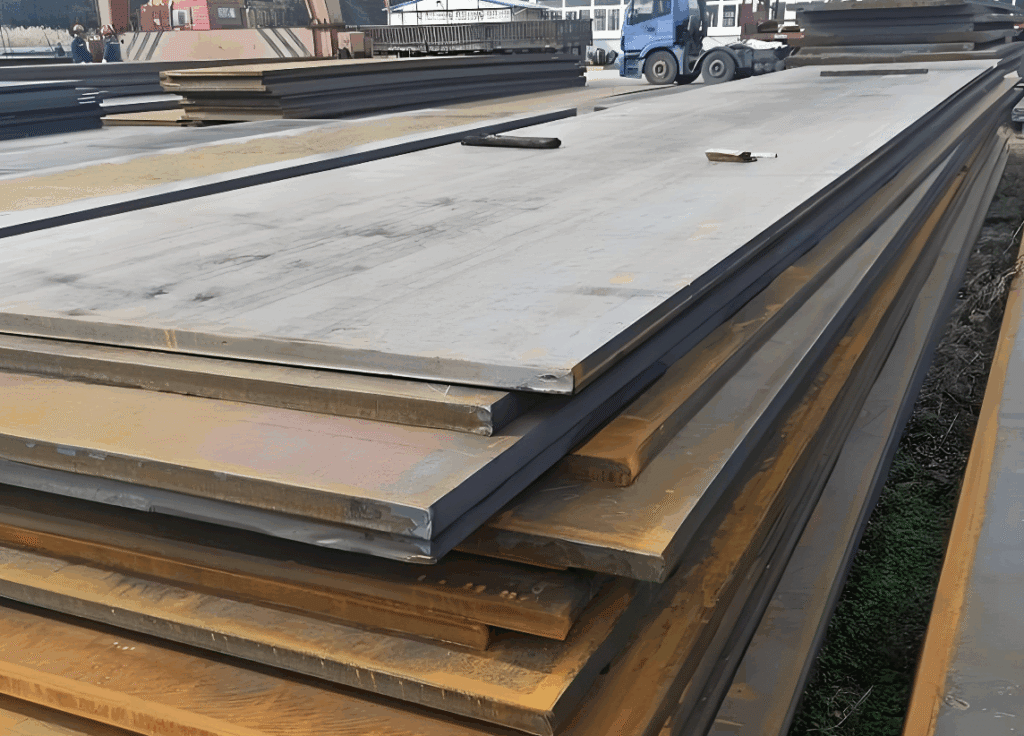
III. Complete Procurement Guide for 3/16-Inch Steel Plate
1、Core Specification and Size Selection
The core specification of 3/16-inch steel plate is based on a thickness of 4.76 mm. Common length-width combinations in China include 1220 mm × 2440 mm and 1500 mm × 6000 mm, while internationally accepted imperial dimensions are 12″ × 12″ and 18″ × 36″. When procuring, select dimensions according to actual processing needs: for small component processing, choose standard sizes to minimize waste; for large equipment casings, customize oversize plates to reduce welding seams from splicing. In terms of custom processing, 3/16-inch steel plates can be subjected to personalized processing services such as laser cutting, plasma cutting, punching, bending, and welding. It should be noted that high-temperature oxidation should be avoided when cutting stainless steel, and laser cutting is recommended; plasma cutting can be adopted for carbon steel to improve efficiency; precision tool steel processing requires strict control of cutting accuracy, with an allowable error ≤ ± 0.1 mm.
2、Market Price Reference and Influencing Factors
2026 January domestic market price reference for 3/16-inch steel plate: ordinary carbon steel (A36) is approximately CNY 3,000–3,500 per metric ton, and 316 stainless steel plate is about CNY 11,000–12,000 per metric ton. Prices are affected by multiple factors: higher material grades lead to higher prices (e.g., 316L stainless steel is 5%–8% more expensive than ordinary 316); higher dimensional accuracy requirements increase costs (precision cutting processing fees are 15%–20% higher than conventional cutting); larger procurement volumes result in lower unit prices (bulk purchases of ≥ 5 metric tons can enjoy a 5%–10% discount). In addition, market steel futures prices and transportation distances also impact the final procurement price.
3、Selection Criteria for High-Quality Suppliers
When procuring 3/16-inch steel plates, screen suppliers based on three aspects: qualification, service, and reputation:
- Qualification Requirements: Suppliers must hold relevant industry certifications. For example, stainless steel products need to provide ASTM A240 and GB/T 24511 certifications; steel plates for pressure vessels require special equipment manufacturing licenses. Meanwhile, complete documentation such as material certificates and performance test reports should be issued.
- Service Capability: Suppliers should offer one-stop services including inventory inquiry, custom processing, on-site measurement, and nationwide delivery, with a sound after-sales guarantee. For instance, timely return or replacement should be provided in case of material inconsistency or dimensional deviation.
- Reputation Reference: Prioritize suppliers with over 5 years of industry experience and long-term cooperation with renowned steel mills (e.g., Baosteel, Tisco, Lianzhong). Their credibility can be verified through industry forums, customer reviews, and third-party platforms to avoid unqualified small workshops.
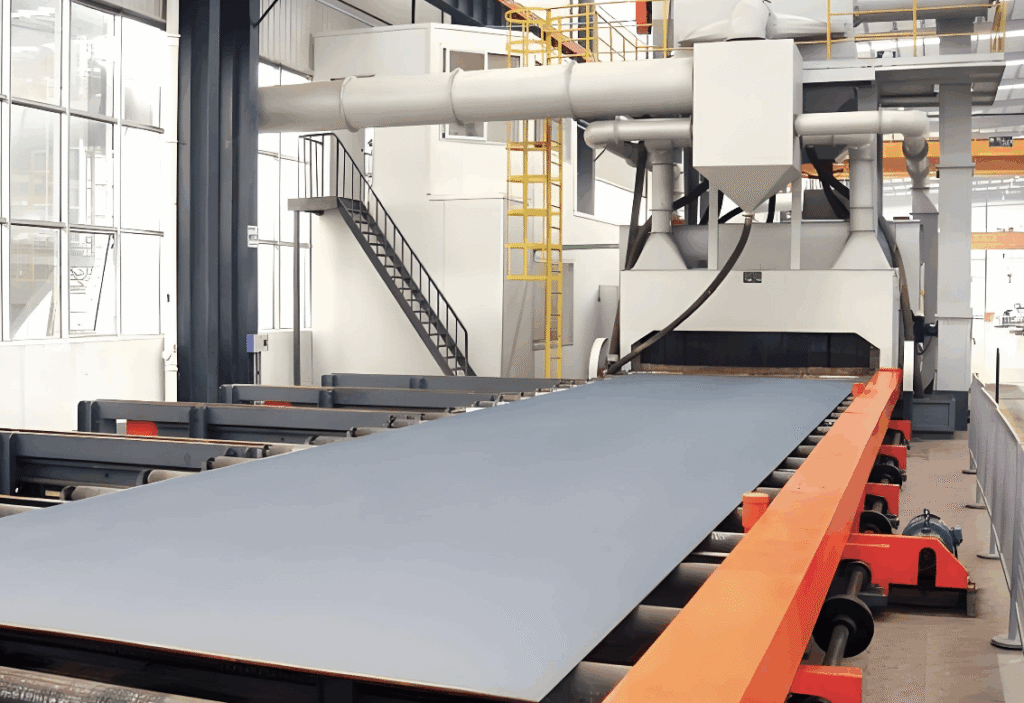
IV. Selection Tips for 3/16-Inch Steel Plate
1、Selection by Environment
For corrosive environments (seawater, chemical media, acid-base solutions), prioritize 316/316L stainless steel; for conventional ambient temperature and pressure environments, choose ordinary carbon steel; for special environments, additional protective measures can be applied. For example, carbon steel plates used in humid environments need anti-rust treatments such as galvanizing and painting.
2、Selection by Cost
Balance performance requirements with budget: for non-corrosive and non-precision scenarios, ordinary carbon steel is preferred to reduce procurement costs; for environments with mild corrosion but limited budget, a combination of carbon steel and anti-rust treatment can be selected, which is 30%–40% cheaper than stainless steel; for high-end precision or highly corrosive scenarios, material performance should be prioritized, and 316 stainless steel should be chosen to avoid equipment failures and increased maintenance costs caused by improper material selection.
V. Frequently Asked Questions (FAQs)
Q: How to choose between 3/16-inch steel plate and 1/4-inch steel plate (6.35 mm)?
A: The selection should be based on load-bearing requirements first: 1/4-inch steel plate is thicker, with higher tensile strength and load-bearing capacity, suitable for medium-to-heavy load scenarios; 3/16-inch steel plate is lighter and more cost-effective with higher processing flexibility, suitable for medium-to-light load scenarios. If the equipment has strict weight requirements (e.g., small mechanical components), 3/16-inch steel plate should be prioritized on the premise of meeting load-bearing requirements.
Q: What are the core differences between 316, 316L, and 316Ti stainless steel plates?
A: The core differences lie in carbon content and alloying elements: 316 has a carbon content ≤ 0.08%, suitable for conventional corrosive environments; 316L has a carbon content ≤ 0.03%, with stronger resistance to intergranular corrosion, ideal for post-welding non-heat-treatment scenarios; 316Ti is added with titanium, further improving high-temperature stability, applicable to high-temperature corrosive environments ≥ 600°C. During procurement, accurate selection should be made according to welding processes and operating temperatures.
Q: How to accurately calculate the weight of 3/16-inch steel plate?
A: The commonly used simplified formula in the industry is: Weight (kg) = Length (m) × Width (m) × Thickness (mm) × 7.85 (density of carbon steel/low alloy steel). For stainless steel, the density should be adjusted to 7.93. Example: The weight of a 2.5 m × 1.2 m × 4.76 mm 3/16-inch carbon steel plate = 2.5 × 1.2 × 4.76 × 7.85 ≈ 112.8 kg. Note that units must be unified during calculation to avoid errors caused by unit confusion.
Q: How to avoid purchasing counterfeit or shoddy 3/16-inch steel plates?
A: Focus on three key points: first, require suppliers to provide formal material certificates and verify that the heat batch number, chemical composition, and other information match the actual product; second, judge by appearance—high-quality steel plates have a flat surface without cracks or scale, while counterfeit products tend to have uneven surfaces and impurity inclusions; third, conduct sampling inspections—entrust third-party testing institutions to test core performance indicators such as tensile strength and corrosion resistance for key batches to ensure compliance with standard requirements.
VI. Conclusion
As a fundamental and widely used material in the industrial field, the core value of 3/16-inch steel plate lies in its wide applicability, processing flexibility, and balanced performance and cost. During procurement and selection, it is necessary to first clarify the actual service environment (corrosion, temperature, pressure) and processing requirements, then accurately match materials according to their characteristics—choose 316 stainless steel for corrosive environments and ordinary carbon steel for conventional scenarios. Meanwhile, select qualified suppliers with sound service systems, and control costs through bulk purchasing and precise customization. It is hoped that this guide can help procurement personnel and engineering technicians quickly select 3/16-inch steel plate products that meet their needs and avoid procurement and selection risks.
Reference Sources
- ASTM A240/A240M: Entitled Standard Specification for Stainless Steel Plates, Sheets, and Strip, it applies to 316/316L stainless steel plates.
- Core Content: It covers the chemical composition, mechanical properties, dimensional tolerances and testing methods of such stainless steel, and clearly specifies that the tensile strength of 316 stainless steel shall be no less than 485 MPa.
- Reference Sources: Official standards of the American Society for Testing and Materials (ASTM) and technical analysis documents from Zhongke Technical Services.
- ASTM A36/A36M: Entitled Standard Specification for Carbon Structural Steel, it applies to A36 plain carbon steel plates.
- Core Content: It specifies that the yield strength of this material shall be no less than 250 MPa, the tensile strength ranges from 400 MPa to 550 MPa, and puts forward specific requirements for chemical composition compliance.
- Reference Sources: Official standards of the American Society for Testing and Materials (ASTM) and the entry on Sohu Iron and Steel Encyclopedia.
- ASTM A681: Entitled Standard Specification for Alloy Tool Steels, it applies to O1 tool steel.
- Core Content: It defines the chemical composition range of O1 steel, specifying that the carbon content shall be controlled between 0.85% and 1.00% and the chromium content between 0.40% and 0.60%. It also regulates the heat treatment process requirements of this material.
- Reference Sources: Official standards of the American Society for Testing and Materials (ASTM) and technical materials from Muyan Alloy.


 English
  Spanish