
Based on the latest market data as of March 2026, this article provides comprehensive quotations for steel plates of 3/8 inch (9.525mm) × 4ft (1.22m) × 8ft (2.44m) across different materials, explains the pricing calculation method, and analyzes the core factors influencing prices.
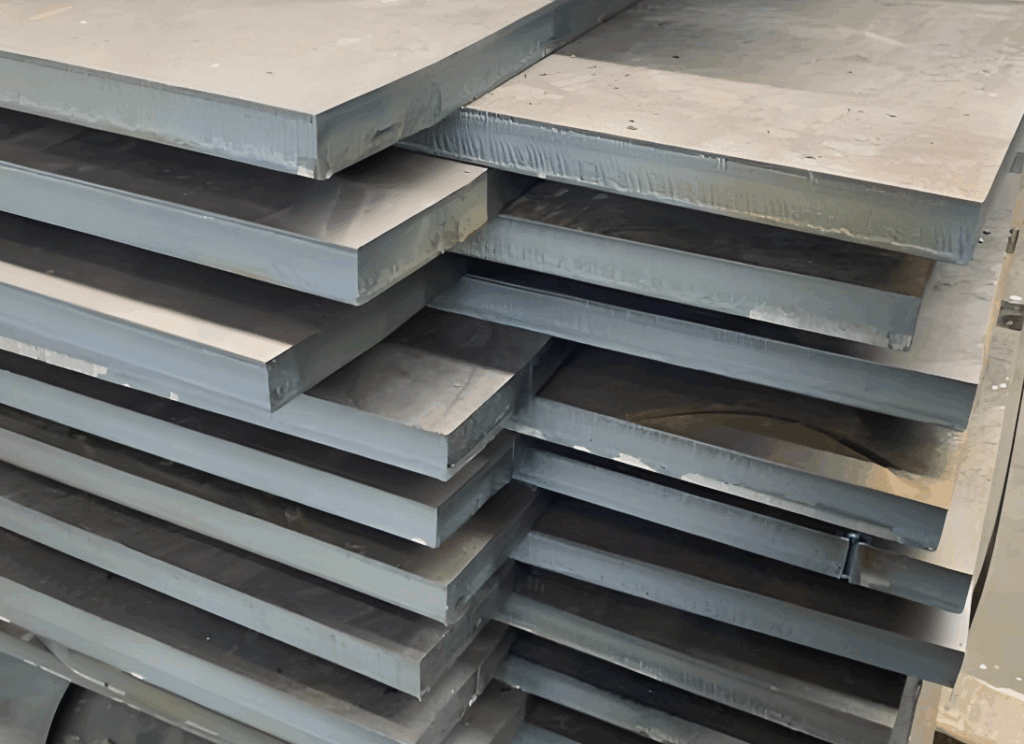
I. Latest Prices for 3/8 Inch 4ft × 8ft Steel Plates (March 2026)
- Carbon Steel (ASTM A36/Q235B):Ideal for general applications and the most widely used grade. Reference price: 3,800–5,200 RMB/ton (MOQ: 1 ton). Converted per sheet (4×8ft): approximately 85–118 RMB.Suitable for general construction, machinery manufacturing, support fabrication, etc. It offers the best cost-performance ratio and accounts for the largest purchase volume.
- Galvanized Steel (DX51D Z275):Excellent anti-corrosion and anti-rust performance. Reference price: 4,500–7,200 RMB/ton (MOQ: 1 ton). Converted per sheet: approximately 101–162 RMB.Designed for outdoor applications such as outdoor supports, guardrails, and container parts, effectively preventing rust caused by rain and humid environments.
- Stainless Steel (304/316L):Outstanding corrosion resistance and heat resistance.
- 304 grade: Reference price 42,000–68,000 RMB/ton (MOQ: 1–5 tons), approximately 945–1,530 RMB per sheet.
- 316L grade: Reference price 65,000–100,000 RMB/ton (MOQ: 1–5 tons), approximately 1,460–2,250 RMB per sheet.Used in chemical, food, medical, and high-end equipment manufacturing industries.
- Abrasion-Resistant Steel (AR500/AR600):High hardness and superior wear resistance.
- AR500: Reference price 22,000–35,000 RMB/ton (MOQ: 6–20 tons), approximately 495–788 RMB per sheet.
- AR600: Reference price 30,000–40,000 RMB/ton (MOQ: 6–20 tons), approximately 675–900 RMB per sheet.Applied to high-wear scenarios such as mining, engineering machinery, and wear-resistant equipment components.

II. Factors Affecting the Price of 3/8 Inch 4×8 Steel Plates
- Material Difference (Core Factor):Raw material costs and production processes vary drastically among different grades. Stainless steel and abrasion-resistant steel are much more expensive than ordinary carbon steel and galvanized steel due to costly raw materials (nickel, chromium, wear-resistant alloys, etc.) and complex manufacturing. Even within the same material, different standards (ASTM A36, Q235B, JIS, etc.) may lead to a price difference of 5%–10%.
- Minimum Order Quantity (MOQ):MOQ is critical to unit pricing: lower MOQ results in higher unit prices (e.g., 1kg MOQ is 20%–30% more expensive than 1 ton MOQ). Bulk orders significantly reduce unit costs, a key incentive for manufacturers to secure large orders.
- Market Supply & Demand and Raw Material Fluctuations:Prices may rise 5%–10% during peak construction seasons (spring and autumn) and industrial production periods. Fluctuations in iron ore, steel billets, and other core raw materials directly affect plate prices: a 10% increase in raw materials typically leads to a 5%–8% rise in steel plate prices.
- Value-Added Services:Additional services such as cutting, bending, rust prevention treatment, and custom sizing increase costs accordingly. More complex services incur higher charges; for example, high-precision cutting costs over 30% more than standard cutting.
- Transportation Costs:As heavy cargo, steel plates incur higher costs over longer distances, usually charged by ton-kilometer. Transportation to remote areas may account for 5%–10% of total procurement cost, which should be calculated in advance.

III. Procurement Notes for 3/8 Inch 4×8 Steel Plates
- Confirm Specifications Clearly:Verify thickness (3/8 inch = 9.525mm), dimensions (4ft × 8ft = 1.22m × 2.44m), material grade, and execution standards to avoid rework, returns, and extra costs from mismatched specifications.
- Check MOQ and Lead Time:Confirm MOQ requirements, delivery schedules, and liability for delayed delivery with suppliers to avoid project delays, especially for urgent orders.
- Compare Multiple Suppliers:Obtain quotes from at least 3–5 suppliers. Do not pursue the lowest price blindly; evaluate material quality and after-sales support (return policies, defect resolution). Prioritize qualified, reputable suppliers.
- Request Samples and Test Reports:For bulk orders, request samples to verify thickness, surface quality, and material. Ask for material test certificates (e.g., ASTM A36, Q235B) to ensure compliance with requirements.
- Clarify Payment Terms and After-Sales Service:Specify payment terms (e.g., 20% advance, 80% on delivery) in contracts to avoid full prepayment risks. Define warranty scope and period to protect rights in case of quality issues.
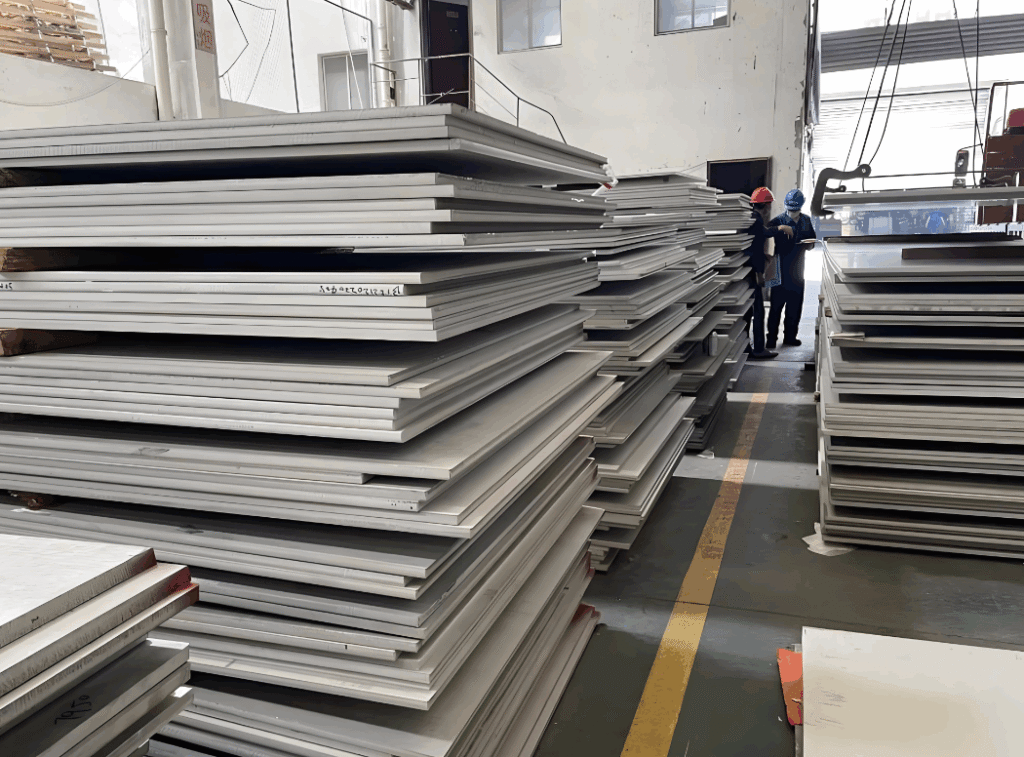
IV. Frequently Asked Questions
Q1: What is the weight of a 3/8 inch 4×8 steel plate?
A: Using the steel weight formula: Weight (kg) = 7.85 × Length (m) × Width (m) × Thickness (mm).
A 3/8″ (9.525mm) × 4ft (1.22m) × 8ft (2.44m) plate weighs approximately:
7.85 × 1.22 × 2.44 × 9.525 ≈ 224.5 kg per sheet.
Weight per square meter ≈ 7.85 × 9.525 ≈ 74.8 kg, useful for calculating shipping and bulk order tonnage.
Q2: Will prices for 3/8 inch 4×8 steel plates keep rising in 2026?
A: Short-term fluctuations of 5%–10% are possible due to raw material costs and seasonal demand, with mild increases expected in spring and autumn construction peaks. Long-term prices will remain stable without sharp rises. Bulk buyers may lock in prices to avoid volatility.
Q3: Can MOQ be less than 1 ton for 3/8 inch 4×8 steel plates?
A: Yes. Some suppliers support orders as small as 1kg, but unit prices will be 20%–30% higher than 1-ton orders, suitable for emergency small-quantity purchases. Bulk orders of 1 ton or more offer better value.
Q4: How to judge the quality of 3/8 inch 4×8 steel plates?
A: Focus on three key points:
- Verify supplier qualifications (business license, production license, material inspection reports).
- Inspect samples for accurate thickness, smooth surface (no scratches, rust, or inclusions).
- Confirm compliance with stated standards (ASTM A36, Q235B, etc.); third-party testing is recommended if needed.
Q5: Are custom cutting and bending services extra?
A: Yes. Costs depend on cutting dimensions, bending angles, and machining accuracy: approximately 5–15 RMB/m for cutting and 8–20 RMB/pc for bending. Confirm detailed fees with suppliers before ordering to avoid unexpected surcharges.
V. Conclusion
This article covers the latest March 2026 quotations, price-influencing factors, and procurement guidelines for 3/8 inch 4ft × 8ft steel plates. For further inquiries, please consult Tonghui.
References
- 2026 Q1 China Steel Industry Price Fluctuation Analysis Report (China Iron and Steel Association, CISA-2026Q1). Key data: iron ore prices up 3.2% YoY in Q1 2026, driving a 4.5% rise in carbon steel prices; 5%–8% price increase expected during March–May construction peak, with quantified impact analysis of raw materials and supply and demand.
- Dimensions, Shape, Weight and Tolerances for Cold-Rolled Steel Plates and Strips (GB/T 708-2019, National Technical Committee for Standardization of Iron and Steel). Specifies the steel weight formula and allows a ±3% tolerance for the standard weight of 3/8″ × 4ft × 8ft steel plates.
- Comparison Manual of Anti-Corrosion Performance and Application Scenarios for Galvanized and Stainless Steel Plates (2026 Edition) (China Steel Structure Association). Salt spray test data shows DX51D Z275 galvanized steel has an outdoor service life of 8–12 years, 304 stainless steel over 15 years, with galvanized steel costing over 80% less than 304 stainless for outdoor use.


 English
  Spanish
  Afrikaans