
In engineering construction, steel procurement, equipment fabrication, and transportation planning, 1/2-inch (12.7mm) steel plate is one of the most widely used specifications. The accuracy of its weight data directly impacts procurement cost accounting, lifting safety, transportation planning, and rationality in engineering selection. Combining industry standards, practical engineering experience, and authoritative reference materials, this article comprehensively organizes the weight data, calculation methods, and influencing factors of 1/2-inch steel plate.
I. Weight of Commonly Used 1/2″ Steel Plate
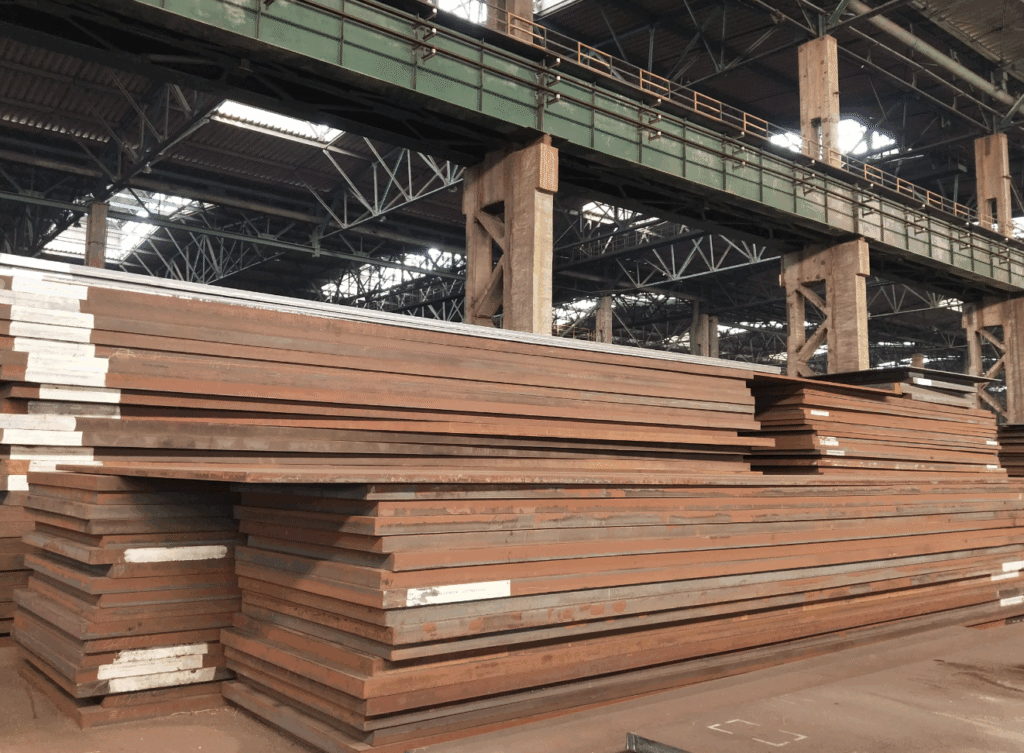
In engineering procurement and transportation, 4×8 ft (48×96 in), 4×10 ft (48×120 in), and 5×10 ft (60×120 in) are the most common sizes for 1/2-inch steel plate. The following are precise weight data (carbon steel), presented in a clear table for bulk query and accounting:
| Specification (Length × Width, inches) | Thickness (inches) | Weight (lbs) | Weight (kg) |
| 48×96 (4×8 feet) | 1/2 | 653.44 | 296.39 |
| 48×120 (4×10 feet) | 1/2 | 816.8 | 370.49 |
| 60×120 (5×10 feet) | 1/2 | 1021 | 463.11 |
Note: The above weight data have been adjusted for manufacturing tolerances (±3%), matching actual supply conditions. They can be directly used for total weight and cost accounting in procurement without additional conversion.
Recommended Reading:2026 4×8 1/2 Inch Steel Plate Price Guide
II. Calculation Methods for 1/2″ Steel Plate Weight
Non-standard 1/2-inch steel plate sizes are often encountered in engineering. Mastering the core calculation formulas allows independent weight calculation, reducing reliance on tools and minimizing errors. The formulas below comply with industry standards and are explained with practical engineering examples for easy learning even for beginners.
2.1 Core Calculation Formulas
The core logic of steel plate weight calculation is Volume × Density. Based on industry practice, two commonly used formulas (imperial and metric) are provided, along with a simplified formula for improved efficiency. The metric formula is fully consistent with the common construction calculation formulas issued by the China Association for Engineering Construction Standardization.
- Imperial Unit (Pounds, lb):Weight = Length (in) × Width (in) × Thickness (in) × 0.283(Steel density conversion factor, corresponding to carbon steel density of 7850 kg/m³)
- Metric Unit (Kilograms, kg):Weight = Length (m) × Width (m) × Thickness (mm) × 7.85(Steel density conversion factor, directly corresponding to carbon steel density of 7850 kg/m³ with no extra conversion needed)
- Simplified Formula (Imperial, Commonly Used in Engineering):Weight (lb) = Area (sq ft) × Thickness (in) × 40.8For quick calculation of standard sizes, with an error ≤1%, suitable for on-site rapid estimation.
Supplement: For stainless steel, adjust the conversion factor to 0.286 (corresponding to stainless steel density of 7900 kg/m³, complying with the material density requirements in ASME BPVC II-D). For galvanized steel, increase the carbon steel weight by 1–3% to compensate for the weight of the galvanized coating.
2.2 Example Calculations
Two examples using the most common engineering sizes are broken down to help master the formulas and avoid calculation errors:
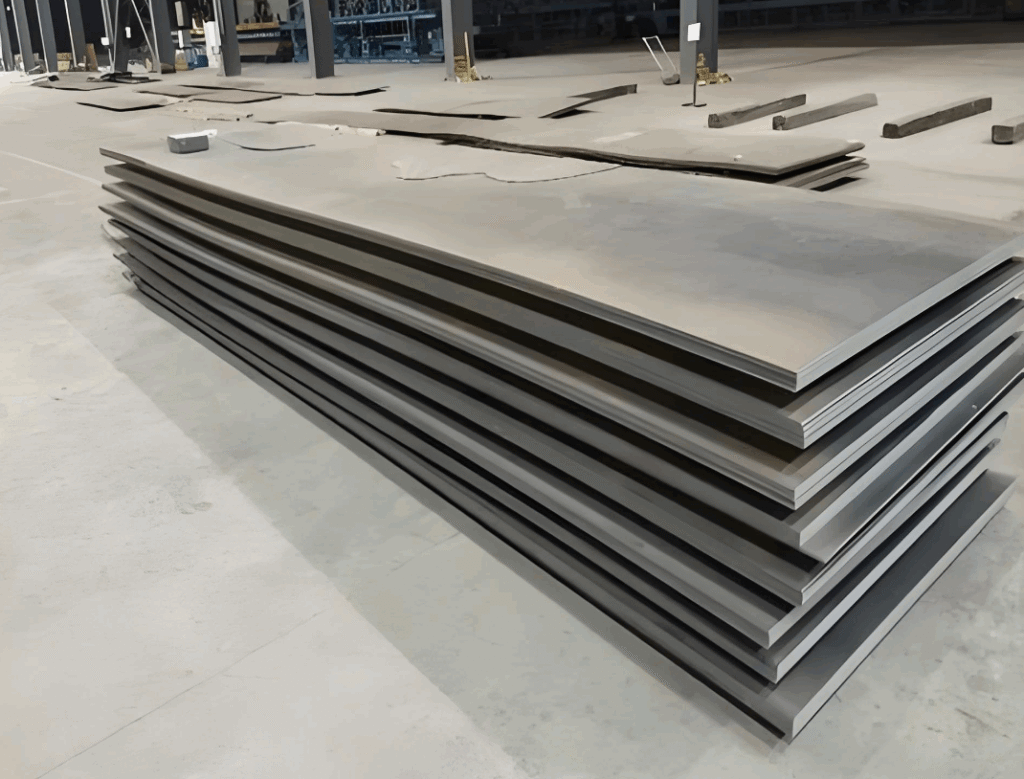
- Example 1 (Imperial, Commonly Used for Procurement Accounting):Calculate the weight of a 4×8 ft (48×96 in) 1/2-inch carbon steel plate.Substitute into the formula:48 (in) × 96 (in) × 0.5 (in) × 0.283 ≈ 653.44 lbConsistent with the table data above, for direct verification.
- Example 2 (Metric, Commonly Used for Construction):Calculate the weight of a 2×1 m, 12.7mm (1/2-inch) carbon steel plate.Substitute into the formula:2 (m) × 1 (m) × 12.7 (mm) × 7.85 ≈ 201.39 kgAdapted to domestic engineering measurement scenarios, directly applicable for lifting and load accounting.
2.3 Calculation Notes
Errors in calculation often lead to over-purchasing, lifting safety hazards, and other issues in engineering. Pay close attention to the following notes to ensure accurate weight calculation:
- Unit Consistency: Keep length, width, and thickness units uniform during calculation; avoid mixing imperial and metric units (e.g., inches and meters). It is recommended to select one unit system based on the scenario.
- Material Adaptation: Different steel materials have different densities — carbon steel 7850 kg/m³, stainless steel 7900 kg/m³ (ASME BPVC II-D). Adjust the conversion factor according to the actual material; do not use universal values.
- Tolerance Reserve: Steel plate has a thickness tolerance of ±3%, causing slight fluctuations in actual weight. Reserve a 3% error margin for procurement and lifting to avoid deviations from tolerance.
- Surface Treatment Impact: Galvanizing, painting, and other surface treatments add minor weight. The galvanized coating adds approximately 1.63 lb per square foot and should be included in calculations.
III. Key Factors Affecting 1/2″ Steel Plate Weight
Many practitioners notice weight differences in 1/2-inch steel plates of the same thickness, mainly caused by material, size, surface treatment, and other factors. A detailed breakdown is provided below for accurate differentiation and proper application.
3.1 Material Differences
1/2-inch steel plates of different materials vary in density and weight significantly. A comparison of the three most commonly used engineering materials is listed below with precise data for direct selection reference:
- Carbon Steel (Most Common, GB/713.1 Standard):Approx. 20.42 lb per square foot, approx. 20.74 kg per square meter.Suitable for general engineering structures, equipment bases, etc., with high cost performance.
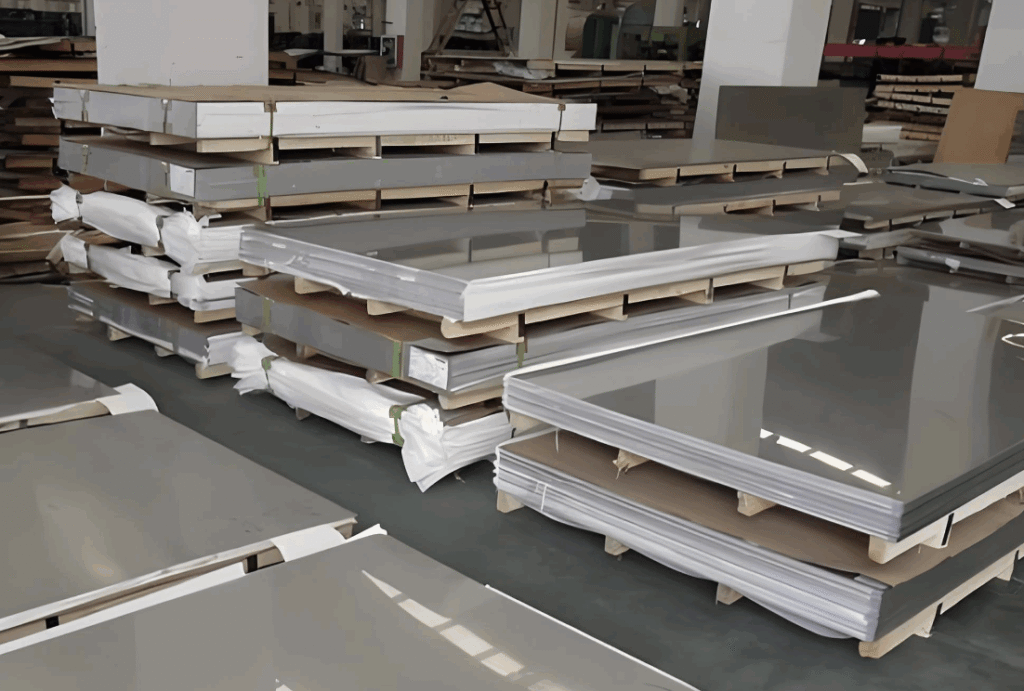
- Stainless Steel (ASME BPVC II-D Standard):Density 7900 kg/m³, approx. 21.1 lb per square foot, approx. 21.4 kg per square meter.Slightly heavier than carbon steel, ideal for corrosion-resistant applications (e.g., chemical, marine engineering).
- Galvanized Steel:Based on carbon steel plus a galvanized coating, approx. 22.05 lb per square foot, approx. 22.8 kg per square meter.The galvanized layer increases weight while enhancing corrosion resistance, suitable for outdoor projects and humid environments.
3.2 Size Differences
Steel plate weight is proportional to length and width. For the same thickness (1/2 inch), larger sizes mean greater total weight. Distinguish clearly between weight per unit area and total finished weight to avoid confusion:
- Weight per unit area: Fixed (e.g., 20.42 lb per square foot for carbon steel), used for quick estimation of weights for different sizes.
- Total finished weight: Determined by size (length × width). For example, 4×8 ft is approx. 653.44 lb, 5×10 ft is approx. 1021 lb. Select sizes based on actual needs to avoid accounting errors.
3.3 Other Influencing Factors
- Manufacturing Tolerance: Thickness tolerance of ±3% leads to heavier weight for thicker plates and lighter weight for thinner ones; a tolerance margin is required in practice.
- Surface Treatment: Besides galvanizing, painting, chrome plating, and other treatments add slight weight (approx. 0.5–1%), adjust calculations based on actual surface treatment.
- Material Purity: Density differences between ordinary carbon steel and high-strength carbon steel are minimal (≤0.5%), with negligible weight variation. A uniform density of 7850 kg/m³ can be used for engineering calculations.
IV. Frequently Asked Questions
Q1: What is the weight of a 1/2-inch thick steel plate per square foot?
A1: Approx. 20.42 lb for carbon steel, 21.1 lb for stainless steel, and 22.05 lb for galvanized steel. Core differences lie in material and surface treatment; select corresponding data per actual engineering needs.
Q2: What is the weight of a 4×8 ft 1/2-inch steel plate?
A2: Approx. 653.44 lb (≈296.39 kg) for carbon steel, the most common size in engineering procurement, directly applicable for procurement and transportation accounting.
Q3: Is there a weight difference between stainless steel and carbon steel 1/2-inch plates?
A3: Yes. Stainless steel has a higher density (7900 kg/m³), approx. 0.68 lb heavier per square foot than carbon steel. Though small, it cannot be ignored in precise engineering calculations.
Q4: Does galvanizing affect the weight of 1/2-inch steel plate?
A4: Yes. The galvanized coating adds weight, approx. 1.63 lb per square foot. Calculate using the galvanized weight for actual procurement to avoid insufficient weight.
Q5: How to quickly calculate the weight of 1/2-inch steel plates in different sizes?
A5: Two methods: 1) Use online calculators (e.g., Tampa Steel Calculator) to generate data by entering size and material; 2) Apply the simplified formula in this article for quick estimation, with an error ≤1%.
V. Conclusion
Accurately mastering the weight of 1/2-inch steel plate improves procurement and construction efficiency, while avoiding safety hazards and cost waste caused by data errors. For weight inquiries about specific sizes or materials, please leave a comment for consultation!
References
- Specification for Imperial Unit Application in Steel Structures: Defines 1/2 inch as a standard increment for section steel and steel plates, standardizing weight calculation for steel plates in imperial units to fit engineering practice.
- ASME BPVC II-D Material Density Standards: Provides standard densities for carbon steel (7850 kg/m³) and stainless steel (7900 kg/m³), serving as the core basis for weight conversion of steel plates of different materials.
- Collection of Common Construction Calculation Formulas by China Association for Engineering Construction Standardization: Specifies the metric formula for steel plate weight (Weight = Length × Width × Thickness × 7.85), adapted to domestic engineering measurement practices.




 English
  Spanish
  Afrikaans