
As 'n kerngrondstof in nywerhede soos konstruksie, brûe, skepe en masjinerievervaardiging beïnvloed die vraagstuk oor gewig en die presiese berekening van staalplate direk projekbegrotingsvoorbereiding, logistieke laaibeplanning, strukturele ontwerpsveiligheid en inkoopkostebeheer. Dit is 'n hoëfrekwensie-vereiste in die daaglikse werk van ingenieurs, kopers en konstruksiepersoneel.
Hierdie artikel fokus op die kernprobleem van staalplaatgewigte, integreer bedryfsstandaarddata, akkurate berekeningsformules en praktiese vergelykingsgrafieke, laat oorbodige teorieë vaar, en alle inhoud kan direk toegepas en geraadpleeg word. Dit help relevante praktisyns om vinnig die probleme van staalplaatgewignavrae en berekeninge op te los, dek die behoeftes van verskeie kategorieë soos koolstofstaalplate, vlekvrye staalplate en dun staalplate, en neem beide metriese en imperiale eenhede in ag, geskik vir verskeie binnelandse en internasionale toepassingsscenario's.
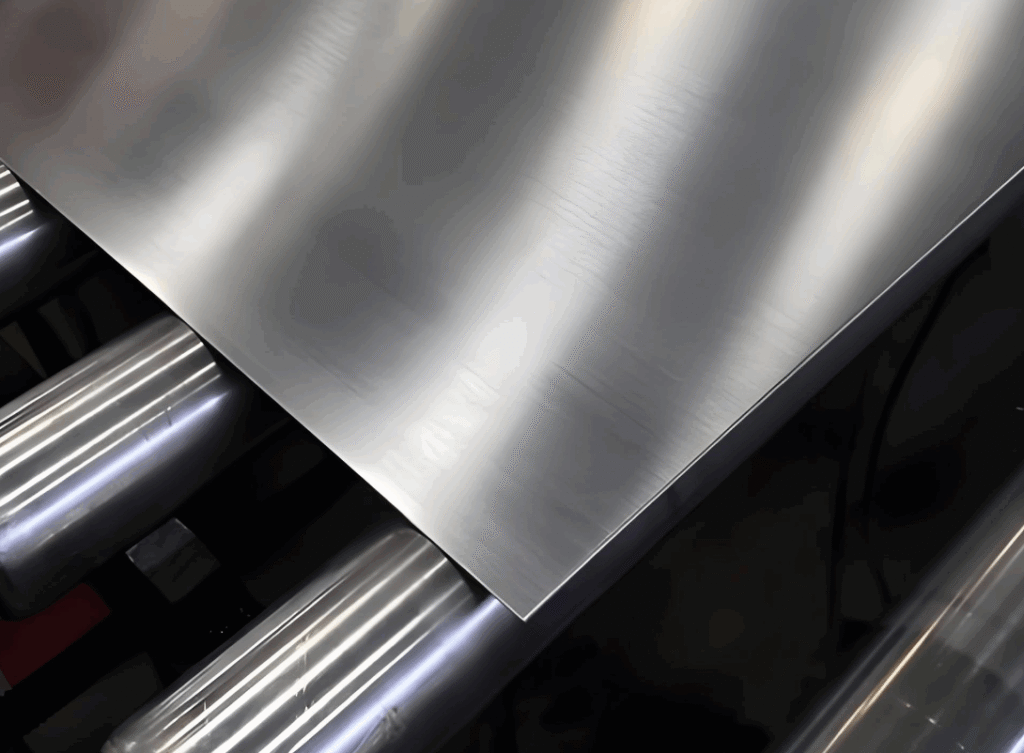
Staalplaatgewigskartel
In kombinasie met bedryfsstandaarde soos GB/T 3274-2017 en GB/T 4237-2015 en algemene markspesifikasies, word die vergelykingsgrafiek aangebied volgens “eenheidklassifikasie + materiaalklassifikasie”. Die data is akkuraat en kan direk gekopieer word vir gebruik, balanseer praktiese bruikbaarheid en professionaliteit, dek algemene diktes van 3 mm tot 100 mm, geskik vir hoëfrekwensie-scenario's soos projekinkopies en logistieke rekeningkunde.
Metriëseenheid-gewigskema (kg, die mees algemeen gebruik)
Die volgende is die metrieke gewigskart vir koolstofstaalplate (digtheid 7,85 g/cm³), wat die algemene lengte- en breedtespesifikasies in die bedryf dek, met die gewig per vierkante meter en die gewig van 'n enkele plaat vir vinnige berekening. Die data voldoen aan die vereistes van die bedryfsstandaard vir gewone koolstofstrukturele staal se medium- en swaarplate:
| Staalplaatdikte (mm) | Gewig per vierkante meter (kg) | 1250mm×2500mm (Enkelplaatgewig, kg) | 1500mm×6300mm (Enkelplaatgewig, kg) | 2000mm×6300mm (Enkelplaatgewig, kg) |
| 3 | 23.55 | 73.6 | 223.4 | 297.9 |
| 6 | 47.1 | 147.2 | 446.8 | 595.8 |
| 8 | 62.8 | 196.3 | 595.7 | 794.4 |
| 10 | 78.5 | 245.3 | 744.6 | 993.0 |
| 12 | 94.2 | 294.4 | 893.5 | 1191.6 |
| 16 | 125.6 | 392.5 | 1191.4 | 1588.8 |
| 20 | 157.0 | 490.6 | 1489.2 | 1986.0 |
| 50 | 392.5 | 1226.6 | 3723.1 | 4965.0 |
| 100 | 785.0 | 2453.1 | 7446.2 | 9930.0 |
Nota: Die data in die tabel is teoretiese gewig, bereken op grond van die digtheid van laekoolstofstaal (0,11% koolstofinhoud) van 7,85 g/cm³. Daar is 'n geringe verskil in gewig tussen middelkoolstofstaal en hoëkoolstofstaal, met 'n afwyking van nie meer as 0,11% nie.

Keiserlike eenheidsgewigkaart (lbs)
Ges geskik vir inkoop- en konstruksiescenario's in Europa en die Verenigde State, gegroepeer volgens imperiale dikte (duim), ooreenkomstig hoofstroomlengte- en breedtespesifikasies, bereken op grond van die digtheid van koolstofstaal van 490 lb/ft³. Die data kan direk gebruik word vir internasionale inkoopbehoeftes:
| Staalplaatdikte (duim) | Gewig per vierkante voet (pond) | 48in×96in (Enkelplaatgewig, lbs) | 60in×120in (Enkelplaatgewig, lbs) |
| 3/16 duim | 7.66 | 245.1 | 383.0 |
| 1/4 duim | 10.21 | 326.7 | 510.5 |
| 5/16 duim | 12.76 | 408.3 | 638.0 |
| 3/8 duim | 15.32 | 489.9 | 766.0 |
| ½ duim | 20.42 | 653.4 | 1021.0 |
Gewigvergeluikingsgrafiek vir verskillende staalplate
Verskille in die digtheid van staalplate van verskillende materiale lei tot verskillende gewigte vir dieselfde spesifikasie. Hieronder is 'n gewigvergelyking van algemene materiale (koolstofstaal, vlekvrye staal) met dieselfde dikte en spesifikasie (1000 mm × 1000 mm). Die data verwys na bedryfsstandaarde en open source-materiaaldigtheidsdata, en die akkuraatheid voldoen aan die vereistes vir ingenieurswese:
| Staalplaatdikte (mm) | Koolstofstaalplaat (7,85 g/cm³, kg) | 304 Vlekvrye staalplaat (7,93 g/cm³, kg) | 316L vlekvrye staalplaat (7,98 g/cm³, kg) | 13% chroomvrystaalplaat (7,75 g/cm³, kg) |
| 6 | 47.1 | 47.6 | 47.9 | 46.5 |
| 8 | 62.8 | 63.4 | 63.8 | 62.0 |
| 10 | 78.5 | 79.3 | 79.8 | 77.5 |
| 12 | 94.2 | 95.2 | 95.8 | 93.0 |
| 20 | 157.0 | 158.6 | 159.6 | 155.0 |
Nota: Verskillende vlekvrye staalmateriale het effens verskillende digthede. Die digtheid van 201, 202, 301 en ander vlekvrye staalsoorte is 7,93 g/cm³; die digtheid van 309S, 310S en ander vlekvrye staalsoorte is 7,98 g/cm³; die digtheid van 405, 410 en ander vlekvrye staalsoorte is 7,75 g/cm³. Die gewig moet by aankoop volgens die spesifieke materiaal bereken word.

Formule vir die berekening van staalplaatgewig
Vir staalplate met nie-standaard spesifikasies (geen vergelykingsgrafiek beskikbaar nie), word twee akkurate berekeningsformules (metries en imperiaal) verskaf, met gedetailleerde voorbeelde en verwysings na materiaaldigtheid. Die formules voldoen aan bedryfsberekeningsstandaarde en kan direk deur ingenieurs en kopers toegepas word sonder ingewikkelde afleiding, wat akkurate berekeningsresultate verseker.
Metric berekeningsformule (van toepassing op kg, mm, m-eenhede, die mees algemeen gebruik)
Kernformule: Gewig (kg) = Materiaaldigtheid (g/cm³) × Lengte (m) × Breedte (m) × Dikte (mm)
Verduideliking: In die formule is die dikte-eenheid mm, die lengte en breedte is m, en die digtheid is g/cm³. Geen eenheidsomskakeling is tydens berekening nodig nie, en die waardes kan direk ingesit word. Dit is geskik vir binnelandse ingenieurswese- en inkoop-scenario's, en voldoen aan die gewigsberekeningsvereistes in die GB/T 3274-2017-standaard.
Voorbeeld 1: Bereken die gewig van 'n koolstofstaalplaat met 6 m (lengte) × 1,5 m (breedte) × 10 mm (dikte), met 'n digtheid van koolstofstaal van 7,85 g/cm³. Substitueer in die formule:
Gewig = 7,85 × 6 × 1,5 × 10 = 706,5 kg, wat ooreenstem met die data in die vergelykingsgrafiek en vir projekbegrotingsadministrasie gebruik kan word.
Voorbeeld 2: Bereken die gewig van 'n 304 vlekvrye staalplaat met 5 m (lengte) × 2 m (breedte) × 8 mm (dikte), met 'n digtheid van 7,93 g/cm³. Substitueer in die formule:
Gewig = 7,93 × 5 × 2 × 8 = 634,4 kg, wat presies geskik is vir die gewigberekening van vlekvrye staalinkopies.
Keiserlike berekeningsformule (van toepassing op lbs, ft, duim-eenhede)
Kernformule: Gewig (lbs) = Lengte (ft) × Breedte (ft) × Dikte (ft) × Materiaaldigtheid (lb/ft³)
Verduideliking: Die diktte van die staalplaat (duim) moet eers in voet (ft) omgeskakel word: 1 duim = 1/12 voet. Die digtheid van koolstofstaal is 490 lb/ft³ en dié van vlekvrye staal is ongeveer 500 lb/ft³, wat geskik is vir internasionale inkoop- en uitvoerituasies.
Voorbeeld: Bereken die gewig van 'n koolstofstaalplaat met 8 voet (lengte) × 4 voet (breedte) × 0,25 duim (dikte). Eerstens omskep die dikte: 0,25 duim = 0,25 ÷ 12 ≈ 0,0208 voet. Substitueer in die formule:
Gewig = 8 × 4 × 0,0208 × 490 ≈ 326,7 pond, wat ooreenstem met die data in die imperiale vergelykingsgrafiek en direk aan internasionale verskaffers gekoppel kan word.
Verwysing van digtheid vir verskillende materiale (presisie-weergawe)
Die digtheid van staalplate van verskillende materiale beïnvloed die gewigberekeningsresultate direk. Hieronder is die algemeen gebruikte digtheidparameters vir materiale in die bedryf, gebaseer op open source-materiaaldata en bedryfsstandaarde. Die akkuraatheid voldoen aan die toetsvereistes en kan direk vir formuleomskakeling gebruik word:
- Koolstofstaal: laekoolstofstaal (0,1% koolstofinhoud) 7,85 g/cm³, middelkoolstofstaal (0,4% koolstofinhoud) 7,82 g/cm³, hoëkoolstofstaal (1% koolstofinhoud) 7,81 g/cm³. In die ingenieurswese word dit standaard op 7,85 g/cm³ vir berekeninge gebruik, en die afwyking is verwaarloosbaar;
- Roestvrye staal: Die digtheid van 304, 304L, 301, 201, 202 en ander materiale is 7,93 g/cm³; die digtheid van 316, 316L, 309S, 310S en ander materiale is 7,98 g/cm³; die digtheid van 405, 410, 420, 430 en ander materiale is 7,75 g/cm³;
- Spesiale staalplate: Die gewig van warmgewalste, langs-toegelope staalplate (LP-staalplate) word bereken volgens die digtheid van die ooreenstemmende materiaal, en die weegmetode moet voldoen aan die nasionale standaardvereistes vir “Warmgewalste langs-toegelope staalplate”.
Gereelde vrae
V1: Hoe bereken mens die gewig van staalplate met nie-standaard afmetings?
A1: Pas direk die metrieke of imperiale berekeningsformule in Deel 2 van hierdie artikel toe, bepaal die ooreenstemmende digtheid volgens die staalplaatmateriaal, en voer die werklike lengte, breedte en dikte in (let op eenheidsuniformiteit) om vinnig die gewig te kry. Voorbeeld: Bereken die gewig van 'n koolstofstaalplaat met afmetings van 3 m × 1,2 m × 7 mm: gewig = 7,85 × 3 × 1,2 × 7 = 199,98 kg, wat direk vir logistieke laaiverrekening gebruik kan word.
Q2: Wat is die standaarddigtheid van staalplate? Sal die digtheidsverskil tussen verskillende materiale die gewig beïnvloed?
A2: Die standaarddigtheid van staalplate wissel na gelang van die materiaal. Die standaarddigtheid van koolstofstaalplate is 7,85 g/cm³ (490 lb/ft³), en die digtheid van vlekvrye staalplate is 7,75–7,98 g/cm³ (ongeveer 500 lb/ft³). Digtheidsverskil sal direk die gewig beïnvloed. Onder dieselfde spesifikasie is 316L-vlekvrye staalplate ongeveer 1,7% swaarder as koolstofstaalplate. Die materiaal moet duidelik gespesifiseer word wanneer dit aangekoop word om koste-impakte as gevolg van gewigsberekeningsafwykings te vermy.
Q3: Is daar 'n verskil tussen die teoretiese gewig en die werklike gewig van staalplate? Wat is die afwykingsreeks?
A3: Daar is 'n geringe verskil. Die teoretiese gewig word bereken op grond van standaarddigtheid en -grootte, terwyl die werklike gewig beïnvloed word deur faktore soos vervaardigingstoleransie, oppervlakbehandeling (soos galvanisering, ontvettering) en wisselvalligheid in materiaal samestelling. Dit voldoen aan die toelaatbare gewigafwykingsvereistes in die GB/T 1499.1-2017-standaard, en die afwyking is gewoonlik binne ±3%. Die teoretiese gewig kan vir rekeningdoeleindes by aankoop gebruik word, en die werklike vereffening moet gebaseer wees op die gewigsertifikaat wat deur die vervaardiger verskaf word.
Q4: Hoe omskep ek die duim van 'n staalplaatgrootte na voet? Om aan die imperiale berekeningsformule aan te pas?
A4: Die omskakelingsformule tussen duim en voet is: 1 duim = 1/12 voet (ft). Byvoorbeeld, 0,5 duim = 0,5 ÷ 12 ≈ 0,0417 ft, 1 duim = 0,0833 ft. Nadat die omskakeling gedoen is, vervang dit direk in die imperiale berekeningsformule om vinnig die imperiale gewig te kry, wat geskik is vir internasionale inkoop-scenario's.
Q5: Wat is die gewig per vierkante meter van 'n 12 mm dik staalplaat? Is daar 'n verskil tussen verskillende materiale?
A5: Die gewig per vierkante meter van 'n 12 mm dik koolstofstaalplaat is 94,2 kg (7,85×1×1×12); die gewig per vierkante meter van 'n 304 vlekvrye staalplaat is ongeveer 95,2 kg (7,93×1×1×12); die gewig per vierkante meter van 'n 316L vlekvrye staalplaat is ongeveer 95,8 kg (7,98×1×1×12); die gewig per vierkante meter van 'n 13% chroomvlekvrye staalplaat is 93,0 kg (7,75×1×1×12). Daar is geringe verskille in gewig tussen verskillende materiale, en die ooreenstemmende data moet volgens die werklike materiaal gekies word.
Q6: Hoe bereken mens die gewig van warmgewalste, langs-tapse staalplate (LP-staalplate)?
A6: Die gewig van LP-staalplate word bereken volgens die gewigmetode wat in die nasionale standaard “Hot-rolled Longitudinally Tapered Steel Plates” gespesifiseer word. Die totale gewig word verkry deur afsonderlik die grootte en digtheid van verskillende dikteseksies te bereken. Die diktesreeks is 10 mm tot 400 mm, wat hoofsaaklik in grootskaalse strukturele projekte soos skepe en brûe gebruik word. Dit kan bereken word met verwysing na die ooreenstemmende digtheid en afdelingsgrootte.
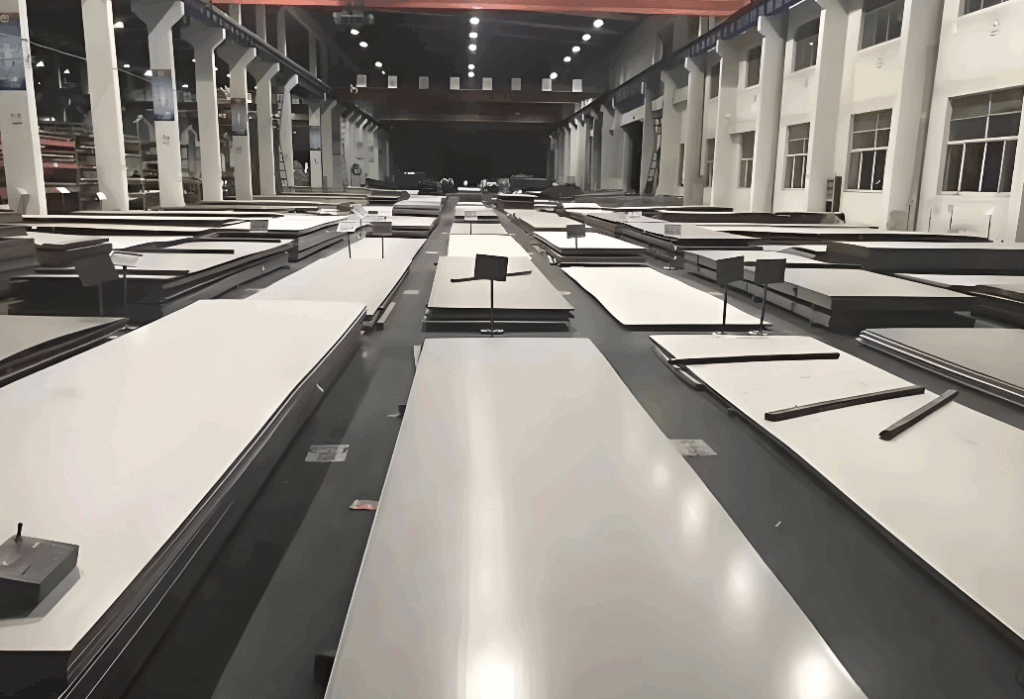
Verwante staalgewigsverwysing
- Staalrolgewigverwysing: Staalrolgewig = materiaaldigtheid × staalroldeursnee × staalrolbreedte × staalroldikte (eenheidsunifikasie). Vir algemene koolstofstaalrolle (dikte 3 mm–10 mm, breedte 1250 mm) is die gewig per meter ongeveer 23,55 kg–78,5 kg. Dit kan bereken word volgens die werklike afmetings van die staalrol deur die formule toe te pas, wat geskik is vir staaltoelevering en vervoersadministrasie.
- Gewigbegeleiding vir dun staalplate: Vir dun staalplate (dikte 1.6mm-5mm), bereken volgens die digtheid van koolstofstaalplaat van 7.85g/cm³, is die gewig per vierkante meter 12.56kg (1.6mm), 19.63kg (2.5mm), 39.25kg (5mm), wat geskik is vir die aankoop van dun staalplate in elektronika, ligte nywerheid en ander nywerhede, en voldoen aan die vereistes van die GB/T 709-88-standaard.
- Standaardgrootte en -gewig van staalplate: In kombinasie met die hoofstroom-standaardgroottes in die bedryf word aanvullingsgewigte wat ooreenstem met algemene spesifikasies verskaf om vinnige ooreenstemming tydens verkryging te vergemaklik. Byvoorbeeld, die gewig van 'n koolstofstaalplaat van 1500 mm×6000 mm×10 mm is 7,85×1,5×6×10=706,5 kg; die gewig van 'n 2000mm×8000mm×16mm koolstofstaalplaat is 7.85×2×8×16=2010.6kg, wat voldoen aan die standaardspesifikasievereistes van gewone koolstofstrukturele staal medium- en swaarplate.
Aanbevole praktiese gereedskap
Drie algemeen gebruikte en betroubare aanlyn-staalplaatgewigberekeninge in die bedryf word aanbeveel. Geen handmatige berekening is nodig nie. Voer die grootte en materiaal in om met een klik die gewigresultaat te genereer, werktyd te bespaar en aan te pas by die vinnige rekeningkundige behoeftes van nie-standaard spesifikasies:
- OSGeo Staalplaat-gewigrekenaar: Ondersteun verskeie materiale soos koolstofstaal en vlekvrye staal, kan metrieke en imperiale afmetings invoer, genereer gewig met een klik, het akkurate data, voldoen aan bedryfsstandaarde en is gratis om te gebruik.
- Staalbedryf Aanlynrekenaar: Ondersteun gewigsberekening van verskeie staalsoorte soos staalplate, staalrolle en staalpype, kan materiaal digtheid aanpas, pas aan vir berekening van spesiale staalplate en verskaf bedryfsstandaardverwysings;
- Ingenieursmateriaalrekenaar: integreer funksies soos staalplaatgewig, koste-rekeningkunde en eenheidsomskakeling, pas aan by die daaglikse werk van ingenieurs en kopers, ondersteun datum-uitvoer en fasiliteer bondelrekeningkunde.
Gevolgtrekking
Hierdie artikel integreer staalplaatgewigvergelykingsgrafieke, akkurate berekeningsformules, algemene vrae en uitgebreide verwysings. Alle inhoud is gebaseer op bedryfsstandaarde en praktiese ervaring, wat ooreenstem met die leesgewoontes van ingenieurs, kopers en konstruksiepersoneel. Die data is akkuraat en kan direk toegepas word, wat die kernuitdagings van staalplaatgewignavrae en -berekeninge oplos. Of dit nou vinnige navrae oor standaardspesifikasies, onafhanklike berekeninge van nie-standaardspesifikasies, koolstofstaal, vlekvrye staal, of metrieke en imperiale eenhede is, kan die behoeftes vinnig deur hierdie artikel vervul word.
Verwysings
- GB/T 3274-2017 “Koolstofstruktuurstaal en lae-legeringstruktuurstaal: warmgewalste dik staalplate en staalstrookke” Die kerninhoud van die dokument, soos die standaard vir gewigsberekening, groottespesifikasies en die toelaatbare gewigsafwyking van koolstofstaalplate, verwys na hierdie standaard, insluitend die spesifikasie-instellings van metriese gewigstabelle, die teoretiese basis vir gewigsberekening, ensovoorts.
- GB/T 4237-2015 “Heetgewalst vlekvrye staalplate en -strippe”: As die kernbasis vir digtheidparameters en gewigsberekeningspesifikasies van vlekvrye staalplate (304, 316L, 13% chroomvlekvrye staal, ens.), is die gewigsvergeluikingsdata van verskillende materiale van vlekvrye staalplate in die dokument almal afgelei uit hierdie standaard.
- GB/T 1499.1-2017 “Staal vir gewapende beton – Deel 1:" ”Heetgewalste ronde staalstawe": Die afwykingsreeks tussen die teoretiese gewig en die werklike gewig van die staalplaat in die dokument (binne ± 3%), en die invloed van wisselvallighede in die materiaal samestelling op die gewig, verwys na die toepaslike bepalings van hierdie standaard.




 English
  Spanish
  Afrikaans