
Vlekvrye staalplaat 304 is die mees gebruikte austenitiese vlekvrye staal. staalplaat wereldwyd. Met kernvoordele soos uitstekende korrosiebestandheid, hoë sterkte en maklike vormbaarheid, word dit wyd toegepas in nywerhede soos vervaardiging, voedsel- en mediese sektore, en argitektoniese versiering. Hierdie artikel bied 'n omvattende oorsig van plaatvlekvrye staal 304 en dek die definisie, prys, eienskappe, toepassings en aankooptegnieke daarvan.
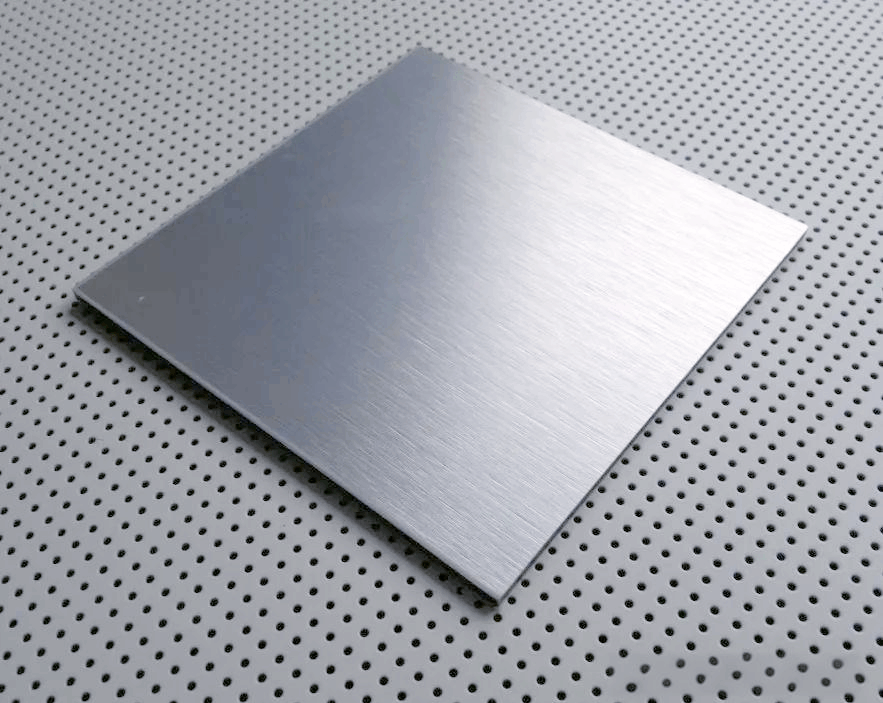
1. Wat is vlekvrye staalplaat 304?
Roestvrye staalplaat 304 is in wese 'n austenitiese vlekvrye staal, Ook in die bedryf bekend as “18/8 vlekvrye staal” weens sy nominale samestelling van ongeveer 18% chroom en 8% nikkel. Dit is wêreldwyd die mees veelsydige en wyd gebruikte vlekvrye staalplaatgraad.
Dit stem ooreen met goed-erkende internasionale standaarde:
- AISI 304 (VSA-standaard)
- UNS S30400 (Geünifiseerde Nommeringstelsel, VSA)
- EN 1.4301 (EU-standaard)
- JIS SUS 304 (Japannese standaard)
- GB 06Cr19Ni10 (Chinese nasionale standaard)
304 vlekvrye staalplate onder verskillende standaarde deel konsekwente kernprestasie-aanwysers, met slegs geringe verskille in produksieproses-besonderhede, almal in ooreenstemming met wêreldwyd aanvaarde gehaltspesifikasies.
Chemiese samestelling
Die chemiese samestelling van 304 vlekvrye staalplaat voldoen streng aan bedryfsstandaarde:
- Kroom (Cr): 18.0–20.0%
- Nikkel (Ni): 8.0–10.5%
- Koolstof (C): ≤0.08%
- Mangaan (Mn): ≤2.0%
- Silikoon (Si): ≤1.0%
- Fosfor (P): ≤0.045%
- Swael (S): ≤0.030%
Kroom is die sleutelbestanddeel vir korrosiebestandheid, wat 'n digte passiewe oksiedfilm op die oppervlak vorm om korrosiewe media te blokkeer. Nikkel stabiliseer die austenitiese struktuur, wat die taaiheid en verwerkbaarheid verbeter vir maklike lasering en vorming.
Kernstandaarde
Globale produksie en toetsing van 304 vlekvrye staalplaat volg hoofsaaklik vier kernstandaarde:
- ASTM A240 (Amerikaanse Vereniging vir Toetsing en Materiale)
- ASME SA240 (Amerikaanse Vereniging van Meganiese Ingenieurs)
- EN 10088-2 (Europese standaard vir vlekvrye staalplate)
- GB/T 3280-2015 (Chinese standaard vir koudgewalste vlekvrye staalplate en -strippe)
Hierdie standaarde spesifiseer chemiese samestelling, meganiese eienskappe, afmetingstoleransies en oppervlakkwaliteit. Byvoorbeeld vereis ASTM A240 'n treksterkte van ≥515 MPa en 'n opbrengssterkte van ≥205 MPa. Kopers kan materiaaltoetssertifikate versoek om nakoming te verseker.
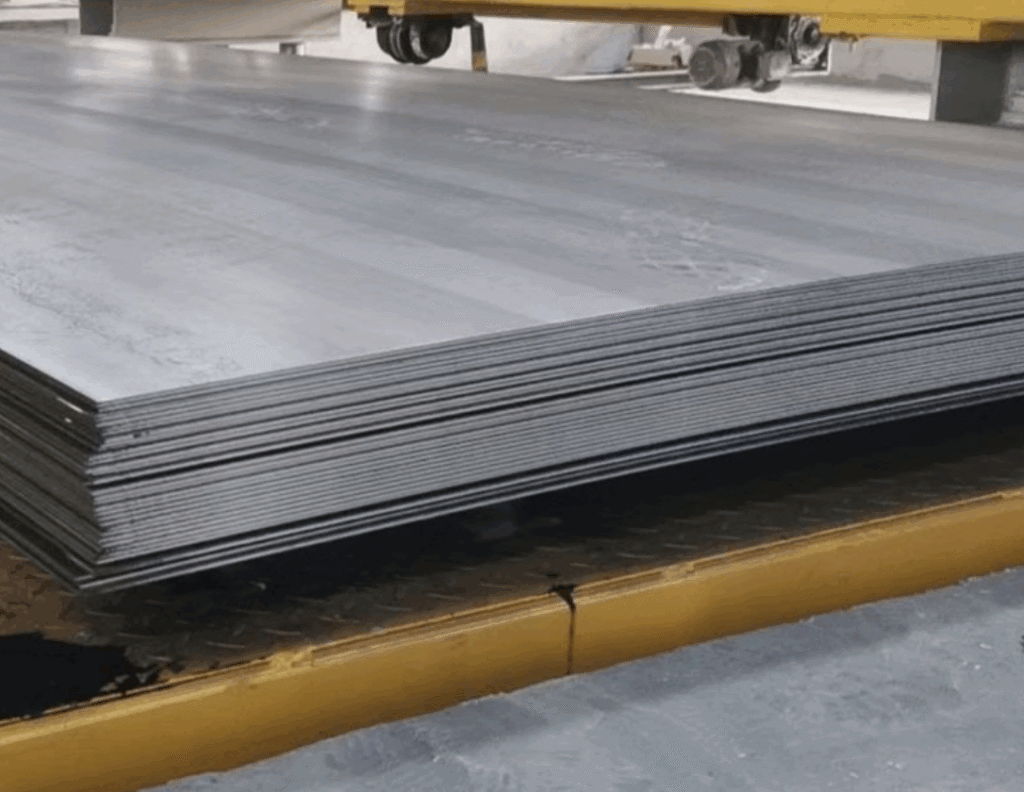
2. Kern-eienskappe van 304 vlekvrye staalplaat
Korrosiebestandheid
As een van sy mees prominente voordele weerstaan die chroom-passiewe film doeltreffend korrosie deur atmosfeer, water, stoom, die meeste swak sure (bv. asynsuur, sitroensuur) en swak logen (bv. natriumhidroksied). Dit presteer goed in kokende stiksuur tot 65% en voldoen aan die korrosievereistes vir die meeste algemene toepassings.
In baie besoedelde nywerheidsomgewings of onder hoë-chloried-omstandighede (bv. mariene omgewings, afvalwaterbehandeling) kan spanningskorrosie voorkom. Gereelde skoonmaak of passivering word aanbeveel. Direkte kontak met koolstofstaal moet vermy word om elektrochemiese korrosie te voorkom.
Meganiese eienskappe
Belangrike meganiese eienskappe (in ooreenstemming met bedryfsstandaarde):
- Digtheid: 7,93 g/cm³
- Treksterkte: ≥515 MPa
- Opbrengssterkte: ≥205 MPa
- Verlenging: ≥40%
- Hardheid: ≤92 HRB
Dit het uitstekende vormbaarheid en lasbaarheid en is geskik vir TIG-, boog- en ander algemene lasmetodes sonder voor- of nabelasting, wat verwerkingskoste verminder. Dit presteer ook goed by lae temperature en werk stabiel van −196 °C tot 800 °C sonder 'n brose oorgang. Die deurlopende diens temperatuur is oor die algemeen beperk tot 925 °C, aangesien verlengde hoë hitte intergraan-karbiedneerslag en versnelde intergraan-korrosie kan veroorsaak.
Ander voordele
- Goeie hittebestande eienskappe: langdurige diens tot 600 °C, kortdurige diens tot 800 °C, geskik vir ketels en warmtewisselaars.
- Higiëniese prestasie: Gladde, nie-poreuse oppervlak weerstaan bakteriegroei en voldoen aan voedselgehalte-standaarde vir voedselverwerking en mediese toestelle.
- Nie-magnetiese gedrag: geen verharding deur hittebehandeling nie; geanneerde 304 is nie-magneties, met ligte magnetisme moontlik na koue bewerking, wat nie die prestasie beïnvloed nie.
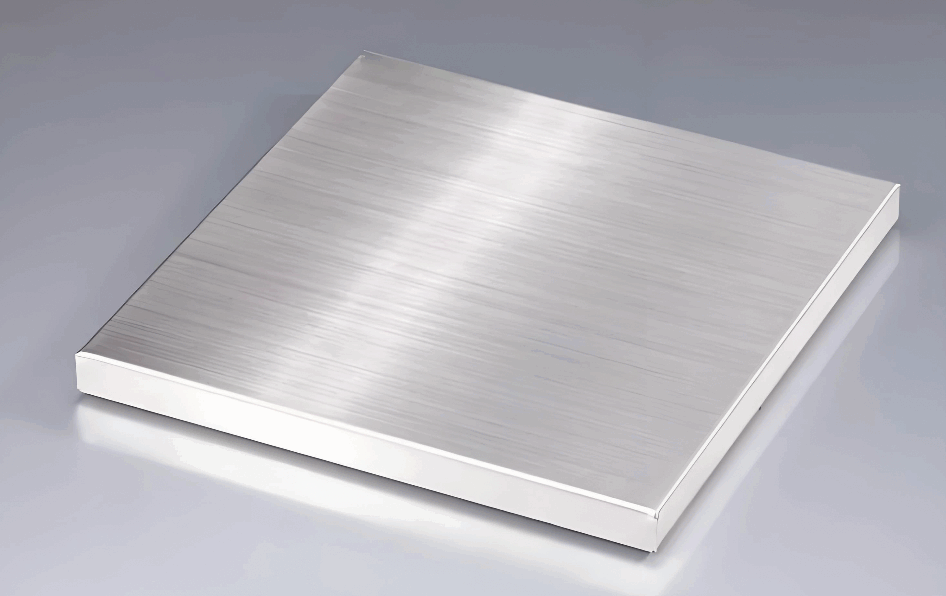
- Uitstekende poleerbaarheid: kan afgewerk word tot spieël-, geborselde of matte oppervlaktes vir argitektoniese en meubeltoepassings.
- Hoë herwinbaarheid: 'n lang dienslewe met behoorlike instandhouding ondersteun omgewingsduurbaarheid.

3. Prys van 304 vlekvrye staalplaat
Pryse word beïnvloed deur spesifikasies (dikte, breedte, lengte), oppervlakafwerking (spieël, geborsel, mat), bestelkwantiteit, handelsmerk en marktoestande.
Teen laat Maart 2026 is die jongste markkoerse:
- Koudgewalste 304 vlekvrye staalplaat: Ongeveer 13,900–13,950 RMB/ton
- Heetgewalste 304 vlekvrye staalplaat: Ongeveer 13,800 RMB per ton
Dit vertaal na ongeveer 13.8–13.95 RMB/kg (1.9–2.0 USD/kg), onderhewig aan wisselkoersfluktuasies.
Markpryse wissel met grondstofkoste (ferronikkkel, ferrochroom), maalproduksieskedules, afnemerbehoeftes en geopolitiese faktore. Kopers word aangeraai om kwotasies van 3–5 verskaffers te vergelyk. Klein bestellings (onder 'n paar ton) kos gewoonlik meer, terwyl groot bestellings (dosyne ton of meer) in aanmerking kom vir fabrieksgroothandelspryse.
4. Afgeleide grade van 304 vlekvrye staalplaat
304L vlekvrye staalplaat
Karakteriseer deur uiters lae koolstof (C ≤0,031 TP3T), verminder 304L die intergraan-korrosiegevoeligheid aansienlik ná las, wat die behoefte aan na-lasontspanning uitskakel. Dit word wyd gebruik vir swaar afdelingslasverbindings, chemiese toerusting en petroleum-pyplyne om korrosiesfaling te voorkom.
304H vlekvrye staalplaat
Met 'n hoër koolstofinhoud (0,04–0,101 TP3T) bied 304H groter hoë-temperatuursterkte en stabiliteit by 500–800 °C, ideaal vir hoë-temperatuurtoerusting, nie-magnetiese komponente en ketel-oorskietverhitters. Sy korrosiebestandheid is effens laer as dié van standaard 304 en 304L, wat dit ongeskik maak vir hoogs korrosiewe omgewings.

5. Toepassings van 304 vlekvrye staalplaat
Industriële sektor
Wyd gebruik in olie- en gaspypleidings, kragstasie-uitrusting, warmtewisselaars, ketels, chemiese bergingstanks, reaktors en vervoerpypleidings weens sy korrosiebestandheid, hittebestandheid en hoë sterkte. Dit word ook gebruik in presisie-elektroniese komponente en motoruitlaatstelsels. Gereelde skoonmaak en passivering word aanbeveel in harde industriële of chlorideryke omgewings.
Voedsel- en mediese sektor
In ooreenstemming met voedselhigiënenorme is 304 reukloos, maklik om skoon te maak en bakterieresistent, wat dit geskik maak vir voedselverwerkingsapparatuur (slagting, brouwerk, suiwel), voedselhouers, eetgerei en kombuisware. In mediese toepassings word dit gebruik vir toestelomhulsels, chirurgiese instrumente en sterilisasietoerusting. Voedselgraad 304 het strenger perke vir skadelike elemente en vereis gesertifiseerde toetsverslae.
Sektor vir argitektoniese dekorasie
Geag ter wille van sy estetika, duursaamheid, lae onderhoud en korrosiebestandheid, word 304 gebruik in gordelwande, dakbedekkings, deure, vensters, handrelings, hekke en dekoratiewe komponente. Dit kan afgewerk word in spieël-, geborselde of matte teksture vir moderne, klassieke of luukse argitektoniese style. Dit kom ook voor in stedelike beeldhouwerke en landskapfasiliteite vir kommersiële geboue, residensiële komplekse en munisipale projekte.
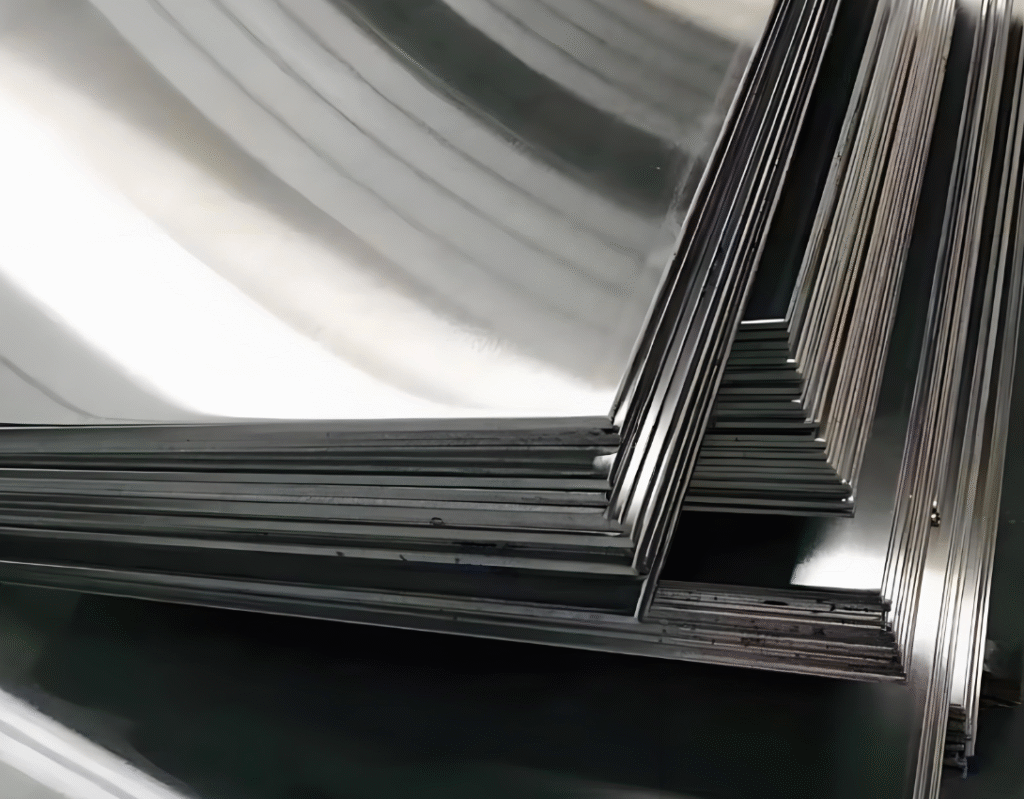
6. Graadvergelyking en keuse-gids
6.1 304 vs 316 vlekvrye staalplaat
Albei is austenitiese grade; die belangrikste verskille lê in samestelling en korrosiebestandheid:
- Samestelling: 316 bevat 2,0–3,0% molibdeen en effens hoër nikkel (8,0–12,0%).
- Korrosiebestandheid316 is baie superieur, veral teen putvorming en spleetkorrosie in chlooride-, seewater- en chemiese omgewings.
- Prys: 316 kos 30–50% meer as 304.
- ToepassingKies 304 vir algemene gebruik; kies 316 vir mariene, chemiese of hoë-chloriedomstandighede.
6.2 304 vs 430 vlekvrye staalplaat
- Magnetisme304 (geannealleer) is nie-magneties; 430 (ferrities) is magneties.
- Korrosiebestandheid304 is aansienlik meer korrosiebestand.
- Prys: 430 kos 20–30% minder.
- Toepassing430 is beperk tot droë, nie-korrosiewe binnenshuise dekorasie; 304 is geskik vir die meeste algemene omgewings.
6.3 Keurwenke
- Korrosie-omgewing: 304 vir algemene atmosfeer; 316 vir swaar korrosie; 430 vir droë dekorasie.
- Temperatuur: 304 vir −196 °C tot 600 °C; 304H vir 500–800 °C.
- Laswerk: 304L vir gelaste komponente sonder na-las-annealering.
- BegrotingGee 304 voorrang vir gebalanseerde prestasie en koste.
- Standaarde: Voldoet aan ASTM A240, GB/T 3280, of bedryfsspesifieke higiënevereistes.
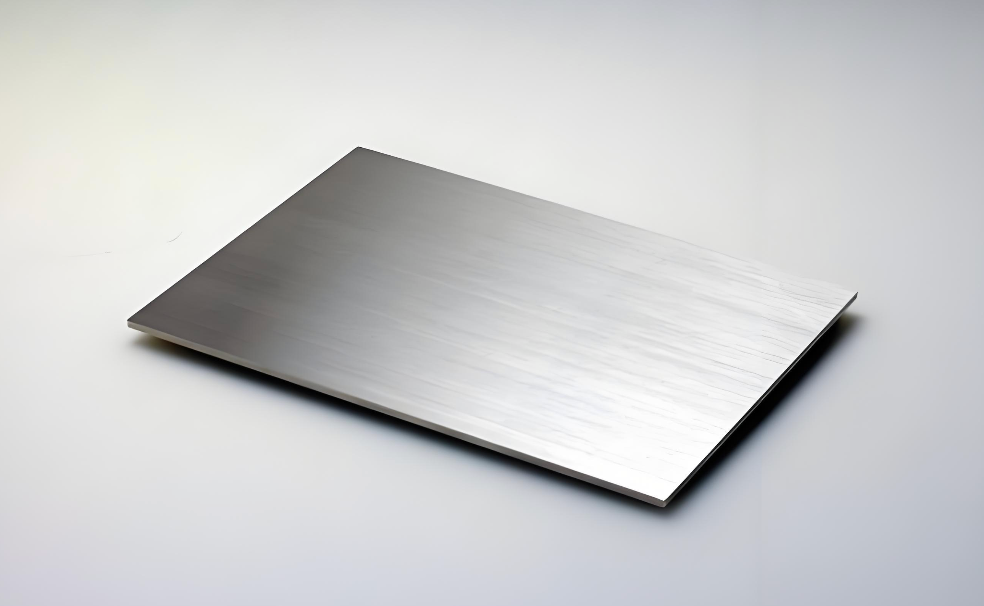
7. Aankoopgids vir 304 vlekvrye staalplaat
- Versoek Materiaaltoetsverslae (MTCs)Verifieer nakoming van standaarde soos ASTM A240 of GB/T 3280 om vervalste 304 te vermy (bv. graad 201 met min of geen nikkel nie).
- Inspekteer oppervlakkwaliteit:Kontroleer vir gladheid, geen skrape, deuk of roestkolle nie, met 'n uniforme kleur. 'n Magneettoets kan help: geanneerde 304 is nie-magneties; sterk magnetisme kan op 'n mindere gehalte materiaal dui. Chemiese toetse word aanbeveel vir kritieke toepassings.
- Kies betroubare verskaffers:Beter gesertifiseerde vervaardigers met fabrieke en goeie na-verkoopsdiens bo ongereguleerde tussengangers. Hersien reputasie of voer fabrieksouditte uit.
- Verduidelik vereistes:Spesifiseer dikte, breedte, lengte, oppervlakafwerking, hoeveelheid, afleweringstyd en gehalte-standaarde in 'n formele kontrak om geskille te voorkom.
- Pasop vir ongewoon lae prysePryse wat aansienlik onder die markgemiddelde lê, dui dikwels op ondermaatse chemie, oppervlakdefekte of onvoldoende dikte. Vermy korttermyn kostebesparings wat tot voortydige mislukking en hoër onderhoudskoste lei.
8. Gereelde vrae
Q1: Is 304 vlekvrye staalplaat magneties?
A: Geraffineerde 304 is nie-magneties weens sy stabiele austenitiese struktuur. Ligte magnetisme kan na koue bewerking (buig, stempel) verskyn, wat normaal is en nie die prestasie beïnvloed nie. Geraffinering kan oorblywende magnetisme verwyder.
Q2: Is 304 lasbaar? Vereis dit hittebehandeling na laswerk?
A: Ja, dit is maklik met TIG, MIG, boog en ander metodes te sweis. Standaard 304 vereis nie na-sweis hittebehandeling nie. Vir swaar afdelings of hoë korrosiebehoeftes word 304L verkies om intergraan-korrosie te voorkom.
Q3: Wat is die verskil tussen voedselgehalte en standaard 304?
A: Voedselgraad 304 stel strenger perke op lood, chroom, swawel en onreinhede en voldoen aan voedselkontakstandaarde soos GB 4806.9-2016. Standaard 304 mag nie aan die vereistes vir direkte voedselkontak voldoen nie. Vra altyd om voedselgraad-sertifisering.
Q4: Hoe om 304 te onderhou en die dienslewe te verleng?
- Vermy kontak met sterk sure/alkaliene; spoel en droog onmiddellik af indien dit in aanraking kom.
- Skoonmaak gereeld om stof, vuil en soutafsettings te verwyder.
- Isolaat van koolstofstaal om elektrochemiese korrosie te voorkom.
- Passiveer gesweisde areas om korrosiebestandheid te verbeter.
- Repareer krasse onmiddellik om plaaslike korrosie te voorkom.
- Moenie voortdurend bo 925°C gebruik nie.
Q5: Wat is die dienslewe van 304 vlekvrye staalplaat?
- Binnenshuise droë omgewings: 30–50 jaar
- Algemene buitelug atmosfeer: 20–30 jaar
- Industriële/mariene omgewings sonder beskerming: 5–10 jaar
- Met passivering en instandhouding: 10–20 jaar
Dunner, hoër kwaliteit plate hou gewoonlik langer.
Q6: Hoe verwyder jy roestvlekke op 304?
- Ligte oppervlakroes: Skoonmaak met vlekvrye staalreiniger of verdunde sitroensuur/oksalsuur, spoel dan af en droog.
- Ernstige roes: poleer of slyp, dan passiveer.
- Diep korrosie: Vervang die plaat om strukturele skade te voorkom.
9. Gevolgtrekking
Roestvrye staalplaat 304 is die wêreld se mees gebruikte graad van roestvrye staal, wat gebalanseerde korrosiebestandheid, meganiese prestasie en koste-doeltreffendheid bied in industriële, voedsel-, mediese en argitektoniese toepassings. Dit is die voorkeurkeuse vir kopers, ingenieurs en vervaardigers.
Vir aankoop- of verwerkingsriglyne wat op u omgewing, dikte en afwerkingsvereistes afgestem is, kontak asseblief Tonghui.
Verwysings
- GB/T 3280-2015 Koudgewalste vlekvrye staalplate en -strippe (Administrasie vir Standaardisering van China)
- ASTM A240/A240M Kroom- en kroom-nikkel-vlekvrye staalplaat, -vel en -strook vir drukvate en algemene toepassings (ASTM Internasionaal)
- EN 10088-2 Roestvrye staal – Deel 2: Tegniese afleweringsvoorwaardes vir koudgewalste roestvrye staalplate en -strippe (Europese Komitee vir Standaardisering)




 English
  Spanish
  Afrikaans