
Hot rolled staalplaat is one of the most widely used basic steel products in industrial production. With excellent ductility, processability and cost-effectiveness, it has become an indispensable core material for construction, automotive, machinery, pressure vessels and many other industries. Its core production process involves rolling steel billets at a high temperature above 930°C. Compared with cold rolled steel plate, it offers significant advantages such as low cost, high output and wide applicability. This article explains hot rolled steel plate in terms of its definition, specifications, types, applications and price.
1. What is Hot Rolled Steel Plate?
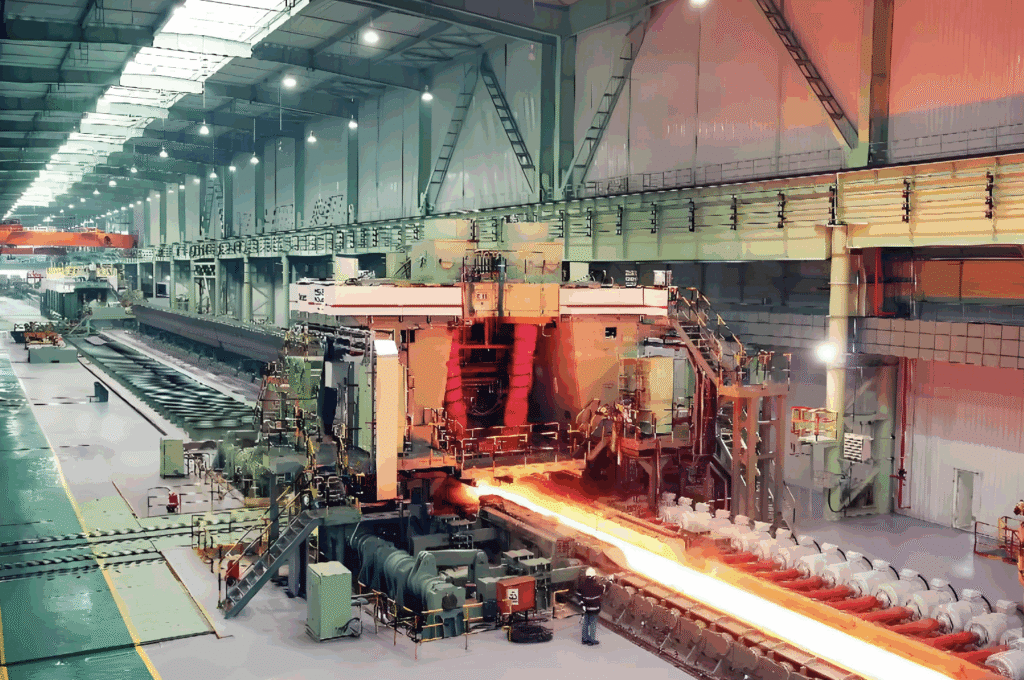
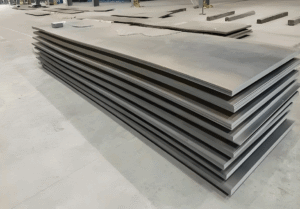
Hot rolled steel plate refers to steel plates with a width of ≥600mm and thickness of 0.35–200mm, as well as steel strips with a thickness of 1.2–25mm, produced from continuous cast slabs or primary rolled billets through heating in a walking-beam furnace, high-pressure water descaling, rough rolling, finish rolling and other processes. Commonly known as “hot plate” in the industry, it is a core steel product alongside cold rolled steel plate and hot rolled coils, and serves as the base material for cold rolled plate, hot-dip galvanized plate and other products, widely used across industrial sectors.
Its production flow can be summarized as heating – rolling – cooling – forming. After final rolling, the plate is cooled by laminar flow and coiled into mother coils, which can be cut into various sizes as required.
Kern-eienskappe
① Low hardness and good ductility, easy to form by bending, welding, stamping and other processes, ideal for structural components.
② Strong weldability with stable performance after welding, requiring no complex pretreatment, thus reducing processing costs.
③ Uniform oxide scale on the surface, a natural protective layer formed during high-temperature rolling, providing basic rust resistance; further anti-corrosion treatment can be done via pickling, painting, etc.
④ Lower cost than cold rolled steel plate due to simpler production and higher output, suitable for bulk procurement.
⑤ Density of approximately 7.85g/cm³, stable mechanical properties, with tensile and yield strengths meeting industrial standards.
Produksieproses
The production consists of four standardized stages:
① Raw material heating: Steel billets are heated to 930–1200°C to achieve sufficient plasticity.
② Descaling: High-pressure water removes surface oxide to ensure surface quality.
③ Roll forming: After rough rolling and trimming, the semi-finished product enters a finishing mill for precise control of thickness, width and flatness.
④ Cooling and forming: The finished plate is rapidly cooled, then coiled and cut to required dimensions.
For hot-dip galvanized hot rolled plate, an additional modified Sendzimir annealing process can be applied to improve corrosion resistance and surface quality for high-end applications.

2. Types and Standard Specifications of Hot Rolled Steel Plate
2.1 Common Types
- Ordinary carbon hot rolled steel plate: The most commonly used type, mainly Q235 and Q355 grades. Cost-effective and widely used in building frames, mechanical bases and supports.
- Alloy hot rolled steel plate: Alloy elements such as manganese, chromium and nickel are added to improve strength, hardness and wear resistance. Typical grades include 45# and 16Mn, used in machinery and automotive parts.
- Tread pattern hot rolled steel plate (anti-slip plate): With diamond or lentil patterns on the surface, used for anti-slip floors, platforms, ship decks and agricultural machinery.
- High-strength low-alloy (HSLA) hot rolled steel plate: Combines high strength and good ductility, lightweight and corrosion-resistant, suitable for bridges, high-rise buildings and pressure vessels.
- Hot rolled steel plate for boilers and pressure vessels: Features excellent high-temperature and high-pressure resistance, used in storage tanks, boilers and chemical reactors, requiring strict certification.
2.2 Standard Specification Parameters
- Thickness range: 0.35–200mm, commonly 0.8–10mm. Thin gauges (0.35–1.0mm) for home appliance parts; thick gauges (10–200mm) for heavy engineering.
- Width and length: Width 600–3800mm (common: 1000mm, 1250mm, 1500mm); length 1.2–12m (common: 2000mm, 6000mm). Custom sizes are available with a lead time of 3–7 days.
- Standaarde: International: ASTM A1011, ASTM A36; Chinese: GB/T 700, GB/T 3274.
- Theoretical weight calculation:W = 7.85 × thickness (mm) × length (m) × width (m)
3. Price of Hot Rolled Steel Plate
- Ordinary carbon hot rolled steel plate (Q235, 0.8–10mm): RMB 3300–3400/ton.
- Alloy hot rolled steel plate (16Mn): RMB 3500–3700/ton.
- Tread pattern hot rolled steel plate: RMB 3450–3600/ton.
- Boiler and pressure vessel plate: RMB 4000–4500/ton.
Prices vary with specifications, materials, order quantity and logistics. Orders of 100 tons or more usually enjoy a 5%–10% discount.
Faktore wat pryse beïnvloed
- Prices are mainly driven by costs of iron ore, coke and other raw materials.
- Market supply and demand directly affect price trends.
- Thick and special-grade products are more expensive.
- Large-quantity and long-term contracts reduce unit costs.
- Transportation distance and method affect the final landed price.

4. Differences Between Hot Rolled and Cold Rolled Steel Plate
Hot rolled and cold rolled steel plates differ significantly in production process, performance, cost and application scenarios.
In terms of production process, hot rolled steel plate is rolled at a high temperature above 930°C with a simple process and high output, while cold rolled steel plate is further processed at room temperature based on hot rolled coils through pickling, cold rolling, annealing and other complex procedures, resulting in higher production cost.
In terms of surface quality, hot rolled plate has natural oxide scale, a relatively rough surface and a dark gray appearance, whereas cold rolled plate has a smooth, oxide-free surface with a silvery-white color and high dimensional precision.
Regarding mechanical properties, hot rolled plate features low hardness, good ductility, easy forming and excellent weldability. Cold rolled plate has higher hardness and strength but relatively lower ductility, though it offers better precision.
In terms of cost and price, hot rolled plate is cheaper, usually 10%–20% lower than cold rolled plate, with a current market difference of about RMB 454 per ton.
In application scenarios, hot rolled plate is mainly used in construction, machinery, bridges and pressure vessels where surface quality is not critical. Cold rolled plate is preferred for home appliance shells, automotive interiors and precision components that require high surface finish and accuracy.
Selection Recommendations
- For general structural parts such as building frames and mechanical supports, hot rolled steel plate is more cost-effective.
- For appearance parts and precision components, choose cold rolled steel plate.
- Thin hot rolled plate (<1.0mm) cannot replace cold rolled plate due to insufficient surface quality.
- Hot rolled plate thicker than 16mm is not suitable for cold bending and may crack or deform.
- For a balance between cost and surface quality, pickled hot rolled steel plate is recommended.

5. Hot Rolled Steel Plate Applications
Construction Industry
Widely used in bridge structures, steel workshop frames, high-rise building skeletons, concrete reinforcement, anti-slip floors, fences and guardrails.
Automotive Industry
Used in body frames, wheels, longitudinal beams, chassis supports and other non-precision parts. HSLA grades support lightweight design to reduce fuel consumption.
Masjinerievervaardiging
Applied to mechanical bases, supports, casings, gears, bearing seats and other components for both light and heavy machinery.
Pressure Vessels and Boilers
Special grades are used in oil storage tanks, boiler bodies, chemical reactors and natural gas storage tanks, complying with strict professional standards.
Other Fields
Also used in agricultural machinery, shipbuilding, home appliance parts, container manufacturing and pipe supports.
6. Hot Rolled Steel Plate Purchasing Guide
Supplier Selection Criteria
- Qualified and compliant with GB, ASTM and other standards, able to provide test reports.
- Complete specifications and support for customization.
- Transparent pricing with no hidden charges.
- Stable delivery capacity: standard products in 1–3 days, customized products in 3–7 days.
- Reliable after-sales service and technical support.
- Good industry reputation.
Procurement Notes
- Confirm applicable standards for target markets such as EN or ASTM.
- Arrange reasonable logistics to control costs and avoid delays.
- Conduct third-party inspections before delivery.
- Confirm necessary import certifications such as CE for cross-border trade.
7. Common Misunderstandings and Tips
Common Misunderstandings
- Thin hot rolled plate cannot replace cold rolled plate due to poor surface finish and precision.
- Hot rolled plate thicker than 16mm is not suitable for cold bending and requires hot bending.
- Plates over 5mm thick are difficult to stamp and may crack, so thin hot rolled or cold rolled plate is preferred.
Practical Tips
- Use pickling, painting or galvanizing in corrosive environments to extend service life.
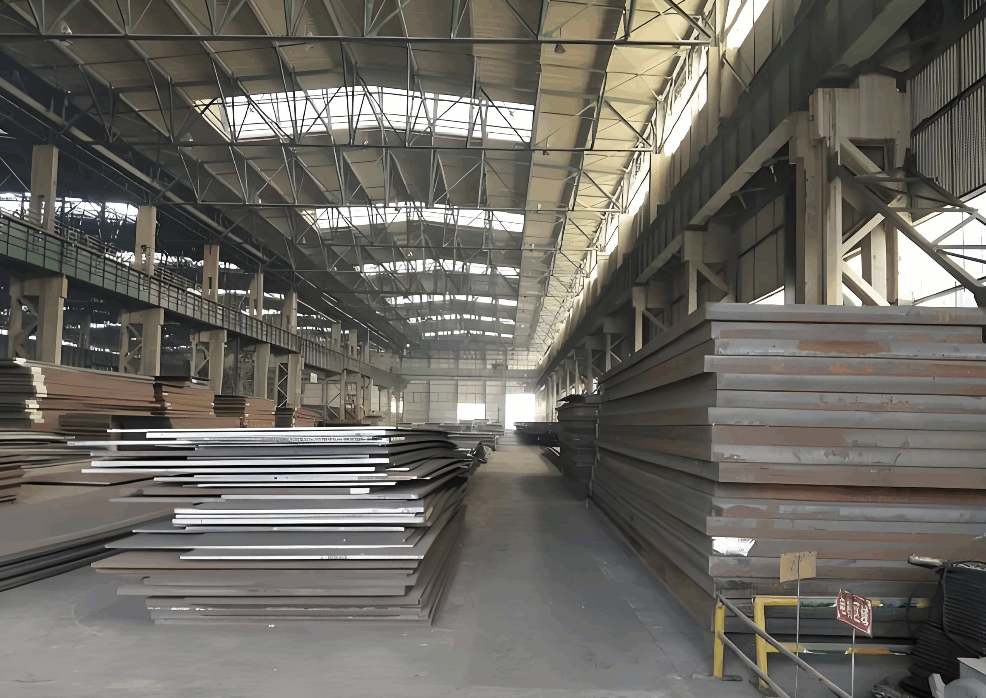
- Store in dry, ventilated and rainproof warehouses, stacked by specification to avoid deformation.
- Inspect surface quality, dimensional tolerance and material certificates upon delivery.
8. V&A
Q: What is the thickness range of hot rolled steel plate?
A: 0.35–200mm, commonly 0.8–10mm. Custom thicknesses are available.
Q: Is hot rolled steel plate cheaper than cold rolled?
A: Yes, usually 10%–20% lower, with a current difference of about RMB 454 per ton.
Q: Can hot rolled steel plate be used for automotive parts?
A: Yes, mainly for non-precision structural parts. HSLA grades support lightweight design.
Q: How to calculate theoretical weight?
A: W = 7.85 × thickness (mm) × length (m) × width (m).
Q: What are common standards?
A: International: ASTM A1011, ASTM A36; Chinese: GB/T 700, GB/T 3274.
9. Gevolgtrekking
Hot rolled steel plate is a low-cost, highly ductile and weldable basic engineering material suitable for most load-bearing structures. When selecting it, keep three key points in mind: clarify the intended use, verify dimensional tolerances and material certificates, and compare total costs including freight and processing loss rather than just the price per ton.
Verwysings
- GB/T 709-1988, GB/T 700-2006, GB/T 3274-2017
- ASTM A1011/A1011M, ASTM A36/A36M


 English
  Spanish
  Afrikaans