
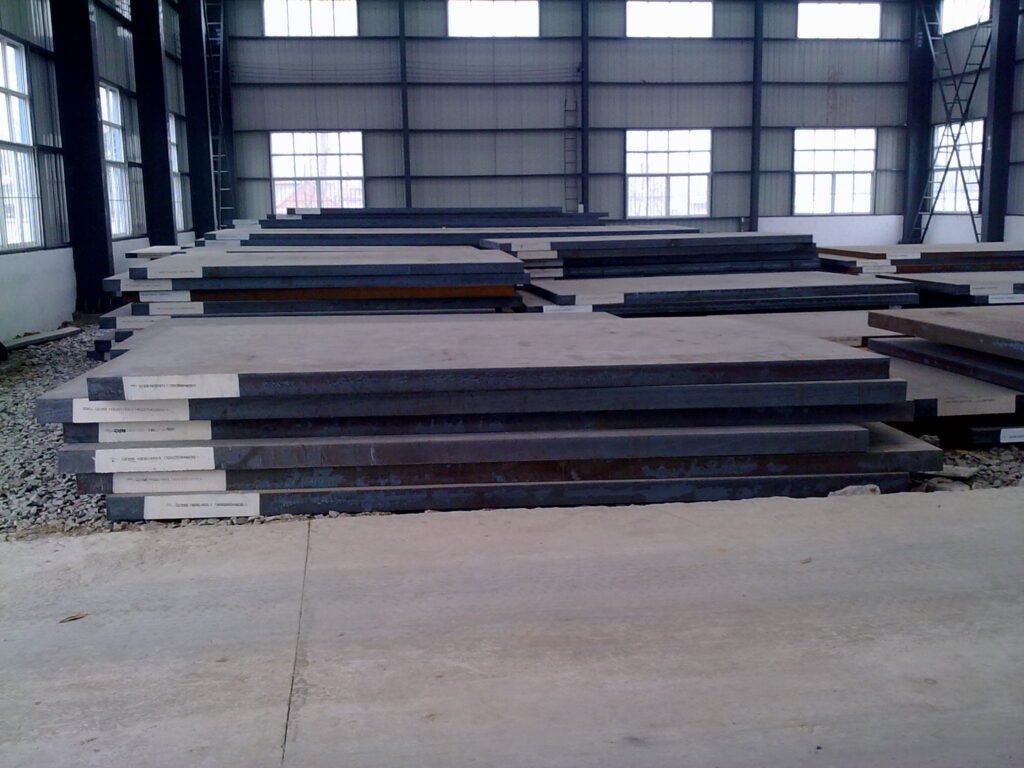
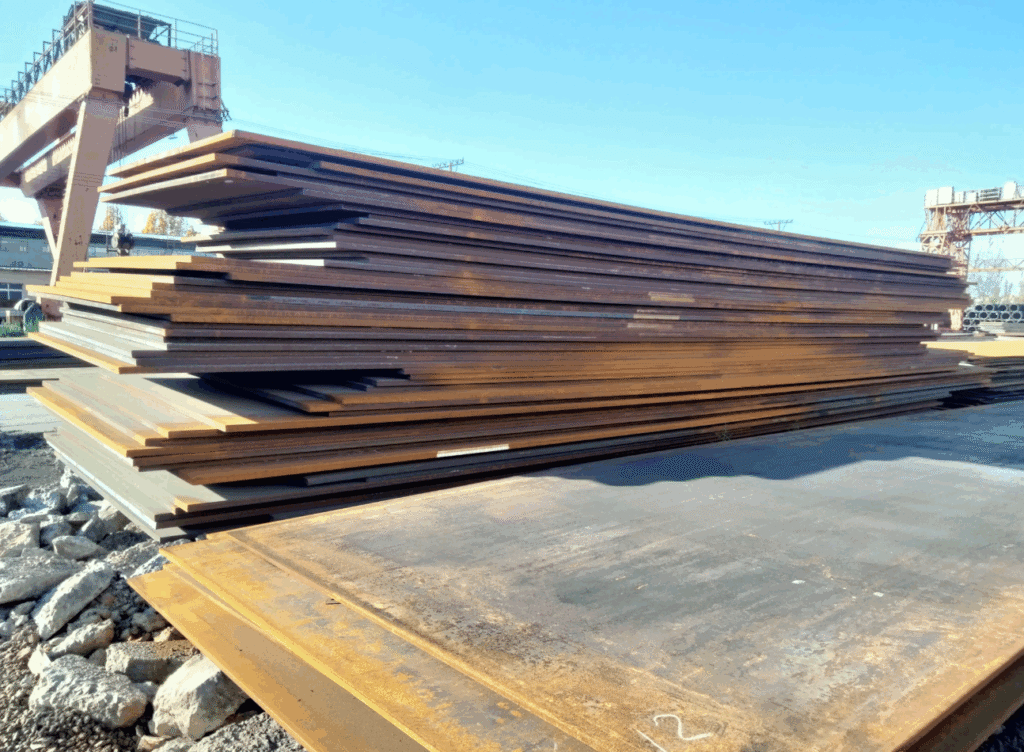
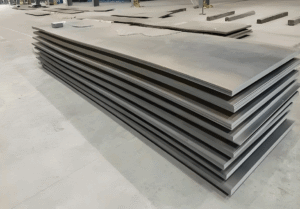
Difícil Chapa de Acero Se refiere a chapas de acero industriales fabricadas mediante procesos especiales de tratamiento térmico que se caracterizan por su elevada dureza, su resistencia superior al desgaste y su gran resistencia a los impactos. A diferencia de las chapas de acero civiles comunes, ofrecen una elevada resistencia a la tracción y a la deformación, lo que las hace adecuadas para condiciones de trabajo industriales de alta exigencia, con gran abrasión y fuertes impactos. Ampliamente utilizadas en la minería, la maquinaria de construcción, la protección militar y el transporte pesado, las chapas de acero endurecido actúan como sustratos principales para piezas vulnerables al desgaste y estructuras portantes, resolviendo de manera eficaz los inconvenientes habituales de las chapas de acero normales, como el rápido desgaste, la fácil deformación y la corta vida útil.
En comparación con las chapas de acero al carbono comunes, las chapas de acero duro se someten a tratamientos refinados de temple y revenido que mejoran considerablemente su estabilidad estructural. Pueden prolongar la vida útil de los equipos con los que se combinan entre 3 y 5 veces, lo que reduce significativamente la frecuencia de mantenimiento de los equipos, las pérdidas por paradas de producción y los costes de sustitución a largo plazo. Como material fundamental para que la industria pesada moderna reduzca costes y potencie la estabilidad operativa, este artículo analiza de forma exhaustiva las diferencias de clasificación, los parámetros de rendimiento, los escenarios de aplicación, los consejos de selección y los aspectos esenciales para la adquisición de chapas de acero endurecido.

1. Diferencias fundamentales entre las chapas de acero duro y las chapas de acero dulce corriente
Muchos compradores industriales confunden las chapas de acero duro con las chapas de acero dulce (chapas de acero con bajo contenido en carbono). Ambas se diferencian fundamentalmente en los procesos de fabricación del material, las propiedades físicas, las características de mecanizado y los ámbitos de aplicación, y una distinción clara es la base para una selección de materiales adecuada y práctica.
En cuanto a sus prestaciones básicas, las chapas de acero dulce se caracterizan por su baja dureza, alta ductilidad y gran conformabilidad, además de presentar pocas dificultades de soldadura y corte. Sin embargo, su resistencia al desgaste, a los impactos y a la deformación es escasa, lo que limita su uso a aplicaciones a temperatura normal y con cargas ligeras, sin abrasión intensa, como las estructuras de acero convencionales y las carcasas de equipos de uso ligero. Por el contrario, las chapas de acero duro se someten a tratamientos de templado, endurecimiento y modificación de la aleación para alcanzar una dureza Brinell considerablemente elevada y estructuras internas densas y uniformes. Ofrecen una resistencia excepcional a la abrasión, al impacto y a la extrusión, y son capaces de funcionar a largo plazo bajo cargas pesadas, fricción continua e impactos violentos.
Desde el punto de vista del mecanizado y los costes totales de mantenimiento, las chapas de acero dulce tienen un precio de compra inicial más bajo, pero ofrecen una escasa adaptabilidad a condiciones de trabajo adversas, lo que provoca un desgaste rápido y sustituciones frecuentes que elevan los gastos generales a largo plazo. Las chapas de acero duro requieren una inversión inicial mayor, pero ofrecen una vida útil mucho más larga, un funcionamiento más estable de los equipos y un mantenimiento mínimo, lo que las hace mucho más rentables para aplicaciones industriales pesadas. Por otra parte, las chapas de acero duro exigen una mayor precisión durante la soldadura y el plegado, lo que requiere procedimientos profesionales para evitar grietas y deformaciones en materiales de alta dureza.
2. Tipos de chapas de acero duro
Placas de acero duro templado y revenido (QT)
Fabricadas mediante un doble tratamiento térmico que consiste en un temple seguido de un revenido, estas placas presentan estructuras metalográficas internas uniformes que combinan una elevada dureza y una ductilidad óptima con una excelente resistencia al impacto. Al ser el tipo más utilizado en todos los sectores industriales, son adecuadas para casi todas las condiciones de trabajo con cargas pesadas y alto desgaste.
Placas de acero duro HSLA (alta resistencia y baja aleación)
Se añaden elementos de aleación menores para optimizar el rendimiento del material sin necesidad de complejos procedimientos de temple para alcanzar una alta resistencia. Destacan por su menor peso y su mayor ductilidad, lo que los hace ideales para aplicaciones que requieren tanto estructuras ligeras como una alta resistencia mecánica.
Placas de acero duro con alto contenido en carbono
Su elevado contenido en carbono proporciona una dureza extrema y una resistencia al desgaste excepcional, a cambio de una menor ductilidad y una tolerancia limitada a los impactos. Solo son adecuados para condiciones de trabajo estáticas con fricción pura y sin cargas de impacto intensas.
3. Calidades habituales y parámetros técnicos de las chapas de acero duro
Los mercados industriales mundiales utilizan principalmente tres series principales de chapas de acero duro: el grado AR, la serie Hardox y el grado NM nacional, todas ellas normalizadas con parámetros claramente definidos y escenarios de aplicación específicos. A continuación se enumeran las especificaciones clave:
- AR400 / Chapa de acero duro NM400: La dureza Brinell oscila entre 360 HB y 440 HB, el límite elástico es ≥ 800 MPa y la resistencia a la tracción es ≥ 1000 MPa. Disponible en una amplia gama de espesores, con una combinación equilibrada de ductilidad y resistencia al desgaste, esta chapa universal resistente al desgaste es adecuada para entornos con abrasión moderada y cumple con la norma internacional EN 10204-3.1.
- AR500 / Chapa de acero duro NM500: La dureza Brinell oscila entre 460 HB y 530 HB, lo que le confiere una resistencia al desgaste superior a la del 30% y al AR400, además de una mayor resistencia a la tracción y estabilidad estructural. Se utiliza como material principal para la maquinaria minera y pesada sometida a abrasión severa e impactos leves.
- Serie Hardox: Chapas de acero duro importadas de primera calidad, entre las que se incluyen Hardox 400, Hardox 500 y Hardox 550. Fabricadas con acero de alta pureza, mantienen una dureza uniforme en todo el espesor de la chapa y conservan una tenacidad al impacto estable a temperaturas de hasta -40 °C. Su resistencia superior a las grietas y a la corrosión las distingue de las placas nacionales convencionales destinadas a maquinaria pesada de alta gama, equipos de precisión y protección militar.
- Placas de acero duro de grado balístico: Chapas de acero especial de dureza ultraalta, con elevada resistencia a la tracción y a la penetración balística. Fabricadas según estrictas especificaciones a medida, se destinan exclusivamente a equipos de protección y material militar.
4. Características principales y ventajas de aplicación de las chapas de acero duro
4.1 Propiedades físicas fundamentales
Las principales ventajas de las placas de acero duro son su extraordinaria resistencia al desgaste, su gran resistencia a los impactos y su integridad estructural estable. El tratamiento térmico profesional garantiza una dureza superficial uniforme capaz de soportar la abrasión a largo plazo provocada por la acción de la arena y las piedras, la erosión de los materiales y la extrusión mecánica. Las densas estructuras internas martensíticas evitan el agrietamiento y la deformación bajo cargas de impacto intensas, superando a las placas de acero comunes en cuanto a estabilidad estructural. Las placas de acero duro de primera calidad mantienen un rendimiento mecánico constante tanto a temperaturas extremadamente altas como bajas, adaptándose a entornos exteriores e industriales complejos.
4.2 Resumen de la maquinabilidad
La mayoría de las chapas de acero duro convencionales admiten procesos controlables de soldadura, corte y plegado. Los grados estándar AR, Hardox y NM pueden procesarse mediante corte con soplete, corte por plasma y soldadura convencional para satisfacer las demandas de fabricación a medida, incluida la fabricación de componentes para equipos, el taladrado de chapas y el conformado por plegado. Cabe señalar que los grados de dureza ultraalta (por encima de 550 HB) presentan una ductilidad limitada; durante el mecanizado es necesario controlar con precisión el radio de curvatura y la temperatura de soldadura para evitar la aparición de grietas.
5. Casos de aplicación de las chapas de acero duro
Gracias a su resistencia integrada al desgaste, a los impactos y a su elevada resistencia a la tracción, las chapas de acero duro se utilizan como sustratos principales para piezas susceptibles de desgaste en diversos sectores de la industria pesada:
5.1 Minería y manipulación de materiales a granel
La minería constituye el principal campo de aplicación de las placas de acero duro, ampliamente utilizadas como revestimientos de silos, deflectores antidesgaste para tolvas, rascadores de cintas transportadoras, revestimientos de trituradoras y accesorios para equipos de cribado de mineral. La abrasión continua provocada por el mineral y la grava desgasta rápidamente los componentes de acero ordinario, mientras que las placas de acero endurecido prolongan considerablemente la vida útil de los equipos, reducen los paros no programados en la explotación minera y garantizan una producción ininterrumpida.
5.2 Maquinaria de la construcción e infraestructuras
Entre sus aplicaciones se incluyen las cucharas de las excavadoras, los revestimientos antidesgaste de las cargadoras, los filos de corte de las excavadoras de empuje, las bases de soporte de maquinaria pesada y los componentes antidesgaste de las plantas mezcladoras de asfalto. La maquinaria de construcción e infraestructuras está sometida a constantes impactos de rocas y a la fricción de los materiales; las placas de acero duro mitigan la abrasión de los componentes y mejoran la estabilidad general del equipo y su vida útil.
5.3 Sector del transporte pesado y la automoción
Se utilizan principalmente en componentes del chasis que soportan carga de camiones pesados, placas protectoras para vehículos de construcción y piezas resistentes al desgaste del transporte ferroviario. Su elevada resistencia a la tracción y a la deformación mejoran la integridad estructural de los equipos de transporte pesado, resistiendo las vibraciones, la fricción y los daños por impacto durante el funcionamiento, lo que garantiza un rendimiento más seguro y estable.
5.4 Sectores militar y de seguridad
Las chapas de acero especial de alta calidad se utilizan para fabricar láminas balísticas, blindajes protectores para equipos y carcasas a prueba de explosiones. Su dureza ultraalta y su resistencia a los impactos y a la penetración balística cumplen con las estrictas normas de seguridad para la defensa militar y la prevención de explosiones en el ámbito industrial.
6. Guía para la selección de chapas de acero duro
A la hora de seleccionar chapas de acero duro, hay que tener en cuenta tres aspectos fundamentales: las condiciones de trabajo, los requisitos de rendimiento y las exigencias de mecanizado, con el fin de evitar un rendimiento insuficiente o un gasto innecesario. A continuación se detallan las pautas de selección:
- Selecciona los grados en función de la intensidad de la abrasión. Elige AR400 / NM500 para entornos con abrasión ligera y sin impactos fuertes, a fin de obtener una relación calidad-precio óptima. Opte por AR500 / NM500 en caso de abrasión severa y desgaste frecuente por el material. Priorice la serie Hardox premium para equipos de precisión de alta gama, entornos adversos a bajas temperaturas y aplicaciones que requieran un alto nivel de protección.
- Determina el espesor en función de la carga y la intensidad del impacto. Las chapas estándar de 6 mm a 20 mm se adaptan a los componentes de revestimiento convencionales, mientras que para estructuras sometidas a cargas pesadas y condiciones de alto impacto se requieren chapas más gruesas, de 20 mm a 50 mm. Adapta el espesor con precisión a las normas de carga del equipo para equilibrar la resistencia estructural y el control presupuestario.
- Adapta los tipos de chapas a los requisitos de posprocesamiento. Si es necesario realizar con frecuencia operaciones de soldadura, plegado y mecanizado profundo, elige chapas de acero duro templado y revenido con ductilidad equilibrada para evitar el agrietamiento de los grados de dureza ultraalta. Las chapas de acero duro con alto contenido en carbono ofrecen la máxima resistencia al desgaste para instalaciones estáticas que no requieran mecanizado secundario.
- Comprueba las normas de certificación de calidad. En las compras industriales a granel, da prioridad a los productos que cumplan con la norma EN 10204 y con las normas nacionales GB/T sobre acero resistente al desgaste, e inspecciona los informes de ensayos de dureza y los datos de propiedades mecánicas para garantizar la compatibilidad con las condiciones de trabajo y el cumplimiento de los requisitos técnicos.
7. Guía para la adquisición de chapas de acero duro
- Aclare con antelación todos los requisitos relativos a los parámetros, incluidos el grado de dureza, el espesor, las dimensiones, las especificaciones de mecanizado y las normas relativas a las condiciones de trabajo, para evitar pérdidas derivadas de una discrepancia en los parámetros del producto.
- Comprueba los requisitos de los proveedores. Selecciona fabricantes a gran escala que cuenten con todas las acreditaciones de exportación necesarias y confirma que dispongan de todos los informes de ensayo de los productos y los certificados de conformidad.
- Establezca plazos de entrega razonables. Las placas de tamaño estándar están disponibles en stock, mientras que las láminas personalizadas sometidas a un proceso de transformación profundo requieren un plazo de entrega previo para su producción y logística.
- Negociar servicios personalizados y tarifas diferenciadas para pedidos al por mayor con el fin de reducir los costes generales de adquisición.
Preguntas frecuentes (FAQ)
P1: ¿Cuál es el tipo de chapa de acero duro más resistente que hay en el mercado?
Para aplicaciones industriales generales que requieren resistencia al desgaste, Hardox 600 y AR 600 son chapas de acero de dureza ultraalta con una dureza Brinell que oscila entre 580 HB y 640 HB. Las placas de acero endurecido especiales de grado balístico para protección militar presentan una dureza aún mayor para resistir impactos severos y la penetración balística en situaciones de protección especializadas.
Pregunta 2: ¿Se pueden soldar y cortar las chapas de acero duro?
Las calidades estándar AR400, AR500 y NM, así como las chapas Hardox convencionales, admiten el corte con soplete, el corte por plasma y la soldadura habitual para la mayoría de los trabajos de fabricación industrial a medida. Las chapas de dureza ultraalta (por encima de 550 HB) requieren procedimientos de mecanizado especializados para evitar la aparición de grietas, debido a la mayor dificultad de su procesamiento.
Pregunta 3: ¿Las chapas de acero duro son lo mismo que las chapas de acero resistentes al desgaste?
En términos generales, las chapas de acero duro pertenecen a la categoría principal de las chapas de acero resistentes al desgaste, y ambos términos se utilizan a menudo de forma intercambiable en la práctica industrial. En sentido estricto, las chapas de acero resistentes al desgaste abarcan una gama más amplia de materiales, mientras que las chapas de acero duro se refieren específicamente a chapas resistentes al desgaste sometidas a tratamiento térmico, de alta dureza y alta resistencia, que constituyen el tipo más habitual de acero resistente al desgaste para uso industrial.
Conclusión
Como material de acero especializado de vital importancia para la industria pesada, las chapas de acero duro resuelven los problemas que desde hace tiempo plantean las chapas de acero ordinarias en entornos exigentes y de uso intensivo —como la abrasión rápida, la corta vida útil y los elevados costes globales—, gracias a sus ventajas integradas de alta dureza, resistencia superior al desgaste, gran resistencia al impacto y rendimiento estructural estable. Los diferentes tipos y calidades de chapas de acero duro presentan límites de aplicación específicos, y las series AR, NM y Hardox cubren íntegramente las necesidades de la industria en general, la maquinaria pesada de alta gama y la protección militar.
Durante la selección y adquisición de materiales de ingeniería, hay que elegir con precisión los grados y las especificaciones de las chapas en función de la intensidad de la abrasión, los requisitos de carga y las necesidades de mecanizado. Si a ello se le suma un mantenimiento anticorrosivo periódico y un control del desgaste, las chapas de acero duro pueden alcanzar todo su potencial de rendimiento, reduciendo de forma efectiva los costes de mantenimiento de los equipos y contribuyendo a una producción industrial estable y continua en todos los proyectos de alta exigencia.
Materiales de referencia
[1] EN 10204-3.1 Productos metálicos. Tipos de documentos de inspección (Especificaciones para ensayos de conformidad de chapas de acero resistentes al desgaste)
[2] Norma nacional china GB/T 32237-2015: Requisitos técnicos y parámetros de rendimiento de las chapas de acero resistentes al desgaste
[3] Manual técnico oficial de las chapas de acero resistentes al desgaste Hardox (parámetros de dureza, ductilidad y comportamiento a bajas temperaturas)




 English
  Spanish
  Afrikaans