
El cromado amarillo del zinc es uno de los procesos de tratamiento superficial del acero más utilizados en la industria. Con la doble ventaja de la protección del zinc de sacrificio y el blindaje mejorado de la película de cromato, ofrece una combinación equilibrada de resistencia a la corrosión, estética y rentabilidad, lo que lo convierte en el acabado superficial preferido para componentes y elementos de fijación en los sectores de la automoción, la minería, la industria en general y otros. Este artículo ofrece un análisis detallado de la definición, normas, propiedades, aplicaciones, conformidad y consideraciones prácticas del acero chapado con cromato amarillo de zinc.
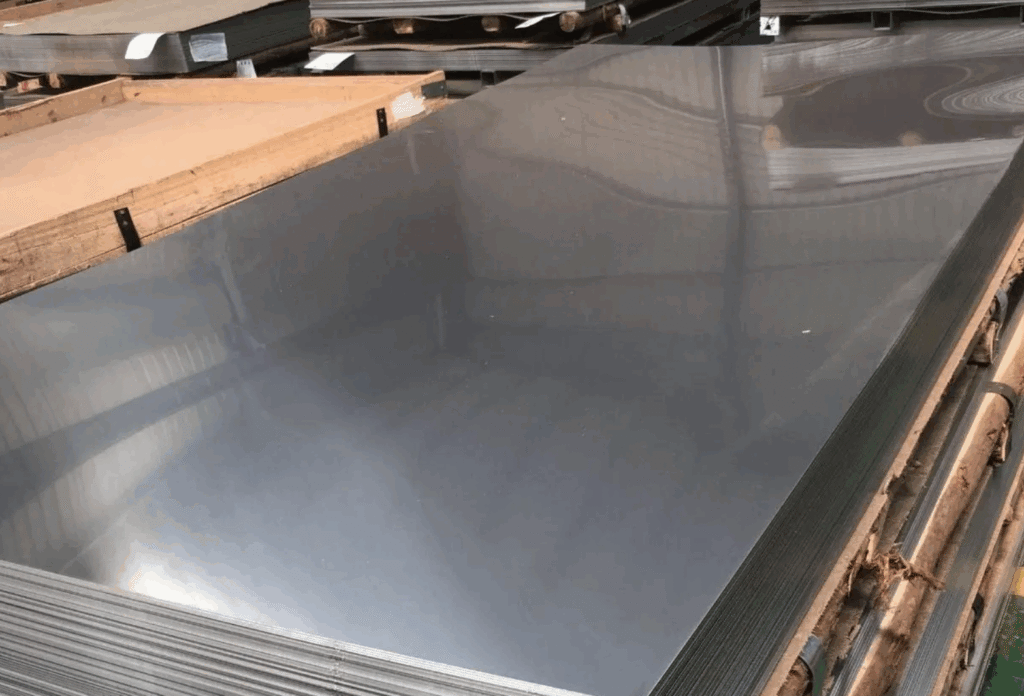
1. ¿Qué es el acero cromado amarillo?
El acero cromado amarillo con zinc es un producto de acero tratado en superficie que presenta una doble capa protectora formada sobre el sustrato de acero mediante galvanoplastia. Consiste en una capa inferior primaria de zinc y una capa exterior de conversión de cromato amarillo, comúnmente conocida en la industria como acero pasivado amarillo de zinc.
La capa inferior de zinc actúa como ánodo de sacrificio. Cuando se daña la superficie de acero, la capa de zinc se corroe preferentemente, evitando la oxidación y la herrumbre del acero base. La capa exterior de conversión al cromato proporciona tanto una mayor protección como un valor decorativo. Mejora aún más la resistencia general a la corrosión, retrasa la formación de óxido blanco y óxido rojo, y produce un aspecto uniforme iridiscente amarillo o dorado con buena visibilidad y estética, adecuado para aplicaciones industriales con requisitos visuales moderados.
En comparación con el acero galvanizado convencional, la principal ventaja del acero chapado con cromato amarillo de zinc es su protección de doble capa. Gracias al efecto sinérgico de la capa de zinc y la película de cromato, su resistencia a la corrosión es de 3 a 5 veces superior a la del acero galvanizado ordinario. Además, su aspecto amarillo brillante ofrece una gran visibilidad en entornos industriales, lo que facilita la inspección y el mantenimiento de los equipos.
Principio de proceso
El flujo de producción completo del acero cromado amarillo de zinc consta de cuatro etapas principales:
Pretratamiento → Galvanoplastia de zinc → Conversión de cromatos → Secado y curado
Cada paso afecta directamente a la calidad del producto final, como se explica a continuación:
- Pretratamiento del acero:Elimina aceite, grasa, óxido, cascarilla y otros contaminantes de la superficie de acero mediante limpieza alcalina, decapado ácido o chorro de arena. Una superficie limpia y uniforme garantiza una fuerte adherencia del posterior revestimiento de zinc y evita el desconchado o la mala adherencia causados por las impurezas de la superficie.
- Galvanoplastia de zincEl acero pretratado se sumerge en un electrolito a base de zinc. Bajo la acción electrolítica, los iones de zinc se depositan uniformemente en la superficie del acero para formar un denso revestimiento de zinc. El espesor del revestimiento puede ajustarse en función de los requisitos de la aplicación, y suele oscilar entre 5 y 25 μm.
- Tratamiento de conversión de cromatos:El acero galvanizado se sumerge en una solución de cromato, formándose una fina capa amarilla de conversión de cromato mediante reacción química. Este paso determina el aspecto amarillo característico y la mejora de la resistencia a la corrosión. El grosor y la densidad de la capa de conversión influyen directamente en la resistencia a la corrosión y la consistencia visual.
- Secado y curadoLas piezas tratadas con cromato se secan para eliminar la humedad de la superficie, mejorar la unión entre la película de cromato y la capa de zinc, evitar el desprendimiento del revestimiento durante el servicio y mejorar aún más el rendimiento general de protección.
Nota: Durante la conversión del cromato, la concentración de la solución, la temperatura y el tiempo de reacción deben controlarse estrictamente para evitar un revestimiento desigual, la variación del color o la reducción de la resistencia a la corrosión. Además, los baños de revestimiento, los lodos y los residuos del tratamiento de aguas residuales generados durante la galvanoplastia se clasifican como residuos peligrosos y deben eliminarse de acuerdo con los requisitos normativos.

2. Parámetros de rendimiento del acero cromado amarillo con zinc
Los parámetros de rendimiento definen la idoneidad del acero chapado con cromato amarillo de zinc para entornos específicos. Entre los indicadores clave se incluyen la resistencia a la corrosión, el espesor del revestimiento, la adherencia y otros, alineados con las normas industriales y las aplicaciones del mundo real:
- Resistencia a la Corrosión:Medido mediante ensayo de niebla salina neutra. Rendimiento típico:
- Recubrimiento amarillo de cromo trivalente y zinc (Tipo VI): 72-240 horas
- Recubrimiento amarillo de cromo hexavalente y zinc (Tipo II): 240-720 horasEl espesor del revestimiento puede aumentarse para entornos más agresivos, y los tratamientos de sellado adicionales pueden prolongar aún más la resistencia a la corrosión.
- Espesor del revestimiento:Espesor total del revestimiento (zinc + película de cromato): 5-25 μm.La capa de zinc representa 80%-90% del espesor total, mientras que la película de cromato es de solo 0,5-2 μm.
- Industria en general: 5-10 μm
- Corrosión media (automoción, minería): 10-15 μm
- Entornos de corrosión severa: 15-25 μm
- Otras propiedades clave
- Buena conductividad eléctrica, adecuada para componentes conductores como cajas electrónicas y conectores eléctricos.
- Excelente adherencia que cumple los requisitos de choque térmico; no se pela ni arruga tras ciclos entre -40 °C y 120 °C.
- Alta calidad estética con un color amarillo iridiscente o dorado uniforme, sin decoloración perceptible, agujeros de alfiler ni arañazos.
- Control de la fragilización por hidrógeno: Para aceros de alta resistencia a la tracción ≥ 1000 MPa, puede producirse fragilización por hidrógeno durante la galvanoplastia. Para reducir el riesgo de fragilización por hidrógeno y evitar la fractura en servicio, es necesario un horneado posterior a 180-220 °C durante 2-4 horas. Se trata de un punto de control crítico para las fijaciones de alta resistencia.
- Inspección visual:Los productos se consideran aceptables si presentan un color amarillo uniforme, sin diferencias evidentes de color, agujeros, arañazos o descascarillado del revestimiento.

3. Escenarios de aplicación
- Industria del automóvil:Se utiliza como tratamiento superficial primario para tornillería de automoción (pernos, tuercas), componentes del chasis y periféricos del motor. Proporciona resistencia a la corrosión, estética y conductividad eléctrica para soportar condiciones de servicio húmedas y con vibraciones. Los vehículos de exportación suelen exigir el cumplimiento de la directiva RoHS.
- Industria mineraLos equipos de minería funcionan en entornos húmedos, polvorientos y corrosivos. El acero cromado amarillo zincado se utiliza ampliamente en fijaciones, conectores y cajas de instrumentos de equipos mineros. Su color amarillo de alta visibilidad simplifica el mantenimiento, mientras que su gran resistencia a la corrosión prolonga la vida útil y reduce los costes de mantenimiento.
- Industria general:Se aplica a maquinaria industrial, conectores mecánicos, componentes de máquinas herramienta y otras piezas en las que se requiere rentabilidad y una protección básica contra la corrosión. Consigue un equilibrio óptimo entre rendimiento y coste, por lo que es el ámbito de aplicación más utilizado.
4. 4. Preguntas frecuentes
P: ¿Qué es el acero cromado amarillo cinc?
R: Es un acero tratado superficialmente con una doble capa protectora (recubrimiento de zinc + película de conversión de cromato amarillo) aplicada mediante galvanoplastia. Mejora la resistencia a la corrosión al tiempo que ofrece ventajas estéticas y económicas, y se utiliza ampliamente en la industria.
P: ¿Cumple la directiva RoHS el acero cromado amarillo?
R: La conformidad depende del tipo de cromo. El recubrimiento amarillo de zinc con cromo trivalente (Tipo VI) cumple las directivas RoHS, mientras que el recubrimiento con cromo hexavalente (Tipo II) no. Los productos exportados a Europa, Norteamérica y otras regiones deben utilizar sistemas de cromo trivalente con niveles verificados de sustancias restringidas.
P: ¿Cuál es la resistencia a la niebla salina del acero chapado con cromato amarillo de zinc?
R: Los revestimientos de cromo trivalente suelen alcanzar 72-240 horas, y los de cromo hexavalente, 240-720 horas. El rendimiento puede mejorarse aumentando el espesor del revestimiento y optimizando los parámetros del proceso.
P: ¿Qué normas se aplican al acero cromado amarillo cincado?
R: Las principales normas son:
- ASTM B633 (US), que cubre el Tipo II (cromo hexavalente) y el Tipo VI (cromo trivalente).
- DIN 50962:2020 (alemán), que especifica los revestimientos de conversión de cromato sobre zinc y aleaciones de zincSon referencias primarias para la compra, producción e inspección.
P: ¿Qué industrias utilizan acero cromado amarillo con zinc?
R: Es adecuado para los sectores de la automoción, la minería, la industria en general, la ferretería, la electrónica y la instrumentación, especialmente para elementos de fijación, componentes y cajas en entornos húmedos y corrosivos.
P: ¿Cuál es la diferencia entre los revestimientos de cromo amarillo-cinc hexavalente y trivalente?
R: Las principales diferencias son la conformidad medioambiental y la toxicidad. Los revestimientos de cromo hexavalente ofrecen mayor resistencia a la corrosión, pero son tóxicos y no cumplen la directiva RoHS, por lo que son adecuados para aplicaciones nacionales no destinadas a la exportación. Los revestimientos de cromo trivalente son de baja toxicidad y cumplen la directiva RoHS, ideales para los mercados de exportación, con una resistencia a la corrosión ligeramente inferior.
5. Conclusión
Como solución de tratamiento de superficies altamente rentable para aplicaciones industriales, el acero cromado con zinc amarillo ofrece una excelente protección de doble capa combinada con un precio económico. Mejora significativamente la resistencia a la corrosión del acero mediante el efecto sinérgico de las capas de zinc y cromato, al tiempo que mantiene una buena estética y un precio asequible, lo que lo hace adecuado para su uso en múltiples industrias.
Referencias
- ASTM B633-2021 Especificación estándar para recubrimientos de zinc (inmersión en caliente, galvanoplastia y recubrimiento mecánico) en herrajes de hierro y acero.. Publicada por ASTM International, esta norma especifica los requisitos, la clasificación y los métodos de ensayo para revestimientos de zinc y pasivación de cromato. Es la norma de galvanización más ampliamente adoptada a nivel mundial, e incluye clasificaciones y parámetros clave para el acero galvanizado con cromato amarillo de Tipo II (cromo hexavalente) y Tipo VI (cromo trivalente).
- DIN 50962:2020 Recubrimientos de zinc y aleaciones de zinc - Recubrimientos de conversión de cromatos. Publicada por el Deutsches Institut für Normung, esta norma regula la pasivación con cromato de los revestimientos de zinc y aleaciones de zinc, definiendo el ámbito de aplicación, los tipos de revestimiento, las aplicaciones bajo tensión y los criterios de calidad, ampliamente referenciados para los productos europeos de exportación.
- DIN EN ISO 19598:2018 Recubrimientos de zinc - Recubrimientos de conversión sin cromatos. Una norma para la pasivación sin cromo, que proporciona directrices técnicas para las alternativas sin cromo al cromado amarillo con zinc para cumplir las normativas medioambientales más estrictas.




 English
  Spanish
  Afrikaans