
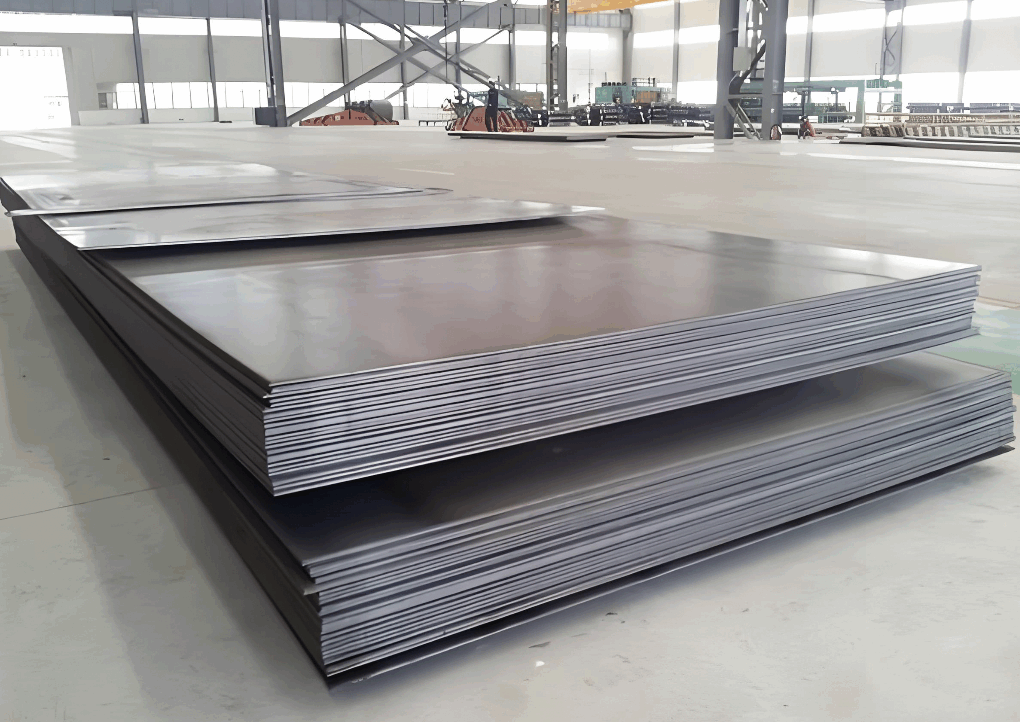
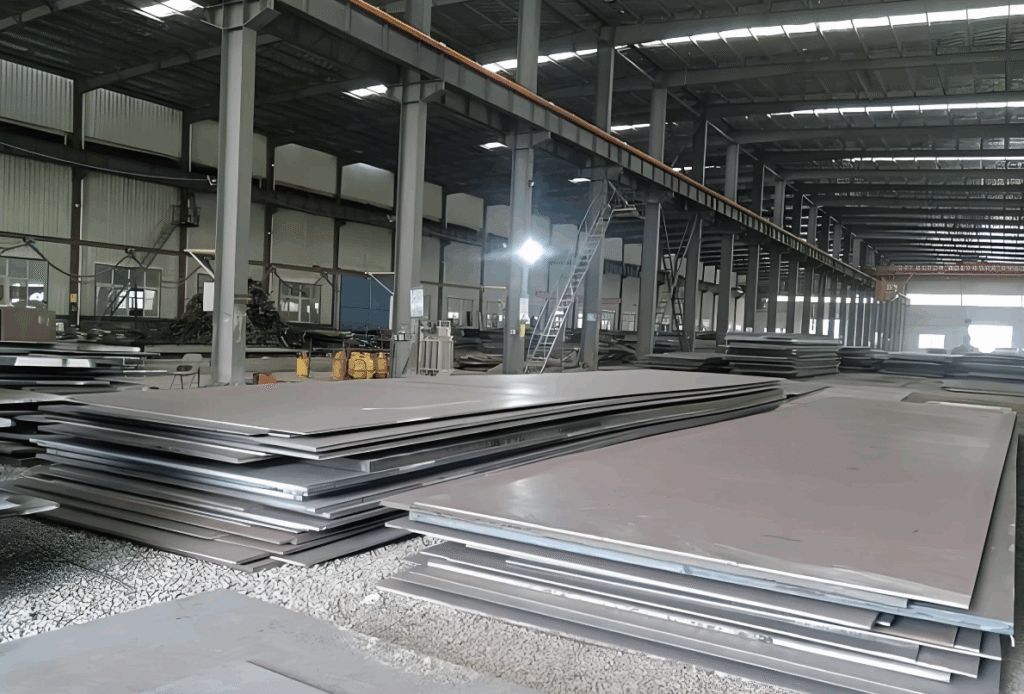
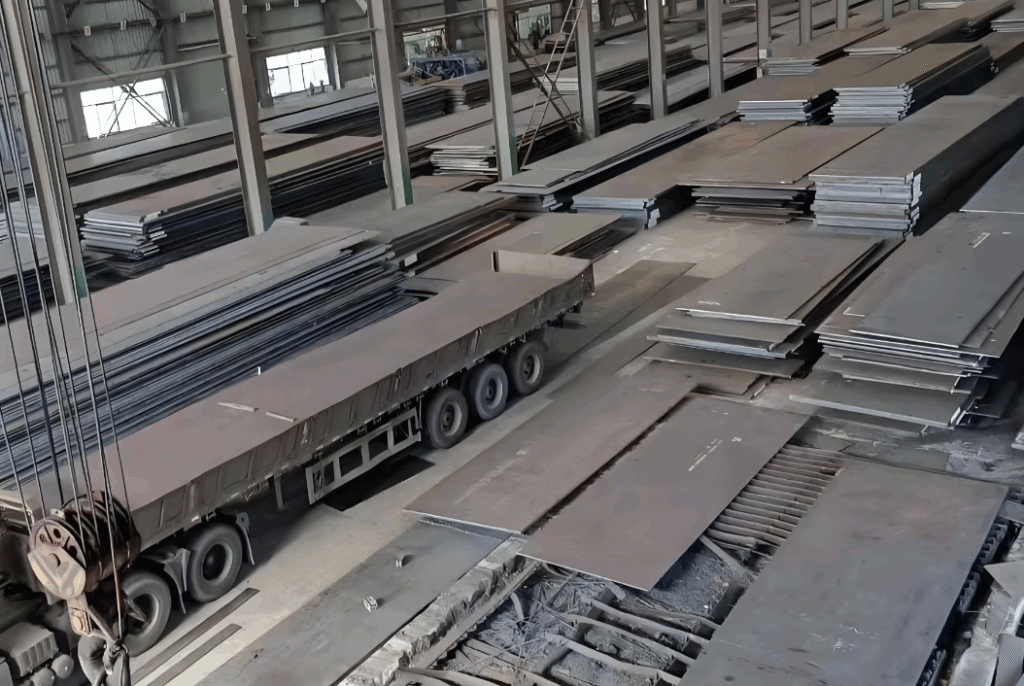
Flat steel plates are a core product in the metal sheet industry. Defined as rectangular flat steel products with a thickness of ≥4.8mm and a maximum width of 5.0m, they boast core advantages of high strength, weldability, ease of processing and strong adaptability. Widely used in construction, machinery, energy, shipbuilding and other industrial sectors, they are indispensable basic components in industrial production. As a seasoned manufacturer specializing in the production of metal sheets, pipes and coils, we have been deeply engaged in the flat steel plate production sector for many years. We offer comprehensive services including large-scale bulk supply and customized solutions, accurately meeting the procurement needs of different industries.
1. What are Flat Steel Plates?
1.1 Core Definition
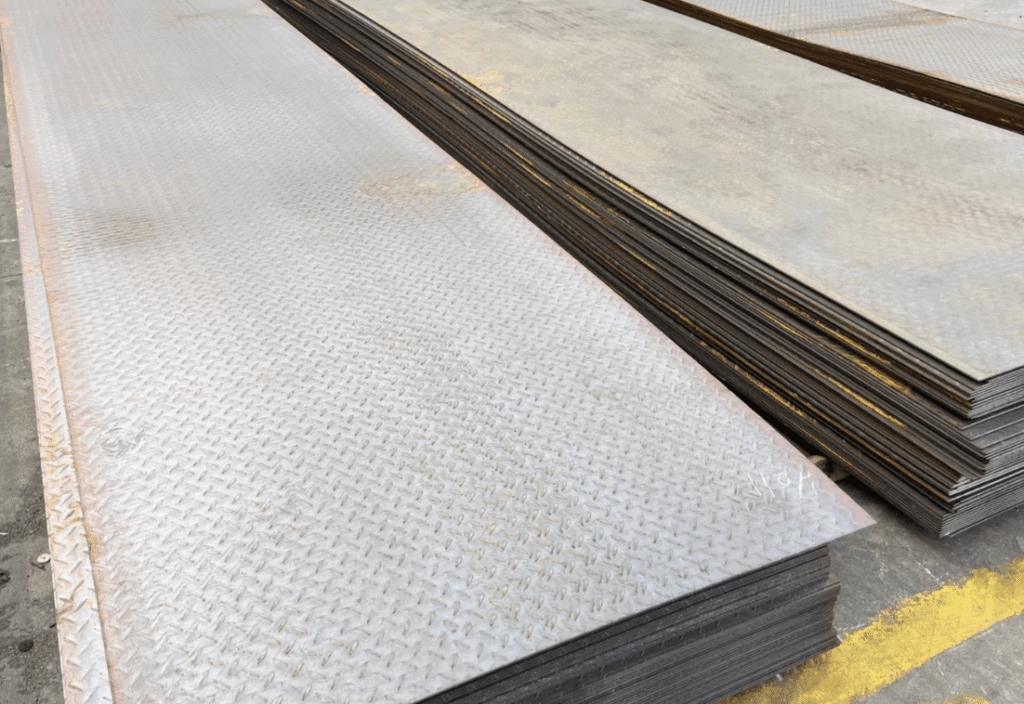
Flat steel plates are rectangular flat steel products processed from carbon steel, stainless steel, alloy and other raw materials via hot-rolled or cold-rolled processes. Their key distinction from thin steel sheets (thickness <4.8mm) lies in their thicker gauge, with a maximum width of 5.0m and customizable lengths. They feature high strength, corrosion resistance, weldability and ease of cutting and processing.
Our factory’s flat steel plates are manufactured in strict compliance with industry standards such as ASTM and GB, covering a thickness range of 4.8mm to 100mm and a width range of 1.2m to 5.0m. This full specification range caters to the basic usage requirements of various industries, adapting to both large-scale engineering procurement and customized application scenarios.
1.2 Core Production Processes
Flat steel plates are primarily produced through two processes: hot rolling and cold rolling. Each process has its unique advantages and is suited for different industrial needs. Our factory flexibly adopts the appropriate production process based on customer scenarios, ensuring product adaptability and cost-effectiveness.
Hot-rolled flat steel plates: Produced by rolling heated steel billets, they offer high production efficiency, low cost, excellent high strength and toughness. Ideal for industrial scenarios with moderate precision requirements such as construction, bridge building and mechanical structural components, they are the most in-demand type of flat steel plates in the market.
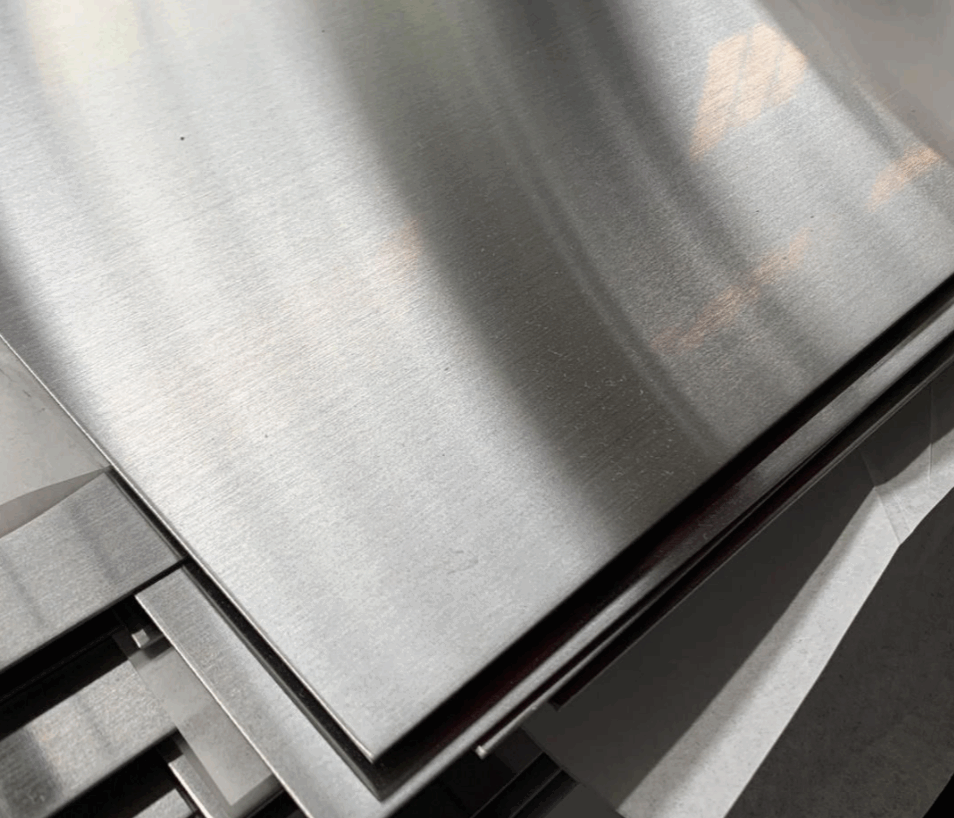
Cold-rolled flat steel plates: Processed from hot-rolled steel plates through room-temperature rolling, annealing, pickling and other procedures, they feature high dimensional accuracy, smooth and flat surfaces and tight tolerances. Perfect for applications with stringent requirements for appearance and precision including precision machinery manufacturing, chemical equipment and food processing equipment, they deliver outstanding cost-effectiveness.
1.3 Material Classification & Characteristics
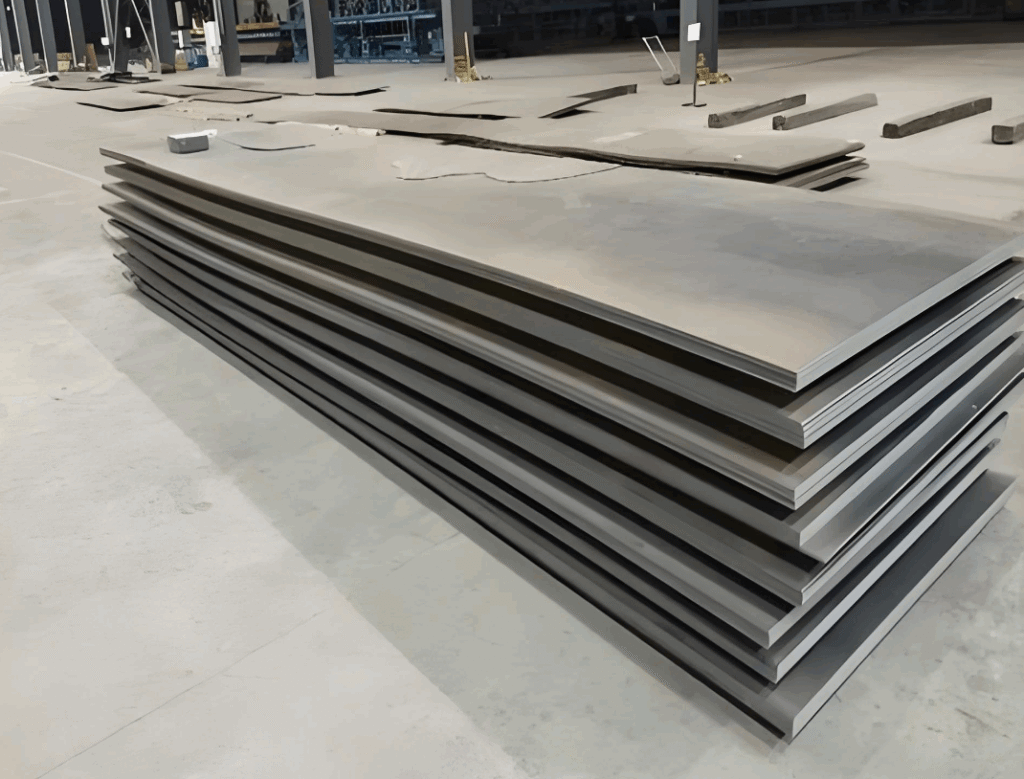
Flat steel plates are classified by their raw material composition, with significant differences in characteristics and applicable scenarios across various materials. The following is a breakdown of common material types to help customers quickly match their industry needs:
Carbon steel flat steel plates: Made from carbon structural steel, this is the most commonly used material for flat steel plates. It offers low cost, high strength and ease of processing, making it suitable for most basic industrial scenarios such as construction, machinery and bridge building (e.g., bridge structural components, building columns, machine tool bases). Our factory provides carbon steel flat steel plates in various grades including Q235 and Q355.
Stainless steel flat steel plates: Crafted from stainless steel, they excel in corrosion resistance, high temperature resistance and aesthetic surface finish. Ideal for industries with strict anti-corrosion requirements such as chemical engineering, food, pharmaceuticals and offshore platforms (e.g., chemical reactors, food processing equipment, offshore platform structural components), we offer popular grades including 304 and 316L.
Alloy steel flat steel plates: Produced by adding chromium, manganese, nickel and other alloying elements to carbon steel, they feature high strength, high toughness, wear resistance and high temperature resistance. Suited for high-end applications such as advanced machinery manufacturing, energy and aerospace (e.g., wind power equipment, heavy machinery, high-pressure vessels), their alloy composition can be customized according to customer requirements.

2. Application Scenarios of Flat Steel Plates
With a diverse range of materials, specifications and excellent performance, flat steel plates are widely applied across multiple industrial sectors. The following details key applications for B2B customers by industry, helping to quickly determine product adaptability while demonstrating our factory’s product matching capabilities.
2.1 Construction Industry (Core Application Sector)
The construction industry is the largest consumer of flat steel plates, where they are mainly used for core components such as bridge structures, building columns, foundation base plates, stair treads, water storage tanks and factory load-bearing structures. Given the high requirements for steel strength, toughness and cost-effectiveness in construction, hot-rolled carbon steel flat steel plates are the primary choice.
Our construction-grade flat steel plates undergo strict quality inspection, meeting strength standards with corrosion resistance and ease of installation. They have been successfully applied to numerous large-scale bridge and factory construction projects, earning consistent recognition from industry customers.
2.2 Machinery Manufacturing Industry
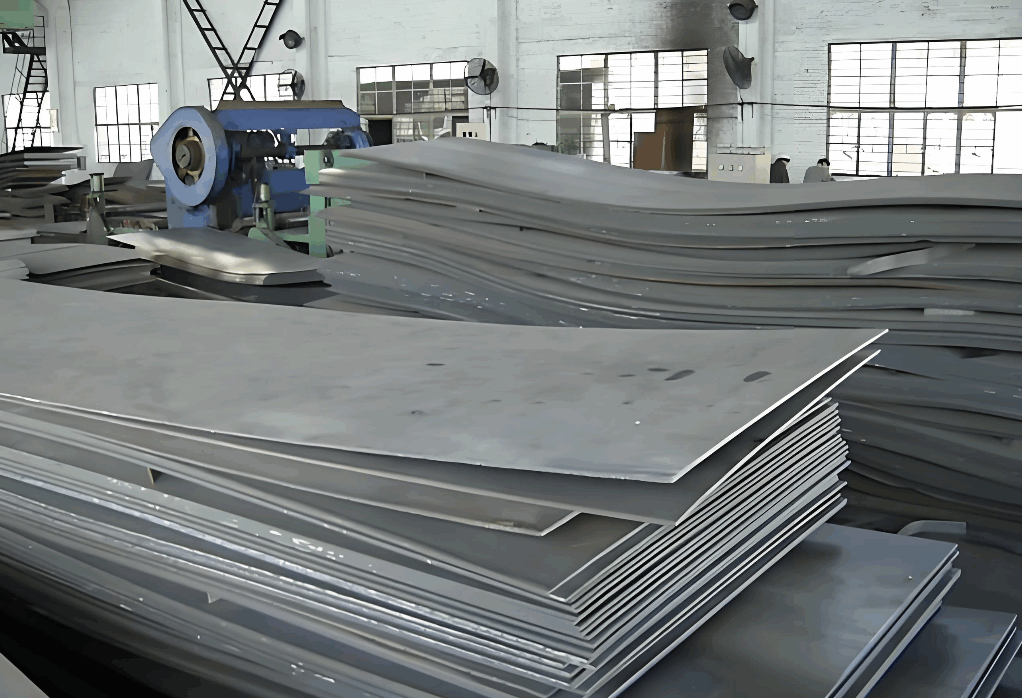
The machinery manufacturing industry demands high precision, strength and wear resistance from flat steel plates, which are used in the production of cranes, bulldozers, molds, machine tool components, railway freight car structural parts and other products.
Based on specific scenario needs, customers can choose hot-rolled carbon steel flat steel plates (for general mechanical structures) or cold-rolled flat steel plates (for precision components). Our factory provides precise tolerance control, meeting the high standards of the machinery manufacturing industry and helping customers improve product quality.
2.3 Energy & Shipbuilding Industries
The energy and shipbuilding industries impose stringent requirements for weather resistance, impact resistance and corrosion resistance of flat steel plates, which are used in core parts such as wind power equipment bases, offshore platform structural components, oil pipelines and ship hull structures.
Stainless steel or alloy steel flat steel plates are typically selected for these scenarios. Our factory’s flat steel plates for these industries adhere to high-end industry standards, offering excellent weather resistance and impact resistance. They are adapted to complex and harsh environments such as offshore and high-altitude settings, ensuring long-term stable operation of equipment.
3. How to Select the Right Flat Steel Plates?
Addressing the common “selection challenges” faced by B2B buyers and engineers when purchasing flat steel plates, we have compiled a practical selection guide based on years of industry experience. This guide helps customers quickly screen suitable products while highlighting our factory’s product advantages and professional capabilities to lay the groundwork for future cooperation.
3.1 Key Selection Parameters
The selection of flat steel plates centers on four critical parameters, which should be chosen based on specific industry scenarios to avoid performance issues caused by improper selection:
Specifications: Focus on thickness, width and length, selected according to the space and load-bearing requirements of the application scenario. For example, bridge construction typically uses products with a thickness of 10mm-50mm and a width of 2.0m-3.0m; precision machinery uses cold-rolled flat steel plates with a thickness of 4.8mm-10mm and a width of 1.2m-1.5m. We offer full-specification customization to meet diverse dimensional needs.
Material: Selected based on the anti-corrosion, high temperature resistance and strength requirements of the service environment. Carbon steel flat steel plates for general scenarios, stainless steel for anti-corrosion applications, and alloy steel for high-end, high-strength scenarios. We provide professional material selection consulting to help customers make precise matches.
Tolerance: Scenarios such as machinery manufacturing and precision equipment require strict dimensional tolerance, with a recommended tolerance of ≤±0.1mm; general construction scenarios can adopt more flexible tolerance standards. Our factory can precisely control tolerance ranges according to customer needs to ensure product accuracy.
Mechanical properties: Focus on tensile strength, yield strength and other indicators based on load-bearing and impact resistance requirements. For example, heavy machinery requires products with a tensile strength of ≥500MPa. We provide detailed mechanical property test reports to ensure all products meet specified standards.
3.2 Hot-Rolled vs. Cold-Rolled Flat Steel Plates
Many buyers confuse hot-rolled and cold-rolled flat steel plates during selection. The following concise comparison helps to quickly distinguish and select the right type:
Hot-rolled flat steel plates: Moderate precision, surface oxide scale (requiring subsequent treatment), low cost, high strength and good toughness. Suited for construction, bridge building, general mechanical structures and other scenarios, they offer high cost-effectiveness and are the mainstream choice in the market.
Cold-rolled flat steel plates: High precision, smooth surface, tight tolerances, no oxide scale, slightly higher cost. Suited for precision machinery, chemical equipment, food processing equipment and other scenarios with high precision and appearance requirements, they reduce the need for subsequent processing procedures.
3.3 Key Considerations for Selecting a Manufacturer
Choosing a reliable manufacturer is critical to ensuring product quality, delivery efficiency and after-sales support when purchasing flat steel plates. Based on the core concerns of B2B buyers, we have compiled five key selection criteria while showcasing our factory’s strengths:
Quality certification: Prioritize manufacturers with ISO9001 quality management system certification and products compliant with industry standards such as ASTM and GB. Our factory has obtained multiple quality certifications; every batch of flat steel plates undergoes strict inspection with complete test reports provided, achieving a product qualification rate of over 99.9%.
Production capacity & delivery capability: Consider the manufacturer’s monthly production capacity and delivery lead time to avoid project delays. Our factory has a monthly production capacity of XX tons, meeting large-scale bulk procurement needs. Lead time for standard specifications is 7-15 days, and lead time for customized products can be flexibly negotiated to ensure on-time delivery.
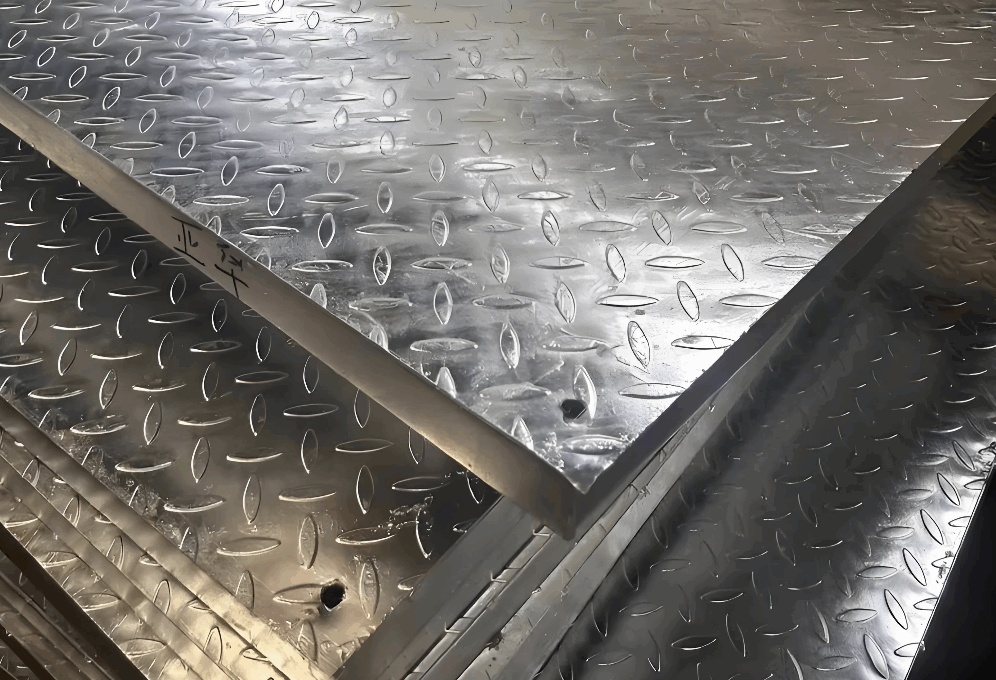
Customization capability: Prioritize manufacturers offering personalized customization services such as size, material and surface treatment customization. We provide customized flat steel plates with different thicknesses, widths, materials and offer additional surface treatments such as galvanizing and painting to adapt to special scenario needs.
Cost-effectiveness: Evaluate comprehensively based on product quality, price and logistics costs to avoid compromising quality for low prices. Leveraging the advantages of large-scale production, we offer high-cost-effective flat steel plates and cooperate with well-known logistics enterprises worldwide to provide sea, land and air transportation solutions, optimizing logistics routes and reducing procurement costs.
After-sales support: Consider the manufacturer’s after-sales policies such as product return/replacement for quality issues, technical consulting and installation guidance. Our factory has a professional after-sales team offering one-on-one technical consulting services; we provide unconditional product return and replacement for quality issues, fully protecting the rights and interests of buyers.
4. Our Flat Steel Plate Advantages
As a seasoned manufacturer with years of experience in metal sheet production, we focus on the R&D, production and supply of flat steel plates. Relying on mature production technology, strict quality control and a comprehensive service system, we have built differentiated competitive advantages to accurately meet the core needs of B2B buyers, helping customers reduce procurement costs and improve project efficiency.
4.1 Strict Quality Assurance with Controllable & Traceable Quality
We prioritize product quality and have established a full-process quality control system from raw material procurement to finished product delivery. Raw materials are high-quality billets from renowned steel mills, only put into production after strict inspection; professional inspectors monitor every production process including rolling, annealing and pickling in real time; finished products undergo multiple tests for dimensional accuracy, mechanical properties and corrosion resistance before delivery, with complete test reports provided. All products comply with industry standards and customer requirements, achieving controllable and traceable quality. We are ISO9001 certified, and our products meet international and domestic standards such as ASTM and GB, adapting to procurement needs in different regions worldwide.
4.2 Full Specification Coverage & Strong Customization Capability
Our factory produces flat steel plates in carbon steel, stainless steel, alloy steel and other materials, covering a thickness range of 4.8mm-100mm and a width range of 1.2m-5.0m, with customizable lengths. Standard specifications are available in stock for immediate supply. For personalized needs in special industries and scenarios, we offer comprehensive customization services for dimensions, materials, surface treatments and mechanical properties. A professional technical team is assigned to dock with customers and optimize customization solutions to ensure products accurately match application scenarios, solving the procurement pain points of “mismatched specifications and unmet needs”.
4.3 High Cost-Effectiveness to Reduce Procurement Costs
Leveraging large-scale production advantages, we have realized integrated optimization of raw material procurement, production processing and logistics distribution, effectively reducing production and operational costs. We provide high-cost-effective flat steel plates for buyers, with prices 5%-10% lower than the industry average. Meanwhile, we have access to major ports worldwide and long-term cooperation with multiple well-known logistics enterprises, offering sea, land and air transportation solutions. We optimize logistics routes, shorten transportation cycles and reduce logistics costs, helping buyers save procurement expenses in an all-round way.
4.4 Efficient Delivery Assurance to Boost Project Progress
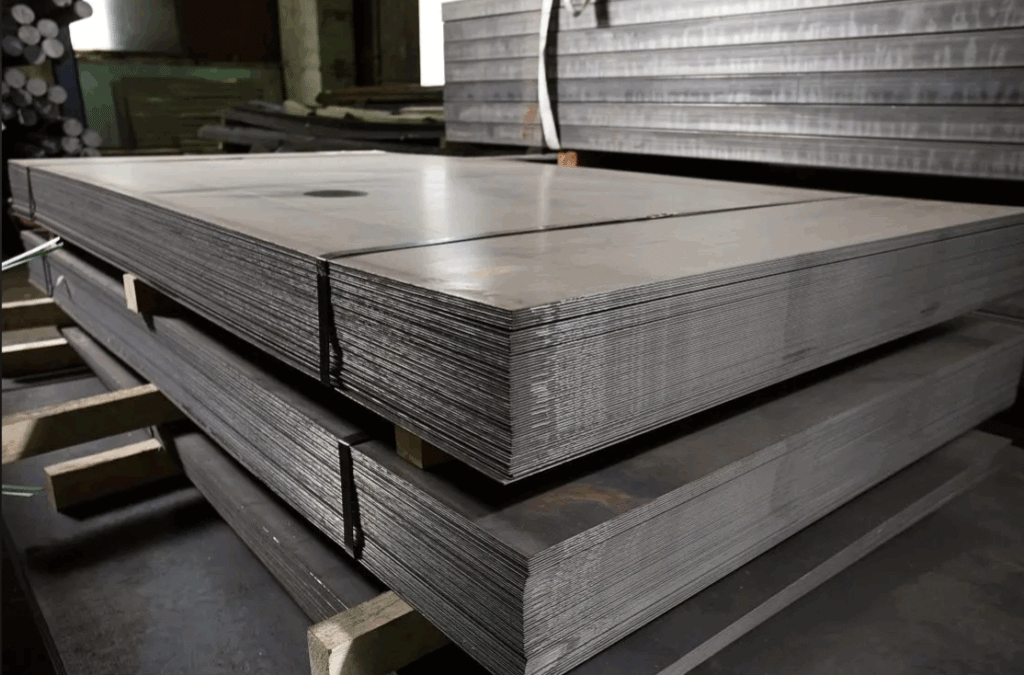
Equipped with advanced production equipment and mature production lines, our factory has a monthly production capacity of XX tons, meeting bulk procurement needs of different buyers. Standard specification flat steel plates are in stock with a delivery lead time of 7-15 days after order placement; for customized specifications, we optimize production processes to shorten production cycles to the maximum extent and ensure on-time delivery without delaying customer projects. In addition, we have established a comprehensive inventory management system to monitor inventory dynamics in real time, avoiding stockouts and ensuring stable supply.
4.5 Professional After-Sales Team with Full-Process Personalized Service
We have a professional team with years of industry experience, covering technical consulting, procurement docking, after-sales support and other positions, providing one-on-one full-process personalized service for buyers. Before procurement: professional selection consulting to help customers choose the right materials and specifications; during procurement: real-time feedback on production progress and logistics status for full procurement transparency; after procurement: technical guidance and installation suggestions, unconditional product return and replacement for quality issues, and 24/7 after-sales response. We fully protect the rights and interests of buyers and eliminate procurement worries.
4.6 Typical Cooperation Cases as a Testament to Our Strength
Over the years, relying on high-quality products and thoughtful services, we have established long-term and stable cooperative relationships with well-known enterprises in various industries and accumulated rich project experience:
- Construction industry: Supplied XX tons of hot-rolled carbon steel flat steel plates for a large-scale bridge construction project. The products featured high strength and corrosion resistance, perfectly meeting the bridge’s load-bearing requirements and winning high recognition from the project party.
- Machinery manufacturing industry: Provided customized cold-rolled flat steel plates for a heavy machinery manufacturer, accurately matching the precision requirements of mechanical components and helping the customer improve product quality and production efficiency.
- Energy industry: Supplied alloy steel flat steel plates for a wind power enterprise, adapting to the weather resistance and impact resistance requirements of high-altitude wind power equipment, ensuring long-term stable operation of the equipment and establishing a long-term strategic cooperation.
5. Frequently Asked Questions
Q1: What is the key difference between flat steel plates and thin steel sheets?
A1: The key difference is thickness: flat steel plates have a thickness of ≥4.8mm, with high strength and good toughness, suited for industrial load-bearing and structural components; thin steel sheets have a thickness of <4.8mm, with high precision and light weight, suited for light industry and decoration. For precise selection advice, please contact our professional team.
Q2: What is the minimum order quantity (MOQ) for your flat steel plates?
A2: The MOQ for standard specification flat steel plates is XX tons, supporting small-batch procurement; the MOQ for customized specifications can be flexibly negotiated. Please contact us for a precise quotation.
Q3: What is the delivery lead time for flat steel plates?
A3: Standard specification flat steel plates are in stock with a delivery lead time of 7-15 days after order placement; for customized specifications, the lead time is 15-30 days based on customization complexity and order volume. We will shorten the lead time to the maximum extent to ensure project progress.
Q4: Do you offer customization services for flat steel plates?
A4: Yes, we provide comprehensive customization services. We can customize flat steel plates with different thicknesses, widths, lengths and materials according to your requirements, and also offer additional surface treatments such as galvanizing and painting to accurately adapt to your industry scenarios. Please contact us for detailed information.
6. Conclusion
As basic components of industrial production, the quality, specifications and cost-effectiveness of flat steel plates directly impact project quality and efficiency. As a seasoned manufacturer with years of experience in metal sheet production, we always put customer needs at the core, providing high-quality, full-specification and customizable flat steel plates with high cost-effectiveness and efficient delivery assurance. Our products adapt to the procurement needs of various industries including construction, machinery, energy and shipbuilding.
For a precise quotation, customized solution consultation or selection advice for flat steel plates, please contact our professional procurement consultants! Contact Us >
References
- ASTM A572/A572M:Standard for High-Strength Low-Alloy Structural Steel Plates, which specifies the core technical indicators of such steel plates including chemical composition, mechanical properties and dimensional tolerances. It is applicable to flat steel plate applications with stringent strength requirements such as building and bridge engineering, and heavy machinery structural fabrication.
- ASTM A516/A516M:Standard for Carbon Steel Plates for Pressure Vessels Service at Moderate and Low Temperatures, which defines the heat treatment processes, testing criteria and service requirements of carbon steel plates under moderate and low temperature operating conditions. It serves as a key selection basis for flat steel plates used in pressure vessels within the energy and chemical industries.
- ASTM A480/A480M-22:General Requirements for Rolled Steel Plates, Sheets and Strip, which covers the universal technical specifications for various material grades including stainless steel plates and alloy steel plates, such as surface treatment, dimensional tolerances and quality acceptance criteria. It is an important reference for formulating technical clauses in flat steel plate procurement contracts.


 English
  Spanish