
In the field of steel anti-corrosion treatment, zinc coating protection has become a mainstream solution in engineering construction and manufacturing due to its controllable cost and stable protection effect. Among them, hot-dip galvanizing (HDG, the industry mainstream of Galvanized) and electrogalvanizing (Zinc Plated) are the two most commonly used processes.
However, they differ significantly in process principles, performance, and application scenarios, which are easy to be confused. For engineers, purchasers, and technical practitioners, incorrect material selection will not only lead to premature corrosion of parts and processing failure, but also cause a sharp increase in later maintenance costs. Based on industry technical parameters and practical application scenarios, this paper systematically analyzes the core differences between hot-dip galvanized steel and zinc plated steel, and provides directly applicable material selection logic to support accurate decision-making.
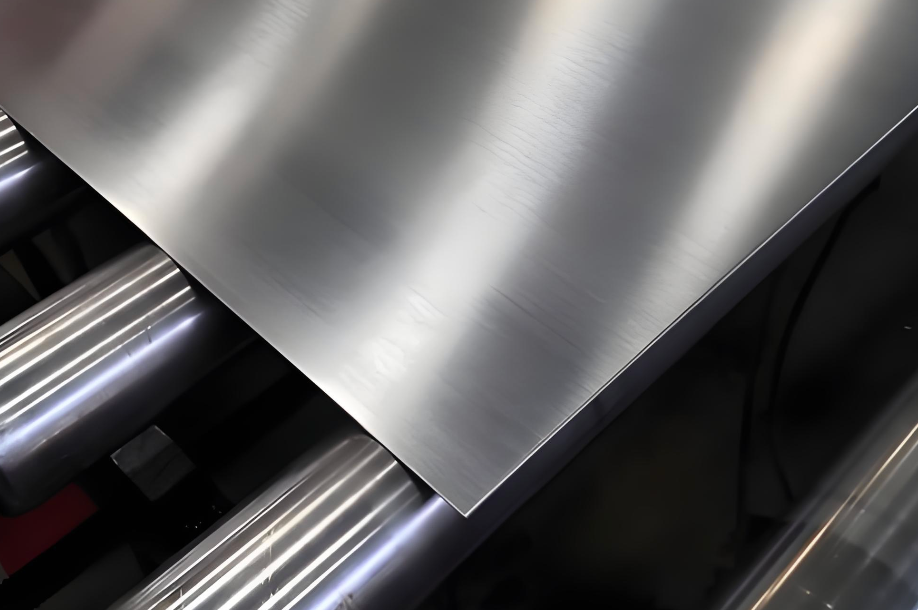
Zinc Plated Steel
Zinc plated steel, also known as electrogalvanized steel in the industry, relies on the principle of electrochemical deposition to achieve zinc coating adhesion. The specific process is as follows: immerse the steel workpiece that has undergone degreasing and pickling derusting into an electrolyte solution containing zinc salts (such as zinc sulfate and zinc chloride), and apply a directional electric current to reduce and deposit zinc ions in the solution on the surface of the workpiece, forming a uniform pure zinc coating. The biggest feature of this process is processing at room temperature without high temperature involved throughout the process. The coating and the substrate are only physically attached without metallurgical reaction. The thickness of the coating can be precisely controlled by current intensity and electrolysis time, with excellent uniformity.
In terms of process details, the conventional thickness range of zinc plated coating is 5–10 microns, and the maximum can reach 25 microns (excessively thick coating is prone to peeling off). To improve anti-corrosion performance and appearance quality, the industry often adopts chromate conversion coating treatment to achieve passivation effects such as blue-white and iridescent, which not only enhances the corrosion resistance of the zinc coating but also optimizes surface aesthetics. In addition, zinc plating has a short production cycle and simple process flow, which is suitable for standardized processing of large batches of precision parts, and is widely used in fields such as civil hardware and automotive interior parts.

Hot-Dip Galvanized Steel
Hot-dip galvanized steel mainly adopts the hot-dip galvanizing (HDG) process. Different from the room-temperature physical deposition of zinc plating, it is a high-temperature metallurgical bonding process. The process flow is as follows: first, thoroughly pickle and degrease the steel workpiece to remove surface oxide scale and impurities, then immerse the workpiece into molten zinc liquid controlled at a temperature of about 450℃. At this time, the steel substrate and molten zinc undergo a violent metallurgical reaction, forming a composite coating of “zinc-iron alloy layer + pure zinc outer layer”. This composite coating is closely integrated with the substrate instead of simple surface adhesion, and its protection stability is far superior to that of zinc plated coating.
In terms of core process parameters, the thickness of hot-dip galvanized coating can be adjusted according to requirements, with a conventional range of 45–200 microns. In strong corrosive environments such as marine and chemical industries, the thickness can be further increased by optimizing the process. In terms of appearance, the surface of hot-dip galvanized workpieces usually has unique spangle crystalline patterns, showing a matte and rough texture with a distinct industrial style. It should be noted that high-temperature treatment will change the surface microstructure of the workpiece, which is likely to cause slight deformation of thin-plate workpieces (thickness < 2mm), and may affect the dimensional tolerance of precision parts. Therefore, it is not suitable for scenarios with extremely high requirements for processing accuracy.

Core Performance Comparison
| Comparison Dimension | Zinc Plated Steel | Hot-Dip Galvanized Steel (HDG) |
| Coating Thickness | 5-10 microns (thin coating), maximum 25 microns | 45-200 microns (thick coating), can be further increased in marine environments |
| Corrosion Resistance | Medium, suitable for indoor dry environments (corrosion class C1-C2), service life of 5-10 years, prone to white rust after long-term exposure | Excellent, suitable for harsh outdoor environments (corrosion class C4-C5), service life of 20-50 years, with sacrificial anode protection property, still able to protect the base material after coating damage |
| Coating Adhesion and Toughness | Moderate adhesion, excellent flexibility, can withstand subsequent processes such as bending, riveting and stamping without easy peeling | Extremely strong adhesion (metallurgical bonding), but the coating is relatively brittle, not suitable for cold working deformation, and prone to peeling under severe bending |
| Appearance Performance | Smooth and bright surface, can achieve blue-white, iridescent and other effects through passivation treatment, high aesthetic value, suitable for scenes with appearance requirements | Matte and rough surface with natural zinc flower patterns, industrial visual texture, not suitable for decorative scenes |
| Cost Level | Low initial purchase cost, simple process flow, suitable for budget-sensitive and short-term use scenarios | High initial purchase cost, but long-term protection can significantly reduce subsequent maintenance and replacement costs, with more advantages in total life cycle cost |
| Processing Impact | Room temperature processing, no risk of thermal deformation, controllable dimensional tolerance (precision up to ±0.01mm), suitable for precision part processing | High temperature is likely to cause deformation of thin-sheet workpieces (thickness < 2mm), and coating residues may cause mold clogging, which has a great impact on precision machining accuracy. It is recommended to process first and then galvanize. |
| Special Risks | Hydrogen embrittlement is likely to occur during the electrolysis process. High-strength steel workpieces require subsequent dehydrogenation treatment to avoid fracture during use. | High temperature environment can eliminate the risk of hydrogen embrittlement, suitable for high-strength steel parts, but local repair after coating damage is difficult, and the repair effect is difficult to guarantee. |
Scenario-Based Material Selection Guide
Scenarios Where Zinc Plated Steel is Preferred
- Indoor dry environment scenarios: Applicable to environments with corrosion class C1-C2, such as internal parts of home appliances, electronic equipment cabinets, indoor furniture hardware, and office equipment connectors. Such scenarios have moderate anti-corrosion requirements, and zinc plating can meet the service life demand of 5–10 years.
- Precision parts and appearance demand scenarios: Such as automotive interior fasteners, dashboard parts, and decorative hardware. These parts have high requirements for dimensional accuracy (tolerance ±0.01mm) and need a smooth surface texture. The high precision and passivatable characteristics of zinc plating can perfectly meet these needs, while facilitating subsequent painting and powder coating processes.
- Scenarios requiring subsequent processing: Such as small fasteners like bolts, nuts, gaskets, and springs. These parts often need subsequent processing such as bending, riveting, and stamping. The excellent flexibility of zinc plating can avoid coating peeling during processing and ensure product performance.
- Budget-sensitive and short-term protection scenarios: Such as small and medium batch civil hardware, DIY handcraft parts, and temporarily built indoor facilities. These scenarios have low requirements for service life (within 5 years), and the low-cost advantage of zinc plating can effectively control procurement costs.
Scenarios Where Hot-Dip Galvanized Steel is Preferred
- Outdoor harsh environment scenarios: Applicable to environments with corrosion class C4-C5, such as bridge components, highway guardrails, power towers, communication towers, marine port infrastructure, and chemical plant equipment. These scenarios are exposed to erosion such as wind, rain, and salt spray, and the thick coating of hot-dip galvanizing can achieve long-term protection for more than 20 years.
- Long-term protection demand scenarios: Such as industrial plant steel structures, agricultural machinery equipment, outdoor fences, roof drainage systems, and municipal public facilities. These facilities are difficult and costly to maintain after installation. The durability of hot-dip galvanizing can greatly reduce maintenance frequency and extend service life.
- High-strength steel and damage resistance demand scenarios: Such as automotive suspension springs, large mechanical load-bearing components, and building steel structure connectors. These parts need to bear large loads and avoid hydrogen embrittlement risks. The metallurgical bonding characteristics and hydrogen embrittlement-free advantage of hot-dip galvanizing can ensure safe use, and resist scratches and collisions during transportation and installation.
- Total life cycle cost priority scenarios: Such as large-scale engineering structures and long-term outdoor facilities. Although the initial procurement cost of such projects is relatively high, the long-term protection of hot-dip galvanizing can avoid frequent part replacement, reduce later maintenance and downtime losses, and is more economical from the perspective of the total life cycle
Common Misunderstandings and Precautions
Misunderstanding 1: Equating “Galvanized” directly with zinc plating
In the engineering field, “Galvanized” defaults to hot-dip galvanizing (HDG). When communicating in procurement and technical work, it is necessary to clearly specify the process name, which can be marked as “HDG (Hot-Dip Galvanized)” or “Zinc Plated” to avoid supply deviations caused by terminology confusion.
Misunderstanding 2: Assuming that the thicker the coating, the better the anti-corrosion effect
When the thickness of zinc plated coating exceeds 25 microns, the adhesion will decrease significantly, and peeling and bulging are prone to occur; excessively thick hot-dip galvanized coating will affect the dimensional accuracy of precision parts and increase processing difficulty. It is necessary to match a reasonable thickness according to the application scenario.
Misunderstanding 3: Randomly repairing damaged hot-dip galvanized coating
The anti-corrosion effect of hot-dip galvanizing depends on the intact composite coating. Repairing local damage by painting or re-plating is difficult to form a uniform metallurgical bonding layer, and the repaired area is likely to become a corrosion breakthrough point. For outdoor parts, structural design should be optimized in advance to avoid coating damage.
Supplementary Notes
Both hot-dip galvanized steel and zinc plated steel adopt the sacrificial anode protection principle. The zinc coating will corrode preferentially over the steel substrate. When the zinc coating is completely depleted, the substrate will rust rapidly. Therefore, it is necessary to regularly check the state of the zinc coating according to the expected service life and take maintenance measures in a timely manner. Meanwhile, both are not suitable for extreme corrosive environments such as strong acid and strong alkali. For such scenarios, anti-corrosion coatings and stainless steel materials should be used to further optimize protection.
Conclusion
The selection of hot-dip galvanized steel and zinc plated steel is essentially a process of balancing “precision, cost, appearance” with “protection strength, durability”. The core decision-making logic can be summarized as the “Three Priorities and Three Sequences”: first clarify the corrosion class of the service environment and the expected protection life, then lock in the coating thickness and anti-corrosion requirements; first confirm the processing technology and dimensional accuracy requirements of the parts, then judge the coating toughness and processing adaptability; first calculate the initial procurement cost and later maintenance cost, then select the more economical solution for the total life cycle. In addition, focus on special risk control: hot-dip galvanizing is preferred for high-strength steel parts to avoid hydrogen embrittlement, while zinc plating is preferred for precision decorative parts to ensure appearance and accuracy.
Frequently Asked Questions
Q1: What happens if zinc plated parts are used outdoors?
A: They may last 1–3 years under dry, well-ventilated canopies. However, in environments exposed to direct sunlight, rain, especially high humidity and high salt content, white rust (zinc salts) may appear within a few months, followed by red rust (iron rust). It is not recommended for load-bearing or key outdoor structures.
Q2: Can hot-dip galvanized workpieces be welded or cut?
A: Yes, but this will severely damage the coating. High welding temperatures will burn the zinc coating, and the cut section will have no protection at all. Special zinc-rich coatings (such as cold-sprayed zinc) must be applied to the damaged area for repair afterwards; otherwise, this point will become the starting point of corrosion.
Q3: Which type does the term “galvanized” on the market refer to by default?
A: In the construction and structural engineering fields, “galvanized” usually refers to hot-dip galvanizing by default. In the fields of precision manufacturing, fasteners, and automotive parts, “galvanized” often refers to zinc plating. When making inquiries or purchases, be sure to use the full name to avoid confusion.


 English
  Spanish