
how much is a 4×8 sheet of diamond plate steel? This article will provide a detailed breakdown of the price range, influencing factors, scenario adaptation, and procurement techniques for 4×8 diamond patterned steel plates.
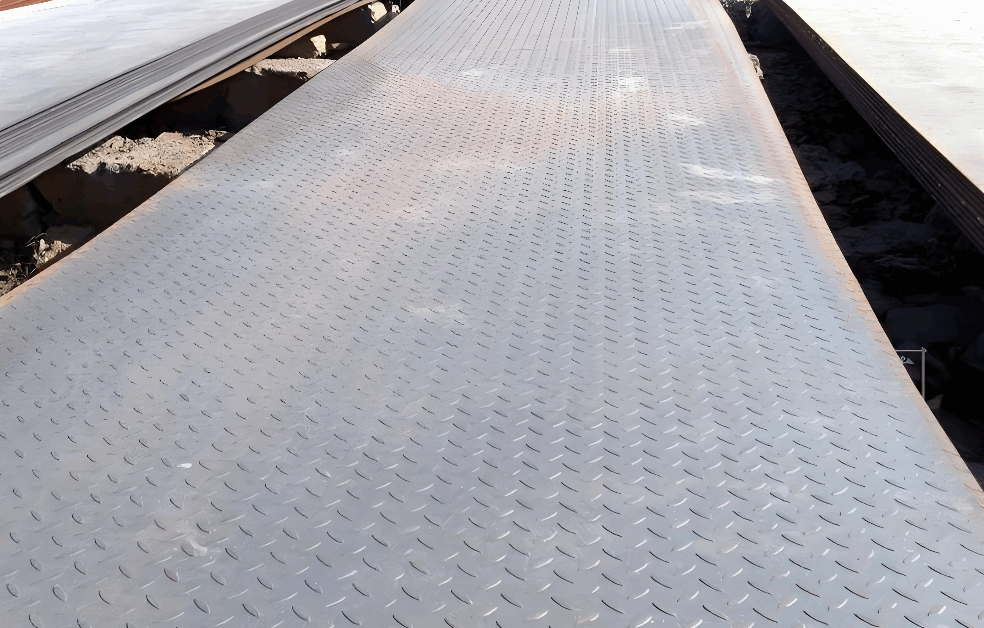
I. Core Price Range of 4×8 Diamond Plate Steel Sheets
The price of diamond plate steel is significantly affected by material, thickness, procurement volume, and fluctuations in international steel prices. Below is the quotation range in major global markets in early 2026:
Prices by Material (with Thickness Reference)
- Carbon Steel Diamond Plate (ASTM A36):As a cost-effective option, it is suitable for indoor scenarios free from corrosion risks, general industrial platforms, and mechanical protection panels. For the 4×8 size with a thickness of 3mm (nearly 1/8 inch), the retail price per sheet is approximately $40-$55; for bulk procurement (minimum order of 1 ton, about 15-20 sheets), the unit price drops to $550-$750 per ton. For 8mm-thick sheets, the retail price per sheet can reach $80-$110, with a bulk tonnage price of $650-$850 per ton. Carbon steel diamond plate is the mainstream choice for global engineering procurement, and its price fluctuations are closely linked to international iron ore and hot-rolled coil prices.
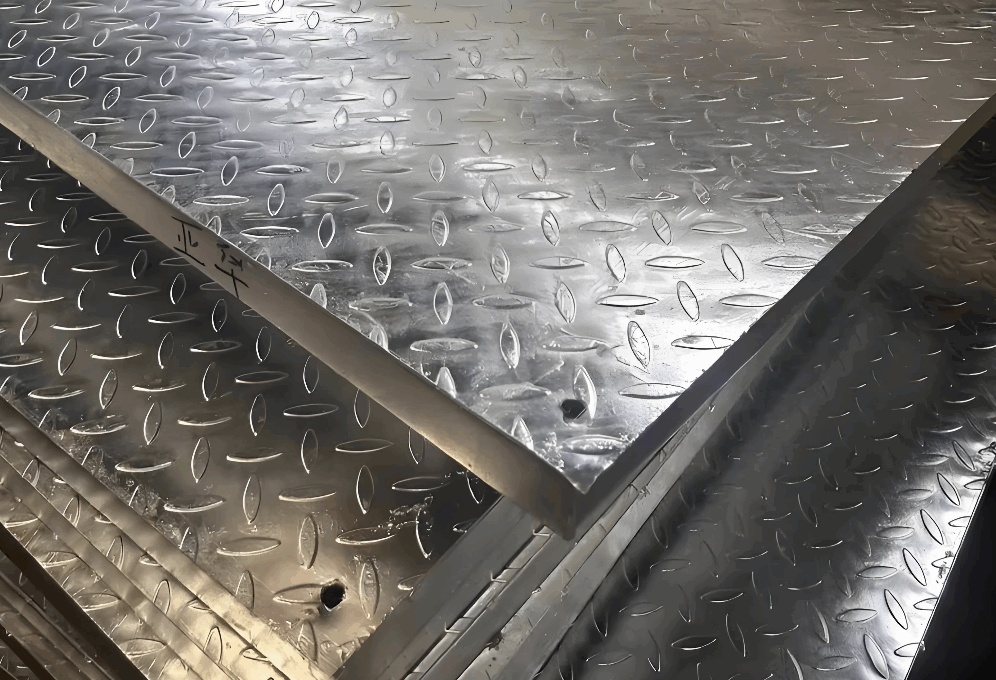
- Hot-Dip Galvanized Diamond Plate:It enhances rust resistance through the hot-dip galvanizing process, balancing cost and weather resistance, and is suitable for outdoor ramps, agricultural machinery, truck beds, and humid environments. Its price falls between that of carbon steel and stainless steel. For the 4×8 size with a thickness of 3mm, the retail price per sheet is $55-$70, and the bulk tonnage price is $700-$900 per ton. For 5mm-thick sheets, the retail price per sheet is $80-$105. It is ideal for international procurement scenarios with basic rust-proof requirements but limited budgets, and is a popular selection in the Southeast Asian and South American markets.
- Stainless Steel Diamond Plate:Classified into three grades according to American standard material specifications: 201, 304, and 316L, its corrosion resistance increases progressively, and the price varies significantly. Affected by the recent nickel price surge (the price of grade 201 has risen by over 7% and grade 304 by over 8% in the past month), for 3mm-thick 4×8 sheets of grade 201 stainless steel, the retail price per sheet is $90-$130, with a bulk tonnage price of $1200-$1600 per ton, suitable for outdoor scenarios with low corrosion levels. For grade 304 stainless steel (ASTM A240), the retail price per sheet is $130-$180, and the bulk tonnage price is $2000-$2800 per ton, applicable to food processing workshops, commercial decoration, and medium-corrosion environments. Grade 316L stainless steel, containing molybdenum, has excellent resistance to acid, alkali, and marine corrosion. The retail price per sheet is $250-$350, and the bulk tonnage price is $3800-$5200 per ton, used in high-end industrial scenarios such as offshore platforms and chemical workshops.
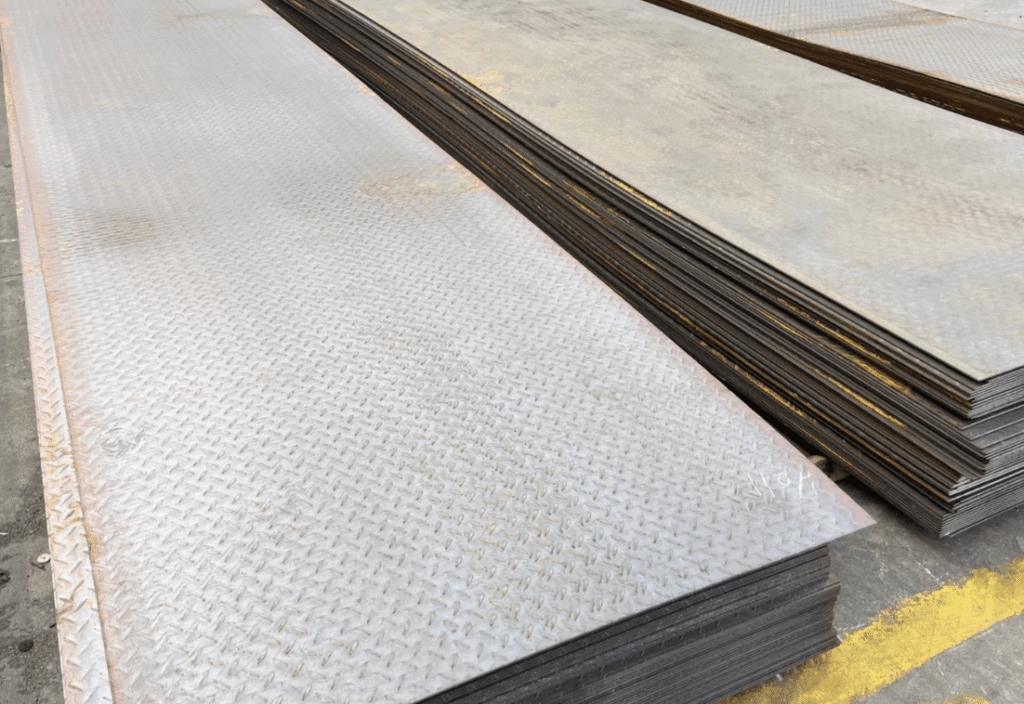
II. Factors Influencing the Price of 4×8 Diamond Plate Steel Sheets
1. Intrinsic Product Attributes
Material grade directly determines the cost base, with the US dollar price ranking as follows: carbon steel < galvanized steel < grade 201 stainless steel < grade 304 stainless steel < grade 316L stainless steel. Thickness is another core factor, following the principle of “thicker sheets command higher prices”. For every 1mm increase in thickness, the price per sheet rises by 15%-25%, as the increased weight leads to simultaneous growth in raw material and transportation costs (the weight of diamond plate steel = weight of the base plate + weight increment from the diamond pattern; the thickness of the base plate is calculated based on the actual marked value, and the raised diamond pattern is not included in the thickness measurement). Surface treatment processes also incur additional charges: for example, a 10%-15% additional processing fee is levied for wire drawing or mirror finishing of stainless steel diamond plates, and hot-dip galvanizing costs 30%-40% more than ordinary carbon steel processing.
2. Market and Procurement Conditions
Fluctuations in global steel prices, as well as the price trends of iron ore and nickel, are directly passed on to the terminal price of diamond plate steel. During peak construction procurement seasons (March-May and September-November), prices may rise by 5%-10%, and the stability of quotations declines before the Spring Festival (the stock-up period for Chinese steel mills). There are obvious regional disparities among suppliers: quotes from suppliers in steel-producing regions such as Foshan and Jiangsu in China are 8%-15% lower than those from local suppliers in North America and Europe. However, cross-regional procurement requires bearing ocean freight costs (calculated by weight, ocean freight between major global ports ranges from $20 to $40 per ton). Value-added services such as custom cutting, bending, and chamfering incur an additional fee of $20-$80 per sheet. Payment methods and settlement currencies (US dollars, euros) also affect the negotiation room for price concessions: full prepayment is more likely to secure favorable terms compared to monthly settlement.
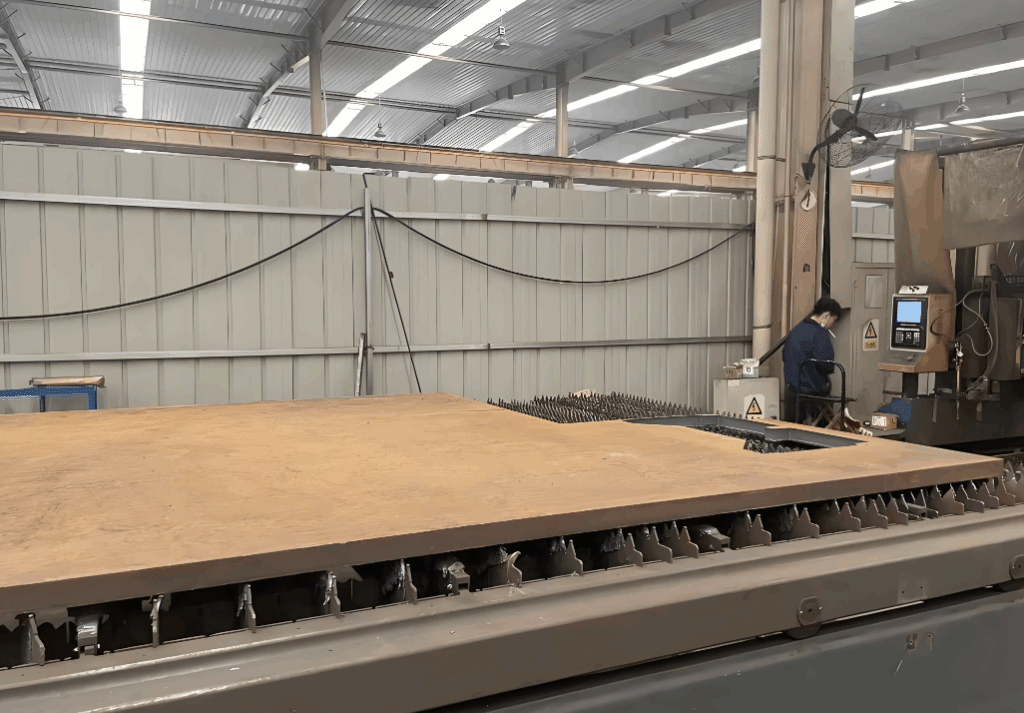
III. Material and Application Scenario Matching Guide
1. Application Scenarios for Each Material
The core principle for selecting diamond plate steel is “matching materials to specific scenarios”. This avoids the cost waste caused by over-purchasing high-end materials, and also prevents shortened service life due to insufficient material quality. International procurement should adjust the material selection based on the regional environmental characteristics:
- Carbon Steel (ASTM A36): Suitable for dry, corrosion-free scenarios such as indoor warehouse flooring, mechanical protective enclosures, and workshop walkways, prioritizing cost-effectiveness. Ideal for bulk engineering procurement in regions like Africa and the Middle East.
- Galvanized Steel: Suitable for humid scenarios such as outdoor ramps, parking lot flooring, agricultural machinery chassis, and truck bed floors. It can resist rainwater erosion and extend the service life to 5-8 years, making it a perfect fit for rainy regions in Southeast Asia and South America.
- Grade 304 Stainless Steel (ASTM A240): Used for stair treads in commercial complexes, flooring in food processing workshops, and high-end indoor decorative wall panels. It balances aesthetics with moderate rust resistance, suitable for procurement in markets like Europe, America, Japan, and South Korea where hygiene and appearance are prioritized.
- Grade 316L Stainless Steel: Applied in highly corrosive environments such as offshore platforms, operating platforms in chemical workshops, and flooring around acid-alkali storage tanks. It boasts exceptional weather resistance, with a service life of over 15 years, ideal for procurement in coastal countries and high-end industrial scenarios.
2. Advantages of the 4×8 Size
The 4×8-foot dimension is a globally standardized specification for diamond plate steel sheets, covering an area of approximately 2.98 square meters. It can be directly cut to meet the requirements of most international projects without extensive customization, thereby reducing cutting waste and processing costs. The weight of a single sheet of this specification is moderate (approximately 75kg for a 3mm-thick carbon steel sheet and 120kg for a 5mm-thick one), facilitating container loading and overseas transportation. It is suitable for large-area paving (e.g., workshop flooring, large-scale ramps). Additionally, this is the specification with the largest stock volume among global suppliers, featuring a short procurement lead time (3-5 days for in-stock delivery and 7-10 days for custom orders), which can meet the timeliness requirements of international procurement.
Conclusion
International procurement of 4×8 diamond plate steel sheets needs to balance four core factors: price, material, application scenario, and total lifecycle cost. For projects with limited budgets and corrosion-free scenarios, carbon steel (ASTM A36) is the recommended choice; for outdoor humid scenarios, galvanized steel is preferred; for mid-to-high-end rust-proof requirements, grade 304 stainless steel is suitable; and for highly corrosive scenarios, grade 316L stainless steel is the optimal option.

Frequently Asked Questions
Q: How much does a single 4×8 diamond plate steel sheet weigh?
A: The weight mainly depends on the material and thickness. Estimation formula: Steel plate weight (kg) ≈ Length (m) × Width (m) × Thickness (mm) × Material density coefficient. The density coefficient for low-carbon steel is approximately 7.85. For example, a 6.35mm-thick steel sheet: 1.22 × 2.44 × 6.35 × 7.85 ≈ 148 kg (this is the theoretical net weight; the actual weight is slightly heavier due to the diamond pattern).
Q: Besides price, what else should I pay attention to when purchasing?
A: Focus on the height and clarity of the diamond pattern, as these directly affect the anti-slip performance. Check whether the steel plate is flat and whether there are severe dents or damages on the four edges. For outdoor use, prioritize galvanized steel or aluminum plates for rust prevention.
Q: Can I cut and install the steel sheet by myself?
A: Yes, but professional tools and safety measures are required. For cutting steel diamond plates, plasma cutters or metal-specific circular saws are recommended, along with safety goggles and gloves. During installation, ensure sufficient support underneath, and use drill bits and screws suitable for metal for fixation.
References
- ASTM A36/A36M-2019 Standard Specification for Carbon Structural Steel Plates. American Society for Testing and Materials (ASTM), 2019.
- ASTM A240/A240M-2020 Standard Specification for Stainless and Heat-Resisting Steel Plate, Sheet, and Strip. American Society for Testing and Materials (ASTM), 2020.


 English
  Spanish