
Thanks to its advantages of corrosion resistance, high strength and easy processing, stainless steel plate is widely used in food processing, marine shipping, architectural decoration, chemical and pharmaceutical industries, medical devices and many other fields. The selection of stainless steel plate grade directly determines the product’s corrosion resistance, service life, maintenance cost and operational safety. Different grades vary greatly in chemical composition, microstructure and core properties. Choosing the wrong grade will not only lead to premature product failure but also increase later repair costs and even cause potential safety hazards.
This article comprehensively analyzes the core grades of stainless steel plates, clearly compares the performance differences of various models, and provides accurate selection suggestions combined with specific application scenarios.
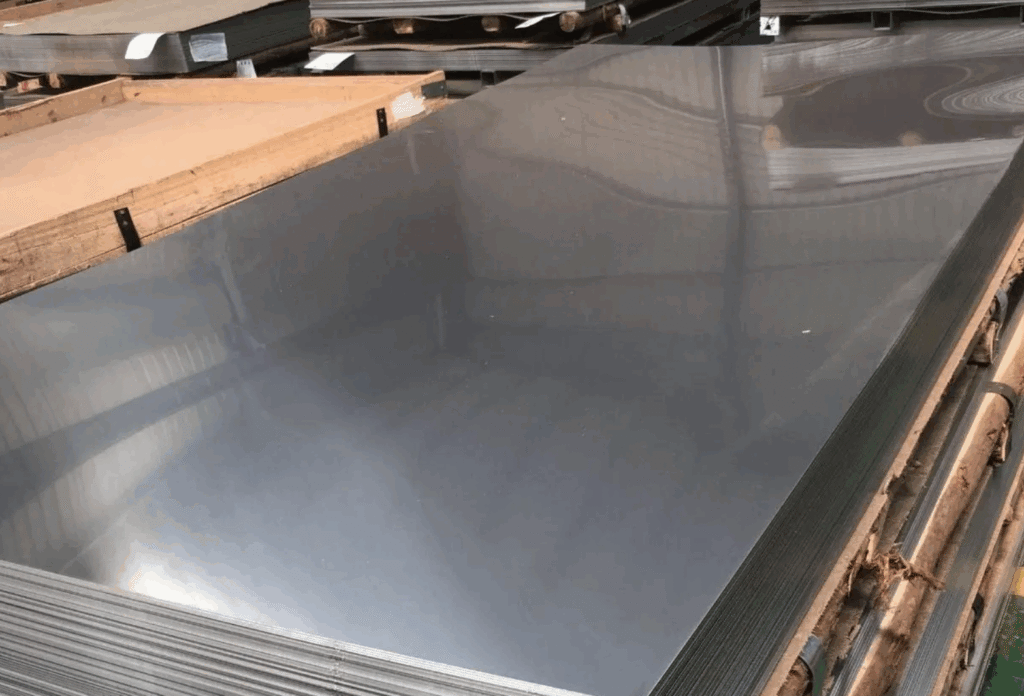
I. What Are Stainless Steel Plate Grades?
1.1 Definition and Function
Stainless steel plate grades are classifications based on the chemical composition (mainly contents of alloying elements such as chromium, nickel, molybdenum, titanium) and microstructure. Their core function is to clearly distinguish the core properties of different plates, including corrosion resistance, strength, weldability and formability, so as to provide a clear basis for users to select suitable plates according to actual needs (such as service environment, load requirements and cost budget), and avoid various problems caused by improper material selection.
Simply put, stainless steel plate grades are equivalent to a material ID card. The applicable scenario and performance limit of the plate can be quickly judged by the grade, which is also one of the core bases for material selection in industrial procurement and engineering design.
1.2 Classification Basis
The most critical basis for classifying stainless steel plate grades is its microstructure. Plates with different microstructures have vastly different performances and suitable applications. There are four main categories commonly used in the industry:
- Austenitic Stainless Steel: The most commonly used type, with excellent corrosion resistance, non‑magnetic (or weakly magnetic), outstanding weldability and formability, suitable for most general applications. Core representative grades: 304, 316, 321. Among them, 304 and 316 account for more than 70% of the stainless steel plate market. Its anti‑rust mechanism comes from a dense chromium‑rich oxide film formed on the surface when chromium content exceeds 12%, which effectively isolates corrosive media and can regenerate even if damaged.
- Ferritic Stainless Steel: Moderate cost, magnetic, good stress corrosion resistance and high‑temperature oxidation resistance, but relatively weak weldability. Suitable for cost‑sensitive applications with low corrosion resistance requirements. Representative grade: 430.
- Martensitic Stainless Steel: High strength and hardness, which can be further improved by heat treatment, magnetic, but average corrosion resistance. Suitable for applications requiring high strength and wear resistance. Representative grades: 410, 420.
- Duplex Stainless Steel: Combines the advantages of austenitic and ferritic stainless steel, with better corrosion resistance and strength than single‑structure plates. Suitable for harsh corrosive environments. Representative grades: 2205, 904L.
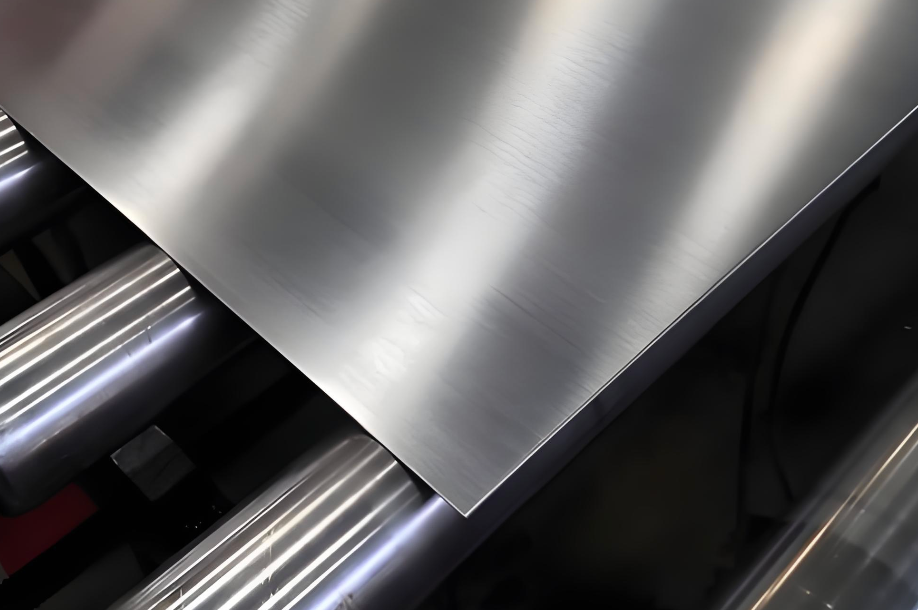
1.3 Influencing Factors
The differences in stainless steel plate grades mainly come from chemical composition. The contents of key alloying elements directly determine plate performance:
- Chromium (Cr): Core anti‑corrosion element. Higher content means stronger corrosion resistance. Effective anti‑corrosion oxide film forms only when Cr ≥ 12%, which is the essential premise for stainless steel to be “stainless”.
- Nickel (Ni): Improves toughness, weldability and corrosion resistance. Higher Ni content leads to better overall performance and higher cost (e.g., 304 contains ~8% Ni, 316 contains ~10% Ni).
- Molybdenum (Mo): Significantly improves resistance to chloride corrosion and pitting. It is the key difference between corrosion‑resistant grades such as 316 and 304, ideal for marine and chemical environments containing chloride.
- Titanium (Ti): Mainly improves weldability and reduces weld corrosion. For example, 321 stainless steel with titanium avoids intergranular corrosion after welding, suitable for high‑temperature welding scenarios.
In addition, carbon and manganese contents also affect strength and processability. Different grades balance performance and cost by precisely controlling these elements.
II. Stainless Steel Plate Grades
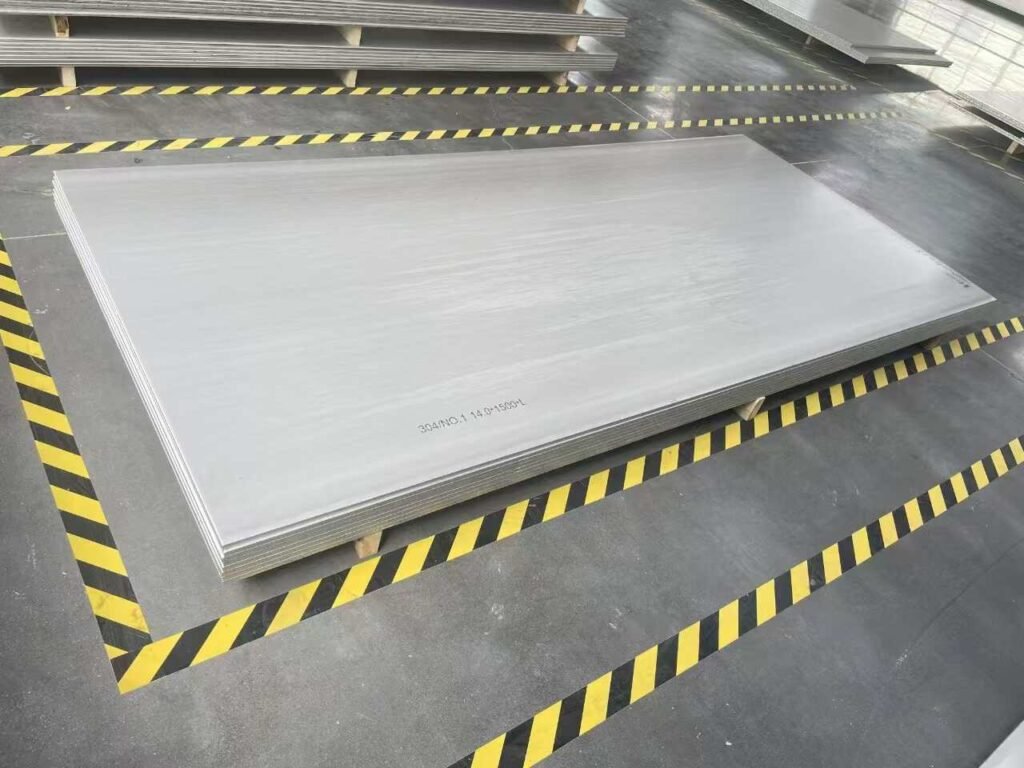
2.1 Grade 304 Stainless Steel Plate
Grade 304 is the most widely used stainless steel plate, with a market share of about 50%. It is austenitic, highly cost‑effective, and suitable for most general applications.
- Core Composition: ~18% Chromium (Cr), ~8% Nickel (Ni), no Molybdenum. Follows the classic “18‑8” ratio, one of the main reasons it is called “food‑grade stainless steel”.
- Key Properties: Excellent corrosion resistance to atmosphere, fresh water and neutral solutions; outstanding weldability and formability, easy to cut, bend and stamp; moderate strength, reasonable cost, non‑magnetic or weakly magnetic (slight magnetism may appear after processing, which is normal and not a quality issue). Note: The common misunderstanding that “good stainless steel is not attracted by a magnet” is misleading. 304 is mostly non‑magnetic but may become weakly magnetic after processing, while low‑quality 201 may be non‑magnetic. Judgement should be based on grade, not magnetism.
- Typical Applications: Food processing equipment (tanks, pipelines, worktables), kitchenware (sinks, cookware, cutting boards), medical devices (basic diagnostic equipment casings), architectural decoration (wall panels, door and window frames), daily hardware. Complies with GB 4806.9‑2016 national standard for food‑contact stainless steel.
- Precautions: Limited corrosion resistance in high‑chloride environments (seawater, chlorine‑containing disinfectants), prone to pitting. Not suitable for marine or harsh chemical environments. For food contact, confirm the “304” mark and national standard to avoid unlabeled inferior products.
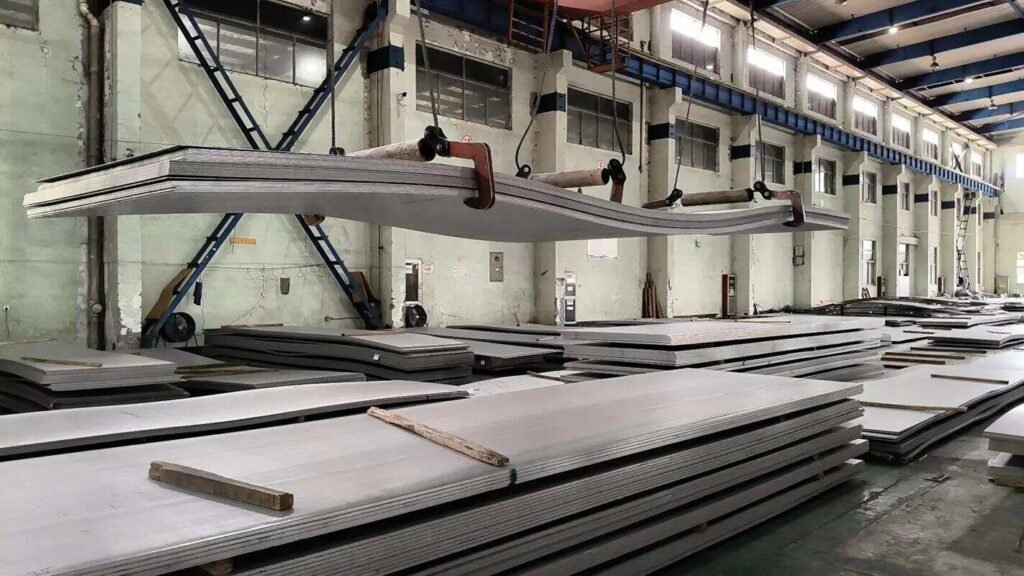
2.2 Grade 316 Stainless Steel Plate
Grade 316 is austenitic and an upgraded version of 304. Its core advantage is stronger corrosion resistance, especially for harsh corrosive environments, making it the first choice for high‑end industrial applications.
- Core Composition: ~16% Chromium (Cr), ~10% Nickel (Ni), ~2% Molybdenum (Mo). The addition of Mo is the key difference from 304.
- Key Properties: Significantly better resistance to chloride, pitting and acid‑alkali corrosion than 304; good high‑temperature stability, usable stably from ‑270°C to 450°C; weldability and formability similar to 304, but cost 20%–30% higher; also non‑magnetic or weakly magnetic.
- Typical Applications: Marine shipping equipment (hardware, decks, cabin interiors), chemical equipment (reactors, pipelines, valves), pharmaceutical industry (drug storage tanks, pipelines), seafood processing equipment, high‑end outdoor decoration (coastal buildings), especially for strong acid, alkali and high‑salt environments.
- Comparison with 304: Core differences lie in corrosion resistance (316 better against chloride and acid‑alkali), cost (316 higher), application (304 general, 316 for harsh corrosion). Tensile strength of 316 is slightly lower than 304. Choose 304 for general use and 316 for harsh environments.
2.3 Grade 201 Stainless Steel Plate
One of the lowest‑cost stainless steel plates, austenitic, average corrosion resistance, prone to rust (especially in humid and chloride environments), only for low‑requirement applications.
Core Applications: Decorative parts (stainless steel trims, billboards), general brackets, non‑load‑bearing structural parts. Not suitable for food contact, outdoor or corrosive environments. Carefully distinguish from 304/316 during procurement to avoid being supplied inferior products.
2.4 Grade 430 Stainless Steel Plate
Ferritic stainless steel, moderate cost, magnetic, good oxidation and stress corrosion resistance, but lower corrosion resistance than 304, average weldability.
Core Applications: Home appliances (refrigerator liners, washing machine casings, microwave parts), automotive accessories (door handles, trims), low‑end decoration. Suitable for cost‑sensitive applications without strict corrosion requirements. Composition close to “18‑0” (18% Cr, no Ni), high cost‑performance.
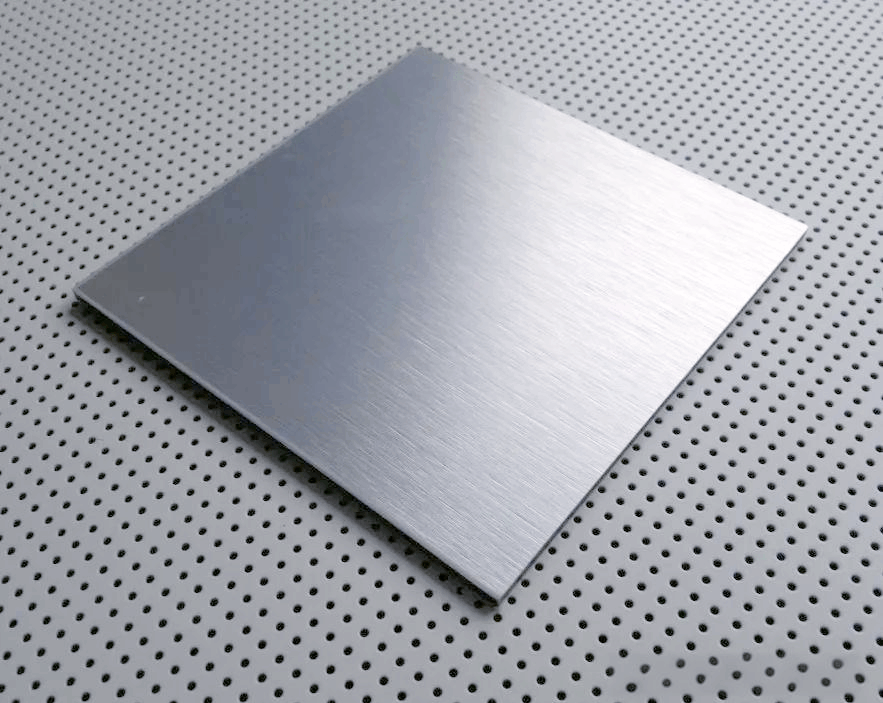
2.5 Grade 410 Stainless Steel Plate
Martensitic stainless steel, high strength and wear resistance, magnetic, average corrosion resistance, hardenable by heat treatment.
Core Applications: Tableware (knives, scissors), mechanical parts (valves, bearings), medical devices (low‑end surgical instruments). Suitable for high strength and wear resistance requirements with low corrosion demands.
2.6 Grade 420 Stainless Steel Plate
Cutlery‑grade martensitic stainless steel, high hardness and wear resistance, better corrosion resistance than 410, hardenable by heat treatment.
Core Applications: Surgical instruments (scalpels, hemostats), razor blades, cutlery (kitchen knives, fruit knives), mold parts. Suitable for applications requiring sharp edges and high strength.
2.7 Grade 321 Stainless Steel Plate
Austenitic stainless steel, with titanium added based on 304. Core advantage: excellent weldability, avoids intergranular corrosion after welding, good high‑temperature stability.
Core Applications: High‑temperature scenarios (boilers, heat exchangers, high‑temperature pipelines), welded structural parts (industrial equipment welds). Suitable for applications requiring welding and long‑term high temperatures.
III. How to Choose the Right Stainless Steel Plate Grade?
The core principle for selecting stainless steel plate grades is “scenario matching”. Combine service environment, performance requirements and cost budget to choose efficiently, avoiding over‑specification or wrong selection.
3.1 Food Processing Industry
Core Requirements: Hygiene, non‑toxicity, corrosion resistance (to food acids, salts), compliance with food‑contact standards.
Recommended Grades: 304 (general, for ordinary food processing such as grain and vegetables), 316 (high‑end, for corrosive foods such as seafood, pickles, vinegar).
Avoid: 201 (poor corrosion, easy to rust and contaminate food), 410 (insufficient corrosion for long‑term food contact). Confirm compliance with GB 4806.9‑2016 and clear grade marking.
3.2 Marine / Shipping Industry
Core Requirements: Chloride corrosion resistance (seawater), pitting resistance, high strength, resistance to high salt, humidity and UV.
Recommended Grades: 316 (general marine use), 2205 duplex (offshore platforms, subsea pipelines), 904L (high‑end, seawater desalination, deep‑sea equipment).
Avoid: 304 (easily corroded by seawater), 430 (insufficient corrosion resistance).
3.3 Construction / Decoration Industry
Core Requirements: Appearance, atmospheric corrosion resistance, moderate cost, weldability and formability in some cases.
Recommended Grades: 304 (general indoor decoration, wall panels, handrails, cost‑effective), 430 (low‑end decoration, trims, low cost), 316 (high‑end outdoor, coastal / acid‑rain areas). Choose 316 for outdoor and 304 for indoor; high grades are unnecessary for general use.
3.4 Chemical / Pharmaceutical Industry
Core Requirements: Chemical corrosion resistance (strong acid, alkali, organic solvents), high temperature resistance, good weldability, hygiene standards for pharmaceuticals.
Recommended Grades: 316 (general chemical pipelines, tanks), 321 (high temperature, reactors, heat exchangers), 904L (high‑end, strong corrosive media such as sulfuric acid, hydrochloric acid). Pharmaceuticals prefer 316 / 904L for impurity‑free, easy‑cleaning performance.
3.5 Automotive / Machinery Industry
Core Requirements: Strength, wear resistance, controllable cost, high temperature and oxidation resistance in some cases.
Recommended Grades: 410 (mechanical parts such as valves, bearings, high strength and wear resistance), 430 (automotive trims, moderate cost, appearance). Select based on functional needs, balance strength and cost rather than high corrosion resistance.
3.6 Medical Device Industry
Core Requirements: Hygiene, non‑toxicity, corrosion resistance, easy disinfection, high strength and hardness for some instruments.
Recommended Grades: 304 (basic diagnostic devices, casings, tables), 316 (surgical instruments, hemostats, tweezers, corrosion‑resistant and easy to disinfect), 420 (cutting instruments, scalpels, scissors, high hardness and sharpness). Use grades compliant with medical device standards.
3.7 General Scenarios
Core Requirements: Low cost, basic usage, no strict corrosion or strength requirements.
Recommended Grades: 201 (decorations, brackets, non‑load‑bearing parts), 430 (low‑end decoration, simple hardware).
Note: Not for humid, chloride or food‑contact environments to prevent rust and failure.
IV. Practical Knowledge About Stainless Steel Plate Grades
4.1 Relationship Between Grade, Thickness and Specification
Different grades can provide basically the same thickness and specifications. The core difference is performance, not dimensions.
Common thickness: 0.3 mm – 100 mm
Common width: 1000 mm, 1220 mm, 1500 mm
Common length: 2000 mm, 2440 mm, 6000 mm
Plates ≤ 3 mm are mostly cold rolled (smooth surface, high precision, for decoration and food equipment). Plates > 3 mm are mostly hot rolled (high strength, good toughness, for industrial equipment and construction).
Note: For the same grade, thicker plate means higher strength, but more difficult processing and higher cost. Performance differences exist regardless of thickness between different grades (e.g., 316 is more corrosion‑resistant than 304 at the same thickness).
4.2 Relationship Between Grade and Price
Price is directly related to grade. Rule: higher alloy content and corrosion resistance = higher price.
Price from low to high:
201 < 430 < 410 < 304 < 316 < 2205 < 904L
V. Frequently Asked Questions
- Q1: What are the most commonly used stainless steel plate grades?
- A1: Core grades: 304, 316, 430, 410. 304 has the highest share (~50%) for general use. 316 is the second most common for harsh corrosion. 430 and 410 suit cost‑sensitive, high strength or wear resistance needs.
- Q2: What is the core difference between 304 and 316?
- A2: Chemical composition and corrosion resistance. 316 contains molybdenum, with much better chloride and pitting resistance. 316 costs 20%–30% more. 304 is general‑purpose; 316 is for harsh environments. Tensile strength of 316 is slightly lower. Both are non/weakly magnetic and cannot be distinguished by magnetism.
- Q3: Which grades are suitable for food contact?
- A3: Priority: 304 (general food processing), 316 (highly corrosive foods). Both are non‑toxic, easy to clean and comply with GB 4806.9‑2016. Avoid 201, 410 to prevent rust contamination.
- Q4: Does grade affect weldability and formability?
- A4: Yes. Austenitic stainless steel (304, 316, 321) has the best weldability and formability. Martensitic (410, 420) has poor weldability and requires post‑weld heat treatment to avoid cracking. Ferritic (430, 409) has average weldability and needs controlled processes.
- Q5: What is the relationship between thickness and grade?
- A5: No direct relationship. Different grades can have the same thickness. Thickness mainly affects strength and processing difficulty; grade mainly affects corrosion resistance, weldability and other core properties. For the same grade, thicker = higher strength and higher cost.
VI. Conclusion
The key to choosing stainless steel plate grades is “scenario matching”. There is no need to blindly pursue high grades, nor to choose low grades just to save cost.
- 304: General‑purpose, highest cost‑performance for most daily and industrial uses.
- 316: Corrosion‑resistant, for marine, chemical and other harsh environments.
- 430, 410: For cost‑sensitive, high strength or wear resistance needs.
- 904L, 2205: High‑end, only for extreme corrosion and strength requirements.
Correct grade selection improves service life and stability, reduces maintenance costs, and maximizes cost‑performance. For specific scenario selection inquiries, please contact Tonghui!
Reference Source
- “National Standard for Stainless Steel Plates” (GB/T 3280-2015): specifies the grades, chemical composition, performance requirements, inspection methods, etc. of stainless steel plates, and is the core basis for domestic stainless steel plate production, inspection, and procurement. It clarifies the composition and performance standards of commonly used grades such as 304, 316, and 430.
- “National Standard for Safety of Stainless Steel Products in Food Contact” (GB 4806.9-2016): specifies the safety requirements for stainless steel plates in food contact, including chemical composition, hygiene indicators, etc., which are the core basis for material selection in the food processing industry. The food scene adaptation recommendations in this article all refer to this standard.
- American ASTM A240 standard: an internationally recognized stainless steel plate standard that specifies the chemical composition and performance requirements of American UNS grades (such as S30400, S31600). The international grade correspondence table in this article refers to this standard for American grades.



 English
  Spanish
  Afrikaans