
As a core basic material in industries such as construction, bridges, ships, and machinery manufacturing, the weight query and accurate calculation of steel plates directly affect project budget preparation, logistics loading planning, structural design safety, and procurement cost control. It is a high-frequency demand in the daily work of engineers, purchasers, and construction personnel.
This article focuses on the core pain point of “steel plate weights”, integrates industry standard data, accurate calculation formulas, and practical comparison charts, abandons redundant theories, and all content can be directly applied and referenced. It helps relevant practitioners quickly solve the problems of steel plate weight query and calculation, covering the needs of various categories such as carbon steel plates, stainless steel plates, and thin steel plates, and taking into account both metric and imperial units, suitable for various domestic and foreign application scenarios.
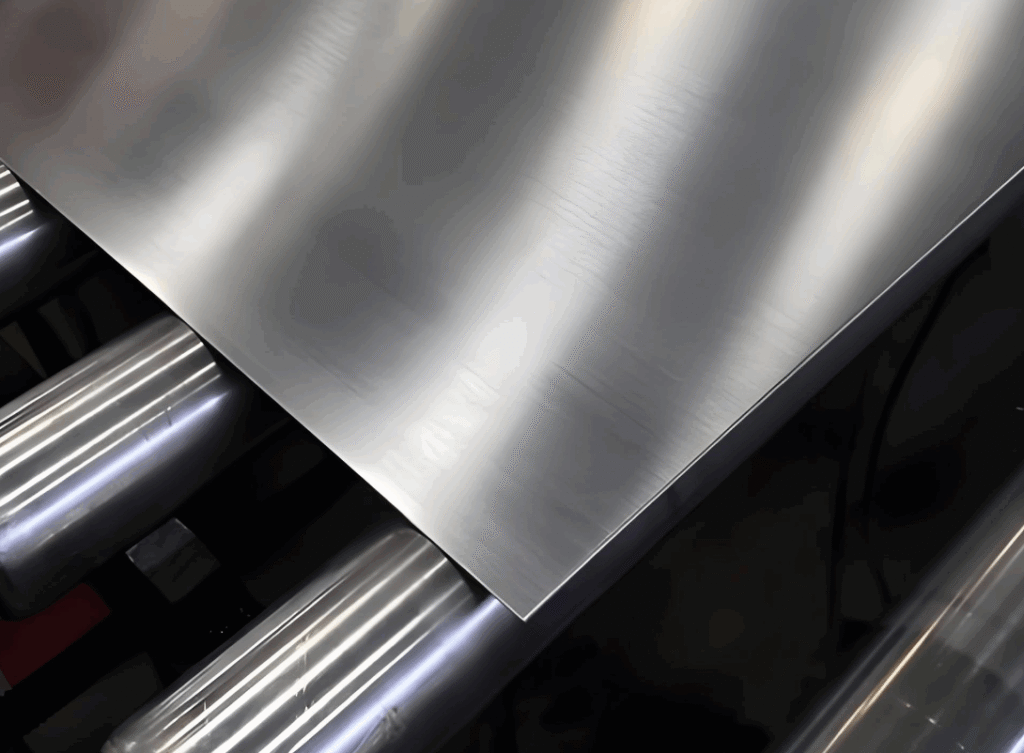
Steel Plate Weight Chart
Combined with industry standards such as GB/T 3274-2017 and GB/T 4237-2015 and common market specifications, the comparison chart is presented by “unit classification + material classification”. The data is accurate and can be directly copied for use, balancing practicality and professionalism, covering common thicknesses from 3mm to 100mm, suitable for high-frequency scenarios such as project procurement and logistics accounting.
Metric Unit Weight Chart (kg, Most Commonly Used)
The following is the metric weight chart for carbon steel plates (density 7.85g/cm³), covering mainstream length and width specifications in the industry, specifying the weight per square meter and the weight of a single plate for quick accounting. The data meets the requirements of the industry standard for ordinary carbon structural steel medium and heavy plates:
| Steel Plate Thickness (mm) | Weight per Square Meter (kg) | 1250mm×2500mm (Single Plate Weight, kg) | 1500mm×6300mm (Single Plate Weight, kg) | 2000mm×6300mm (Single Plate Weight, kg) |
| 3 | 23.55 | 73.6 | 223.4 | 297.9 |
| 6 | 47.1 | 147.2 | 446.8 | 595.8 |
| 8 | 62.8 | 196.3 | 595.7 | 794.4 |
| 10 | 78.5 | 245.3 | 744.6 | 993.0 |
| 12 | 94.2 | 294.4 | 893.5 | 1191.6 |
| 16 | 125.6 | 392.5 | 1191.4 | 1588.8 |
| 20 | 157.0 | 490.6 | 1489.2 | 1986.0 |
| 50 | 392.5 | 1226.6 | 3723.1 | 4965.0 |
| 100 | 785.0 | 2453.1 | 7446.2 | 9930.0 |
Note: The data in the table is theoretical weight, calculated based on the density of low-carbon steel (0.1% carbon content) of 7.85g/cm³. There is a slight difference in weight between medium-carbon steel and high-carbon steel, with a deviation of no more than 1%.

Imperial Unit Weight Chart (lbs)
Suitable for procurement and construction scenarios in Europe and the United States, grouped by imperial thickness (inches), corresponding to mainstream length and width specifications, calculated based on the carbon steel density of 490lb/ft³. The data can be directly used for international procurement needs:
| Steel Plate Thickness (inch) | Weight per Square Foot (lbs) | 48in×96in (Single Plate Weight, lbs) | 60in×120in (Single Plate Weight, lbs) |
| 3/16″ | 7.66 | 245.1 | 383.0 |
| 1/4″ | 10.21 | 326.7 | 510.5 |
| 5/16″ | 12.76 | 408.3 | 638.0 |
| 3/8″ | 15.32 | 489.9 | 766.0 |
| 1/2″ | 20.42 | 653.4 | 1021.0 |
Weight Comparison Chart for Different Material Steel Plates
Differences in the density of steel plates of different materials lead to different weights for the same specification. The following is a weight comparison of common materials (carbon steel, stainless steel) with the same thickness and specification (1000mm×1000mm). The data refers to industry standards and open-source material specific gravity data, and the accuracy meets the requirements of engineering use:
| Steel Plate Thickness (mm) | Carbon Steel Plate (7.85g/cm³, kg) | 304 Stainless Steel Plate (7.93g/cm³, kg) | 316L Stainless Steel Plate (7.98g/cm³, kg) | 13% Chromium Stainless Steel Plate (7.75g/cm³, kg) |
| 6 | 47.1 | 47.6 | 47.9 | 46.5 |
| 8 | 62.8 | 63.4 | 63.8 | 62.0 |
| 10 | 78.5 | 79.3 | 79.8 | 77.5 |
| 12 | 94.2 | 95.2 | 95.8 | 93.0 |
| 20 | 157.0 | 158.6 | 159.6 | 155.0 |
Note: Different stainless steel materials have slightly different densities. The density of 201, 202, 301 and other stainless steels is 7.93g/cm³; the density of 309S, 310S and other stainless steels is 7.98g/cm³; the density of 405, 410 and other stainless steels is 7.75g/cm³. The weight should be calculated according to the specific material when purchasing.

Steel Plate Weight Calculation Formula
For non-standard specification steel plates (no comparison chart available), two accurate calculation formulas (metric and imperial) are provided, with detailed examples and material density references. The formulas comply with industry calculation standards, and can be directly applied by engineers and purchasers without complex derivation, ensuring accurate calculation results.
Metric Calculation Formula (Applicable to kg, mm, m Units, Most Commonly Used)
Core Formula: Weight (kg) = Material Density (g/cm³) × Length (m) × Width (m) × Thickness (mm)
Explanation: In the formula, the thickness unit is mm, the length and width are m, and the density is g/cm³. No unit conversion is required during calculation, and the values can be directly substituted. It is suitable for domestic engineering and procurement scenarios, and meets the weight calculation requirements in the GB/T 3274-2017 standard.
Example 1: Calculate the weight of a carbon steel plate with 6m (length) × 1.5m (width) × 10mm (thickness), with a carbon steel density of 7.85g/cm³. Substitute into the formula:
Weight = 7.85 × 6 × 1.5 × 10 = 706.5kg, which is consistent with the data in the comparison chart and can be used for project budget accounting.
Example 2: Calculate the weight of a 304 stainless steel plate with 5m (length) × 2m (width) × 8mm (thickness), with a 304 stainless steel density of 7.93g/cm³. Substitute into the formula:
Weight = 7.93 × 5 × 2 × 8 = 634.4kg, which is accurately suitable for the weight accounting of stainless steel procurement.
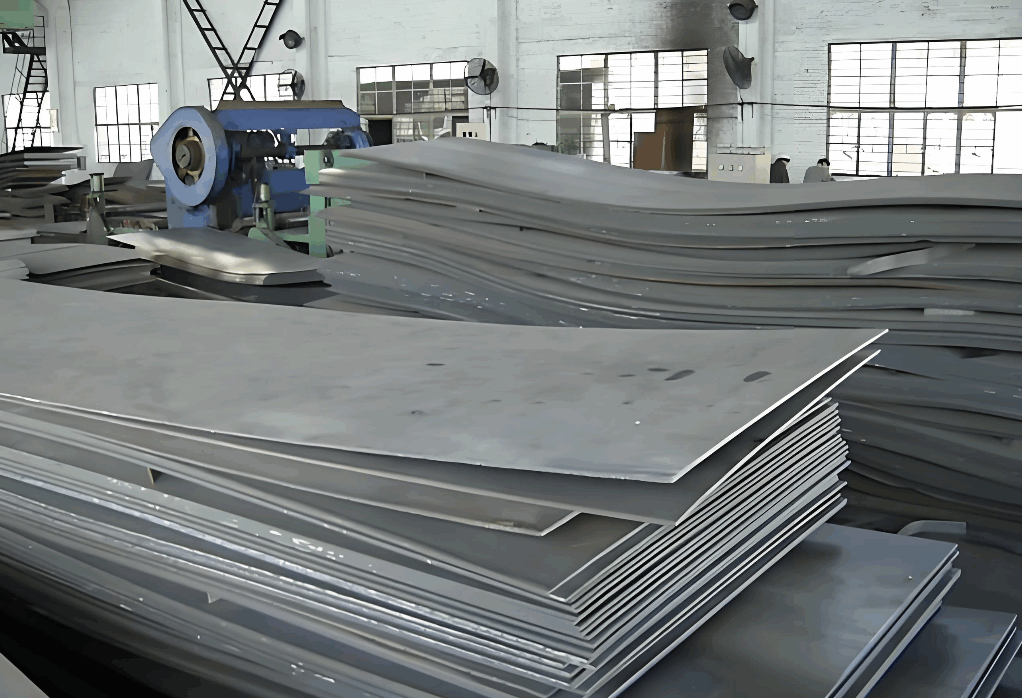
Imperial Calculation Formula (Applicable to lbs, ft, inch Units)
Core Formula: Weight (lbs) = Length (ft) × Width (ft) × Thickness (ft) × Material Density (lb/ft³)
Explanation: The steel plate thickness (inch) needs to be converted to feet (ft) first, 1 inch = 1/12 feet. The density of carbon steel is 490lb/ft³, and the density of stainless steel is about 500lb/ft³, which is suitable for international procurement and export scenarios.
Example: Calculate the weight of a carbon steel plate with 8ft (length) × 4ft (width) × 0.25inch (thickness). First convert the thickness: 0.25inch = 0.25÷12≈0.0208ft. Substitute into the formula:
Weight = 8 × 4 × 0.0208 × 490 ≈ 326.7lbs, which is consistent with the data in the imperial comparison chart and can be directly connected to international suppliers.
Reference of Density for Different Materials (Precision Version)
The density of steel plates of different materials directly affects the weight calculation results. The following are the commonly used material density parameters in the industry, referring to open-source material data and industry standards. The accuracy meets the testing requirements and can be directly used for formula conversion:
- Carbon Steel: Low-carbon steel (0.1% carbon content) 7.85g/cm³, medium-carbon steel (0.4% carbon content) 7.82g/cm³, high-carbon steel (1% carbon content) 7.81g/cm³. In engineering, it is defaulted to 7.85g/cm³ for calculation, and the deviation is negligible;
- Stainless Steel: The density of 304, 304L, 301, 201, 202 and other materials is 7.93g/cm³; the density of 316, 316L, 309S, 310S and other materials is 7.98g/cm³; the density of 405, 410, 420, 430 and other materials is 7.75g/cm³;
- Special Steel Plates: The weight of hot-rolled longitudinally tapered steel plates (LP steel plates) is calculated according to the density of the corresponding material, and its weight measurement method must comply with the national standard requirements of “Hot-rolled Longitudinally Tapered Steel Plates”.
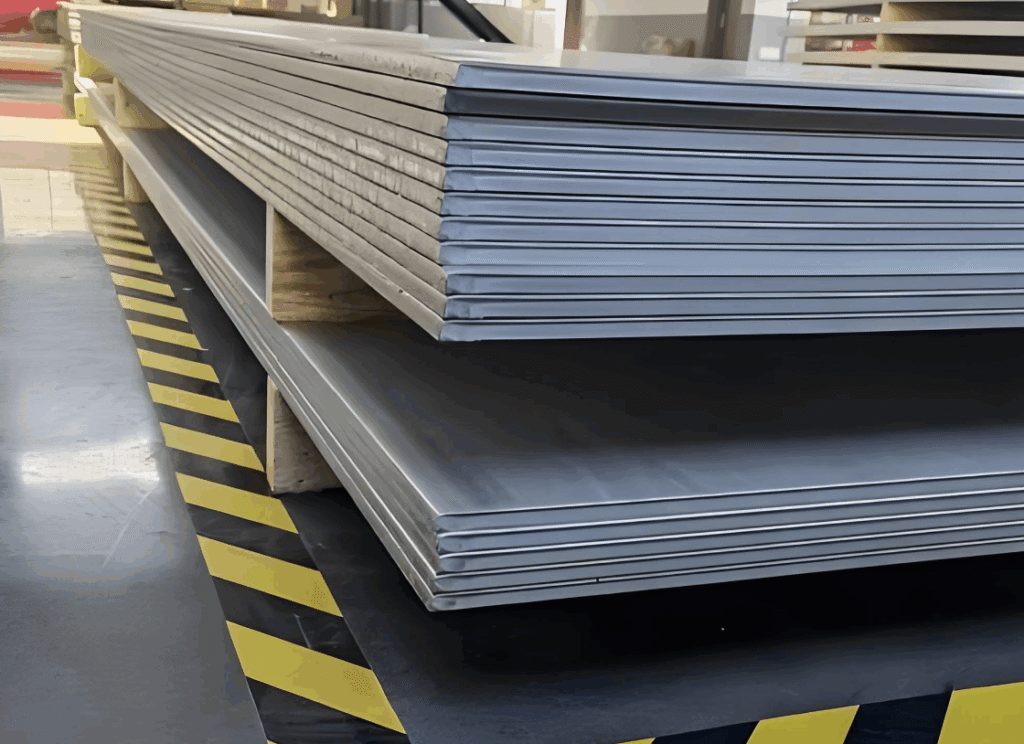
FAQ
Q1: How to calculate the weight of non-standard size steel plates?
A1: Directly apply the metric or imperial calculation formula in Part 2 of this article, determine the corresponding density according to the steel plate material, and input the actual length, width, and thickness (pay attention to unit unification) to quickly get the weight. Example: Calculate the weight of a carbon steel plate with 3m×1.2m×7mm, weight=7.85×3×1.2×7=199.98kg, which can be directly used for logistics loading accounting.
Q2: What is the standard density of steel plates? Will the density difference of different materials affect the weight?
A2: The standard density of steel plates varies with materials. The default density of carbon steel plates is 7.85g/cm³ (490lb/ft³), and the density of stainless steel plates is 7.75-7.98g/cm³ (about 500lb/ft³). Density difference will directly affect the weight. Under the same specification, 316L stainless steel plates are about 1.7% heavier than carbon steel plates. The material must be clearly specified when purchasing to avoid cost impact caused by weight accounting deviation.
Q3: Is there a difference between the theoretical weight and the actual weight of steel plates? What is the deviation range?
A3: There is a slight difference. The theoretical weight is calculated based on standard density and size, while the actual weight is affected by factors such as manufacturing tolerance, surface treatment (such as galvanizing, pickling), and material composition fluctuation. It meets the weight allowable deviation requirements in the GB/T 1499.1-2017 standard, and the deviation is usually within ±3%. The theoretical weight can be used for accounting when purchasing, and the actual settlement shall be based on the weight certificate provided by the manufacturer.
Q4: How to convert the inch of steel plate size to feet? To adapt to the imperial calculation formula?
A4: The conversion formula between inches and feet is: 1 inch = 1/12 feet (ft). For example, 0.5 inches = 0.5÷12≈0.0417ft, 1 inch = 0.0833ft. After conversion, directly substitute into the imperial calculation formula to quickly get the imperial weight, which is suitable for international procurement scenarios.
Q5: What is the weight per square meter of a 12mm thick steel plate? Is there a difference between different materials?
A5: The weight per square meter of a 12mm thick carbon steel plate is 94.2kg (7.85×1×1×12); the weight per square meter of a 304 stainless steel plate is about 95.2kg (7.93×1×1×12); the weight per square meter of a 316L stainless steel plate is about 95.8kg (7.98×1×1×12); the weight per square meter of a 13% chromium stainless steel plate is 93.0kg (7.75×1×1×12). There are slight differences in weight between different materials, and the corresponding data should be selected according to the actual material.
Q6: How to calculate the weight of hot-rolled longitudinally tapered steel plates (LP steel plates)?
A6: The weight of LP steel plates shall be calculated according to the weight measurement method specified in the national standard “Hot-rolled Longitudinally Tapered Steel Plates”. The total weight is obtained by separately calculating the size and material density of different thickness sections. Its thickness range is 10mm~400mm, which is mainly used in large-scale structural projects such as ships and bridges. It can be calculated with reference to the corresponding material density and section size.
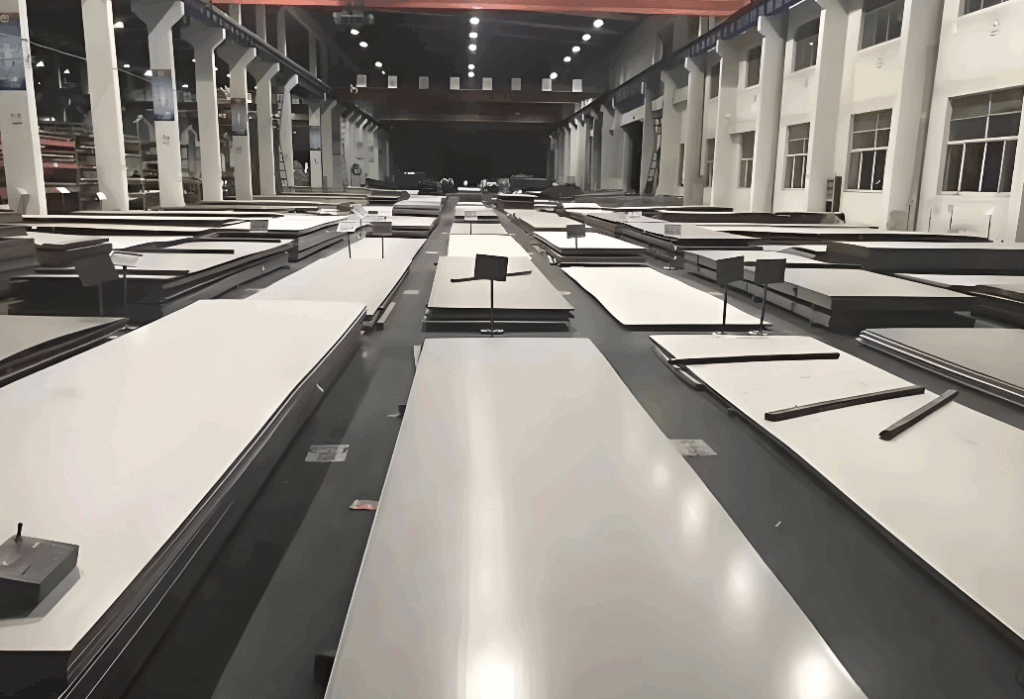
Related Steel Weight Reference
- Steel Coil Weight Reference: Steel coil weight = material density × steel coil diameter × steel coil width × steel coil thickness (unit unification). For common carbon steel coils (thickness 3mm-10mm, width 1250mm), the weight per meter is about 23.55kg-78.5kg. It can be calculated according to the actual size of the steel coil by applying the formula, which is suitable for steel warehousing and transportation accounting.
- Thin Steel Plate Weight Guide: For thin steel plates (thickness 1.6mm-5mm), calculated according to the carbon steel plate density of 7.85g/cm³, the weight per square meter is 12.56kg (1.6mm), 19.63kg (2.5mm), 39.25kg (5mm), which is suitable for the procurement of thin steel plates in electronics, light industry and other industries, and meets the requirements of the GB/T 709-88 standard.
- Standard Size and Weight of Steel Plates: Combined with the mainstream standard sizes in the industry, supplementary weights corresponding to common specifications are provided to facilitate quick matching during procurement. For example, the weight of a 1500mm×6000mm×10mm carbon steel plate is 7.85×1.5×6×10=706.5kg; the weight of a 2000mm×8000mm×16mm carbon steel plate is 7.85×2×8×16=2010.6kg, which meets the standard specification requirements of ordinary carbon structural steel medium and heavy plates.
Recommended Practical Tools
Three commonly used and reliable online steel plate weight calculators in the industry are recommended. No manual calculation is required. Input the size and material to generate the weight result with one click, saving working time and adapting to the quick accounting needs of non-standard specifications:
- OSGeo Steel Plate Weight Calculator: Supports various materials such as carbon steel and stainless steel, can input metric and imperial sizes, generates weight with one click, has accurate data, conforms to industry standards, and is free to use;
- Steel Industry Online Calculator: Supports weight calculation of various steels such as steel plates, steel coils, and steel pipes, can customize material density, adapts to the calculation of special material steel plates, and provides industry standard references;
- Engineering Material Calculator: Integrates functions such as steel plate weight, cost accounting, and unit conversion, adapts to the daily work of engineers and purchasers, supports data export, and facilitates batch accounting.
Conclusion
This article integrates steel plate weight comparison charts, accurate calculation formulas, common questions and extended references. All content is based on industry standards and practical experience, which is in line with the reading habits of engineers, purchasers and construction personnel. The data is accurate and can be directly applied, solving the core pain points of steel plate weight query and calculation. Whether it is quick query of standard specifications, independent calculation of non-standard specifications, carbon steel, stainless steel, or metric and imperial units, the needs can be quickly solved through this article.
References
- GB/T 3274-2017 “Carbon Structural Steel and Low Alloy Structural Steel Hot Rolled Thick Steel Plates and Strips”: The core contents of the document, such as the weight calculation standard, size specifications, and weight allowable deviation of carbon steel plates, refer to this standard, including the specification setting of metric weight tables, theoretical weight calculation basis, etc.
- GB/T 4237-2015 “Hot rolled Stainless Steel Plates and Strips”: As the core basis for density parameters and weight calculation specifications of stainless steel plates (304, 316L, 13% chromium stainless steel, etc.), the weight comparison data of different materials of stainless steel plates in the document are all derived from this standard.
- GB/T 1499.1-2017 “Steel for reinforced concrete – Part 1: Hot rolled round steel bars”: The deviation range between the theoretical weight and actual weight of the steel plate in the document (within ± 3%), and the influence of material composition fluctuations on weight refer to the relevant provisions of this standard.


 English
  Spanish