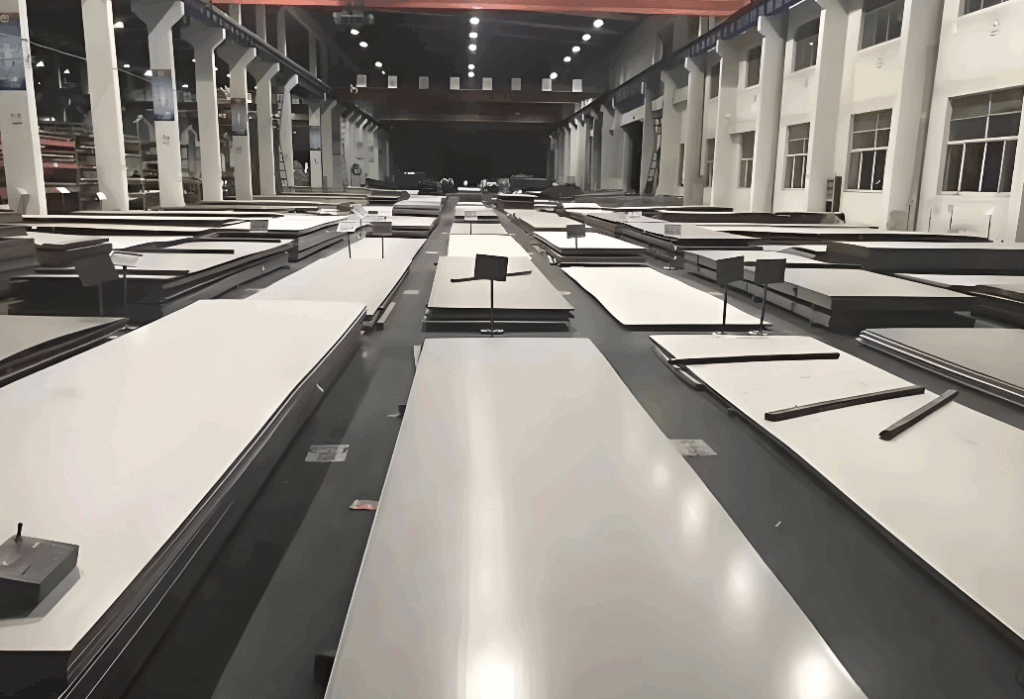
TongHui is one of the leading 321 Stainless Steel Plate manufacturers and suppliers in China, located in Liaocheng, Shandong Province. 321 stainless steel plate, optimized with titanium elements, effectively avoids intergranular corrosion, and combines excellent high temperature resistance and corrosion resistance, making it suitable for complex working conditions. Our products cover multiple specifications and sizes. We carefully select high-quality base materials, precisely control the production process, and provide stable supply and customized services. Welcome to inquire!
321 stainless steel plate is a titanium-stabilized alloy plate modified based on the 18-8 type austenitic stainless steel (Cr18Ni9). Its core chemical composition consists of 17%-19% chromium, 9%-12% nickel, with the addition of titanium element (Ti≥5×C%). Its key advantage is that titanium preferentially combines with carbon to form titanium carbide, which effectively prevents intergranular corrosion caused by the precipitation of carbon and chromium in high-temperature environments, enabling it to withstand continuous high-temperature operating conditions of 430-900℃. This plate is widely used in fields such as chemical equipment, high-temperature pipelines, aerospace components, and food processing machinery, and is the preferred stainless steel material for high-temperature and corrosion-resistant scenarios.
321 Stainless Steel Plate Price
As of early January 2026, the mainstream FOB quotation of 321 stainless steel plate (UNS S32100) in the international market is 1,600-1,900 US dollars per ton. The specific price is affected by multiple professional factors. The standard specifications of conventional cold-rolled 2B finish with a thickness of 0.039-0.394 inches are about 1,650-1,750 US dollars per ton; due to higher processing costs, the quotation of hot-rolled No.1 finish medium and heavy plates (0.394-1.969 inches) ranges from 1,750-1,900 US dollars per ton.
The core driving factors of the price include: price fluctuations of raw materials such as nickel and chromium, surface treatment precision, origin differences, order volume and certification requirements.
Get your exclusive customized 321 stainless steel plate solution!
Titanium element (Ti≥5×C%) is added, which preferentially forms titanium carbide with carbon, preventing intergranular corrosion caused by the precipitation of carbon and chromium at high temperatures. The corrosion resistance remains stable after welding or high-temperature heat treatment.
Excellent high-temperature performance
Capable of serving in continuous high-temperature operating conditions of 430-900℃, with outstanding hot strength and oxidation resistance, no obvious performance attenuation, suitable for high-temperature equipment manufacturing.
Balanced comprehensive corrosion resistance
Contains 17%-19% chromium and 9%-12% nickel, resistant to atmosphere, fresh water, neutral salts and some acid-alkali media, can resist pitting corrosion caused by chloride ions, applicable to multi-medium scenarios.
Easy to process and weld
No solution treatment is required after welding, and the weld seam has no embrittlement; cold working is suitable for stamping, bending and other processes, with room-temperature tensile strength ≥515MPa and good formability.
321 Stainless Steel Plate Application Field
Our 321 stainless steel plate is applied in various fields!
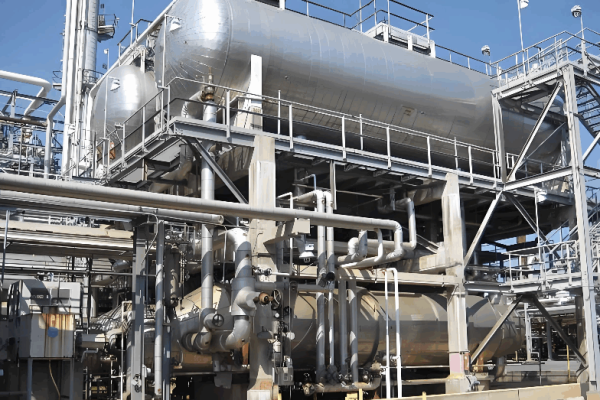
Chemical Equipment
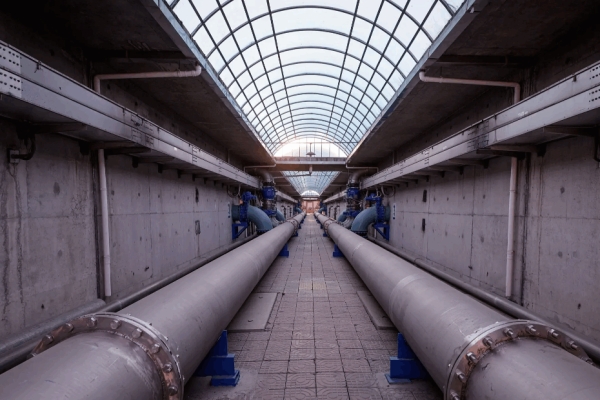
High-Temperature Pipeline
Aerospace Components
Frequently Asked Questions
What is 321 stainless steel?
321 stainless steel is a titanium-stabilized alloy modified based on the 18-8 type austenitic stainless steel (Cr18Ni9). Its core composition includes 17%-19% chromium and 9%-12% nickel, with the titanium content meeting Ti≥5×C%. Its core advantage lies in that titanium combines with carbon to form titanium carbide, which can effectively prevent intergranular corrosion at high temperatures. It can serve stably at 430-900℃ operating conditions, and has excellent corrosion resistance, weldability and workability. Widely used in chemical industry, aerospace, high-temperature equipment and other fields, it is the preferred material for high-temperature and corrosion-resistant scenarios.
Is 321 stainless better than 304?
It cannot be simply judged that 321 stainless steel is “better” than 304, as the core difference between the two lies in their applicable scenarios. 321 is a titanium-stabilized modified version of 304. With the addition of titanium, it offers superior intergranular corrosion resistance and high-temperature stability (430-900℃), making it suitable for scenarios such as post-welding service and high-temperature equipment. 304, however, has higher cost-effectiveness, and its corrosion resistance can meet the requirements of conventional operating conditions like ambient temperature atmosphere and fresh water. For applications involving high temperatures, welding processes, or harsh corrosive environments, 321 has more advantages; in conventional scenarios, 304 is a more economical choice, and selection should be based on specific needs.
Is 321 stainless better than 316?
It cannot be simply judged that 321 stainless steel is “better” than 316, as their core advantages lie in different application scenarios. 321 contains titanium, offering superior intergranular corrosion resistance and high-temperature stability (430-900℃), making it suitable for post-welding service and high-temperature equipment. 316 contains molybdenum (2-3%) and has stronger resistance to chloride ion corrosion and acid-alkali media (PREN≥25), ideal for harsh corrosive environments like marine and chemical industries. Select based on needs: 321 excels in high-temperature scenarios, while 316 is more advantageous in corrosive environments.




 English
  Spanish