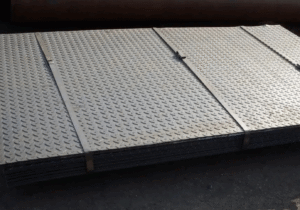
TongHui is one of the leading 1045 steel plates manufacturers and suppliers in China, located in Liaocheng, Shandong Province. 1045 steel plate, as a high-quality medium carbon structural steel plate, combines high strength, good toughness, and excellent workability, with good hardenability and stable performance after heat treatment. It is suitable for various processes such as cutting, stamping, and welding. Tonghui provides a full range of specifications and supports customization on demand. The products comply with national/American standards, with strict quality control and stable supply. Welcome to inquire!
1045 steel plate is a medium-carbon structural steel under the AISI/SAE standard, with the designation “1045” indicating an average carbon content of approximately 0.45%. This material offers good comprehensive mechanical properties. Its strength and hardness can be significantly enhanced through heat treatment (such as quenching and tempering, i.e., a tempering process), while maintaining a certain degree of plasticity and toughness. Its tensile strength typically falls within the range of 570-700 MPa. It is widely used in manufacturing mechanical components that require medium strength, high wear resistance, and adequate toughness, such as shafts, gears, connecting rods, high-strength bolts, as well as various molds and tools.
1045 Steel Plate Price
As of early January 2026, the mainstream market quotation for 1045 steel plate is 440-680 USD/ton (FOB China), with prices fluctuating based on specifications, processing technology, and purchase volume. Hot-rolled base specifications (3-25mm thick) are approximately 440-520 USD/ton; cold-rolled/quenched and tempered (QT) plates command a premium of 580-680 USD/ton due to advanced processing. For small-batch customization (<5 tons), the unit price increases by 10-15%, while bulk purchases (>20 tons) are eligible for a 5-8% discount. Prices are influenced by iron ore costs, supply-demand dynamics, heat treatment processes, international shipping fees, and exchange rates. Currently, the market is at a cyclical bottom with a stable overall trend.
Get your exclusive customized 1045 steel plate solution!
As a medium carbon structural steel (carbon content: 0.42%-0.50%), it has a tensile strength of approximately 600-750MPa and a yield strength of ≥355MPa. Combining moderate strength with good toughness, it can withstand certain impact loads and is suitable for medium-load working conditions.
Excellent Machinability
It exhibits strong adaptability to processes such as cutting, stamping, welding, and forging. The processed surface has high finish, and subsequent processing can be carried out without complex pretreatment, reducing production process costs.
Good Heat Treatment Response
With moderate hardenability, its hardness and wear resistance are significantly improved after quenched and tempered (QT), normalizing, or other heat treatments. The enhanced performance stability meets the requirements of high-precision components.
Outstanding Cost-Effectiveness
Featuring controllable raw material costs and mature production processes, it is easier to process than high-carbon steel and has better strength than low-carbon steel. It is a versatile industrial steel that balances performance and cost.
1045 Steel Plate Application Field
Our 1045 steel plate is applied in various fields!
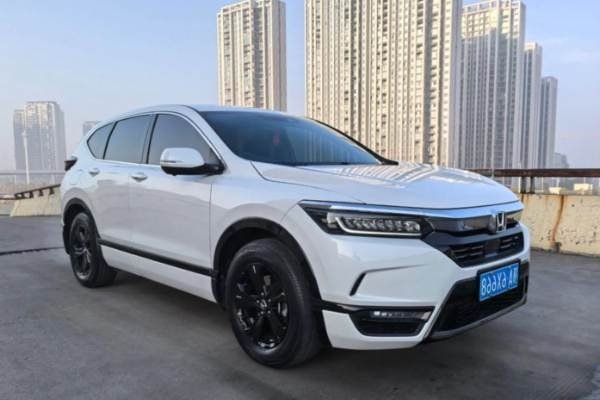
Auto Parts
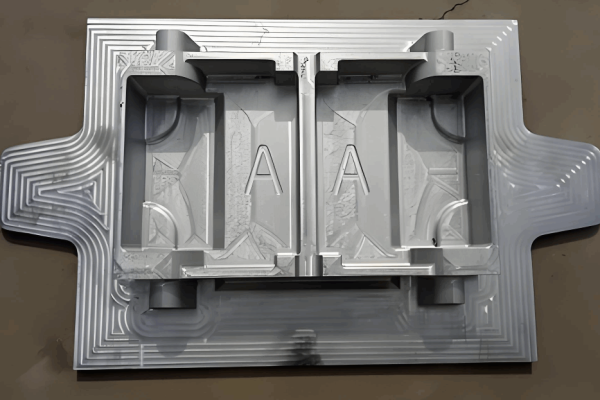
Mold Base
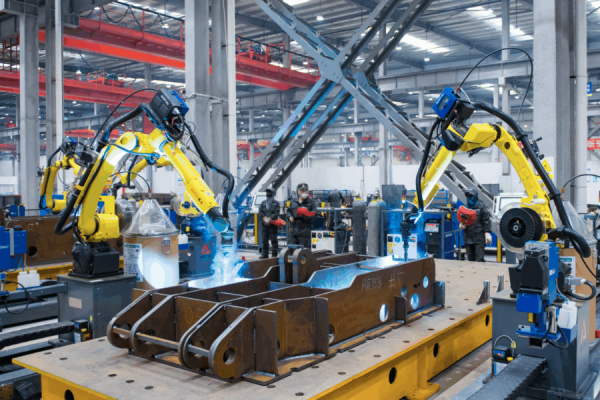
Machinery Manufacturing
Frequently Asked Questions
What is the difference between 1045 and 4140 steel?
Composition: 1045 is a medium carbon structural steel (C: 0.42%-0.50%) without key alloying elements; 4140 is a chromium-molybdenum (Cr-Mo) alloy steel (C: 0.38%-0.43%, containing Cr and Mo) with superior hardenability.
Mechanical Properties: 4140 has a tensile strength of 655-850MPa and yield strength ≥415MPa, while 1045’s are 600-750MPa and ≥355MPa respectively. 4140 excels in toughness, wear resistance, and fatigue strength.
Heat Treatment & Machining: 4140 shows more significant performance improvement after quenching and tempering (QT), suitable for thick-section components; 1045 offers better machinability and lower cost.
Applications: 1045 is used for common shafts, connecting rods, etc.; 4140 adapts to severe working conditions like high-strength gears, high-pressure components, and aerospace parts.
Are C45 and 1045 the same?
C45 and 1045 are essentially same-grade medium carbon structural steel with highly consistent core compositions and properties. They only belong to different standard systems: C45 is a grade under German DIN/EU EN standards, while 1045 follows American AISI/SAE standards, corresponding to China’s GB 45 steel and Japan’s JIS S45C.In terms of composition, both have a carbon content of 0.42%-0.50%, silicon ≤0.40%, manganese 0.50%-0.80%, and phosphorus/sulfur ≤0.045%. Their mechanical properties are similar, with a tensile strength of approximately 600-750MPa and yield strength ≥355MPa, both featuring good machinability and heat treatment response.The minor difference lies in slight variations in impurity control and trace element ranges specified by the standards. In practical applications, they are interchangeable, requiring only compliance with the technical requirements of the corresponding standard system.
What is the difference between 304 and 1045 steel?
Material Category: 304 is an austenitic stainless steel (containing 18%-20% Cr, 8%-10.5% Ni), while 1045 is a medium carbon structural steel (0.42%-0.50% C, no alloying elements).
Core Properties: 304 offers excellent corrosion resistance and toughness, is non-magnetic, and cannot be strengthened by heat treatment. 1045 has superior strength (tensile strength: 600-750MPa) and hardness, can be enhanced via quenching and tempering (QT), but is prone to rust.
Processing Characteristics: 304 features good weldability and bendability but high cutting resistance. 1045 has strong adaptability to cutting, forging, and stamping, with lower processing costs.
Applications: 304 is used in corrosion-resistant scenarios such as chemical equipment and food machinery; 1045 is suitable for structural components like mechanical shafts, gears, and fasteners.



 English
  Spanish
 Afrikaans