
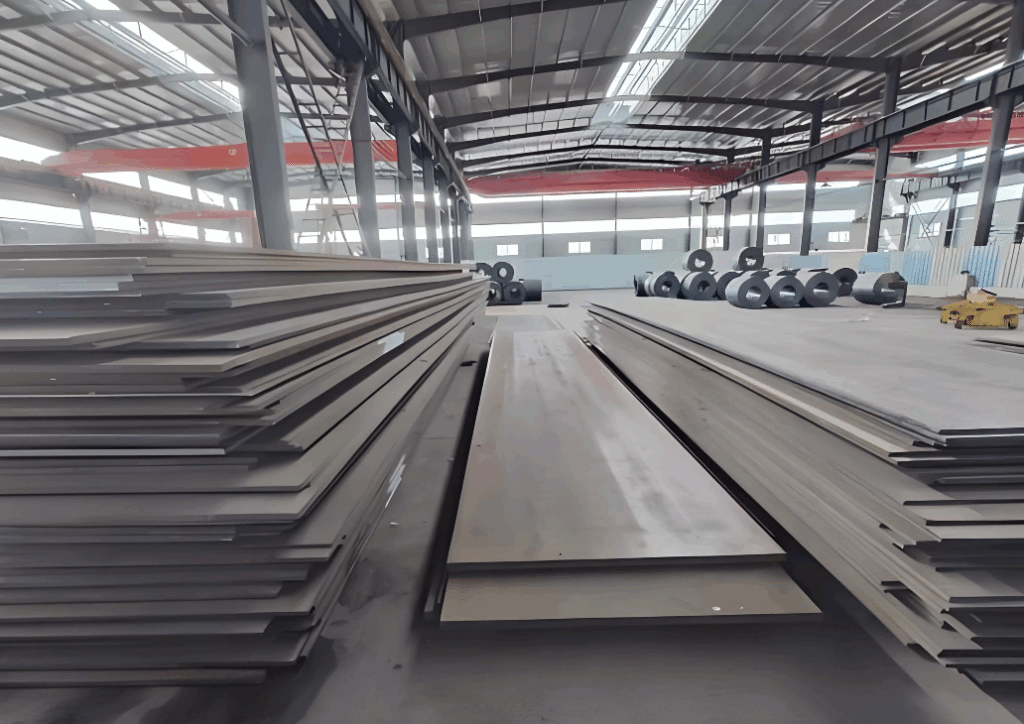
Metal steel plate is the most basic and widely used steel product in the industrial field. It is an indispensable core raw material for construction, machinery manufacturing, automotive, shipbuilding and other industries. This article provides a comprehensive and practical guide to metal steel plates, covering what they are, how much they cost, and how to choose the right type for different applications.

1. What is a Metal Steel Plate?
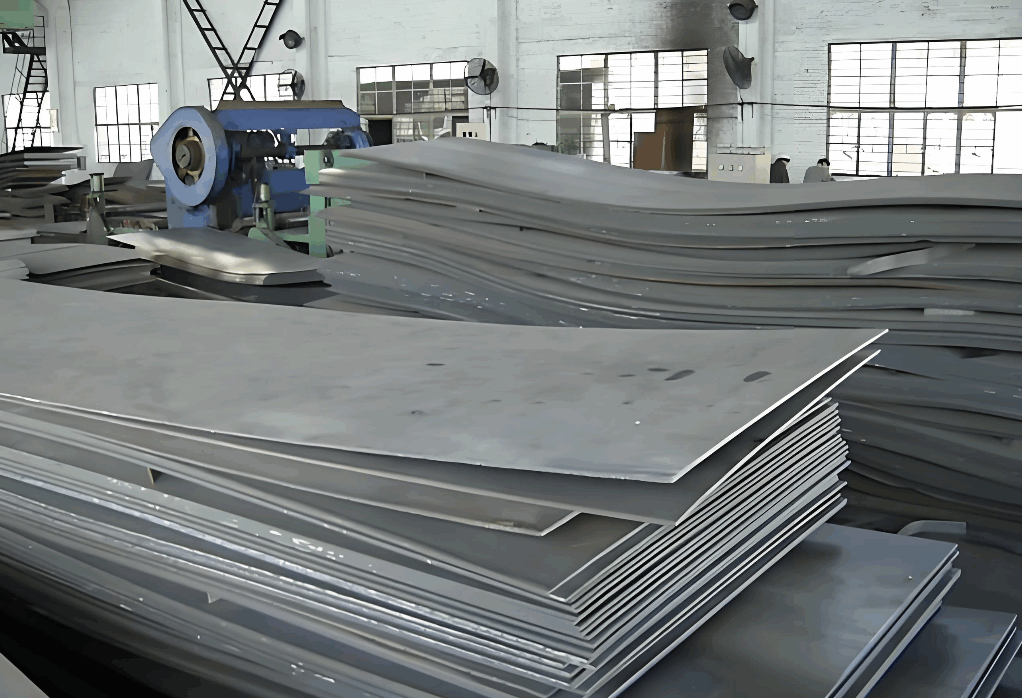
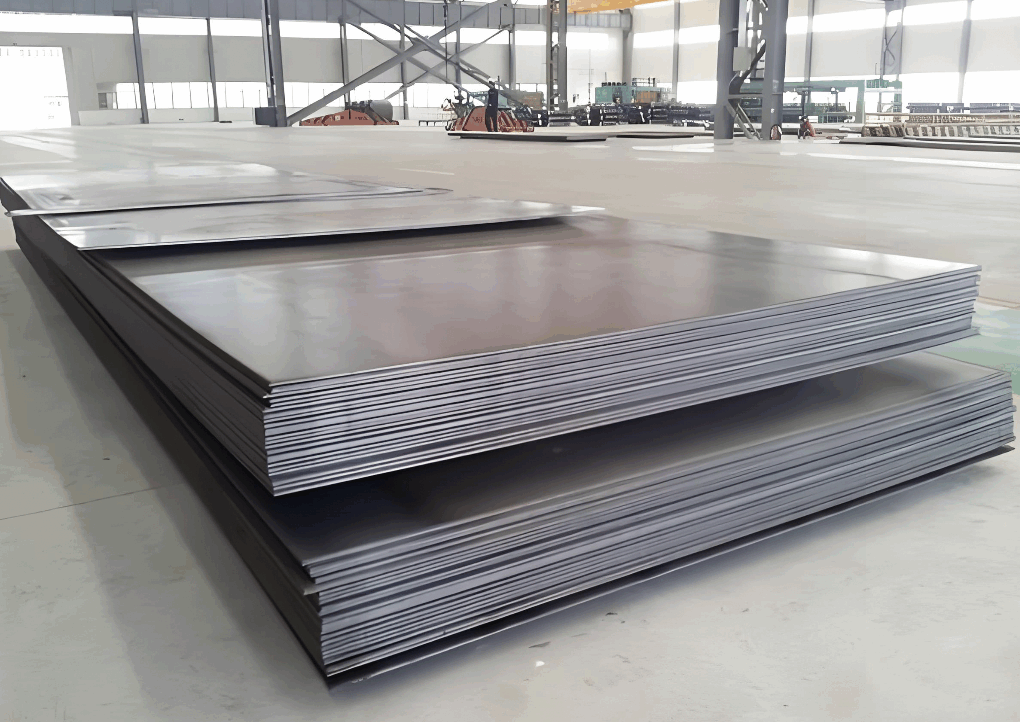
A metal steel plate refers to a flat metal product rolled from steel. In the industry, flat steel with a thickness of ≥ 4mm is defined as a steel plate (thickness < 4mm is called a thin steel plate or steel strip). Its core raw materials include carbon steel, stainless steel, alloy steel, etc., which are processed by hot rolling or cold rolling.
The core properties of metal steel plates support their wide applications:
- High strength, capable of bearing heavy loads for load-bearing and structural support.
- High durability, with good impact and wear resistance, and long service life.
- Good workability, can be processed into various shapes and specifications by cutting, welding, stamping, bending, etc.
- High versatility, suitable for multiple industries and scenarios without complicated adaptation.
Many users confuse metal steel plate with steel sheet. The core differences lie in thickness, application and cost:
- Steel plate: thickness ≥ 4mm, focuses on load-bearing and structural support, relatively high cost.
- Steel sheet: thickness < 4mm, focuses on decoration and lightweight enclosure, low cost, commonly used in home appliance shells and small equipment parts.
Common Misconceptions
Misconception 1: Metal steel plate = stainless steel plate
Metal steel plate is a general term. Stainless steel plate is only one type. Carbon steel plates, alloy steel plates, etc., have vastly different properties and uses.
Misconception 2: The thicker the steel plate, the better
Selection should match the application. For architectural decoration, 2–5mm thin plates are sufficient; thicker plates increase cost and construction difficulty. For bridges and heavy machinery bases, plates over 10mm are required for structural stability.
Misconception 3: All steel plates can be used outdoors directly
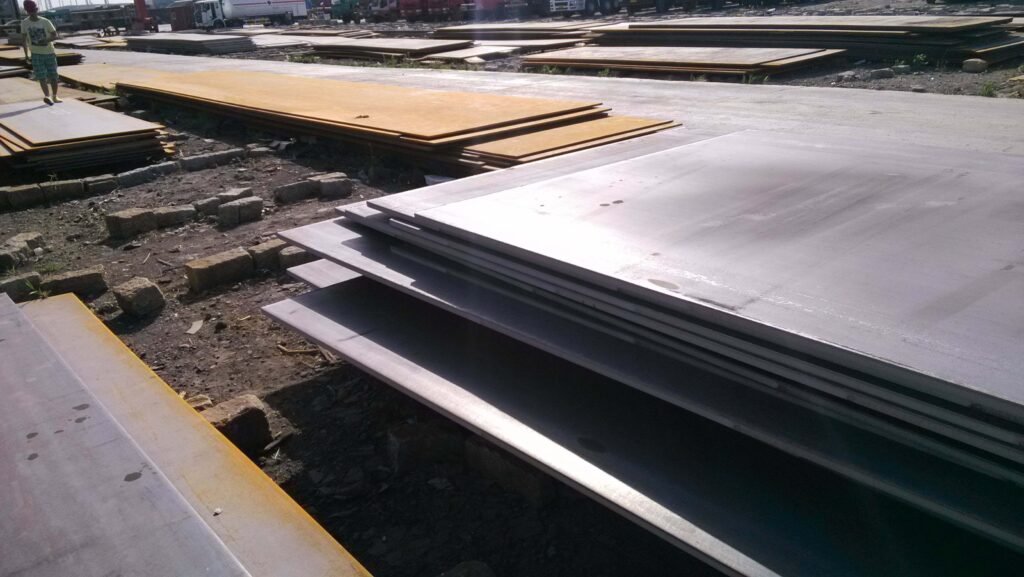
Ordinary carbon steel plates without anti-corrosion treatment will rust outdoors. They need galvanizing, painting or other treatments. Stainless steel and galvanized steel plates have good corrosion resistance and can be used outdoors directly.
2. Types of Metal Steel Plates
Metal steel plates are mainly classified by material, processing technology and thickness.
2.1 Classification by Material
The most common and widely used type, low cost, easy to weld, high strength. Poor corrosion resistance and easy to rust; anti-corrosion treatment is required for outdoor or humid environments.
- Common grades: A36, A572, Q235, Q355.
- Applications: building frames, bridge structures, machinery bases, equipment enclosures, pipe supports, etc.
Corrosion-resistant, easy to clean, aesthetic, high temperature and low temperature resistance. Higher cost.
- Common types: 304 (general purpose), 316 / 316L (stronger corrosion resistance).
- Applications: chemical equipment, food processing, medical devices, architectural decoration, marine parts, etc.
Made by adding alloy elements such as manganese, chromium, nickel to carbon steel. Features high strength, wear resistance, high temperature resistance. High cost.
- Types: manganese steel (wear-resistant), chrome steel (high-temperature resistant), etc.
- Applications: auto parts, aerospace, heavy machinery, high-temperature equipment, wear parts.
(4) Other Special Steel Plates
- Pressure vessel steel plates: for boilers, reaction kettles, e.g. Q345R, 16MnR.
- Galvanized steel plates: carbon steel with zinc coating, good corrosion resistance, lower cost than stainless steel, used for building roofs, guardrails, home appliances.
2.2 Classification by Processing Technology
(1) Hot-Rolled Steel Plates
Produced by rolling at high temperatures (above 1000°C).
- Features: high efficiency, low cost, rough surface, moderate precision, good ductility.
- Applications: construction, machinery bases, scenarios with low precision requirements.
(2) Cold-Rolled Steel Plates
Rolled at room temperature, with multiple rolling and annealing processes.
- Features: smooth surface, high dimensional accuracy, higher strength, slightly lower ductility, higher cost.
- Applications: auto parts, home appliance shells, precision equipment, architectural decoration.
2.3 Classification by Thickness and Size
- Thickness:
- 2–5mm: thin plates, for decoration and light enclosure.
- 10–20mm: medium-thick plates, for general load-bearing and machinery.
- Over 20mm: thick plates, for heavy load-bearing, bridges, pressure vessels.
- Common sizes: 1220mm×2440mm (4×8ft), 1500mm×6000mm, 1800mm×6000mm, customizable by cutting.
3. Metal Steel Plate Prices and Influencing Factors
Prices are affected by material, thickness, processing, order quantity and market conditions.
From low to high price:
Carbon steel < Galvanized steel < Stainless steel < Alloy steel
As of March 2026:
- Carbon steel plate: 400–550 USD/ton (≈ 2800–3900 CNY/ton)
- 304 stainless steel plate: 1800–2200 USD/ton (≈ 12600–15400 CNY/ton)
- Alloy steel plate: above 2500 USD/ton (≈ 17500 CNY/ton)
- Galvanized steel plate: 600–800 USD/ton (≈ 4200–5600 CNY/ton)
Other factors:
- Thicker plates cost more.
- Cold-rolled plates are more expensive than hot-rolled plates of the same material and thickness.
- Larger orders usually get 5%–10% discounts.
- Steel prices fluctuate with iron ore, supply and demand, and policies.

4. Applications of Metal Steel Plates
4.1 Construction Industry
The largest application area: building frames, bridges, floor slabs, curtain walls, roofs, guardrails.
High-rise buildings use high-strength carbon or alloy steel; curtain walls use stainless or cold-rolled thin plates; bridges use thick plates.
4.2 Machinery Manufacturing Industry
Machinery bases, equipment enclosures, machine tool parts, molds, gears.
Bases use thick carbon steel; molds use high-strength alloy steel; enclosures use cold-rolled thin plates.
4.3 Automotive and Aerospace Industry
- Automobiles: body uses cold-rolled thin plates; chassis uses high-strength alloy plates.
- Aerospace: high-end alloy steel plates for structural and engine parts, requiring high strength, heat resistance and lightweight.
5. Usage and Processing Tips
5.1 Processing Methods
- Cutting: flame cutting, plasma cutting, laser cutting (high precision).
- Welding: carbon steel by arc welding; stainless steel by argon arc welding.
- Stamping and bending: mainly for thin plates.
5.2 Installation Notes
- Outdoor plates need anti-corrosion treatment.
- Leave expansion gaps for load-bearing plates to avoid thermal deformation.
- Avoid direct contact between stainless steel and carbon steel to prevent electrochemical corrosion.
5.3 Maintenance
- Regularly inspect and repair rust by grinding and repainting.
- Clean stainless steel with neutral detergents; avoid acids and alkalis.
- Check welded joints of thick plates regularly for cracks or looseness.
6. Metal Steel Plates Purchasing Guide
- Clarify requirements: confirm material, thickness, size, process, quantity and application.
- Compare quotations: obtain offers from 3–5 suppliers, check whether freight and tax are included.
- Quality inspection: require test reports, check surface quality and dimensional accuracy.
- Plan volume: avoid overstock or shortage; bulk orders lower cost.
- Sign a formal contract: specify material, specification, price, delivery, quality standard and after-sales terms.
7. Frequently Asked Questions
Q1: What is the difference between metal steel plate and steel sheet?
A1:
- Thickness: plate ≥ 4mm; sheet < 4mm.
- Application: plate for load-bearing; sheet for decoration and light enclosure.
- Cost: plate is more expensive.
Q2: Which steel plate is best for construction?
A2:
- Load-bearing (beams, bridges): carbon or alloy steel (A36, Q355), 10–20mm+.
- Decoration (curtain walls): 304 stainless or cold-rolled thin plate, 2–5mm.
- Outdoor roofs/guardrails: galvanized or 316 stainless steel.
Q3: How much is metal steel plate per ton?
A3: Refer to Section 3. Prices change with the market. Bulk purchases enjoy discounts.
Q4: Where to buy high-quality steel plates?
A4: B2B platforms (Alibaba), local steel markets, brand distributors, mills.
Choose qualified suppliers with complete certificates, good reputation and after-sales service.
Q5: Are steel plates easy to weld and cut?
A5: Carbon steel is easy. Stainless steel needs argon arc welding and laser cutting. Alloy steel has higher welding difficulty. Clean surface before welding; ensure cutting accuracy.
Q6: How to prevent corrosion? How long do they last outdoors?
A6:
- Anti-corrosion: galvanizing, painting, or use stainless steel directly.
- Service life outdoors:
- Galvanized: 5–10 years
- Painted carbon steel: 3–5 years (needs repainting)
- 304 stainless steel: 10–15 years
- 316 stainless steel: 15–20 years
8. Conclusion
As a core raw material for many industries, the selection, procurement and application of metal steel plates directly affect production efficiency, product quality and purchasing costs. For purchasing support, you can contact Tonghui.
Reference Source:
- Industry Standards for Metal Steel Plates (GB/T 700-2006, GB/T 3280-2015): Clarify the definition, material, specifications, and quality standards of metal steel plates, providing professional basis for articles;
- China Economic Database “National Steel Production in Current Period” (2023-2025): provides national steel production data to support market analysis and ensure content timeliness;




 English
  Spanish
  Afrikaans