
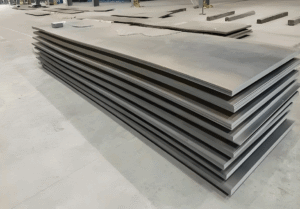
3/4″ steel plate refers to a flat steel product with a thickness of 3/4 inch (0.75 inch), falling into the category of heavy steel plates (per industry standards, products ≥3/16″ thick are classified as steel plates, while thinner ones are sheet metal). As one of the most widely used heavy steel plates in industry, this article comprehensively covers its dimensions, weight, pricing, materials, applications and processing methods.

1. What is a 3/4″ Steel Plate?
A 3/4″ steel plate is a flat steel product with a standard thickness of 3/4 inch (0.75 inch), equivalent to approximately 19.05 mm, often referred to as “19 mm thick steel plate” in the industry. It is categorized as heavy steel plate, mainly produced via hot rolling, with optional surface treatments such as galvanizing, painting or polishing to suit various industrial scenarios.
As a basic industrial consumable, 3/4″ steel plate features high strength, good toughness and strong load-bearing capacity, balancing practicality and cost-effectiveness. It is a cost-effective choice for heavy-load applications and widely used in various industrial and engineering fields.
2. Specifications of 3/4″ Steel Plate
- Thickness: Standard thickness is 3/4 inch (0.75 inch, ~19.05 mm). Tolerances vary slightly by material and manufacturer, with a general tolerance of ±0.001 inch (±0.0254 mm). Carbon steel has relatively looser tolerances, while stainless steel and alloy steel feature tighter precision, complying with standards including GB/T 3280-2015 and ASTM A36.
- Common Sizes: Industry-standard widths are 48 inches (1219 mm) and 60 inches (1524 mm), with lengths of 96 inches (2438 mm) and 120 inches (3048 mm). The 4×8 ft (1219×2438 mm) format is the most common. Custom cutting is available with a precision of ±0.5 mm to meet project-specific dimensional requirements.
- Weight: Industry-standard formula:Weight (kg) = Length (m) × Width (m) × Thickness (m) × 7850 kg/m³ (steel density)Equals approximately 30.63 lb per square foot.For a standard 4×8 ft (1.219 m × 2.438 m) plate:Weight ≈ 444.5 kg (≈980 lbs).Slight adjustments apply for different materials: stainless steel (~7930 kg/m³) is slightly heavier, alloy steel (~7810 kg/m³) slightly lighter. Weight calculations follow industry standards to ensure accurate engineering estimation and construction safety.

3. Price of 3/4″ Steel Plate
Prices vary by material, size, order quantity, manufacturer and custom processing. Below are typical 2026 price ranges:
- A36 Carbon Steel: 4×8 ft standard sheet ≈ $55–60 per piece; bulk orders (10+ pieces) ≈ $50–55 per piece.
- 304 Stainless Steel: 4×8 ft ≈ $170–215 per piece.
- 316 Stainless Steel: 4×8 ft ≈ $255–315 per piece (strongly affected by nickel and chromium prices).
- 4140 Alloy Steel: 4×8 ft ≈ $115–140 per piece; bulk orders ≈ $105–130 per piece.
Key Price Factors: material grade, custom sizing (10–20% premium), order volume (5–15% discount), surface treatments (e.g., galvanizing adds ~$3–4/m²), manufacturer reputation, and market supply and demand.
4. Material Grades
Common materials and their applications:
- A36 Carbon Steel: The most widely used and cost-effective option, yield strength ≥355 MPa (ASTM A36). Good toughness, weldable and affordable. Dominates over 80% of the market for general structures, heavy bases and equipment support plates.
- 304/316 Stainless Steel: Corrosion-resistant and heat-resistant. 304 contains ≥18% Cr and ≥8% Ni, suitable for humid or mildly corrosive environments. 316 adds molybdenum for superior corrosion resistance in marine and chemical applications.
- 4140 Alloy Steel: High strength and toughness, ideal for heavy-duty, wear-resistant applications such as mining equipment, machine gears and high-pressure components. More difficult to machine and priced higher than carbon steel.
5. Applications of 3/4″ Steel Plate
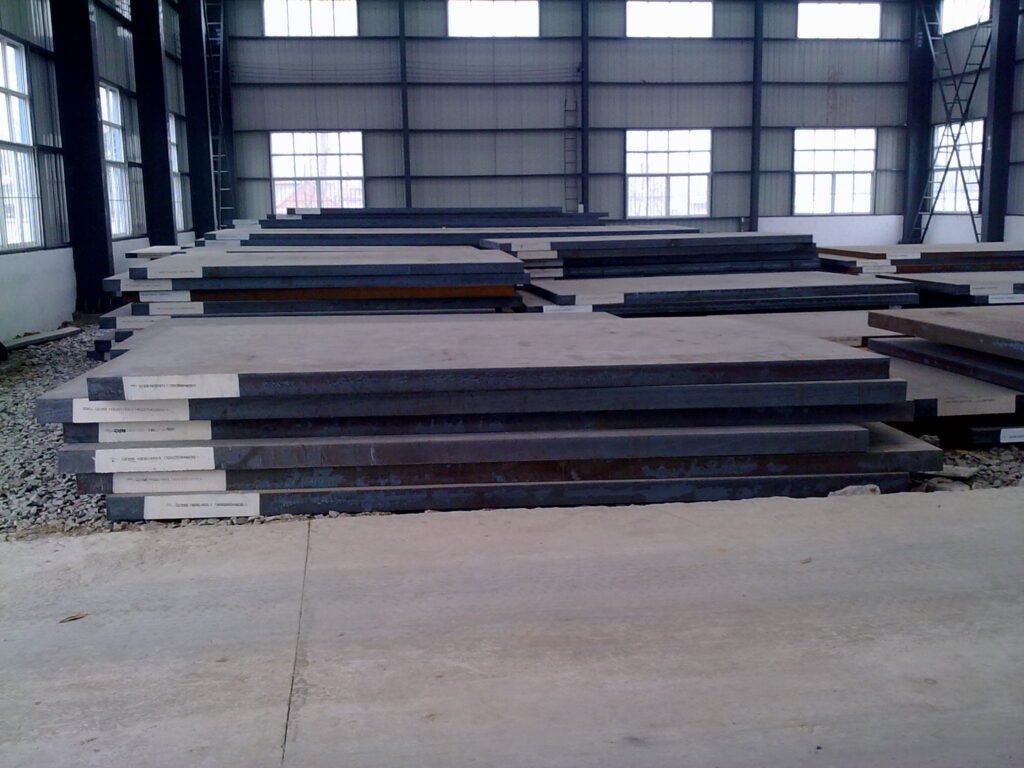
- Heavy Structural Engineering: Used in bearing components such as heavy base structures, bridge parts, crane supports, dam reinforcement, factory columns and tower crane foundations, providing reliable heavy-load support.
- Machinery Manufacturing: Applied in heavy equipment frames, press bases, mining wear plates, agricultural machinery parts, machine tool tables and mechanical supports.
- Industrial Fabrication: Used for large mold bases, equipment mounting pads, storage tanks, marine fittings and pressure vessel shells, supporting cutting and welding for custom fabrication.
- Repair & Reinforcement: Used for repairing damaged heavy equipment, reinforcing building structures, bridge maintenance and heavy vehicle chassis repair, offering high-strength support and cost-effective replacement.
6. Processing & Installation
Cutting Methods
Plasma and flame cutting are standard; shearing is not recommended due to thickness and risk of deformation.
- Plasma Cutting (Most Common): High efficiency, clean cuts, precision ±0.5 mm, suitable for all material types (carbon, stainless, alloy steel), ideal for batch and precision cutting.
- Flame Cutting: Cost-effective for A36 low-carbon steel, suitable for on-site and large-area cutting, precision ±1 mm. Post-cut grinding is required to remove burrs and scale.
Welding & General Processing
- A36 Carbon Steel: Easy to weld with standard processes. Preheat to 100–150°C only if ambient temperature <0°C; post-weld stress relief recommended.
- 304/316 Stainless Steel: Requires dedicated stainless steel electrodes to prevent oxidation; welds are typically polished for corrosion resistance.
- 4140 Alloy Steel: Preheat to 200–300°C before welding and temper afterward to avoid cracking and ensure joint integrity.
Surface options include galvanizing (outdoor corrosion resistance), painting (indoor rust prevention) and polishing (visual applications). Stress relief via annealing or normalizing helps prevent deformation.
Installation
Secure using bolting or welding based on load requirements. Ensure a level base to avoid uneven stress. For heavy-duty installations, use cushioning pads to distribute loads and improve stability.
7. Frequently Asked Questions
Q: How much does a 3/4″ steel plate weigh?
A: ~30.63 lb/ft². A standard 4×8 ft sheet weighs ~444.5 kg (980 lbs). Stainless steel is slightly heavier, alloy steel slightly lighter.
Q: What is the best material for 3/4″ plate?
A: A36 carbon steel for general use; 304/316 stainless steel for corrosive environments; 4140 alloy steel for high-stress, wear-heavy applications.
Q: Can plasma cutters cut 3/4″ steel plate?
A: Yes, it is the most common and efficient method, delivering clean, precise cuts within ±0.5 mm.
Q: Is 3/4″ plate suitable for trailer flooring?
A: Ideal for heavy-duty mining and freight trailers. Lighter trailers often use 1/4″ or 3/8″ plate to avoid excess weight.
Q: Hot-rolled vs cold-rolled 3/4″ plate?
A: Hot-rolled: rougher surface, lower cost, better toughness – for general structural use. Cold-rolled: smoother, tighter dimensional tolerance – for precision molds and equipment.
Q: What is 3/4″ plate in millimeters?
A: Approximately 19.05 mm, commonly referred to as 19 mm plate in metric markets.
References
- Steel Weight Calculation Standards and Application Guidelines
- ASTM A36 Standard for Carbon Structural Steel Plates
- GB/T 3280-2015 Cold-Rolled Stainless Steel Plates and Strips




 English
  Spanish
  Afrikaans