
“Is stainless steel a non-ferrous metal?” Starting from the core logic of metal classification, this article will clearly answer this question, clarify confusing misconceptions, and combine practical application scenarios to help you fully understand the classification attributes and practical value of stainless steel, as well as easily distinguish the core differences between ferrous and non-ferrous metals.

1. Is Stainless Steel a Non-Ferrous Metal?
A clear conclusion first: Stainless steel is not a non-ferrous metal but a typical ferrous metal and iron-based alloy.
The core criterion for metal classification lies not in surface characteristics such as appearance or corrosion resistance, but in whether iron is the main component. Essentially, stainless steel is an iron-based alloy with iron (Fe) as the base element. It generally contains a minimum of 10.5% chromium (Cr), and certain grades are added with nickel (Ni), molybdenum (Mo) and other alloying elements. Iron accounts for more than 50% of its total composition, fully meeting the core definition of ferrous metals. Therefore, it does not fall into the category of non-ferrous metals.
In short, the key to judging a ferrous metal is its primary iron composition, rather than rust resistance or magnetism. Different from ordinary carbon steel, stainless steel gains corrosion resistance thanks to a passivation film formed by chromium addition. However, this does not change its iron-dominated essence, so it still belongs to the ferrous metal family.
2. Core Differences Between Ferrous and Non-Ferrous Metals
To fully understand the classification of stainless steel, it is essential to clarify the definitions and fundamental differences between ferrous and non-ferrous metals to avoid cognitive confusion. Metallic materials are generally divided into three categories: ferrous metals, non-ferrous metals and special metal materials. The distinctions between ferrous and non-ferrous metals are as follows:
Definition Analysis
- Ferrous Metals:Refers to metals and alloys with iron as the main component. In a broad sense, it also includes chromium, manganese and their alloys. Common types cover carbon steel, cast iron, stainless steel, etc. Ferrous metals feature high strength and excellent mechanical properties, and most are magnetic (except certain stainless steel grades). As the most widely used industrial metal materials, they are known as “the skeleton of industry” and still dominate the raw material market.
- Non-Ferrous Metals:Covers all metals and their alloys excluding iron, chromium and manganese. They are further classified into light metals, heavy metals, precious metals, semi-metals, rare metals and rare earth metals. Typical examples include aluminum, copper, titanium, gold, silver, zinc and pure nickel. Most non-ferrous metals are corrosion-resistant, non-magnetic, and possess superior electrical and thermal conductivity, playing an irreplaceable role in machinery, instrumentation, marine engineering, aerospace and other fields.
Core Comparison
| Comparison Items | Ferrous Metals | Non-Ferrous Metals |
| Main Component | Iron (Fe) as the core component | Does not contain iron, chromium, or manganese as the main component |
| Common Examples | Stainless steel, carbon steel, cast iron, industrial pure iron | Aluminum, copper, titanium, gold, silver, zinc, brass, pure nickel |
| Key Properties | High strength, excellent mechanical properties, most are magnetic (except some stainless steel), ordinary varieties are prone to rust (except stainless steel) | Corrosion-resistant, most are non-magnetic, some have good electrical/thermal conductivity, and their strength and hardness are usually higher than pure metals |
| Main Uses | Industrial equipment, building structures, kitchenware, auto parts, mechanical manufacturing | Electronic components, jewelry, aerospace, chemical equipment, medical devices, new energy fields |

3. Why Do Many People Mistake Stainless Steel for Non-Ferrous Metal?
The confusion mainly stems from misleading surface properties, summed up in three common misconceptions:
Misconception 1: Non-magnetic metals are non-ferrous
This is the most prevalent misunderstanding. Magnetism is not a classification standard for ferrous and non-ferrous metals. The magnetism of stainless steel depends on its alloy composition and internal structure: austenitic stainless steel (e.g., 304, 316) is usually non-magnetic, while ferritic stainless steel (e.g., 430) and martensitic stainless steel (e.g., 410) have obvious magnetism.
Regardless of magnetism, all stainless steel grades are iron-based and classified as ferrous metals. In addition, although most non-ferrous metals are non-magnetic, exceptions exist such as weak magnetism in specific copper alloys. Magnetism alone cannot determine metal classification.
Misconception 2: Corrosion-resistant metals are non-ferrous
The false belief that “all ferrous metals rust and corrosion-resistant metals are non-ferrous” leads to widespread confusion. The anti-corrosion performance of stainless steel does not result from an iron-free composition, but from chromium. Chromium reacts with oxygen to form a dense chromium oxide passivation film on the surface, isolating oxygen and moisture to prevent internal iron from oxidation and rust.
Ordinary ferrous metals like carbon steel lack sufficient chromium and cannot form a protective passivation film, resulting in poor rust resistance. As a high-alloy ferrous metal, stainless steel improves corrosion resistance via chromium and nickel additions, which is fundamentally different from the natural corrosion resistance of non-ferrous metals. Per industrial standards, 304 stainless steel contains 18.0%-20.0% chromium, and 316 stainless steel contains 16.0%-18.0% chromium to ensure stable anti-corrosion performance.
Misconception 3: Stainless steel differs from regular steel, so it is non-ferrous
Stainless steel does differ from ordinary carbon steel (e.g., Q235) in performance and appearance, yet both belong to ferrous metals. As an alloy steel grade, stainless steel is modified with chromium, nickel and other elements to enhance corrosion resistance and aesthetics, but iron remains its core component. Just as fortified flour is still flour, stainless steel is essentially an iron-based alloy and an indispensable part of ferrous metals.
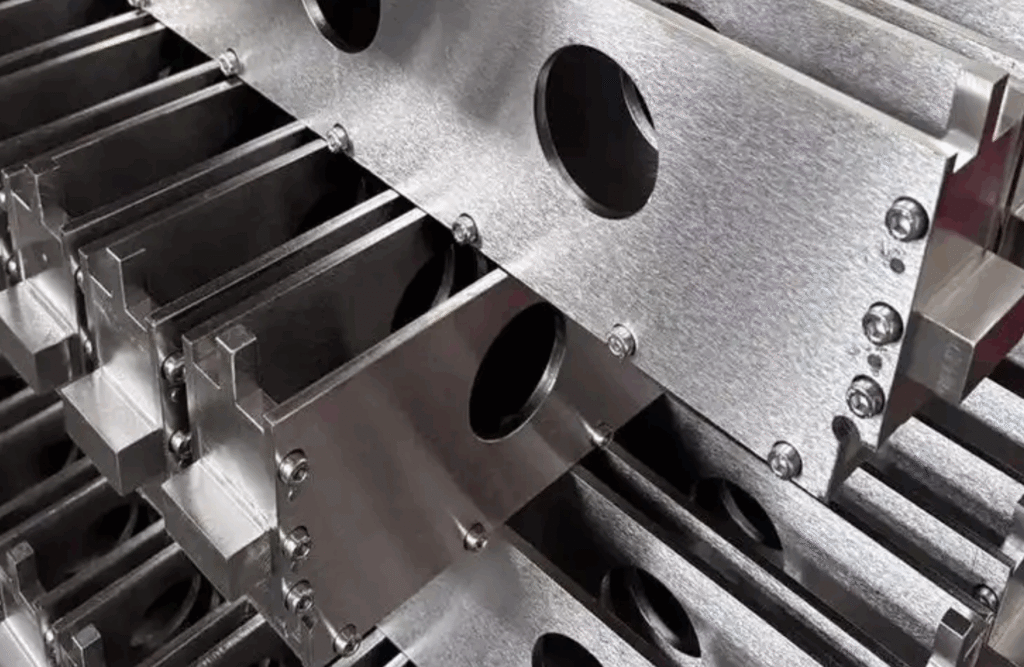
4. Classification of Stainless Steel
Based on internal microstructure and chemical composition, stainless steel is mainly divided into three mainstream types widely used in industry and daily life:
- Austenitic Stainless Steel:The most commonly used type, represented by 304 and 316. It is non-magnetic with high chromium and nickel content and outstanding corrosion resistance. 304 stainless steel (18/8 stainless steel, containing 18% chromium and 8% nickel) is food-grade and widely used in kitchenware, food processing equipment, medical devices and interior decoration. With added molybdenum, 316 stainless steel delivers stronger corrosion resistance for harsh environments such as chemical equipment and marine engineering.
- Ferritic Stainless Steel:Represented by grade 430. It is magnetic, nickel-free with high chromium content and low cost, offering moderate corrosion resistance. It is commonly applied to daily kitchenware, decorative materials and household appliance shells.
- Martensitic Stainless Steel:Represented by grade 410. It features magnetism, high hardness and structural strength, with performance adjustable through heat treatment. It is widely used in cutting tools, valves and high-wear mechanical parts.
5. Application Scenarios of Stainless Steel
- Advantages as a Ferrous Metal:Inheriting the high strength and superior machinability of ferrous metals, stainless steel is applied to industrial equipment, building structures, auto parts and mechanical manufacturing. It replaces ordinary carbon steel to extend service life in load-bearing, wear-resistant and pressure-resistant working conditions.
- Unique Advantages of Stainless Steel:With excellent corrosion resistance, easy cleaning, non-toxicity and aesthetic appearance, it is widely adopted in kitchen supplies, food production, medical facilities, chemical equipment and sanitary ware. It perfectly adapts to humid and corrosive working environments and makes up for the rust defect of conventional ferrous metals.
6. Frequently Asked Questions
Q1: Is 304 stainless steel non-ferrous?
A1: No. As a typical austenitic stainless steel, 304 is an iron-dominated iron-based alloy. Despite non-magnetism and corrosion resistance, iron accounts for over 50% of its composition, with 18.0%-20.0% chromium and 8.0%-11.0% nickel. It is strictly categorized as a ferrous metal.
Q2: What is the main difference between stainless steel and non-ferrous metals?
A2: The core difference lies in the primary chemical composition. Stainless steel is an iron-based alloy, while non-ferrous metals do not take iron, chromium or manganese as main components. In addition, stainless steel retains the high-strength property of ferrous metals with upgraded corrosion resistance via alloying elements, whereas most non-ferrous metals are naturally corrosion-resistant, non-magnetic and have outstanding electrical and thermal conductivity.
Q3: Does stainless steel contain iron?
A3: Yes. Iron is the base metal of stainless steel, making up more than half of its total mass. Its anti-rust property relies on a passivation film formed by over 10.5% chromium rather than the absence of iron.
Q4: Are all non-ferrous metals non-magnetic?
A4: No. Most non-ferrous metals such as aluminum, copper, gold and silver are non-magnetic, but partial copper alloys have weak magnetism. Hence, magnetism cannot be used as a judgment standard; the primary component is the decisive factor.
Q5: Is stainless steel ferrous or non-ferrous (non-ferrous metals are also called non-ferrous metals)?
A5: Stainless steel belongs to ferrous metals. Ferrous metals cover iron, chromium, manganese and their alloys, and stainless steel, as an iron-based alloy, falls into this scope. Non-ferrous metals exclude stainless steel completely.

7. Conclusion
In summary, stainless steel is never a non-ferrous metal but an essential branch of ferrous metals and iron-based alloys. Metal classification is determined by the main component, instead of superficial characteristics including magnetism and corrosion resistance. Although stainless steel is non-magnetic and rust-proof and visually different from ordinary steel, its iron-based composition remains unchanged, which marks the fundamental boundary between ferrous stainless steel and non-ferrous metals such as aluminum and copper.
References
- GB/T 13304-2008, Classification Standards for Metallic Materials: Clarifies the classification criteria and core definitions of ferrous and non-ferrous metals, and defines the scope of iron-based alloys.
- Application Guide for Ferrous and Non-Ferrous Metals, compiled by The Chinese Society for Metals: Summarizes the core differences and material selection principles of ferrous and non-ferrous metals, providing authoritative support for application content.




 English
  Spanish
  Afrikaans