
This article will serve as your ultimate guide, providing one-stop answers to all core questions about 3/8-inch steel plate specifications, weight, price, and processing applications.
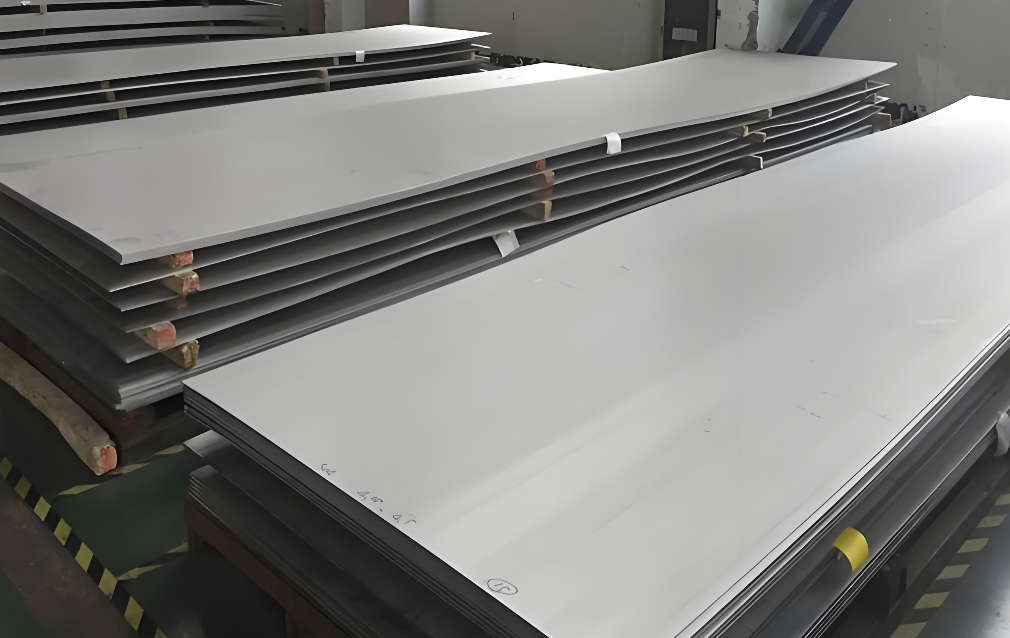
I. Detailed Specifications and Properties of 3/8-inch Steel Plate
1.1 Thickness Interpretation: Imperial to Metric Conversion
“3/8” refers to the imperial unit, i.e., 3/8 of an inch. This is a commonly used thickness designation in North American and many international engineering projects. The specific conversion is as follows:
- Imperial: 3/8 inch = 0.375 inch
- Metric: 0.375 inch × 25.4 ≈ 9.525 millimeters
In engineering practice, this thickness is often referred to simply as “9.5mm plate”. It is worth noting that it is approximately 0.5mm thinner than the commonly used 10mm steel plate. In most non-precision applications, the two can be regarded as approximate substitutes, but they must be distinguished in strict load-bearing calculations.
1.2 Weight Calculation: Key Data and Formulas
Weight is crucial for cost estimation and logistics. The weight of 3/8-inch steel plate mainly depends on the material density. Taking the most common low-carbon steel (with a density of approximately 7.85 tons per cubic meter) as an example:
- Weight per square foot: Approximately 15.3 pounds per square foot (psf)
- Weight per square meter: Approximately 74.8 kilograms per square meter (kg/m²)
Simplified calculation formula:
Weight (kg) = Area (m²) × Thickness (m) × 7850 (carbon steel density)
For example, the weight of a standard 4’×8′ (1.22m×2.44m) 3/8-inch steel plate is approximately: 1.22×2.44×0.009525×7850 ≈ 178 kg.
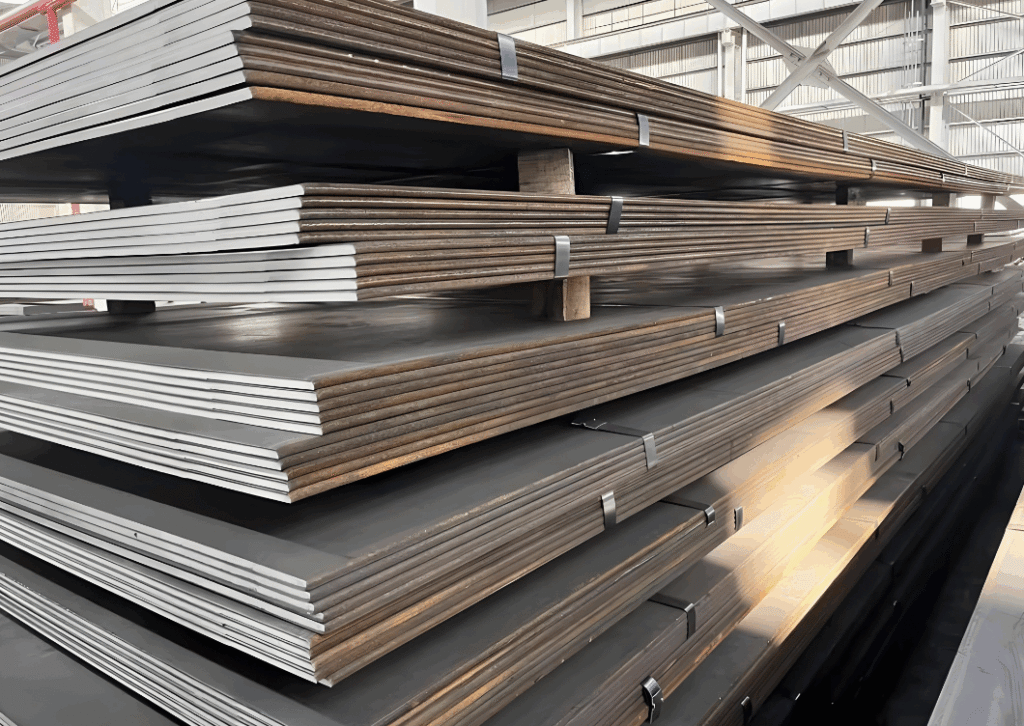
1.3 Common Materials and Standards
Different materials determine the performance, price, and application scenarios of steel plates:
- A36 (ASTM American Standard): The most versatile structural carbon steel plate, featuring excellent weldability and formability, with a yield strength of 36 ksi (approximately 250 MPa). Suitable for most frames, bases, and structural components.
- Q235 (GB Chinese National Standard): Equivalent to A36, with a yield strength of 235 MPa, it is the most commonly used ordinary carbon structural steel in China.
- SS400 (JIS Japanese Standard): Similar to A36, widely used in the Asian market.
- A572 Gr.50 / Q345: High-strength low-alloy steel with higher yield strength (50 ksi / 345 MPa), suitable for structures requiring stronger load-bearing capacity.
1.4 Standard Sizes and Forms
Steel plates are usually supplied in the form of rectangular flat plates:
- Common sizes: 4’×8′ (1220×2440mm), 5’×10′ (1500×3000mm), 6’×20′ (1800×6000mm), etc.
- Thickness tolerance: Hot-rolled steel plates typically have a thickness tolerance of approximately ±0.01 inch (about ±0.25mm).
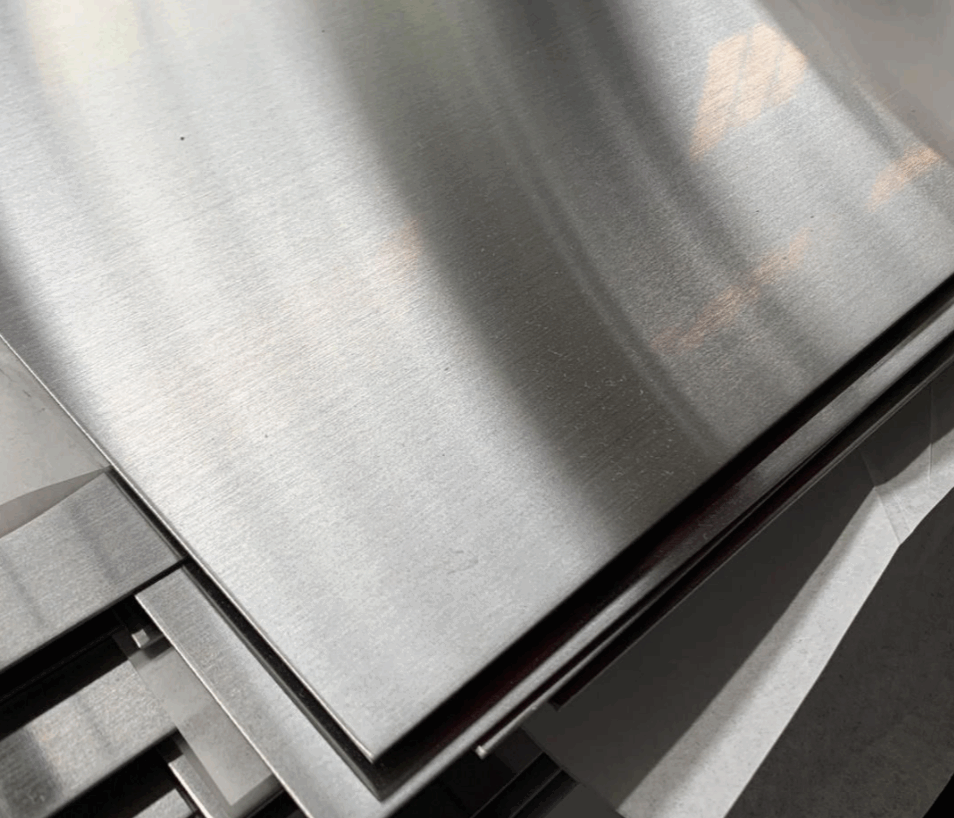
- Surface condition: Hot-rolled (with oxide scale), sandblasted (SAE), or cold-rolled (smoother surface, but 3/8-inch thickness is usually hot-rolled).

II. Pricing of 3/8-inch Steel Plate
1. Core Components of Market Price
The total price of a 3/8-inch steel plate usually consists of the following parts:
1.1 Base Price
This is the raw material cost determined by the steel mill’s ex-factory price, which fluctuates daily with global prices of iron ore, coking coal, and energy. For example, when the hot-rolled coil index on Mysteel or Shanghai Nonferrous Metals Network (SMM) rises, the base price of 3/8-inch steel plate usually follows suit.
1.2 Material Surcharge
- A36/Q235 (ordinary carbon steel): Benchmark price.
- A572 Gr.50/Q345 (high-strength steel): Approximately 15%-25% higher than A36, with a premium paid for the increased yield strength.
- Wear-resistant steel (e.g., AR400): The price may be 2-3 times that of A36.
- Stainless steel (e.g., 304): The price is usually 4-8 times that of carbon steel, which is greatly affected by the prices of nickel and chromium.
1.3 Fabrication and Service Fees
- Cut-to-size fee: If you do not purchase full-size plates, distributors will cut from large plates according to your required dimensions, which will incur cutting labor and material waste costs. It is usually charged based on the length of the cut (meter) or a percentage of the total price (e.g., 10%-20%).
- Fabrication fee: If drilling, beveling, bending, etc., are required, the fee is charged based on working hours or fabrication complexity.
- Surface treatment fee: Additional costs will be incurred if sandblasting for rust removal or pre-painting is needed.
1.4 Logistics and Delivery Costs
- Freight: This is a key factor affecting the “delivered price”, especially for thick plates. Local transportation costs are relatively low; for cross-provincial or small-batch transportation, freight costs may be close to or even exceed the cost of the material itself.
- Loading and unloading fee: Some suppliers charge separately for door-to-door delivery services.
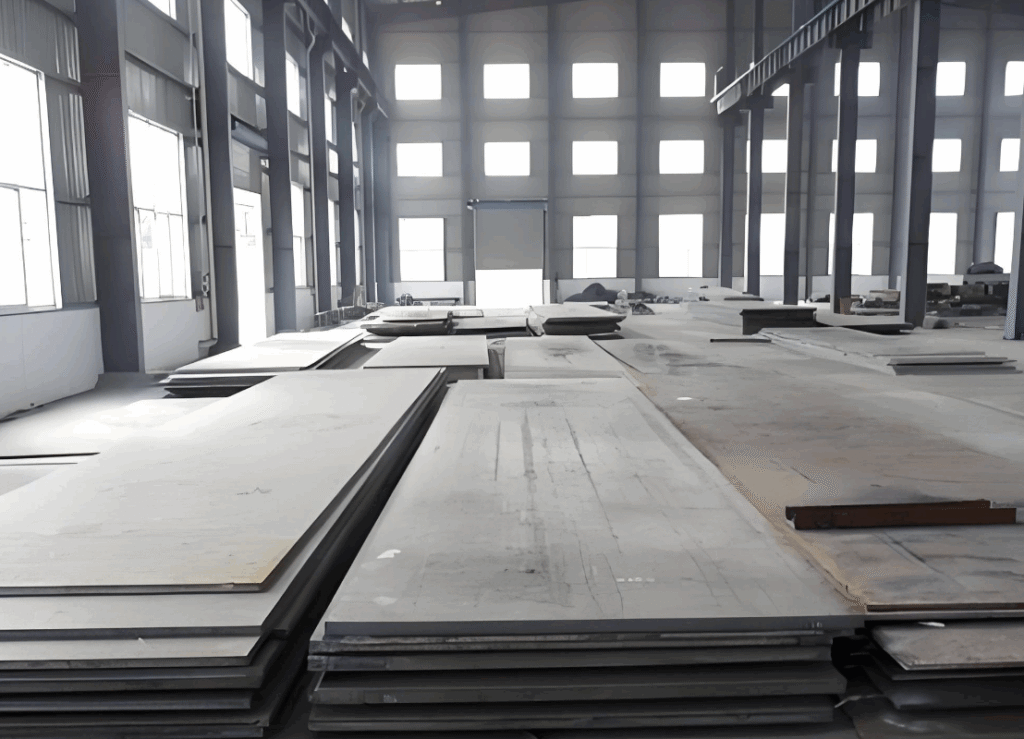
2. Price of 3/8-inch Steel Plate
Estimated reference:
Taking a standard 4’×8′ (1.22m×2.44m) 3/8-inch A36 steel plate as an example, its theoretical weight is approximately 178 kg. If the current comprehensive unit price of carbon steel plates in the market is about 5,000 CNY per ton (this is an example; please check the real-time price), then:
- Material cost ≈ 0.178 ton × 5,000 CNY/ton = 890 CNY
- Distributor profit and operating cost surcharge ≈ 10%-30% of the material cost
- Cut-to-size fee (if needed) ≈ an additional 50-200 CNY
- Local freight ≈ 100-300 CNY
Therefore, the “delivered price” of a full-size plate purchased from a local service center generally ranges from 1,100 CNY to 1,500 CNY. The unit price per kilogram for a small cut piece (e.g., 1’×1′) will be much higher than that of full-size plate procurement.
3. Core Factors Affecting Price
- Material and grade: A572 Gr.50 is 10%-25% more expensive than A36. Stainless steel (e.g., 304) is several times the price of carbon steel.
- Purchase quantity: The unit price is the lowest when purchasing full-size plates; cut-to-size processing will incur additional fees based on working hours and material waste.
- Market conditions: Steel is a bulk commodity, and its price fluctuates daily affected by iron ore, coking coal costs, and supply-demand relationships. Before purchasing, you can check industry indices such as Mysteel.
- Fabrication requirements: Cutting, drilling, beveling, etc., will all generate additional costs.
- Location and logistics: Freight is an important cost, especially for thick plates. Local procurement often has more logistics advantages.
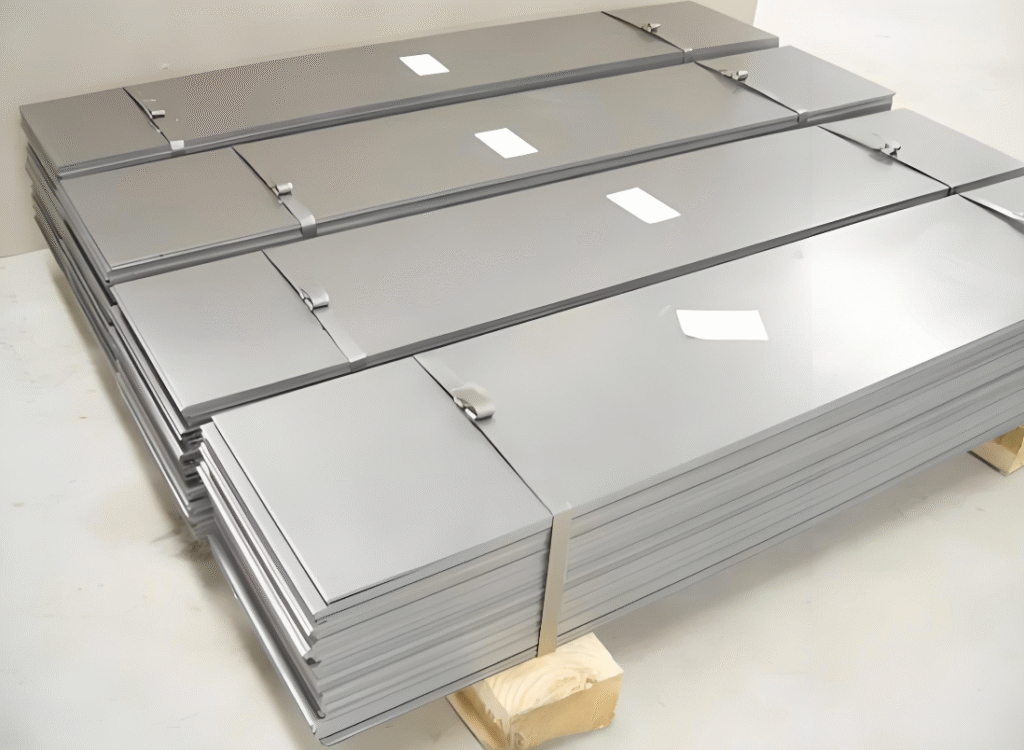
III. Performance of 3/8-inch Steel Plate
- Optimal balance of strength and rigidity: Compared with 1/4-inch (6mm) plates, its bending stiffness is significantly improved; compared with 1/2-inch (12.7mm) plates, both weight and cost are greatly reduced, resulting in high cost performance.
- Excellent workability: It can be easily welded using conventional arc welding and MIG welding; it can be effectively cut using plasma cutters or flame cutting; drilling and tapping operations are relatively easy.
- Wide availability: This is a specification that metal service centers and steel distributors almost always keep in stock, making procurement easy with short waiting times.
IV. Application Scenarios of 3/8-inch Steel Plate
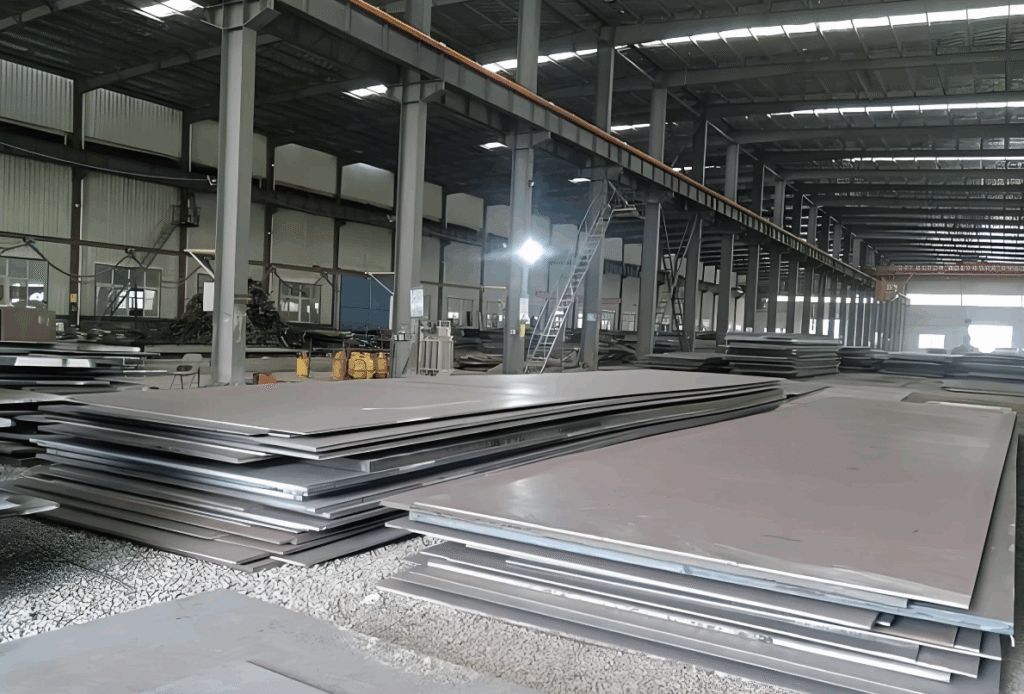
Due to its balanced strength, weight, and cost, 3/8-inch steel plate has become a “versatile workhorse” in the industrial and manufacturing fields:
- Construction and structural engineering: Factory platforms, walkways, stair treads, equipment support bases, steel structure connecting plates.
- Heavy equipment and manufacturing industry: Machine tool bases, equipment protective covers, hoppers, conveyor side plates, mold base plates.
- Transportation: Flatbed trailer decks, truck bed floors and reinforcements, forklift fork back plates.
- Infrastructure and agriculture: Bridge repair plates, sluice gates, bucket blade base plates, plow plates.
- DIY and creative production: Heavy-duty workbench tops, custom tool cabinets, sculptures, outdoor fire pits.
V. Practical Tips for Fabrication and Treatment of 3/8-inch Steel Plate
1. Safety First
- Personal protective equipment (PPE): Be sure to wear cut-resistant gloves, safety glasses, and steel-toe boots during operation. When cutting or welding, use a welding helmet, fire-resistant clothing, and respiratory protection equipment.
- Handling: A single 4’×8′ 3/8-inch steel plate weighs nearly 400 pounds (about 180 kg). It must be handled using overhead cranes, forklifts, or by multiple personnel working together to prevent crushing injuries.
2. Common Fabrication Methods
Cutting
- Plasma cutting: The most commonly used method, featuring high speed and relatively smooth cut edges.
- Flame cutting: Suitable for thick plates, with low cost, but has a large heat-affected zone and may produce a lot of slag.
- Laser cutting: Offers the highest precision, but requires high equipment investment and is usually outsourced for processing.
Welding
- Shielded metal arc welding (SMAW): Use E7018 or E6010 electrodes, suitable for on-site operations.
- MIG welding: High efficiency and aesthetically pleasing weld seams; ER70S-6 welding wire is recommended.
- Preheating: In cold environments or when welding high-strength steel, appropriate preheating can prevent cracks.
Drilling
Use high-speed steel or cobalt-containing drill bits, with low speed, large feed rate, and cutting fluid for cooling.
3. Surface Treatment and Rust Prevention
- Rust removal: The oxide scale on the surface of new hot-rolled plates needs to be removed by sandblasting, pickling, or angle grinder grinding to ensure coating adhesion.
- Painting: First apply a layer of anti-rust primer (e.g., epoxy zinc-rich primer), followed by a polyurethane or acrylic topcoat.
- Alternative solution: Consider purchasing pre-galvanized steel plates, but 3/8-inch thick galvanized plates may require special ordering.
Conclusion
3/8-inch steel plate is truly an industrial workhorse, and its balanced performance makes it a reliable choice for countless projects ranging from heavy-duty structures to creative productions.
Frequently Asked Questions (FAQs)
Q1: How much does a 4’×8′ 3/8-inch A36 steel plate cost?
A: Prices fluctuate sharply with the market. As of 2023, the reference price range for full-size plate procurement is approximately $300 to $600 (or equivalent CNY). Cut-to-size prices will be higher. The best way to obtain real-time prices is to inquire with your local metal service center.
Q2: Can 3/8-inch steel plate and 10mm steel plate be used interchangeably?
A: In most non-precision structural applications, the 5% difference between 9.5mm (3/8″) and 10mm is within the safety factor range and can be considered interchangeable. However, for engineering designs with strict load-bearing requirements (e.g., pressure vessels, lifting equipment), the exact thickness specified in the drawings must be followed, and substitution is not allowed at will.
Q3: Can I use 3/8-inch steel plate to build a second-floor attic platform? What is the load capacity?
A: Yes, this is a common application. Its load-bearing capacity depends on the span, support spacing, and material grade. For example, a 3/8-inch A36 steel plate can safely bear a uniform load of approximately 125 pounds per square foot (about 600 kg per square meter) under a simply supported condition with a 4-foot span. However, the specific design must be calculated and approved by a professional engineer in accordance with local building codes.
Reference Sources
- ASTM A36/A36M: Standard Specification for Carbon Structural Steel. This standard of the American Society for Testing and Materials (ASTM) specifies the chemical composition and mechanical properties of A36 steel plates.
- GB/T 700-2006: Carbon Structural Steel. This is a China National Standard that sets out the technical requirements for Q235 series steel products.
- JIS G3101 SS400: This is a Japanese Industrial Standard (JIS) that specifies the requirements for SS400 steel.
- ASTM A572/A572M: Standard Specification for High-Strength Low-Alloy Columbium-Vanadium Structural Steel. This standard defines the specifications for high-strength steels including Grade 50.




 English
  Spanish
  Afrikaans