
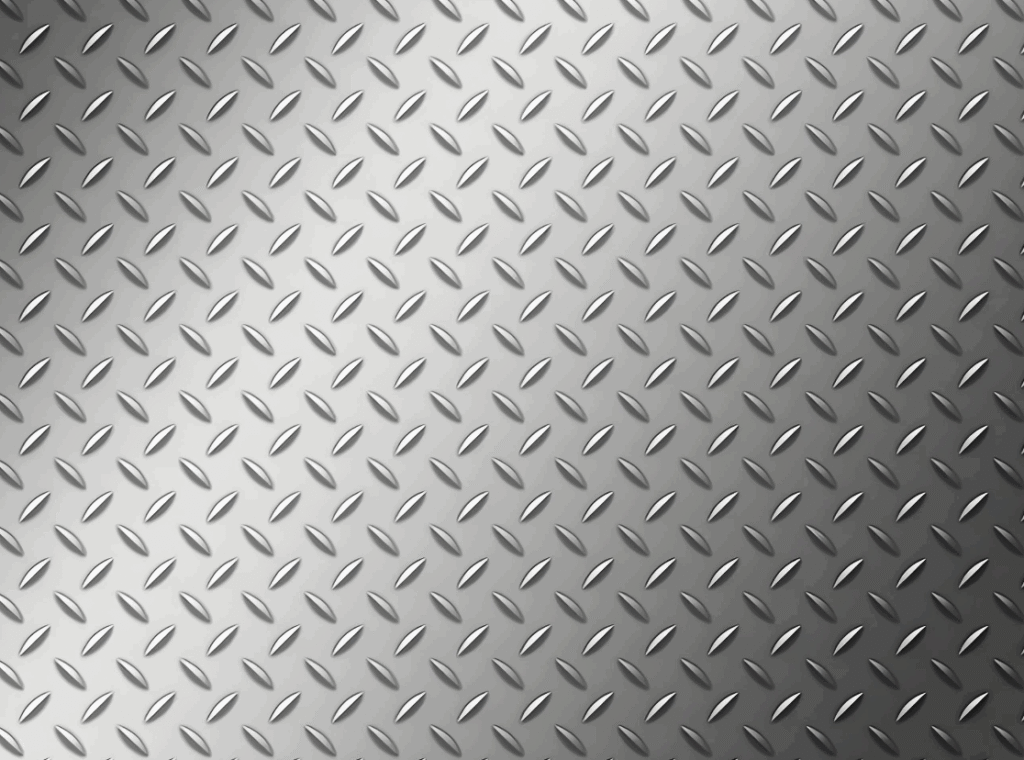
Checker plate steel, also known as diamond plate or anti-slip tread plate, is a special steel plate with regular raised patterns on its surface, manufactured through processes such as hot rolling and stamping. This article provides a comprehensive and practical guide to checker plate steel from the perspectives of basic knowledge, product classification, parameter standards, application scenarios, selection guidelines and procurement strategies.

1. What is Checker Plate Steel?
Checker plate steel is a steel plate with regular raised patterns on its surface (commonly diamond, five-bar, lentil-shaped, etc.). It is mainly produced by hot rolling at a high temperature of 1200°C, achieving metallurgical bonding between the patterns and the base plate with no risk of pattern falling off. Compared with ordinary steel plates, it has outstanding core characteristics:
- Excellent anti-slip performance: The surface friction coefficient is 30–40% higher than that of ordinary steel plates, effectively preventing slipping hazards for pedestrians and stacked goods, especially suitable for wet and oily environments.
- Wear and corrosion resistance: The surface patterns disperse stress and reduce wear; galvanized or stainless steel varieties further enhance corrosion resistance and extend service life.
- High structural strength: The load-bearing capacity is 15–20% higher than that of ordinary steel plates of the same thickness, meeting heavy-duty application requirements.
- Strong processability: Easy to weld, cut and bend; customizable in size and shape to fit complex installation scenarios.
2. Types of Checker Plate Steel
- Mild Steel Checker Plate:The most common and cost-effective type with a hot-rolled uncoated surface, easy to process and low in cost. Common grades include Q235, A36, SS400 and S235JR. Suitable for general structural and flooring applications such as factory floors, stair treads, truck platforms and warehouse shelves. It is the first choice for SMEs to meet most conventional usage scenarios.
- Carbon Steel Checker Plate:Higher in strength and hardness than mild steel, with better wear resistance. Common grades include ASTM A283, A572 Gr.50, Q345 and S275JR. Designed for heavy-duty scenarios such as heavy machinery floors, industrial ramps, transport trailers and port loading platforms, capable of withstanding heavy loads and reducing wear and deformation over long-term use.
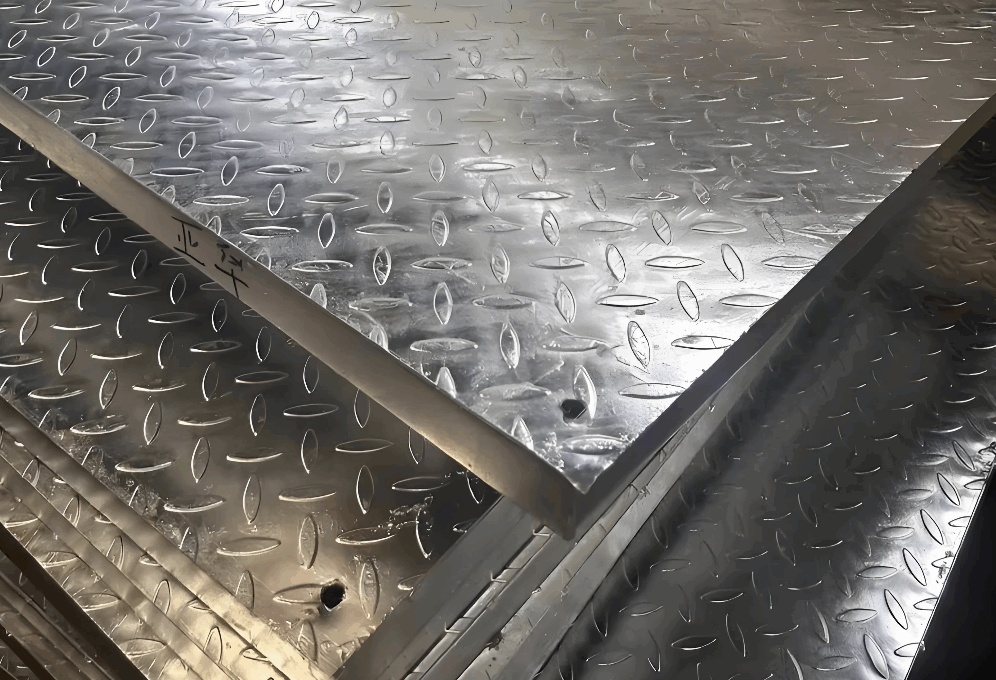
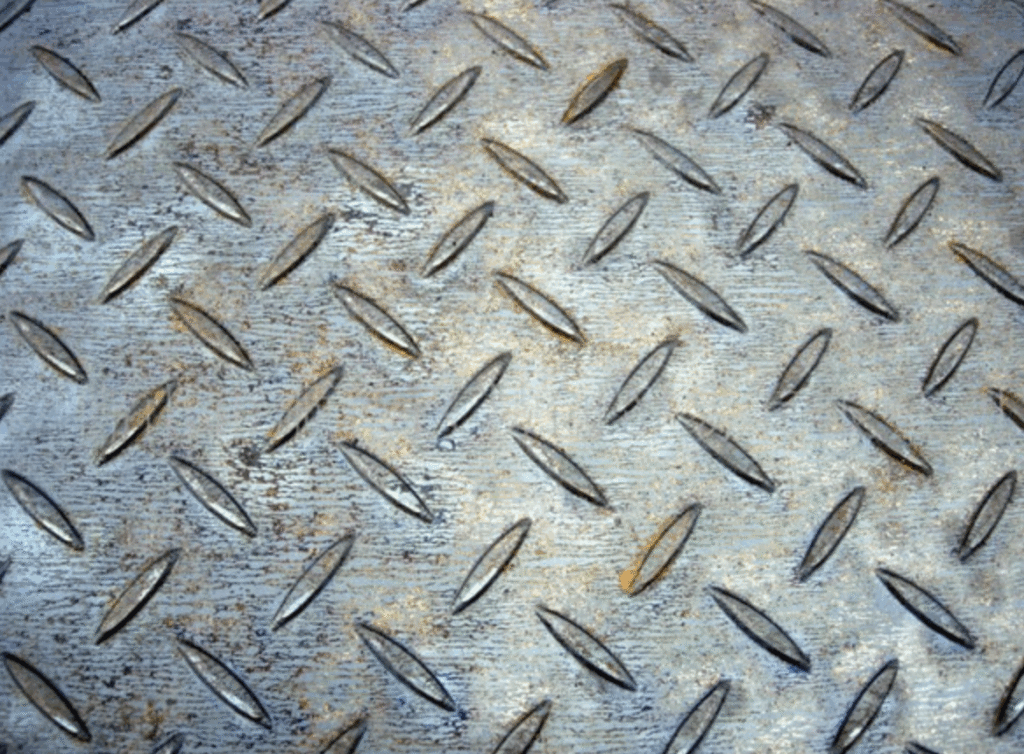
- Galvanized Checker Plate:Surface-treated by hot-dip galvanizing or electro-galvanizing to form a protective layer, greatly improving corrosion resistance. Ideal for outdoor, humid and marine corrosive environments such as outdoor ramps, offshore platforms, wet-area stair treads and ship decks. Common grades are galvanized Q235 and galvanized A36, with a service life 3–5 years longer than ordinary mild steel checker plates. Q235B galvanized checker plate is the most supplied type in the current market, mainly with lentil and diamond patterns, produced by major steel mills including Tianjin Steel, Laiwu Steel, Rizhao Steel and Benxi Steel.
3. Specification Parameters of Checker Plate Steel
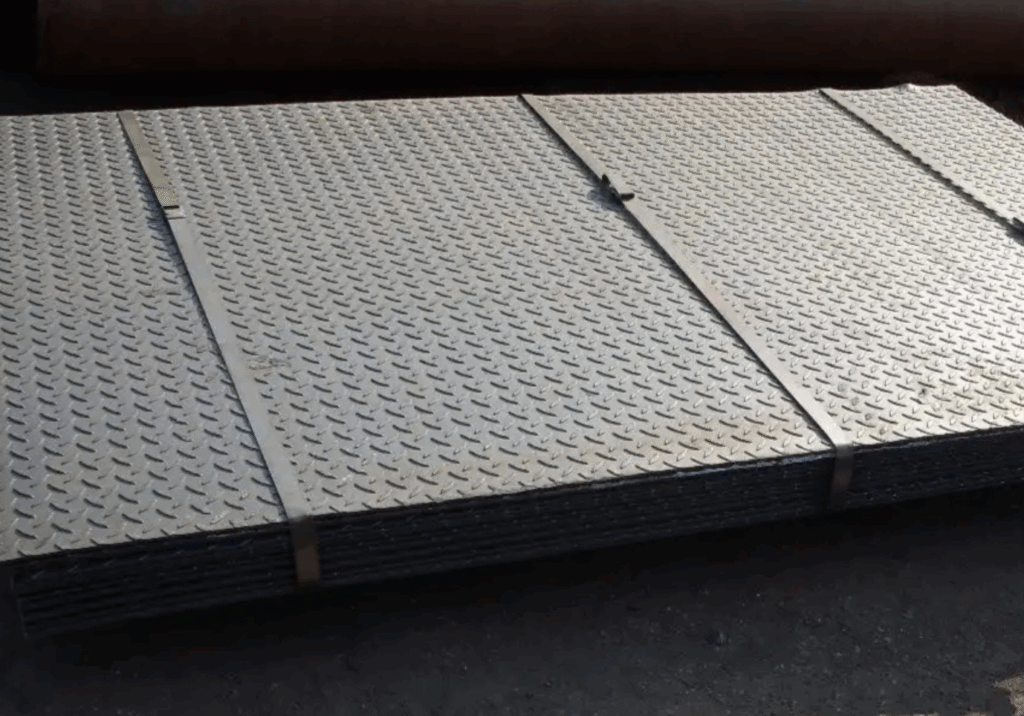
- Thickness:Conventional thickness ranges from 2mm to 12mm, with 3mm, 4mm and 5mm being the most common for general scenarios. 2mm thin plates are mainly used for decoration and light protection; 6–12mm thick plates are for heavy-duty applications (e.g., heavy machinery floors, port platforms). Thickness tolerances comply with industry standards: ±0.3mm for 2.5–3.5mm thickness, ±0.4mm for 4–4.5mm thickness, to avoid engineering quality issues caused by dimensional deviations.
- Width & Length:Conventional width ranges from 600mm to 1800mm, with 1200mm and 1500mm being the most common. Conventional length ranges from 2m to 12m, with 6m and 8m being the most common. Custom sizes (e.g., international standard 4’×8′, 5’×10′) are available, with MOQ (Minimum Order Quantity) and lead time to be confirmed with suppliers in advance.
- Weight:Weight depends on thickness and pattern type. The following are theoretical weight references for common specifications (accurate weight subject to actual testing) for cost accounting and transportation planning:
- 2.5mm diamond pattern: ~21.6kg/m², lentil pattern: ~21.1kg/m²
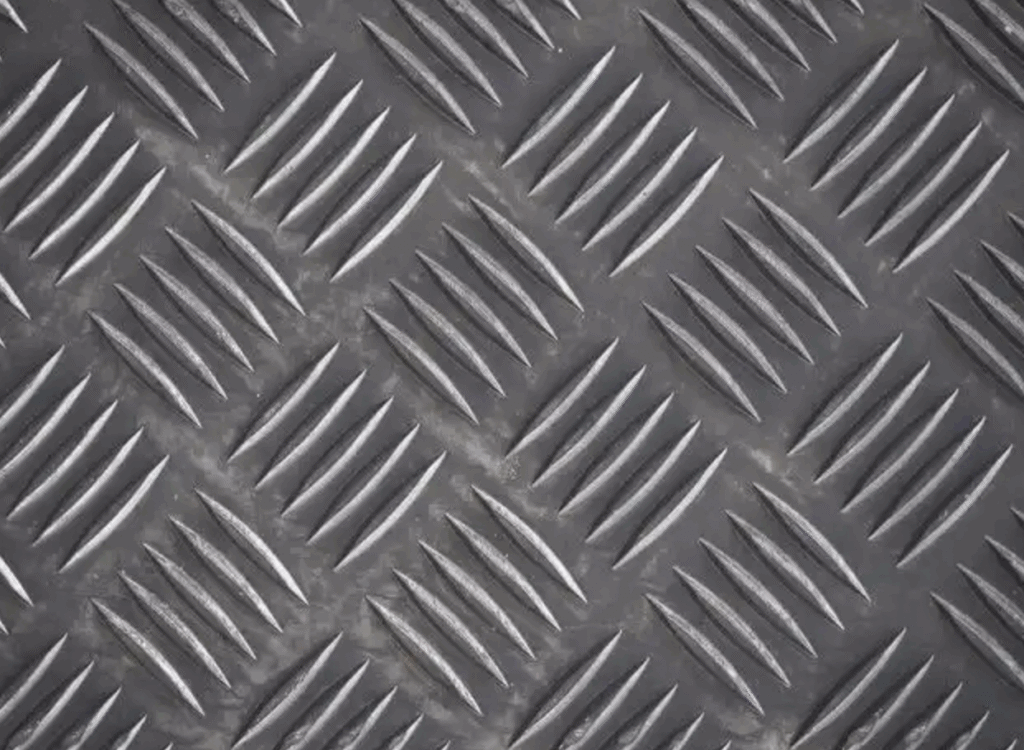
- 3mm diamond pattern: ~25.6kg/m², lentil pattern: ~24.3kg/m², five-bar pattern: ~24.4kg/m²
- 3.5mm diamond pattern: ~29.5kg/m²
- 4mm diamond pattern: ~33.4kg/m²
- 5mm diamond pattern: ~41.3kg/m²
- Pattern Height:Conventional range: 0.5–1.2mm. Higher pattern height delivers better anti-slip performance but lower surface flatness; lower pattern height ensures smoother surface but relatively weaker anti-slip effect. For high anti-slip demand (industrial ramps, ship decks), select 1.0–1.2mm height; for decorative applications, select 0.5–0.8mm height.
4. Prices of Checker Plate Steel
Prices fluctuate significantly based on material, thickness, pattern type, order quantity, transportation cost and certification requirements. 2026 market reference ranges are as follows:
- Price by Material
- Mild steel checker plate: 456–700 USD/ton (45–75 USD/m²)
- Galvanized checker plate: 510–1,250 USD/ton (55–85 USD/m²)
- Stainless steel checker plate: 1,500–2,500 USD/ton (150–200 USD/m²)
- Aluminum checker plate: 850–1,300 USD/ton (85–130 USD/m²)
Domestic reference for Q235B galvanized checker plate: ≥100 tons at 4,500 USD/ton; 50–100 tons at 4,500 USD/ton; 1–50 tons at 4,560 USD/ton. Prices vary slightly by origin and specification.
- Price by Thickness
- 2–3mm thin type: 45–60 USD/m²
- 4–5mm standard type: 60–80 USD/m²
- 6–10mm thick type: 80–120 USD/m²
- 11–12mm extra-thick type: 120–150 USD/m²Price increases with thickness.
5. Applications of Checker Plate Steel
5.1 Industrial Applications
Industrial scenarios are the core application field, prioritizing anti-slip, wear resistance and heavy load capacity to reduce safety hazards for equipment operation and pedestrian traffic.
- Factory floors & workshop walkways: Mild/carbon steel checker plate, 4–6mm thick, diamond/five-bar pattern, suitable for frequent pedestrian and equipment rolling.
- Heavy machinery floors & equipment platforms: Carbon/heavy-duty galvanized checker plate, 6–10mm thick, hexagonal/diamond pattern, high load-bearing and wear-resistant.
- Industrial ramps & loading platforms: Carbon/galvanized checker plate, 5–8mm thick, diamond/five-bar pattern, ideal for heavy cargo handling; port projects often use galvanized versions to resist seawater corrosion.
5.2 Construction Applications
Construction applications emphasize anti-slip performance, high structural strength and adaptability to humid environments.
- Stair treads & building walkways: Galvanized/mild steel checker plate, 3–5mm thick, five-bar/diamond pattern, suitable for wet and high-traffic stairs.
- Bridge platforms & scaffolding treads: Carbon/galvanized checker plate, 4–6mm thick, diamond pattern, high load-bearing and corrosion-resistant for construction and maintenance.
- Warehouse floors: Mild/galvanized checker plate, 3–4mm thick, five-bar/lentil pattern, anti-slip and wear-resistant for forklift traffic and cargo stacking.
5.3 Transportation Applications
Transportation scenarios require wear resistance, anti-slip performance and corrosion resistance for harsh outdoor environments.
- Truck beds & transport trailers: Carbon/galvanized checker plate, 5–8mm thick, diamond pattern, prevents cargo shifting during transit.
- Ship decks & port platforms: Galvanized/stainless steel checker plate, 6–10mm thick, diamond/hexagonal pattern, corrosion-resistant to seawater and wind.
- Rail transit platforms: Galvanized checker plate, 4–6mm thick, five-bar pattern, suitable for high-traffic subway and light rail platforms.
6. How to Select Checker Plate Steel
- Application Environment:Outdoor, humid, marine or chemical corrosive environments prioritize galvanized or stainless steel checker plates. Indoor, dry and non-corrosive environments can use mild steel to reduce costs. Heavy industrial and high-wear environments choose carbon steel for longer service life.
- Load Requirement
- Light-duty (decoration, small shelves): 2–3mm thin mild steel or aluminum checker plate.
- Standard (stairs, warehouse floors): 3–5mm mild steel or galvanized checker plate.
- Heavy-duty (heavy machinery floors, port platforms): 6–12mm carbon or heavy-duty galvanized checker plate to avoid deformation and damage.
- Anti-Slip Requirement
- High anti-slip (industrial ramps, ship decks, wet stairs): Diamond, five-bar or hexagonal patterns with 1.0–1.2mm height.
- Standard anti-slip (warehouse floors, workshop walkways): Five-bar or lentil patterns with 0.8–1.0mm height.
- Decoration/light use: Lentil or teardrop patterns with 0.5–0.8mm height for balanced appearance and basic anti-slip.Diamond or lentil patterns with good drainage are preferred for wet conditions.
- Budget:Mild steel checker plate is the most economical for budget-limited standard scenarios. Galvanized checker plate offers balanced cost performance for outdoor and humid environments. Stainless steel and aluminum checker plates, at higher costs, suit high-end or special applications (food processing, aerospace).
7. Frequently Asked Questions
Q1: What is the difference between checker plate steel and ordinary hot-rolled steel plate?
A1: There are three core differences:
- Surface structure: Checker plate has regular raised patterns; ordinary hot-rolled plate has a flat surface.
- Performance: Checker plate excels in anti-slip and wear resistance; ordinary plate focuses on structural strength without anti-slip function.
- Application: Checker plate is for anti-slip and protection; ordinary plate is for structural support (building beams, equipment enclosures).Checker plate also involves an extra pattern-rolling process, resulting in slightly higher cost.
Q2: How long is the service life of checker plate steel?
A2: Service life depends on material and environment:
- Mild steel checker plate (indoor dry environment): 3–5 years
- Galvanized checker plate (outdoor/humid environment): 5–8 years
- Stainless steel checker plate (high-end corrosive environment): Over 10 years
- Aluminum checker plate (indoor decoration/lightweight use): 8–10 yearsProper maintenance (regular derusting and painting) can extend service life by 1–2 years.
Q3: Can checker plate steel be cut and welded?
A3: Yes. It has excellent processability and can be cut by flame, plasma or laser cutting into any size and shape. Welding methods such as arc welding and gas shielded welding are applicable without impairing anti-slip performance or structural strength. Professional welding is recommended to avoid cracks and deformation.
Q4: What is the best pattern for stair treads?
A4: Five-bar or diamond patterns are optimal. Five-bar pattern offers stable anti-slip performance and easy cleaning for most stairs. Diamond pattern provides the best anti-slip effect for wet, high-traffic stairs (factory stairs, outdoor stairs). Lentil and teardrop patterns are not recommended due to insufficient anti-slip performance.
Q5: How to maintain checker plate steel to extend service life?
A5: Three key maintenance points:
- Regular cleaning: Remove dust, oil and debris to prevent wear and corrosion.
- Derusting and anti-corrosion: Derust and repaint mild steel annually; touch up damaged galvanized layers with anti-corrosion paint.
- Avoid heavy impact: Prevent heavy equipment or objects from directly striking the surface to avoid pattern detachment and plate deformation.
8. Conclusion
When selecting checker plate steel, consider application environment, load requirement, anti-slip demand and budget, and choose standard-compliant, cost-effective products to avoid common selection mistakes. For procurement, select reliable suppliers with complete qualifications, rich project cases and comprehensive after-sales service to ensure product quality and stable supply.
For further inquiries, please consult Tonghui.
References
- National Standards: GB/T 3277-2015 Checker Plates, GB/T 33974-2017 Hot-Rolled Checker Plates and Strip Steels
- International Standards: ASTM A36, ASTM A283, A572 Gr.50 (ASTM International), BS EN 10025 (British Standards), JIS G 3101 (Japanese Industrial Standards)
- Industry Materials: Specification for Construction Checker Plate Application, Industrial Steel Procurement Guide


 English
  Spanish
  Afrikaans