
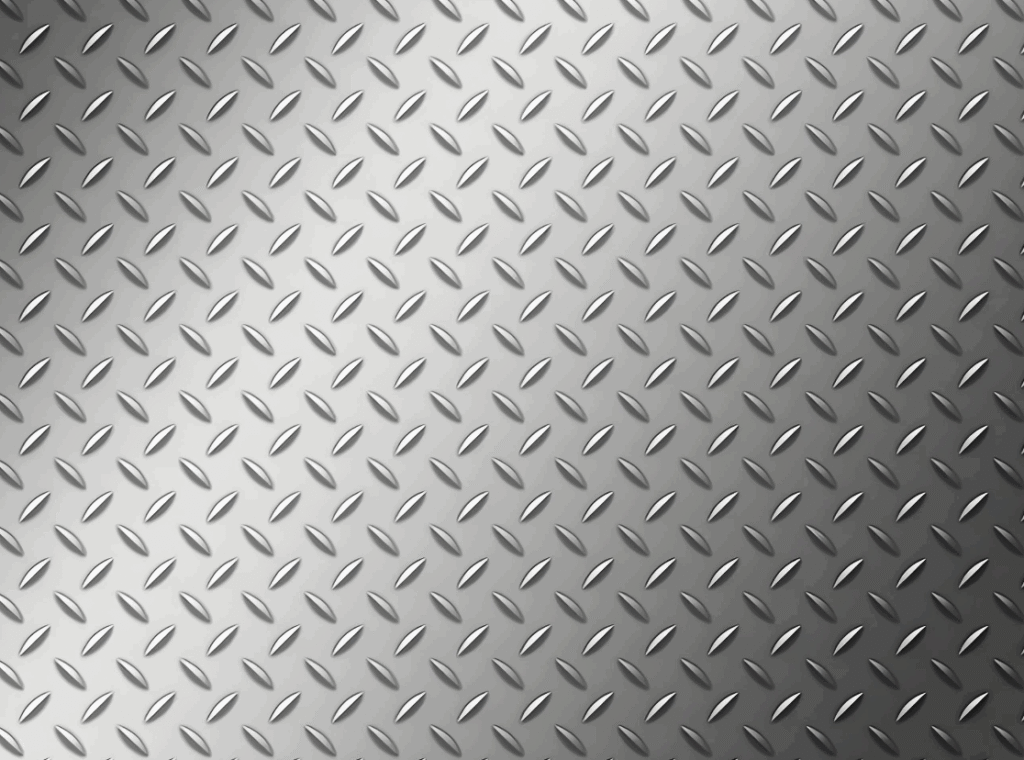
Stainless Steel Diamond Plate (also known as Checker Plate, Tread Plate) is a stainless steel sheet with raised diamond patterns on the surface. With four core advantages of anti-slip performance, corrosion resistance, high strength and easy cleaning, it has become a mainstream anti-slip material in industrial, construction, transportation and decoration fields. This article explains stainless steel diamond plate from basic knowledge, grade selection, weight calculation, processing and installation to procurement decisions.
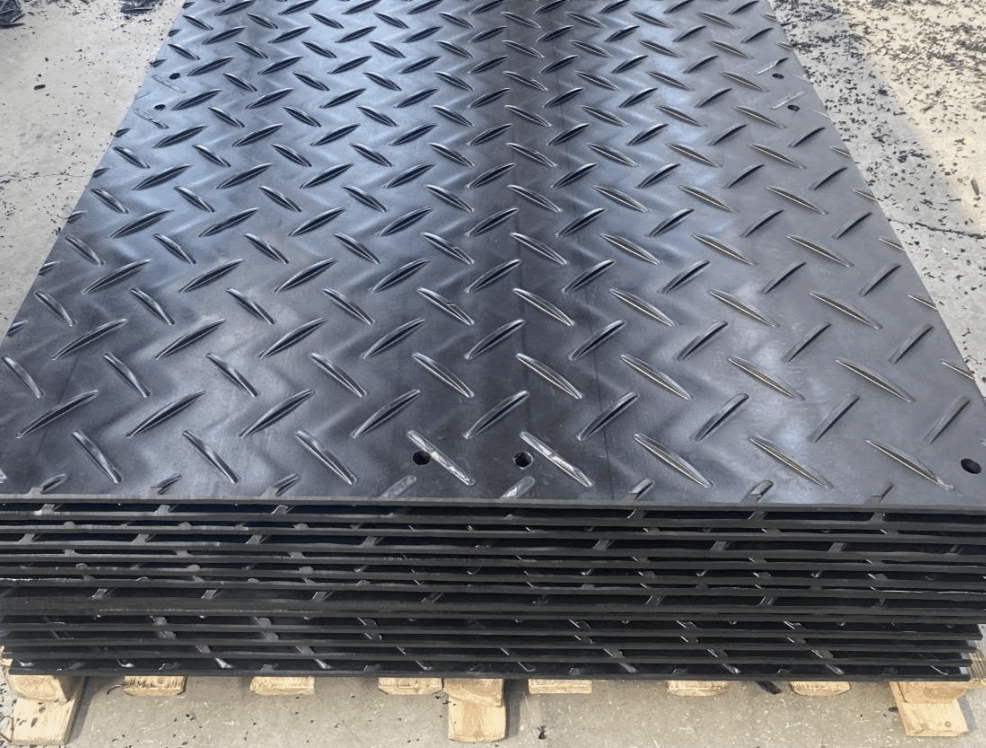
1. What is Stainless Steel Diamond Plate
Stainless Steel Diamond Plate is a sheet made by pressing raised diamond patterns on the surface of a stainless steel base plate through hot rolling or cold rolling. The pattern height is usually 3–8mm, with a dry friction coefficient ≥0.5 and wet friction coefficient ≥0.3, providing far better anti-slip performance than ordinary flat plates. Industry common aliases: diamond tread plate, anti-slip checker plate, stainless steel textured plate.
1.1 Core Performance Advantages
- Superior Anti-Slip: Diamond patterns increase surface friction, suitable for slippery environments such as humidity, oil stains, rain and snow, eliminating the risk of personnel slipping.
- Excellent Corrosion Resistance: Austenitic stainless steels such as 304/316 contain more than 18% chromium, forming a dense oxide film to resist corrosion from atmosphere, water, weak acids and weak bases. 316 further contains molybdenum, which greatly enhances chloride ion corrosion resistance.
- High Strength & Load-Bearing: Base plate hardness is 190–205HBW, capable of withstanding heavy rolling, suitable for industrial platforms, heavy machinery pedals and other scenarios.
- Easy Cleaning & Maintenance: Smooth and seamless surface, resistant to acid and alkali cleaners. It can be directly steam-cleaned in food and pharmaceutical applications with no hygienic dead spots.
- Aesthetic & Durable: Patterns combine functionality and decoration. Surface finishes such as 2B, No.4, brushed and mirror polish meet both industrial and high-end decoration needs.
1.2 Production Process & Specification System
Process Classification
- Hot Rolling Embossing: For medium-thick plates ≥3mm, pattern height 5–8mm, strong anti-slip performance, low cost, suitable for heavy-duty industrial applications.
- Cold Rolling Embossing: For thin plates 1–4mm, pattern precision ±0.05mm, flat surface, suitable for commercial decoration, food workshops and other scenarios.
Standard Specifications (ASTM A793/GB/T 3280)
- Thickness: 1.0–12.0mm (commonly 2–6mm)
- Width: 1000–3000mm
- Length: 2000–6000mm (customizable)
- Surface Finish: 2B (general industrial), No.4 (brushed), mirror (decorative), sandblasted (enhanced anti-slip)

2. Selection Guide for Stainless Steel Diamond Plate
The mainstream types on the market are 304, 316 and 430, which differ significantly in corrosion resistance, processability, application scenarios and cost. Wrong selection leads to unnecessary costs, premature rusting, deformation or insufficient strength. The following clarifies selection based on actual usage.
2.1 304 Stainless Steel Plate
304 is the most commonly used and cost-effective stainless steel, with a standard composition of 18% chromium + 8% nickel. It offers stable atmospheric, water, weak acid and alkali resistance, is non-magnetic, easy to weld and bend, making it the default choice for most scenarios.
Suitable for: indoor dry environments, general commercial spaces, food workshops, shopping mall stairs, vehicle pedals, conventional architectural decoration.
Recommended thickness: 2–4mm, balancing anti-slip, load-bearing and material efficiency.
Note: 304 is not suitable for long-term exposure to seawater, high-concentration chloride ions or strong acid/alkali environments, as pitting corrosion and rust may occur.
2.2 316 Stainless Steel Plate
316 adds molybdenum on the basis of 304, greatly improving chloride ion corrosion resistance, high temperature resistance and acid/alkali resistance. It is a marine-grade and chemical-grade stainless steel.
Designed for harsh environments such as coastal construction, ship decks, seawater pump houses, chemical workshop platforms, sewage treatment facilities and high-end food/pharmaceutical workshops. It is the only reliable option for humid and highly corrosive environments.
Recommended thickness: 4–8mm for heavy-duty and long-term durability.
Disadvantage: Cost is 30%–50% higher than 304. Not recommended for non-extreme corrosive environments.

2.3 430 Stainless Steel Plate
430 is ferritic stainless steel containing 17% chromium but no nickel. It is low-cost, magnetic, with good decorative effect and resistance to daily atmospheric corrosion, but inferior weldability and corrosion resistance compared to 304.
Suitable for light-load, dry, non-corrosive scenarios: indoor decoration, elevator interiors, furniture panels, wall decoration, non-load-bearing decorative parts.
Common thickness: 1.5–5mm.
Note: Due to poor weldability and moderate strength, 430 is not recommended for heavy-duty platforms, industrial anti-slip floors or long-term outdoor exposure.
Core Selection Principles Summary
- Indoor general use & cost efficiency: choose 304 directly.
- Coastal, seawater, chemical, high-humidity corrosive environments: must choose 316.
- Low-cost indoor decoration & non-load-bearing parts: optional 430.
- Thickness by load: light load 2–3mm; heavy load 5mm+ for safety.
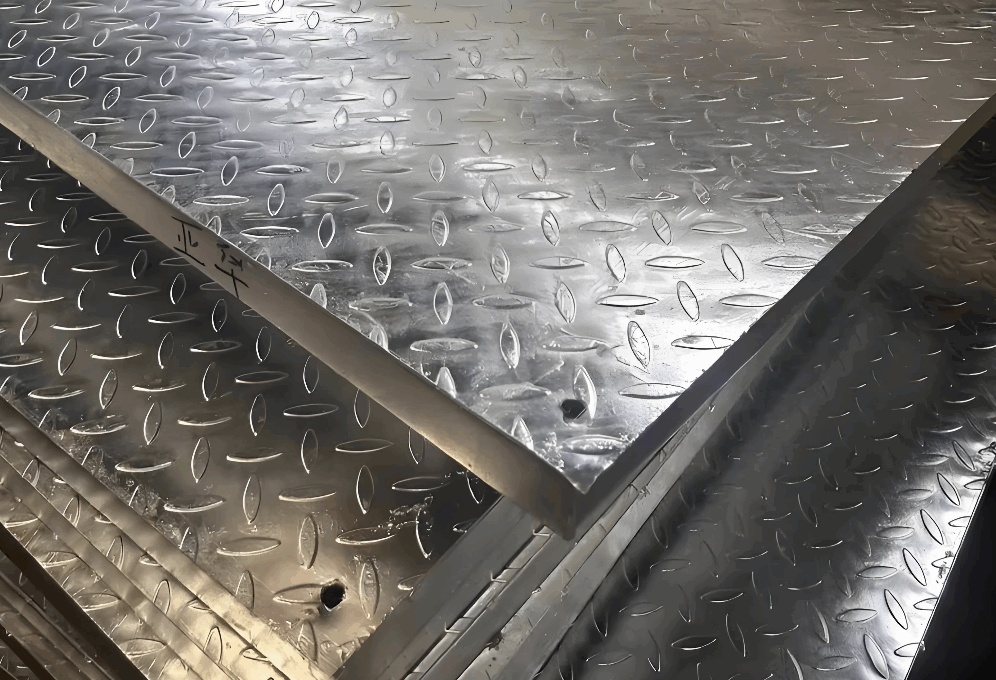
3. Weight and Load-Bearing Capacity of Stainless Steel Diamond Plate
3.1 Industry Standard Weight Calculation Formula
Weight of Stainless Steel Diamond Plate = Thickness (mm) × Width (m) × Length (m) × Density (7.93kg/dm³)
Note: Raised patterns add approximately 4–5kg/㎡. Adjust accordingly for bulk procurement; use theoretical weight for project budgeting.
3.2 Common Specification Weight Reference Table
| Specifications (thickness x width x length) | Theoretical weight (kg/sheet) | Applicable scenarios |
|---|---|---|
| 2mm×1220mm×2440mm | about 47kg | Indoor decoration, lightweight pedals |
| 3mm×1220mm×2440mm | about 71kg | Shopping mall stairs, food workshop |
| 5mm×1500mm×6000mm | about 357kg | Industrial platform, heavy-duty workshop |
| 8mm×2000mm×6000mm | about 761kg | Ship deck, chemical heavy-duty platform |
3.2 Load-Bearing Standard Reference
- 2–3mm: support spacing ≤500mm, max load ≤500kg/㎡
- 4–5mm: support spacing ≤800mm, max load ≤1000kg/㎡
- 6–8mm: support spacing ≤1200mm, max load ≤2000kg/㎡
Tip: Increase support density or use thick 316 plates for heavy-duty applications to improve safety.
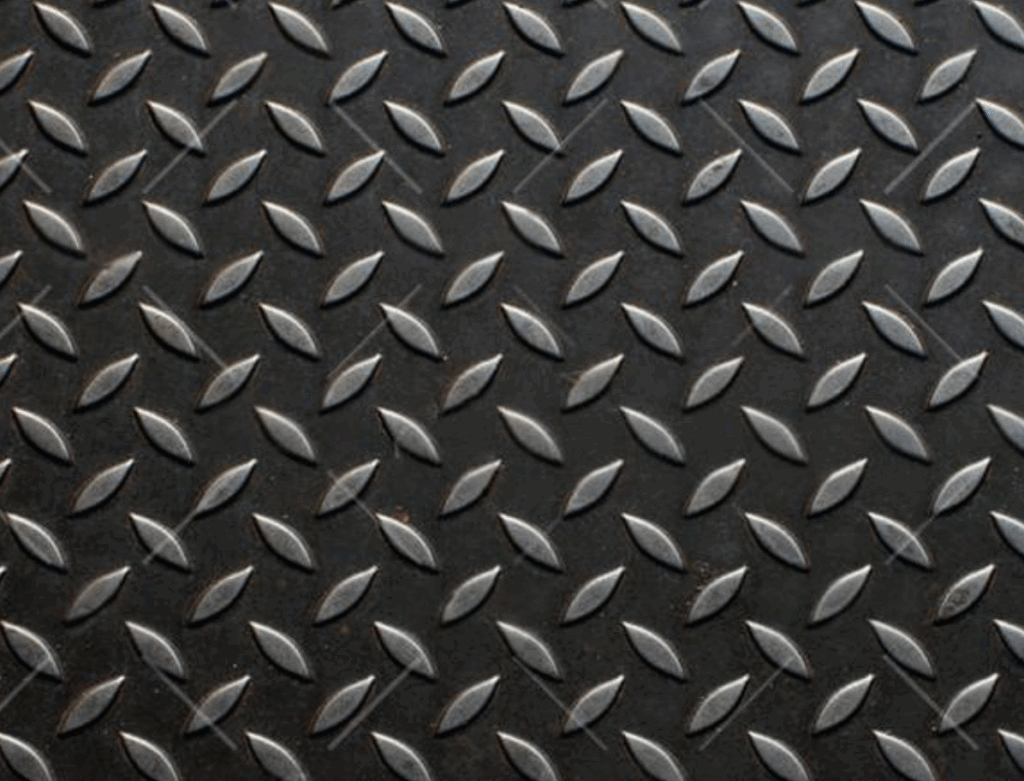
4. Processing and Installation of Stainless Steel Diamond Plate
4.1 Cutting and Bending
- Cutting: Prioritize laser/plasma cutting for high precision and burr-free edges. Avoid flame cutting to prevent surface oxidation and discoloration.
- Bending: Preheat to 150–200℃, control bending radius ≥1.5× thickness to prevent pattern cracking. Reduce bending speed for 316.
- Stamping: Use special stainless steel molds to avoid surface scratches; clean oil stains promptly after stamping.
4.2 Core Welding Techniques (Industry Standard)
Stainless steel diamond plate is prone to thermal deformation and intergranular corrosion during welding. Follow these procedures strictly:
- Pre-Welding Preparation: Clean welding areas with acetone to remove oil and impurities; grind with a stainless steel wire brush to avoid carbon steel contamination.
- Filler Metal Matching: ER308/308L for 304; ER316/316L for 316. Strictly prohibit mixing.
- Welding Parameters: Low current (80–120A), fast welding to control heat input and reduce deformation. Argon purity ≥99.99% for oxidation protection.
- Post-Welding Treatment: Remove welding slag promptly; treat welds with pickling paste to restore corrosion resistance; correct deformed areas with specialized tools.
4.3 Installation and Maintenance Tips
- Installation: Install with anti-slip surface upward; reserve 2–3mm gaps for thermal expansion and contraction. Secure with 304/316 stainless steel screws to avoid rust contamination from carbon steel fasteners.
- Maintenance: Clean regularly with neutral cleaners; avoid strong acids/alkalis. Minor scratches can be repaired by polishing. Perform passivation treatment quarterly for coastal/chemical environments.
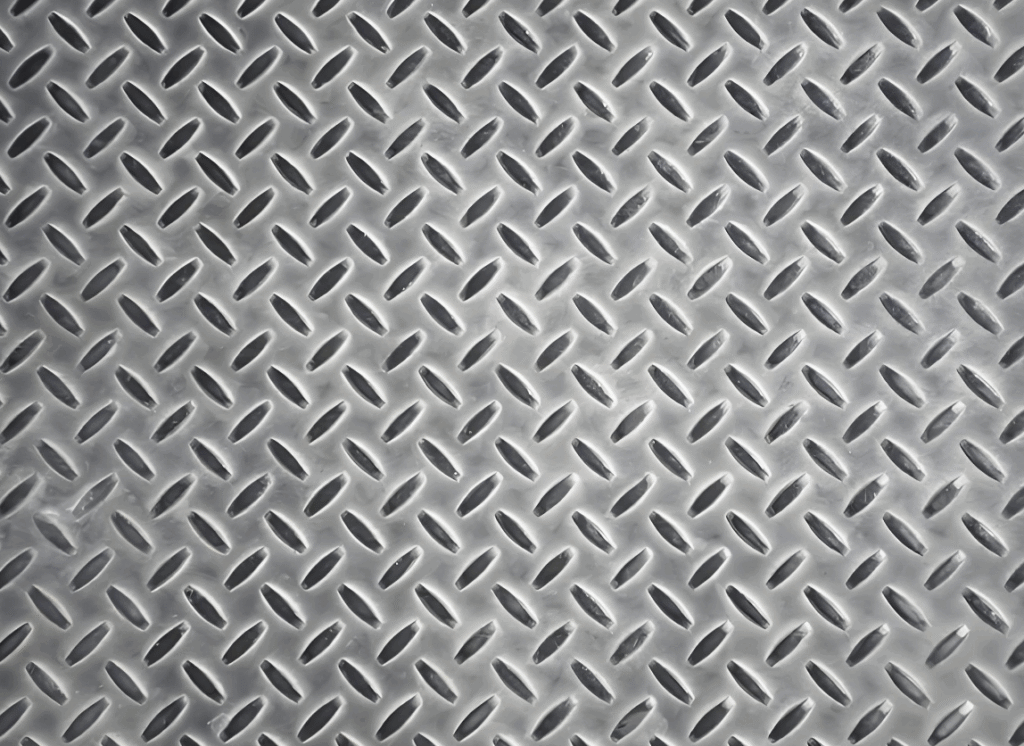
5. Applications of Stainless Steel Diamond Plate
5.1 Industrial Sector (Mainly 316 / Thick Plates)
- Chemical, pharmaceutical and food processing plants: anti-slip, corrosion-resistant, easy to clean, compliant with GMP standards.
- Mining machinery and heavy equipment pedals: high strength and wear resistance for heavy-duty conditions.
- Sewage treatment plants and seawater desalination facilities: 316 resists chloride ion corrosion.
5.2 Construction & Commercial Sector (Mainly 304)
- Stairs/corridors in shopping malls, hotels and hospitals: anti-slip, safe and aesthetically pleasing.
- Underground garage ramps and platforms: anti-slip and wear-resistant to reduce accidents.
- Elevator interiors, curtain walls and railings: No.4/mirror finish for high-end decoration.
5.3 Transportation Sector (Mainly 316)
- Ship decks and trestles: 316 resists seawater corrosion and ensures pedestrian safety.
- Truck beds and trailer floors: wear and corrosion resistant for extended service life.
- High-speed rail/subway pedals: anti-slip and easy to clean for high-frequency public use.
5.4 Decoration Sector (430/304 Decorative Finish)
- Furniture panels and wall decoration: unique patterns with strong metallic texture for modern design.
- Storefronts and signboards: corrosion and weather resistant, no rust in outdoor use.
6. Procurement Guide for Stainless Steel Diamond Plate
6.1 Price Reference (March 2026, tax included / ton)
- 304 Stainless Steel Diamond Plate: 12,000–22,000 CNY/ton (thickness 2–6mm)
- 316 Stainless Steel Diamond Plate: 18,000–30,000 CNY/ton (thickness 4–8mm)
- 430 Stainless Steel Diamond Plate: 8,000–15,000 CNY/ton (thickness 1.5–5mm)
Tip: Prices fluctuate with nickel prices. Bulk orders (≥5 tons) qualify for 5%–10% discounts.
6.2 Procurement and Factory Audit Key Points
- Clear Parameters: Specify grade, thickness, size, surface finish, quantity and delivery time in the purchase contract.
- Material Verification: Require material certificates (ASTM A793/GB/T 3280) from suppliers; verify grades on-site with stainless steel test solution.
- Quality Inspection: Uniform patterns, no cracks or deformation, no scratches or oxidation spots on the surface, thickness deviation ≤±0.05mm.
- Delivery Assurance: Agree on packaging (moisture-proof film + wooden frame) and transportation to avoid damage in transit.
7. FAQ
Q1: What is the core difference between 304 and 316 stainless steel diamond plate?
A: 316 contains molybdenum, with 3–5 times higher chloride ion corrosion resistance than 304. It is used in marine, chemical and coastal environments. 304 is cost-effective for general indoor applications.
Q2: How to calculate the weight of stainless steel diamond plate?
A: Weight = Thickness (mm) × Width (m) × Length (m) × 7.93. Patterns add approx. 4–5kg/㎡ for adjustment.
Q3: Can stainless steel diamond plate be welded?
A: Yes. Use matching filler metals (308 for 304, 316 for 316), low-current fast welding, and post-weld passivation to avoid intergranular corrosion.
8. Conclusion
With core advantages of anti-slip, corrosion resistance, high strength and easy maintenance, Stainless Steel Diamond Plate is the top choice for anti-slip materials across all industries. The key to selection is choosing the right grade (304 for general use, 316 for corrosion resistance, 430 for decoration) and thickness based on load-bearing needs. Processing must follow stainless steel-specific techniques to avoid thermal deformation and corrosion. Procure from qualified manufacturers and verify material certificates. For industrial heavy-duty, commercial decoration or transportation applications, selecting the right stainless steel diamond plate ensures safety and long-term cost efficiency. If you are planning to purchase stainless steel diamond plate, welcome to choose Tonghui!
References
- National Standards: GB/T 3280-2015 Cold Rolled Stainless Steel Plates and Strips, YB/T 4159-2022 Checkered Steel Plates
- International Standards: ASTM A793/A793M Standard Specification for Stainless Steel Checkered Plate, EN 10088-2 Stainless Steels – Technical Delivery Conditions for Sheet and Strip
- Industry Report: 2026 China Stainless Steel Diamond Plate Market Research Report (China Iron and Steel Industry Association)




 English
  Spanish
  Afrikaans