
As one of the most widely used medium-thickness steel materials, 18 gauge steel achieves an optimal balance of strength, workability and cost, making it the preferred choice for DIY projects, construction, automotive manufacturing, kitchenware and many other fields. This article provides a comprehensive guide to 18 gauge steel from five dimensions: basic knowledge, property comparison, practical applications, processing techniques and procurement guidelines.

1. What Is 18 Gauge Steel?
1.1 Meaning of “Gauge” in Steel Industry
Many people feel confused about the unit “gauge” when first encountering 18 gauge steel. Gauge is a metal sheet thickness unit derived from the traditional US measurement system, following the core principle: the higher the gauge number, the thinner the steel sheet. This logic is opposite to that of millimeters and inches. Mastering the conversion between gauge, millimeters (mm) and inches (inch) is essential to avoid specification errors in procurement and processing, and to support international purchasing and project cooperation, especially in European and American markets.
1.2 Exact Thickness of 18 Gauge Steel
The thickness of 18 gauge steel is not a fixed value and varies slightly depending on material grade and surface coating. Below are the industry-standard precise thickness parameters.
| Steel Type | Thickness (inch) | Thickness (mm) | Remarks |
| Standard Cold-Rolled Carbon Steel | 0.0478 | 1.214 | The most commonly used basic type, with low cost and wide adaptability |
| 304/316 Stainless Steel | 0.0500 | 1.270 | Strong corrosion resistance, suitable for humid and high hygiene requirement scenarios |
| Galvanized Steel | 0.0516 | 1.311 | With zinc coating, focusing on outdoor and anti-corrosion scenarios to extend service life |
Note: Minor thickness deviations are normal in the industry, mainly caused by material density, surface coating thickness (such as galvanized layer) and manufacturing tolerances, and will not affect conventional usage scenarios.

2. Classification of 18 Gauge Steel
Material grade directly determines the applicable scenarios of 18 gauge steel with significant differences in performance. The three most commonly used grades in the industry are listed below for accurate selection:
2.1 18 Gauge Carbon Steel
Carbon steel features the lowest cost and widest application among all 18 gauge steel types. It delivers moderate strength, good toughness and excellent workability, and can be easily cut, bent and welded without special tools.
Typical applications: ordinary structural brackets, DIY metal products, automotive body panels (cold-rolled carbon steel).
Disadvantage: poor corrosion resistance; prone to rust in humid environments and requires anti-rust treatment.
2.2 18 Gauge Stainless Steel (304/316)
304 and 316 are the most common stainless steel grades. 304 stainless steel is ideal for daily sanitary scenarios, while 316 offers superior corrosion resistance for outdoor and acid-base environments. It is rust-proof, sanitary and easy to clean, serving as the standard material for kitchen sinks, food processing equipment and medical device enclosures.
Disadvantage: higher cost than carbon steel and galvanized steel.
2.3 18 Gauge Galvanized Steel
Galvanized steel is carbon steel coated with a zinc layer for anti-corrosion and rust protection. It has strength similar to carbon steel and good workability, widely used in outdoor, humid and agricultural scenarios such as building roof and wall panels, ventilation ducts and farm fences. Its cost performance is between carbon steel and stainless steel.
Supplement: The weight of 18 gauge steel varies by material grade. Standard weight reference:
- Carbon steel: approx. 2.000 lb/ft²
- Stainless steel: approx. 2.100 lb/ft²
- Galvanized steel: approx. 2.050 lb/ft²Weight differences can be referenced for installation and transportation planning.

3. Properties of 18 Gauge Steel
3.1 Strength and Durability
Classified as medium-strength steel, it offers excellent dent and impact resistance. It ensures structural integrity while maintaining lightweight design, suitable for medium-load applications. It is less deformable than thinner 20 gauge steel and lighter and more cost-effective than thicker 16 gauge steel.
3.2 Workability
18 gauge steel features outstanding workability for both DIY enthusiasts and industrial processing. Basic operations including cutting, bending and welding can be completed with ordinary tools such as angle grinders and welding machines, lowering the processing threshold. Note that welding techniques vary by material; stainless steel requires special welding rods to prevent burn-through and cracking.
3.3 Corrosion Resistance
Corrosion resistance varies by grade, ranked from highest to lowest:
316 stainless steel > 304 stainless steel > Galvanized steel > Ordinary carbon steel
For selection: choose stainless steel for humid and sanitary environments, galvanized steel for outdoor anti-corrosion scenarios, and carbon steel for dry indoor applications.
3.4 Cost Efficiency
It delivers outstanding cost performance and is the optimal solution for most scenarios. It costs 15%-25% less than 16 gauge steel and offers around 30% higher strength than 20 gauge steel, balancing budget control and functional requirements for bulk procurement and daily DIY use.

4. Price of 18 Gauge Steel
Prices vary by material grade, specification, order quantity and region. Below are the 2026 industry reference prices (excluding freight and processing fees):
- 18 Gauge Carbon Steel: 2.5-3.5 CNY per kg (10%-15% discount for bulk orders)
- 18 Gauge 304 Stainless Steel: 12-15 CNY per kg
- 18 Gauge 316 Stainless Steel: 18-22 CNY per kg
- 18 Gauge Galvanized Steel: 4.5-6 CNY per kg
Key price-influencing factors: material purity, thickness tolerance, order volume and surface treatment. Bulk orders of 1 ton and above can significantly reduce unit price.
5. Comparison: 18 Gauge Steel vs Other Materials
5.1 18 Gauge Steel vs 18 Gauge Aluminum
Aluminum is lighter and naturally corrosion-resistant without extra coating, but much lower in strength, prone to deformation and weak in impact resistance. 18 gauge steel provides higher structural strength, better workability and lower cost, ideal for load-bearing scenarios such as brackets and panels. Aluminum is more suitable for lightweight decorative parts with no load-bearing requirements.
5.2 18 Gauge Steel vs 18 Gauge Copper
Copper features superior corrosion resistance and excellent electrical conductivity but comes with extremely high costs. It is only used for special applications such as conductive components in electrical equipment. 18 gauge steel offers wide adaptability and cost advantages for mass application, making it a better choice for most scenarios.

6. Application Scenarios of 18 Gauge Steel
18 gauge steel is widely used in household, commercial, industrial and agricultural fields with different grades for targeted applications:
6.1 Household & DIY Applications
It is a top choice for DIY metal crafting:
- Kitchen Sinks: 18 gauge stainless steel is the industry standard for kitchen sinks, with moderate thickness, rust resistance and easy cleaning for residential and small commercial use. Avoid strong acid and alkaline detergents to extend service life.
- DIY Metal Products: Metal brackets, storage racks, storage boxes and pet fences; easy to cut, bend and weld even for beginners.
- Home Decoration: Decorative panels, metal frames and wall hangings, customizable through grinding and polishing to match various decoration styles.
6.2 Commercial & Industrial Applications
- Automotive Industry: Body panels, structural brackets and interior frames, mostly cold-rolled carbon steel for complex shaping, lightweight design and structural stability.
- Construction Industry: Ventilation ducts, roof/wall panels and non-load-bearing structural brackets. Galvanized steel for outdoor building components; stainless steel for humid areas such as restrooms and kitchens; carbon steel for dry indoor brackets. Follow standard procedures of layout, marking, cutting, welding and anti-rust treatment for steel structure fabrication.
- Food & Medical Industry: Commercial sinks, equipment enclosures and workbenches, adopting 304/316 stainless steel to meet hygiene standards and avoid contamination.
- Manufacturing Industry: Electrical control boxes, equipment housings and small mechanical parts; moderate strength enables EMI shielding with easy processing for mass production.
6.3 Agricultural Applications
Ideal for outdoor anti-corrosion agricultural use:
- Farm fences and livestock enclosures: galvanized steel resists outdoor weathering and rust, strong enough to withstand livestock impact.
- Agricultural roof tiles and farm tool brackets: galvanized steel for durability in harsh outdoor agricultural environments and low maintenance costs.
7. Processing Guidelines for 18 Gauge Steel
18 gauge steel is easy to process for both DIY and industrial production. Master the following skills to avoid defects, improve efficiency and comply with steel structure processing standards.
7.1 Cutting
Multiple tools are applicable:
- DIY Use: Angle grinders and portable plasma cutters are portable and easy to operate. Remove surface rust and oil before cutting to avoid burrs and edge chipping. Control cutting speed for smooth cuts and clean up slag and spatter afterward.
- Industrial Use: CNC flame cutters and laser cutters ensure high precision and efficiency for mass production. Per industry standards, the perpendicularity of the cutting section shall not exceed 10% of steel thickness and shall not exceed 2.0mm.
- Precautions: Wear protective goggles and gloves to prevent spark injuries; clean cut pieces timely to avoid rust. Use CNC cutting for bulk materials and mechanical/grinder cutting for sporadic materials.
7.2 Bending
Available for manual and mechanical bending; control bending radius to prevent fracture:
- Manual Bending: Suitable for thin 18 gauge stainless steel and carbon steel with bending pliers or bench vises. Apply force gradually; the recommended minimum bending radius is 5 times the steel thickness to avoid cracks.
- Mechanical Bending: Use press brakes for mass production with accurate angle and radius adjustment to prevent warping and deformation.
- Precautions: Protect the zinc layer of galvanized steel during bending to prevent peeling and rusting; polish stainless steel after bending to restore surface finish.
7.3 Welding
18 gauge steel is compatible with conventional TIG and MIG welding with grade-specific techniques complying with steel welding specifications:
- Carbon Steel: Use ordinary welding rods (E4300-E4313). Preheating to 100-150℃ is required only when ambient temperature is below 0℃. Control welding current to avoid burn-through and clean welding slag afterward.
- Stainless Steel: Use special stainless steel welding rods; isolate air during welding to prevent oxidation and discoloration. Conduct pickling and polishing after welding for better surface quality. Complete multi-layer welding continuously with each weld layer thickness of 4-6mm; remove defects before next welding pass.
- Galvanized Steel: Remove the zinc layer at welding joints before welding to avoid harmful fumes and weak welds; apply anti-rust paint on welding areas afterward.
- Precautions: Ensure good ventilation during welding; avoid common defects such as incomplete penetration and undercutting.
7.4 Surface Treatment
Focus on anti-rust protection and aesthetics:
- Carbon Steel: Grind and derust after cutting and welding, then apply anti-rust primer or paint. Hot-dip galvanizing is recommended for outdoor use to enhance corrosion resistance.
- Stainless Steel: Grinding and polishing for surface gloss with no extra anti-rust treatment required. Polish scratches timely to avoid water accumulation and rust.
- Galvanized Steel: No extra treatment needed; repair peeled zinc layers with touch-up galvanized paint. Conduct shot blasting or sandblasting after fabrication for enhanced anti-corrosion performance.

8. Procurement Guidelines for 18 Gauge Steel
8.1 Key Procurement Factors
- Material Selection: Choose carbon steel for dry indoor use, 304/316 stainless steel for humid and sanitary scenarios, and galvanized steel for outdoor anti-corrosion applications.
- Thickness Tolerance: Standard industry tolerance is ±0.005 inch (±0.127mm). Confirm tolerance to avoid processing and functional issues caused by thickness deviation.
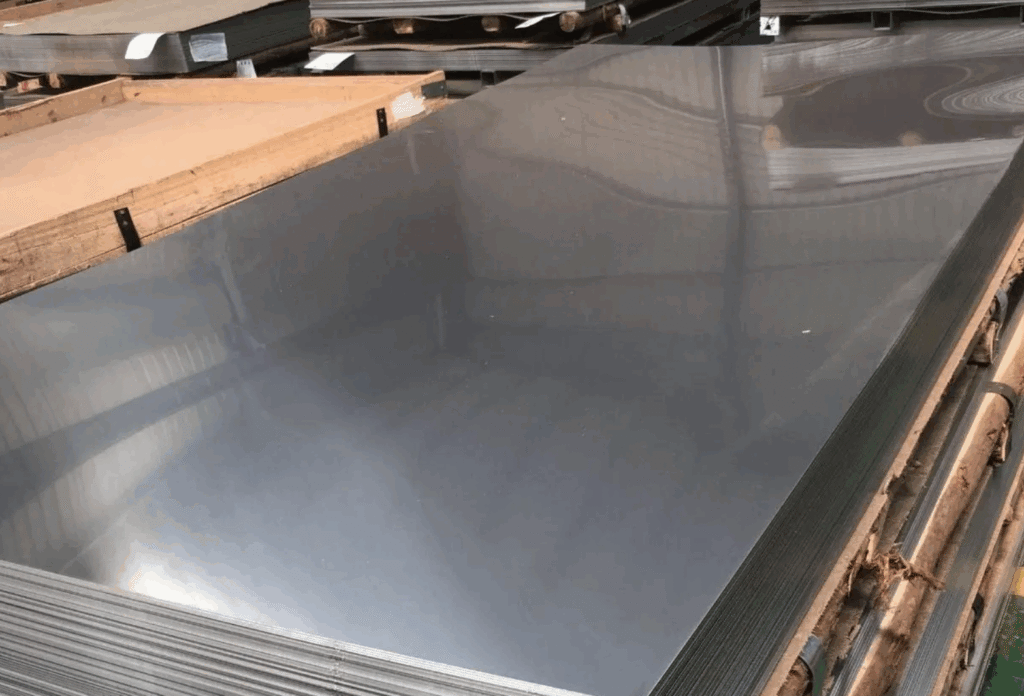
- Dimension Specification: Standard sheet size is 4×8 feet (approx. 1.22×2.44m). Custom sizes are available with a minimum cutting size of 20mm to reduce waste. Verify overall and installation dimensions for steel structure components.
- Surface Treatment: Select painting or galvanizing for carbon steel, brushing or polishing for stainless steel, and natural finish for galvanized steel according to application needs.
8.2 Quality Inspection
Strict quality inspection is essential to avoid inferior products, referring to ASTM, JIS and ISO international standards:
- Material Certification: Request material test reports and chemical composition certificates from suppliers.
- Thickness Check: Measure with calipers to ensure compliance with tolerance range.
- Surface Inspection: Check for scratches, rust and dents; ensure uniform zinc coating on galvanized steel and no oxidation or discoloration on stainless steel.
- Specification Verification: Confirm dimension and weight consistency with purchase orders. Conduct random sampling for bulk orders for timely quality control.
9. Frequently Asked Questions
Q1: Is 18 gauge steel sufficient for kitchen sinks?
A1:Yes. 18 gauge stainless steel is the industry standard for kitchen sinks, featuring moderate thickness, impact resistance and dent resistance for residential and small commercial applications.
Q2: Is 18 gauge steel easy to weld?
A2: Yes. It is compatible with TIG, MIG and other common welding methods. Carbon steel can be welded directly; stainless steel requires dedicated welding rods; remove local zinc layer before welding galvanized steel. It is beginner-friendly with standard welding procedures.
Q3: Will 18 gauge stainless steel rust?
A3: 304/316 stainless steel is highly rust-resistant, but slight corrosion may occur under long-term exposure to strong acid, alkali or salt water, or unpolished surface scratches. Avoid corrosive detergents in daily cleaning.
Q4: What is the difference between 18 gauge and 20 gauge steel?
A4: 18 gauge is thicker (1.21-1.31mm) with higher strength; 20 gauge is thinner (0.95mm), lighter and lower in cost. 18 gauge suits most general scenarios, while 20 gauge is for lightweight decorative and non-load-bearing use.
Q5: How to prevent rust on 18 gauge carbon steel?
A5: Grind and derust after cutting and welding, then apply anti-rust paint. Use hot-dip galvanizing for outdoor installation and conduct regular inspection and repainting to extend service life.
Q6: What is the standard size of 18 gauge steel sheet?
A6: The standard sheet size is 4×8 feet (approx. 1.22×2.44m) with customizable dimensions and a minimum cutting size of 20mm.
10. Conclusion
As an all-purpose medium-thickness steel material, 18 gauge steel balances strength, workability and cost, covering household, commercial, industrial and agricultural applications. For DIY enthusiasts, industry practitioners and procurement professionals alike, there is a suitable grade available.
Core selection logic: Confirm material grade based on application scenarios, compare specifications with other gauge sizes, purchase from reliable suppliers, and complete quality inspection and professional processing to maximize the advantages of 18 gauge steel, reduce costs and improve efficiency.
For customized processing, bulk quotation and professional selection advice for specific scenarios, feel free to contact TongHui.
Reference Sources
- GB 50205-2020, Code for Acceptance of Construction Quality of Steel Structures: referenced for steel processing, welding and quality inspection specifications.
- American Iron and Steel Institute (AISI): referenced for thickness standards, classification and application specifications of 18 gauge steel.
- ASTM, JIS and ISO International Standards: referenced for steel quality inspection and thickness tolerance requirements, adapting to international procurement norms.




 English
  Spanish
  Afrikaans