
Metal plate steel are the most widely used basic metal profiles in industrial manufacturing, construction infrastructure and heavy-duty equipment fabrication, simply referred to as steel plates in daily procurement and construction work. Combined with global universal metal plate industry standards, this article systematically sorts out classification criteria, mainstream product types, specification parameters and applicable scenarios of metal plate steel, and delivers a complete material selection framework plus practical procurement risk avoidance tips.
1. Main Classifications of Metal Plate Steel
1.1 Classification by Material
1.1.1 Carbon Steel Plates
Carbon steel plates feature the highest cost performance on the market. The mainstream international grade is A36, while common domestic grades include Q235 and Q345.
- Core advantages: Stable tensile strength, excellent weldability, low raw material cost, easy cutting and drilling, and abundant supply channels.
- Disadvantages: No inherent rust resistance; prone to corrosion in humid or outdoor environments, requiring spray coating or paint for anti-corrosion treatment.
- Application scenarios: Factory steel structures, equipment bases, heavy machinery girders, auxiliary bridge components, mold base plates.
1.1.2 Stainless Steel Plates
Grades 304 and 316 dominate the market, achieving natural rust and corrosion resistance via chromium and nickel alloy composition.
- Core advantages: Acid and alkali resistance, waterproof and rust-proof without extra anti-corrosion coatings, smooth and aesthetic surface. Grade 316 stainless steel withstands seawater and chemical corrosive environments.
- Disadvantages: Far higher procurement cost than carbon steel plates; the cost gap widens significantly with increased thickness; demanding low-temperature welding procedures.
- Application scenarios: Chemical equipment, water treatment tanks, outdoor protective platforms, food processing machinery, marine fittings.
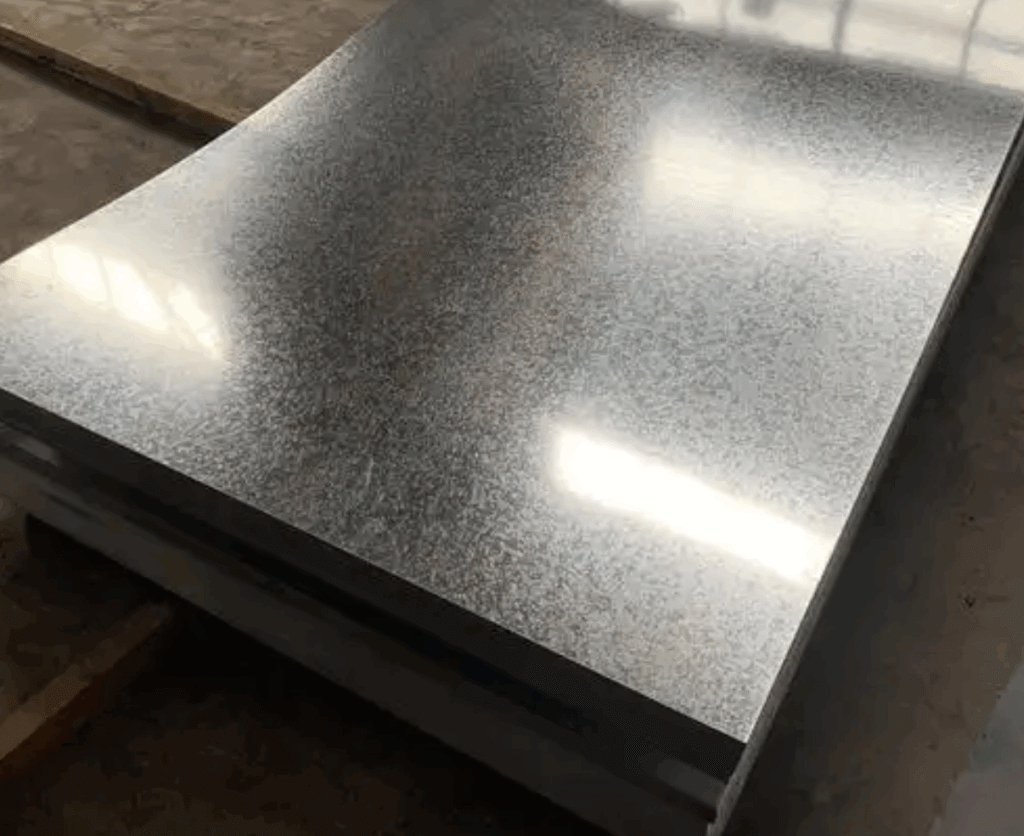
1.1.3 Galvanized Steel Plates
Manufactured by hot-dip galvanizing carbon steel substrates, combining the structural strength of carbon steel with basic rust resistance.
- Core advantages: Factory-attached zinc anti-rust coating; no paint required for indoor and mildly humid environments with convenient processing.
- Disadvantages: Zinc coating peels off easily under strong acid or high-salt conditions; high welding temperature damages partial zinc layers.
- Application scenarios: Indoor equipment supports, light-duty storage platforms, standard factory protective baffles.
1.2 Classification by Rolling Process
1.2.1 Hot-Rolled Steel Plates
Formed under high-temperature rolling, the primary production process for heavy metal plate steel.
Hot-rolled plates carry mill scale on the surface with relatively large dimensional tolerances. They are the top choice for load-bearing structures with no strict surface precision requirements, featuring short production cycles and lower wholesale prices.
1.2.2 Cold-Rolled Steel Plates
Secondary rolling at ambient temperature, mostly available in thin gauges only. Cold-rolled steel plates deliver ultra-smooth surfaces, minimal thickness tolerances and high dimensional accuracy, ideal for precision finished components. Thick cold-rolled metal plate steel have limited stock availability and higher pricing.
2. Standard Thickness, Dimensions & Weight Reference for Metal Plate Steel
2.1 Common Industrial Thickness Specifications
Two measurement systems are adopted globally for metal plate steel thickness; inch measurements are mostly used for export foreign trade projects:
- Metric mainstream sizes: 6mm, 8mm, 10mm, 12mm, 16mm, 20mm, 25mm, 30mm
- Inch mainstream sizes: 1/4 inch, 3/8 inch, 1/2 inch, 1 inch
- Material selection tip: Required plate thickness rises with larger bearing loads and longer spans. A minimum thickness of 10mm is recommended for long-term heavy-load equipment bases.
2.2 Standard Plate Dimensions
Standard factory cut-to-length sizes in stock: 1500×6000mm, 1250×6000mm, 2000×6000mm. Manufacturers support custom cutting for small-sized blanks, and full-sheet bulk procurement offers more favorable unit prices.
2.3 Theoretical Weight Calculation Formula
The theoretical weight of metal plate steel can be calculated with a fixed density formula:
Metal Plate Steel Weight (kg) = Length (m) × Width (m) × Thickness (mm) × 7.85
This formula enables fast estimation of total material consumption for cost accounting and logistics loading planning.

3. Full-Spectrum Application Scenarios of Metal Plate Steel
3.1 Construction & Infrastructure Projects
Metal plate steel serve as core basic profiles for large civil works, including load-bearing main beams of factories, bridge bottom slabs, foundation pit supporting plates, floor bearing platforms, fire water tank substrates, and connecting plates for steel structure columns.
3.2 Machinery & Heavy Industry Manufacturing
Metal plate steel guarantee stable long-term operation of heavy equipment, applied in frames of excavators and cranes, machine tool bases, mold backing plates, pressure vessels, and load-bearing supports for conveying equipment.
3.3 Chemical, Marine & Water Treatment Industries
Grade 316 stainless steel plates are applied in seawater vessels and chemical reaction tanks; galvanized and carbon steel plates are adopted for water treatment equipment and pipeline supporting structures in factories.
3.4 Small-Scale Fabrication & DIY Projects
Custom-cut metal plate steel fit small processing factories and personal machinery renovation, used for heavy-duty workbenches, equipment protective baffles, storage rack bases and outdoor machinery protective platforms.
4. Step-by-Step Metal Plate Steel Material Selection Guide
Step 1: Confirm service environment and load-bearing requirements
- Prioritize carbon steel plates for dry indoor standard working conditions.
- Choose galvanized plates or Grade 304 stainless steel for rainy outdoor or coastal high-salt environments.
- Grade 316 stainless steel is mandatory for chemical and seawater corrosive conditions.
- Select thickened plates of 10mm or above for heavy-load and long-span structures.
Step 2: Determine matching material grades
- General civil engineering: Q235, A36 carbon steel plates
- High-strength load-bearing engineering: Q345 carbon steel plates
- Regular anti-rust demand: Hot-dip galvanized carbon steel plates
- Long-term corrosive working conditions: Grade 304 / 316 stainless steel plates
Step 3: Confirm thickness and plate dimensions
Select thickness according to bearing load and installation span; full standard factory sheets are preferred to cut procurement costs, while custom cutting is available for scattered small-batch processing.
Step 4: Match suitable rolling process
- Prioritize hot-rolled plates for pure strength demand with limited budgets
- Select cold-rolled plates for precision flat surfaces and high-finish machined components
Step 5: Comprehensive trade-off based on budget
Opt for stainless steel plates for sufficient budgets requiring long-term maintenance-free outdoor service; carbon steel plates are cost-effective for indoor use with subsequent custom anti-rust paint spraying.

5. Key Procurement Points & Price-Influencing Factors for Metal Plate Steel
5.1 Core Inspection Indicators Upon Delivery
Four critical standards shall be verified when receiving shipments: material test certificates, thickness tolerances, zero lamination or cracking on plate surfaces, and qualified welding performance. For foreign trade orders, material certificates complying with ASTM and EN standards must be confirmed simultaneously.
5.2 Core Factors Affecting Metal Plate Steel Pricing
- Material type: Stainless steel > Galvanized steel > Ordinary carbon steel
- Thickness specification: Thin precision machined plates carry higher unit prices than thick hot-rolled plates
- Procurement volume: Bulk full-sheet wholesale prices are far lower than custom-cut small blanks
- Additional processing services: Cutting, bending, drilling, sandblasting and anti-corrosion coating generate extra processing fees
- Raw material market trends: Fluctuations in iron ore and nickel futures directly affect real-time quotations of carbon and stainless metal plate steel.
5.3 Bulk Purchasing Suggestions
For stable long-term material demand, directly cooperate with steel mills and large metal plate distributors to cut intermediate markup. For export orders, select suppliers that support material testing and can issue inspection reports meeting international standards.
Frequently Asked Questions
1、How to choose between carbon steel plates and stainless steel plates?
Carbon steel plates are suitable for low-budget, dry indoor environments where follow-up anti-corrosion painting is acceptable. Stainless steel plates are ideal for humid, outdoor, acid and alkali corrosive environments requiring long-term rust-free performance without extra maintenance.
2、Can metal plate steel be welded and bent for processing?
Carbon steel plates and Grade 304 stainless steel plates feature excellent weldability and can be welded in regular thicknesses. Plates thicker than 12mm have extremely high bending difficulty, so structural designs with thick plate bending should be avoided in the early stage.
3、Can ordinary carbon metal plate steel meet the strength requirements of heavy-duty equipment?
Hot-rolled carbon metal plate steel in grades A36 and Q345 have tensile and yield strength fully compatible with most heavy equipment and load-bearing infrastructure projects, with limitations only in corrosive environments.
Conclusion
As fundamental industrial profiles, metal plate steel are selected mainly based on three core dimensions: service environment, load-bearing demands and budget. For mass engineering procurement and export orders, verify material standards and inspection documents in advance to secure long-term stability of projects.
Reference Materials
- ASTM A36 Standard Specification for Carbon Structural Steel Plates
- ASTM A240 Standard Specification for Chromium and Chromium-Nickel Stainless Steel Plate for Pressure Vessels
- EN 10025 Hot Rolled Products of Non-Alloy Structural Steels




 English
  Spanish
  Afrikaans