
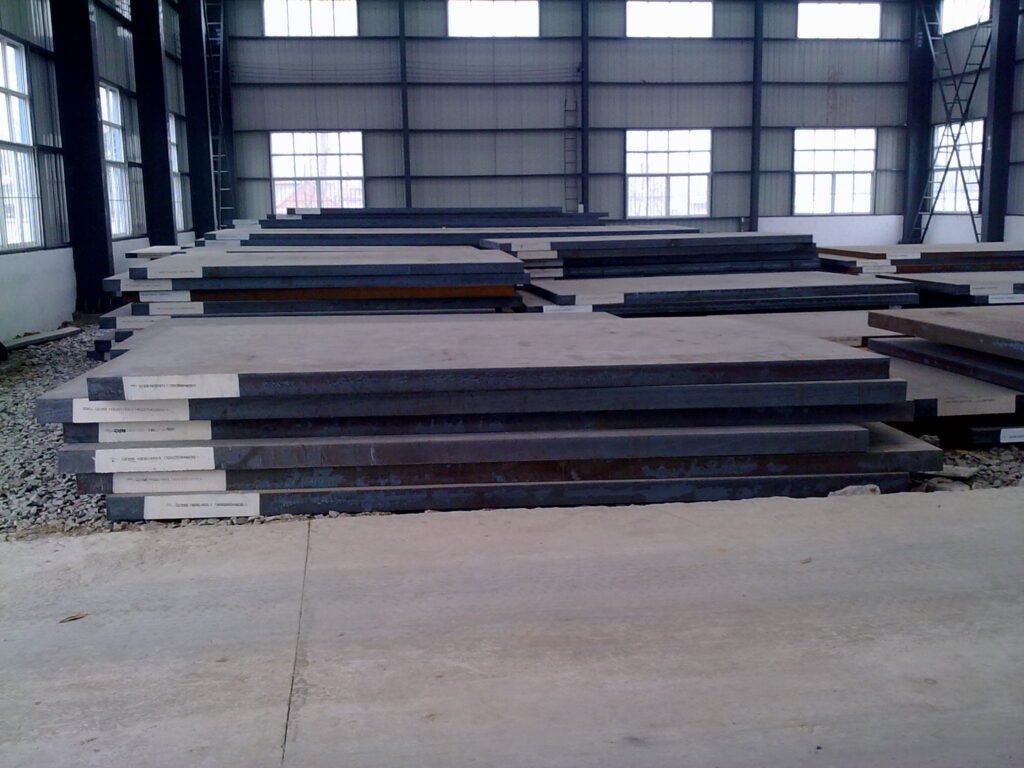
Mild steel is the most widely used low-carbon alloy in industrial production. Featuring excellent ductility, toughness and cost-effectiveness, it is extensively applied in automotive parts, building structures, pipeline fabrication, hardware processing and many other fields. As one of the core physical properties of mild steel, its melting point directly determines process parameters for casting, forging and welding, and also affects service safety and material selection rationality under high-temperature conditions. This article elaborates on the exact melting point range, unit conversion, influencing factors, melting point comparison with other steel grades, and analyzes the practical value of melting point characteristics combined with real application scenarios.
1. Melting Point of Mild Steel
1.1 Core Melting Point Range
The industry-recognized melting point range of mild steel is 1450–1530°C (2640–2800°F). The most commonly adopted reference values in practical applications are 1450°C (2640°F) and 1500–1525°C (2732–2777°F).
It should be clarified that the melting point of mild steel is not a fixed value but a fluctuating range, closely related to its alloy composition. Mild steel is a mixture of iron, carbon and trace alloying elements such as manganese, silicon and sulfur, rather than a pure single-element substance like pure iron. Slight differences in chemical composition directly cause melting point variations.
Pure iron has a melting point of 1538°C. Carbon added to mild steel disrupts the crystal structure of iron and lowers its melting point; hence, mild steel generally has a lower melting point than pure iron. For instance, the common SAE1006 mild steel has a melting point of approximately 1425°C (2600°F), which falls within the standard mild steel melting point range.
1.2 Melting Point Unit Conversion (°C ↔ °F)
Different industrial scenarios adopt different temperature units, making accurate unit conversion essential for practical operations.
The standard conversion formula: °F = °C × 1.8 + 32
Conversion results for mild steel melting points:
- 1450°C ≈ 2640°F (lower melting limit)
- 1530°C ≈ 2800°F (upper melting limit)
- 1500°C ≈ 2732°F (industry standard reference value)
These converted values can be directly applied to process parameter setting. For casting, the furnace temperature should be maintained above 2640°F to ensure complete melting of mild steel and avoid incomplete fusion defects.

2. Key Factors Affecting Mild Steel Melting Point
The melting point of mild steel is not constant. Its fluctuation is mainly governed by chemical composition and external conditions, with carbon content as the dominant factor, followed by alloying elements and external pressure. Mastering these factors helps manufacturers precisely control processing techniques and prevent product defects caused by melting point variations.
2.1 Dominant Factor: Carbon Content
Mild steel has a carbon content of 0.05–0.25% by mass. Carbon content is negatively correlated with melting point: the higher the carbon content, the lower the melting point.
Carbon forms covalent bonds with iron atoms, breaking the symmetry of iron’s crystal structure and weakening intermolecular forces, thereby reducing the melting point and forming low-melting eutectic mixtures.
Industrial test data shows that every 0.1% increase in carbon content lowers the melting point of mild steel by about 10–15°C:
- Mild steel with 0.1% carbon content: melting point around 1500–1525°C
- Mild steel with 0.25% carbon content: melting point around 1470–1490°C
Both ranges are within the standard 1450–1530°C interval. Compared with medium and high-carbon steel, mild steel has a significantly higher melting point than high-carbon steel (0.3–1.7% carbon content, melting point 1425–1540°C), making it more suitable for high-temperature service environments.
2.2 Secondary Influencing Factors
Besides carbon content, alloying elements, external pressure and heat treatment impose minor impacts on the melting point:
- Alloying Elements: Commercial mild steel contains trace manganese (≤1.65%), silicon (≤0.6%) and sulfur to enhance toughness and machinability. These elements cause a melting point fluctuation of no more than 5°C, requiring no additional adjustment in process design. Elements such as chromium and molybdenum slightly raise the melting point, but their extremely low content in mild steel makes the effect negligible.
- External Pressure: Rising external pressure slightly reduces the melting point of mild steel. Every 100 MPa pressure increase lowers the melting point by roughly 2–3°C. This factor should be considered in high-pressure industrial processes such as hot forging and casting, with temperature adjustments to compensate for pressure-induced melting point changes.
- Heat Treatment: Annealing, quenching, normalizing and other heat treatment processes only alter the hardness, strength and microstructure of mild steel without changing its melting point. Melting point is determined by chemical composition rather than microstructure state. For example, annealed mild steel still maintains a melting point of 1450–1530°C, with only its hardness reduced.

3. Melting Point Comparison: Mild Steel vs. Other Steels & Common Metals
3.1 Comparison with Other Steel Grades
Differences in carbon content and alloy composition lead to distinct melting points among steel types. Mild steel is compared with medium-carbon steel, high-carbon steel and stainless steel as follows:
| Steel Type | Carbon Content Range (Mass Fraction) | Melting Point Range (℃) | Melting Point Range (°F) | Key Features |
| Mild Steel | 0.05%-0.25% | 1450-1530 | 2640-2800 | High melting point, good toughness, excellent processability, and wide application |
| Medium Carbon Steel | 0.25%-0.60% | 1420-1480 | 2588-2696 | Lower melting point than mild steel, high strength, suitable for manufacturing medium-load components |
| High Carbon Steel | 0.60%-1.70% | 1425-1540 | 2600-2800 | High carbon content, large fluctuation in melting point, high hardness, and poor toughness |
| Stainless Steel 304 | ≤0.08% | 1400-1450 | 2552-2642 | Strong corrosion resistance, slightly lower melting point than mild steel |
| Stainless Steel 316 | ≤0.08% | 1375-1400 | 2507-2552 | Better corrosion resistance than 304, lower melting point than mild steel |
It is evident that mild steel has a higher melting point than most stainless steel and high-carbon steel, and only slightly lower than some medium-carbon steel grades — a core advantage for mild steel in high-temperature processing and structural construction applications.
3.2 Comparison with Pure Iron and Common Metals
To establish a comprehensive understanding of metal melting points, the following compares mild steel with pure iron, aluminum, copper and other mainstream metals to clarify its positioning in material selection:
| Metal/Alloy | Melting Point (℃) | Melting Point (°F) | Comparison with Mild Steel Melting Point |
| Pure Iron | 1538 | 2800 | Higher than the upper limit of mild steel’s melting point |
| Mild Steel | 1450-1530 | 2640-2800 | Core reference benchmark |
| Aluminum | 660 | 1220 | Much lower than mild steel’s melting point |
| Copper | 1085 | 1985 | Lower than mild steel’s melting point |
This comparison supports material substitution design. For low-temperature service scenarios, low-melting metals such as aluminum and copper can replace mild steel to cut processing costs. For high-temperature environments, mild steel outperforms aluminum and copper significantly in heat resistance.

4. Practical Applications of Mild Steel Melting Point
The melting point of mild steel is not merely theoretical data; it serves as a critical guideline for production processing and material selection. Below is a detailed breakdown of its practical value across manufacturing, construction and other key industries.
4.1 Manufacturing and Processing Applications
In casting, forging and welding, the melting point of mild steel is the fundamental basis for setting process parameters, directly affecting product quality and production efficiency:
- Casting: Furnace temperature should be kept 100–150°C above the mild steel melting point (1550–1680°C) to ensure full melting, while avoiding excessive temperature that causes oxidation and coarse grain structure. For automotive brackets and household appliance shells made of mild steel, the furnace temperature is strictly set based on the 1450°C reference melting point to ensure complete casting forming and zero porosity.
- Forging: For hot forging, mild steel is heated to 300–400°C below its melting point (1150–1230°C), where it achieves optimal ductility for easy forming. Heating close to or above the melting point causes excessive softening and shape distortion, compromising dimensional accuracy.
- Welding: Welding materials and current parameters are matched to the melting point of mild steel. The welding temperature must reach the melting point to achieve full fusion between base metal and filler material, preventing incomplete fusion and lack of penetration defects. For mild steel pipeline welding, the standard welding temperature is controlled at approximately 1500°C to ensure weld strength matches the base material.
4.2 Construction and High-Temperature Safety Applications
Mild steel is widely used in structural steel such as I-beams, angle steel and steel rebars, with its melting point directly determining building fire safety performance:
- Fire Safety: In case of building fires, once the ambient temperature reaches 1450°C, mild steel melts completely and loses load-bearing capacity, leading to structural collapse. For high-rise buildings and industrial plants, mild steel structures are coated with fireproof insulation materials to slow temperature rise and maintain structural load capacity during fires.
- High-Temperature Operation: In metallurgical and chemical industries, mild steel components exposed to high temperatures require a clear operating temperature limit based on its melting point. High-temperature pipelines and equipment supports should operate below 1000°C to maintain structural stability.
4.3 Material Selection Guidance
Melting point characteristics provide clear guidelines for material selection to avoid cost waste and safety hazards:
- High-Temperature Scenarios: For service temperatures close to 1000°C, mild steel is preferred due to its high melting point, outperforming high-carbon steel and ordinary stainless steel. For temperatures exceeding 1530°C, high-temperature resistant alloys such as nickel-based alloys are required instead of mild steel.
- Low-Temperature Processing: For low-temperature casting and welding, low-carbon mild steel (around 0.1% carbon) is ideal. Its relatively high melting point avoids overheating and oxidation, ensuring stable processing quality.
- Cost-Sensitive Scenarios: With a moderate melting point and simple processing requirements, mild steel is more cost-effective than stainless steel and high-temperature alloys. It is the preferred choice for ordinary pipelines and hardware fittings with no special corrosion or high-temperature resistance requirements.

5. Frequently Asked Questions
1. What is the exact melting point of mild steel?
Mild steel has no fixed single melting point. Its standard melting point range is 1450–1530°C (2640–2800°F), with widely accepted reference values of 1450°C and 1500–1525°C. The specific value varies with carbon content and alloy composition. For example, SAE1006 mild steel has a melting point of about 1425°C, which is within the standard range.
2. Why is mild steel melting point a range rather than a fixed value?
Mild steel is an alloy composed of iron, carbon and trace elements, not a pure single-element substance. Different batches and steel grades have slight variations in carbon and alloy content, resulting in melting point fluctuations and a range value instead of a fixed number.
3. Does heat treatment change the melting point of mild steel?
No. Heat treatment processes including annealing, quenching and normalizing only modify the microstructure, hardness and strength of mild steel without altering its chemical composition. Since melting point is determined by material composition, heat treatment has no impact on melting point.
4. Is it possible to melt mild steel at home?
It is extremely difficult and practically unachievable. The minimum melting point of mild steel is 1450°C, while household heating equipment such as gas stoves and small furnaces can only reach a maximum temperature below 1000°C. Professional high-temperature furnaces such as electric arc furnaces and induction furnaces are required for industrial melting of mild steel.
5. What happens if mild steel is heated beyond its melting point?
When heated above 1530°C, mild steel fully melts into molten steel and loses its original strength, hardness and shape. After cooling and solidification, the recrystallized steel has a coarse microstructure and degraded mechanical properties. Secondary forging and heat treatment are required to restore its service performance.
Conclusion
The standard melting point range of mild steel is 1450–1530°C (2640–2800°F). Its melting point is not fixed and is predominantly affected by carbon content — higher carbon content leads to lower melting point. Minor fluctuations are also caused by alloying elements and external pressure.
Mild steel has a higher melting point than most high-carbon steel and stainless steel, and slightly lower than pure iron. This characteristic underpins its widespread application in casting, forging, building structures and other industrial fields.
References
- Sohu. Melting Points of Various Metals | Metal Melting Point Chart [EB/OL]. 2024-09-20.
- Sohu. Melting Point and Influencing Factors of Steel Alloys [EB/OL]. 2020-05-26.





 English
  Spanish
  Afrikaans