
In temporary engineering scenarios such as municipal emergency repairs, building construction and mining operations, problems including road surface collapse, trench excavation and muddy ground can seriously block the passage of construction vehicles and delay project progress. As a high-strength and recyclable temporary paving material, steel road plates feature strong bearing capacity, excellent wear resistance and convenient assembly and disassembly. They serve as the core choice for temporary road paving in various heavy-duty engineering projects. Compared with traditional road hardening and gravel paving methods, steel road plates can be reused repeatedly, greatly reduce the comprehensive engineering cost, and adapt to various complex outdoor construction conditions. This article comprehensively introduces the definition and core characteristics, application scenarios, standard specifications, selection comparison, safety standards, installation procedures and purchasing guidelines of steel road plates.
1. What Are Steel Road Plates?
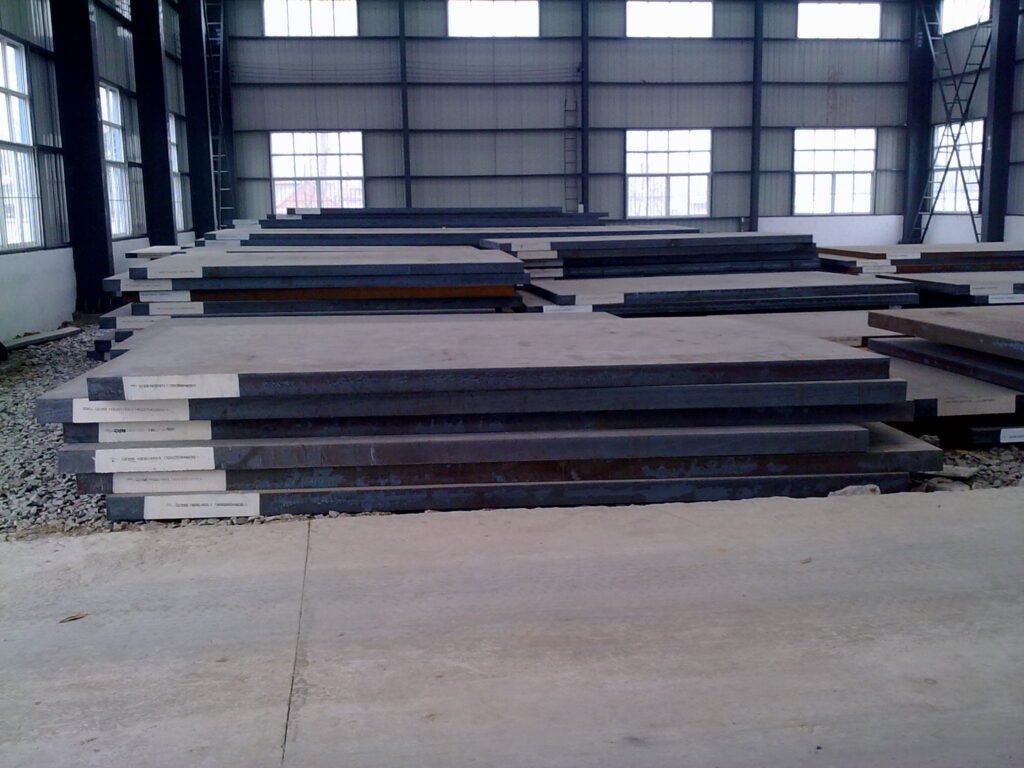
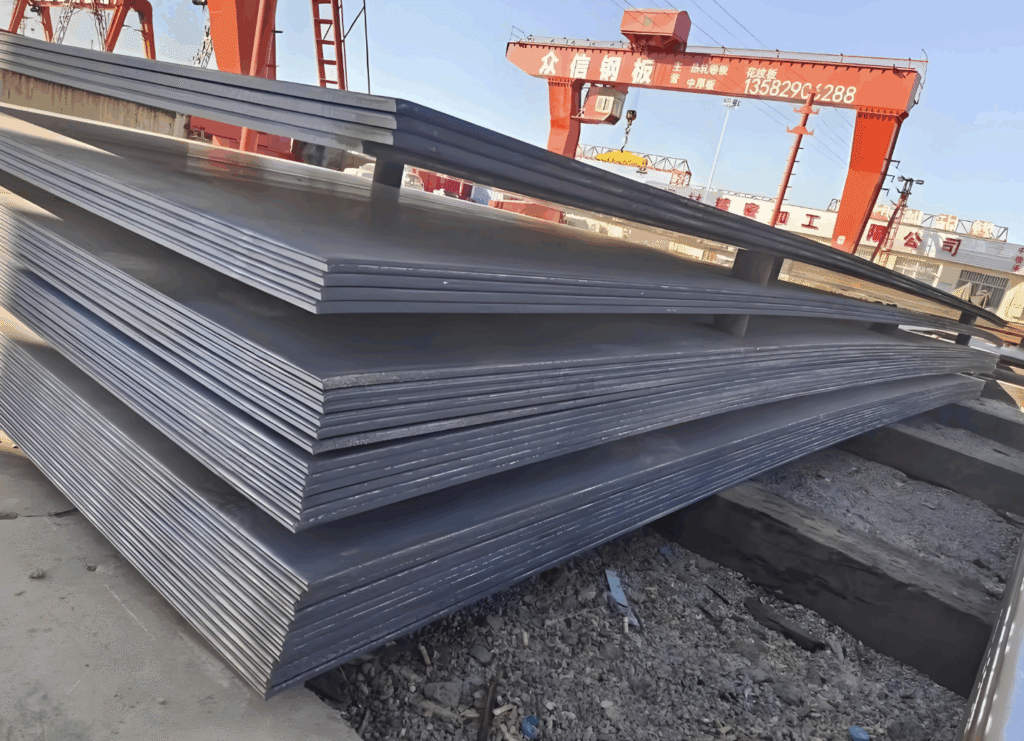
Also known as trench cover plates, road transition plates and temporary construction steel plates, steel road plates are special engineering plates rolled and processed from high-strength carbon steel and structural steel. They are mainly used for temporary road paving, trench and foundation pit covering, and site hardening at construction sites, acting as indispensable temporary construction materials in infrastructure projects.
Different from ordinary steel plates, professional steel road plates are specially optimized for construction scenarios with prominent core advantages. Firstly, they feature high structural strength, excellent impact and compression resistance, and can withstand long-term rolling by heavy construction machinery and heavy-duty trucks without deformation or fracture. Secondly, they have strong adaptability and can be quickly laid on complex grounds such as muddy, bumpy and soft foundations to form temporary passage roads efficiently. Thirdly, they are recyclable. With wear-resistant and anti-corrosion treatments, they have extremely low loss rates and can be assembled and disassembled for multiple cycles, delivering much higher cost performance than disposable paving materials. Fourthly, the construction process is efficient. Pre-reserved lifting and fixing holes eliminate the need for complex equipment during installation and disassembly, greatly shortening the construction preparation cycle.
At present, the mainstream materials in the industry are A36 carbon steel and AS3678-250 high-strength structural steel with stable performance, complying with international general engineering construction standards. Custom plates with anti-slip and hot-dip galvanized anti-corrosion treatments are available to adapt to high-corrosion and high-wear working conditions.

2. Applications of Steel Road Plates
Steel road plates are applicable to most engineering scenarios requiring temporary road support, covering municipal engineering, building construction, mining, cultural tourism and other fields. The core application scenarios are as follows:
Municipal Pipe Network Emergency Repair: In the excavation and construction of urban water supply, drainage, gas and power pipelines, steel road plates are used to cover trenches and fill road gaps, ensuring temporary passage for pedestrians and small vehicles and avoiding traffic interruption and road collapse risks.
Building Construction Sites: They are laid at building site entrances and exits, muddy operation areas and material transportation passages to solve the problem of soft ground and vehicle sinking, ensuring the normal operation of muck trucks, material transport vehicles and tower cranes.
Mining and Heavy-Duty Engineering: They are applied for heavy-duty road paving in mines, quarries, muck transfer stations and large-scale infrastructure construction sites, capable of withstanding long-term rolling by dozens of tons of heavy mining vehicles and construction machinery, suitable for high-frequency and heavy-duty operation scenarios.
Temporary Site Construction: They are used for site hardening of outdoor exhibitions, sports events, temporary parking lots and landscape projects, enabling rapid construction of flat and solid temporary ground and quick removal and recycling after project completion.
Road Emergency Repair: They are applied for emergency paving of damaged, collapsed and waterlogged road sections to quickly restore road traffic, shorten traffic interruption time and reduce engineering losses.

3. Specification Parameters of Steel Road Plates
There are no mandatory unified non-standard dimensions for steel road plates, but general industry standard specifications have been formed in the global engineering field. Plates with different sizes and thicknesses correspond to different bearing grades and application scenarios, serving as the core basis for engineering selection. The specifications, self-weight and adaptation parameters of mainstream finished products are as follows:
Light-Duty Standard Specification: Size 2500×1250×12mm, single plate weight of about 295kg, uniform load capacity of 10-15 tons. Suitable for pedestrian passages, private cars and light-duty construction equipment, widely used in municipal sidewalks and small landscape projects.
Medium-Duty Universal Specification: Size 2500×1250×16mm, single plate weight of about 390kg, load capacity of 20-30 tons. Adaptable to ordinary engineering transport vehicles and medium and small construction machinery, it is the best-selling universal specification for building construction and pipe network maintenance.
Heavy-Duty Specification: Size 2500×1250×20mm/25mm, single plate weight of 485kg and 610kg respectively, load capacity of 40-60 tons. It meets the EN 124 D400 heavy-load standard and is specially designed for high-frequency passage scenarios such as mines, large-scale infrastructure and heavy-duty vehicles.
All standard steel road plates are pre-reserved with standard lifting holes and fixing holes for convenient lifting, transportation and on-site fixation. Customized length, width, thickness and anti-slip textures are available to meet personalized needs of special projects. During selection, a 20% safety load factor shall be reserved to prevent plate deformation and cracking caused by long-term overload and ensure construction safety.

4. Steel Road Plates vs Plastic/Composite Road Plates
The temporary paving market mainly includes two types of products: steel road plates and plastic/composite road plates. They differ greatly in performance and applicable scenarios, enabling targeted selection based on actual working conditions and project budgets:
Load-Bearing Performance: Steel road plates have outstanding advantages. Heavy-duty models can withstand rolling of heavy equipment within 60 tons without permanent deformation, while plastic and composite road plates have a maximum load capacity of only 10-20 tons, which are only suitable for light-duty passage scenarios and cannot adapt to heavy-duty construction machinery operations.
Durability and Service Life: Steel road plates feature stable structure, excellent impact and wear resistance, and can be recycled for 3 to 5 years under normal working conditions. Plastic composite plates are prone to aging, cracking and deformation under high temperature, low temperature and heavy pressure, with a service life of only 1 to 2 years and limited turnover times.
Anti-Slip Performance and Safety: Steel road plates can be customized with raised anti-slip textures and anti-slip coatings to ensure safe vehicle passage on both dry and wet roads. Plastic plates have smooth surfaces that are easy to slip on rainy days, bringing great potential safety hazards under heavy-duty working conditions.
Price and Cost Performance: Plastic and composite road plates have lower one-time procurement costs. However, in terms of long-term turnover and comprehensive costs, steel road plates can be disassembled and reused repeatedly with extremely low maintenance costs and no frequent replacement requirements, delivering higher cost performance for long-term and heavy-duty projects.
Applicable Scenarios: Plastic and composite road plates are suitable for light-duty, short-term and low-load temporary scenarios, while steel road plates are the preferred choice for heavy-duty, long-term, high-frequency and complex engineering projects.

5. Installation Procedures of Steel Road Plates
Standardized installation and fixation can effectively prevent plate displacement, warping and slipping, and avoid safety accidents during vehicle passage. The standardized construction steps are as follows:
Step 1: Site Pretreatment. Clean up gravel, sundries and silt in the construction area, level and compact soft and bumpy ground to ensure a solid and uniform paving base and prevent plate deformation caused by uneven stress.
Step 2: Accurate Plate Paving. Place steel road plates in order according to the passage direction and construction scope, ensuring tight splicing of plates with reasonable gaps to avoid large voids and height differences.
Step 3: Reinforcement and Fixation. Fix the plates firmly to the ground with special bolts, ground pins and locking accessories through the pre-reserved fixing holes. Adjacent plates can be locked as a whole with connectors to eliminate displacement caused by vehicle rolling.
Step 4: Gap and Anti-Slip Treatment. Seal the splicing gaps simply to prevent gravel and sediment from entering the bottom and causing surface protrusions. Check anti-slip textures carefully in humid and rainy weather, and lay auxiliary anti-slip materials if necessary.
Step 5: Dismantlement after Completion. After the project is completed, remove the fixing accessories in sequence, lift the plates stably through the lifting holes, clean the surface sediment and stains, and stack them neatly for secondary turnover and use.
6. Frequently Asked Questions
What specification of steel road plate should be selected for engineering construction?
12mm thick plates are suitable for pedestrian and light vehicle scenarios; 16mm universal plates are applicable to ordinary engineering transport vehicles and medium and small machinery operations; 20mm or thicker heavy-duty plates are preferred for high-frequency passage scenarios of mines, heavy trucks and large construction machinery. The length and width shall be matched according to the construction site area.
Do steel road plates have anti-slip performance?
Standard smooth steel plates have ordinary anti-slip performance. For rainy, snowy and humid construction scenarios, steel road plates with customized raised anti-slip textures or anti-slip coatings can greatly improve surface friction and meet the anti-slip requirements of all-weather construction.
Can steel road plates be used outdoors for a long time?
Ordinary carbon steel plates are prone to slight rust when exposed to rain and sediment for a long time and are not recommended for long-term outdoor storage. Hot-dip galvanized anti-corrosion plates with stronger corrosion resistance and weather resistance can be selected for long-term outdoor use to extend the service life.
Can steel road plates be reused for multiple cycles?
Yes. High-quality steel road plates have stable structural strength. Without severe deformation and cracking, they can be disassembled, cleaned and reused for multiple times with extremely low loss rate, making them the most cost-effective recyclable temporary paving material at present.
What should be noted when selecting plates for heavy-duty construction scenarios?
For heavy-duty scenarios, priority shall be given to AS3678 and A36 high-strength steel heavy-duty plates with a load capacity of more than 40 tons. A 20% safety load factor shall be reserved during construction, and the ground foundation shall be fully compacted to avoid safety accidents caused by local overload.

7. Conclusion
With the advantages of high strength, strong adaptability and recyclability, steel road plates have become core building materials for various temporary infrastructure projects. Engineering selection shall be based on construction scenarios, vehicle load and construction cycle to accurately match plates with appropriate size, thickness and process. Strictly following standardized installation procedures and safety specifications can not only ensure construction passage safety and improve engineering efficiency, but also minimize comprehensive construction costs.
References
1. EN 124 Standard for Load Grades of Road and Drainage Construction Products
2. ASTM A36 Standard Specification for Carbon Structural Steel
3. AS3678-250 Australian Standard for High-Strength Structural Steel




 English
  Spanish
  Afrikaans