
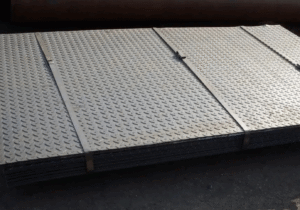
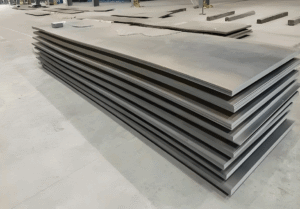
Steel plate fabrication serves as a fundamental core process in modern machinery manufacturing and construction engineering. It refers to a full sequence of standardized, refined operations including cutting, forming, welding and surface treatment. Raw plates such as carbon steel, stainless steel and alloy steel are processed into non-standard components, structural parts and finished profiles that meet specified dimensional, precision and performance requirements. As a basic supporting process for heavy industry, steel plate fabrication features strong adaptability, controllable precision and stable mechanical properties. It runs through the whole industrial production chain and is a critical link guaranteeing reliable equipment operation and structural safety for engineering projects.

I. Types of Steel Plate Fabrication Processes
Based on functional purposes, steel plate fabrication is grouped into five major categories: cutting, forming, welding, surface treatment and custom non-standard fabrication. Each category suits different plate thicknesses, materials and operating scenarios and forms the backbone of the industrial fabrication system.
1. 1 Cutting
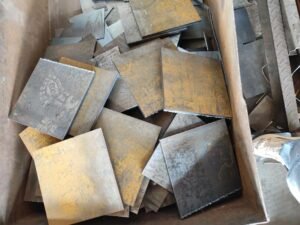
Cutting is the primary foundational step of steel plate fabrication. It cuts coiled or whole raw steel plates into blanks of specified sizes and shapes. The mainstream technologies include laser cutting, plasma cutting, waterjet cutting and oxy-fuel cutting.
Laser cutting melts and vaporizes steel using a high-energy laser beam. It achieves a tolerance of ±0.02 mm with smooth, burr-free cut edges that usually require no secondary grinding. It is suitable for precision profile cutting of thin and medium-thick plates and widely adopted in precision machinery and hardware component production. Plasma cutting melts metal with high-temperature plasma arcs. It delivers fast cutting speeds and works excellently for medium-thick carbon steel and stainless steel plates, offering better cost performance than laser cutting. Waterjet cutting is a cold cutting method that uses high-pressure water mixed with abrasives. It causes no thermal deformation or material damage and fits aluminum alloy, stainless steel, composite plates and other materials vulnerable to heat distortion. Oxy-fuel cutting burns metal with high-temperature flames. Equipment investment is low; it is mainly used for rough machining of large-size, heavy carbon steel plates with relatively lower precision.
1.2 Forming
Forming reshapes steel plates by external force without compromising material integrity to produce various profiled structural components. Key operations are bending, stamping and plate rolling. Bending uses press brakes to fold flat steel plates into L-shaped, U-shaped or angled custom profiles. It is widely used for cabinet frames, equipment supports and construction fittings. Stamping relies on dies for batch punching, blanking and deep drawing. It is ideal for mass production of standardized parts. Plate rolling bends steel plates into cylindrical or arc-shaped structures, commonly seen in piping equipment, pressure vessels and tank accessories.
3. Welding
Welding joins steel plate segments and reinforces assemblies for large or complex combined structures. Processes such as arc welding, TIG welding and MIG welding fuse separate plate blanks into integrated structures. Fabricators must strictly control welding distortion and weld seam flatness and apply corrosion-resistant reinforcement to secure structural strength and stability. This method is heavily used in steel structure projects, large equipment frames and marine components.
4. Surface Treatment
Surface treatment is an extended critical process to improve corrosion resistance, wear resistance and visual quality, extending the service life of fabricated steel parts. Common treatments include descaling, painting, galvanizing and polishing. Sandblasting and pickling remove mill scale and rust thoroughly. Electrostatic painting and baking paint create protective coatings for general indoor and outdoor structural components. Hot-dip galvanizing and electroplated galvanizing deliver superior anti-corrosion performance for outdoor installations and chemically corrosive, humid environments. Mirror polishing and brushed polishing are applied to decorative and precision equipment steel fittings.
5. Custom Non-Standard Fabrication
Custom non-standard fabrication produces profiled, special-structure, high-precision steel components according to client drawings, dimensional parameters and service conditions, breaking the limits of standard plate sizes. It addresses niche and personalized industrial requirements and represents the dominant service model in today’s steel plate fabrication sector.
II. Standard Full Workflow for Steel Plate Fabrication
Professional industrial steel plate fabrication follows standardized workflows with full traceability from raw material inspection through final delivery to guarantee dimensional accuracy and product quality. The complete steps are listed below:
- Raw Material Inspection:Verify incoming steel grade (carbon steel, stainless steel, alloy steel, etc.), thickness and specifications. Inspect flatness, surface condition and material composition to prevent nonconforming raw materials from entering production.
- Drawing Analysis & Parameter Confirmation:Engineers interpret fabrication drawings, clarify component dimensions, tolerance limits, required processes, surface specifications and operating conditions. Finalize all fabrication parameters to avoid machining errors.
- Precision Cutting & Blanking:Select suitable cutting technology based on confirmed parameters for plate cutting, punching and profile blanking to ensure base dimensional accuracy of blanks.
- Secondary Forming Operations:Carry out bending, rolling, stamping or other forming processes as required. Correct minor distortion generated during processing to ensure parts conform to target geometry.
- Welding & Assembly:Conduct standardized welding and assembly for spliced composite components. Grind weld seams and trim edges to achieve solid structures and smooth surfaces.
- Anti-corrosion Surface Treatment:Apply descaling, painting, galvanizing, polishing or other surface treatments matching working conditions to enhance plate protection.
- Final Quality Testing:Rigorously inspect finished parts for dimensional tolerances, flatness, surface quality and structural strength. Verify compliance with drawings and industry standards; reject defective products.
- Packaging & Shipment:Apply rust-proof packaging and sort qualified finished goods. Add protective packaging for transit and complete outbound delivery.

III. Core Industrial Application Scenarios
Fabricated steel plate components feature stable structural performance and outstanding versatility and are widely deployed across many industrial sectors. Major applications include:
- Building Steel Structures:Used for factory frames, load-bearing building structures, curtain wall fittings and steel supports. Mostly fabricated from thick carbon steel plates through cutting, bending and welding. Priority is given to structural integrity; strict cosmetic precision is generally not required.
- Machinery Manufacturing:Machine tool frames, equipment enclosures, transmission parts and tooling fixtures all demand precision steel fabrication. High standards apply for dimensional tolerance and flatness. Laser precision cutting and fine bending are the preferred processes.
- Shipbuilding & Offshore Engineering:Ship decks, hull assemblies and offshore platform fittings operate continuously in humid, salt-spray environments. Corrosion-resistant stainless steel and high-strength alloy steel are selected, paired with specialized anti-corrosion surface treatment.
- Automotive & Aerospace Industries:Automotive chassis parts and lightweight aerospace components require stringent machining accuracy and material properties. Precision laser cutting and distortion-free forming of thin plates are adopted to achieve high precision, lightweight design and reliable stability.
- Petrochemical Industry:Chemical tanks, pipe supports and corrosion-resistant equipment components must withstand acid, alkali, high temperature and high pressure. Fabrication focuses heavily on material selection and anti-corrosion surface treatment to ensure long-term safe equipment operation.
FAQ
Q1: What is steel plate fabrication?
A1: Steel plate fabrication is the process of converting raw carbon steel, stainless steel, alloy steel plates into various structural parts and components for industrial and construction use via cutting, forming, welding, surface treatment and other standardized operations. It is a fundamental supporting process for heavy industry.
Q2: Which fabrication process works best for thick steel plates?
A2: For plates up to 20 mm thick, plasma cutting balances precision and cost-effectiveness. Oxy-fuel cutting reduces costs for carbon steel thicker than 20 mm. Waterjet cutting is preferred for high-precision thick plate corrosion-resistant parts where heat distortion must be avoided.
Q3: Is laser cutting always better than plasma cutting?
A3: Not necessarily. Laser cutting delivers higher accuracy and superior edge quality for thin sheets and delicate small parts, yet it costs more and runs slower on thick plates. Plasma cutting is fast and economical, suited for general fabrication of medium-thick plates. Process selection depends on plate thickness and precision requirements; neither has absolute superiority.
Q4: What are standard tolerances for custom steel plate fabrication?
A4: General industrial custom fabrication tolerances are ±0.1 mm. Precision custom components can achieve ±0.02 mm, while rough blank machining tolerances are ≤ ±0.5 mm. Custom tight tolerance standards can be negotiated to match project specifications.
Q5: What lead time can be expected for custom steel plate fabrication?
A5: Standard small parts normally take 1–3 working days. Medium batches of non-standard components require 3–7 working days. Large, high-precision, complex assemblies or bulk orders take 7–15 working days. Actual lead time varies with process complexity and order volume.
Summary
Steel plate fabrication is a foundational industrial process spanning multiple sectors. Process selection, workflow compliance, material matching and cost control directly govern finished quality and project economics. During production and procurement, fabricators and buyers should select laser, plasma, waterjet or oxy-fuel cutting properly according to steel grade, plate thickness, precision requirements and operating environments. Adherence to standardized fabrication workflows and tolerance specifications plus thoughtful procurement planning helps control manufacturing costs effectively.




 English
  Spanish
  Afrikaans