
For purchasers, project managers, and engineering leads in construction, machinery manufacturing, chemical equipment, and other industries, obtaining accurate pricing for 3/16-inch (approx. 4.76mm) thick, 4×8-foot (1219mm×2438mm) steel plates is critical to controlling procurement costs and making efficient buying decisions. Based on 2026 steel market conditions, this article breaks down the price range, material differences, and purchasing tips for 3/16 steel plate 4×8, while answering common procurement questions to provide a one‑stop reference.
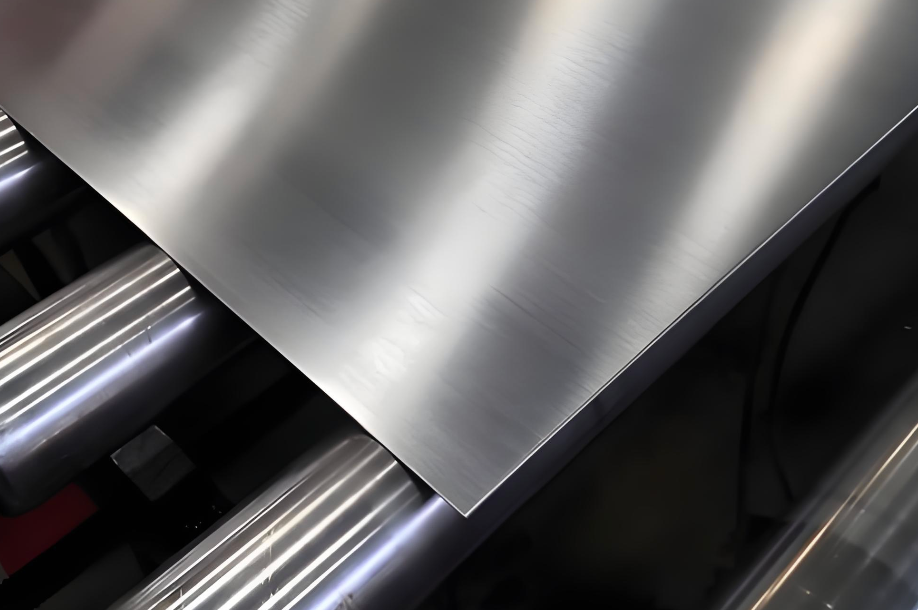
I. What is 3/16 × 4×8 Steel Plate?
Before discussing pricing, it is essential to clarify product specifications.
Specification Definition:
“3/16” refers to the plate thickness, equivalent to 0.1875 inches or 4.76 millimeters.
“4×8” refers to the plate width and length: 4 feet × 8 feet (1.22m × 2.44m).
Material & Weight:
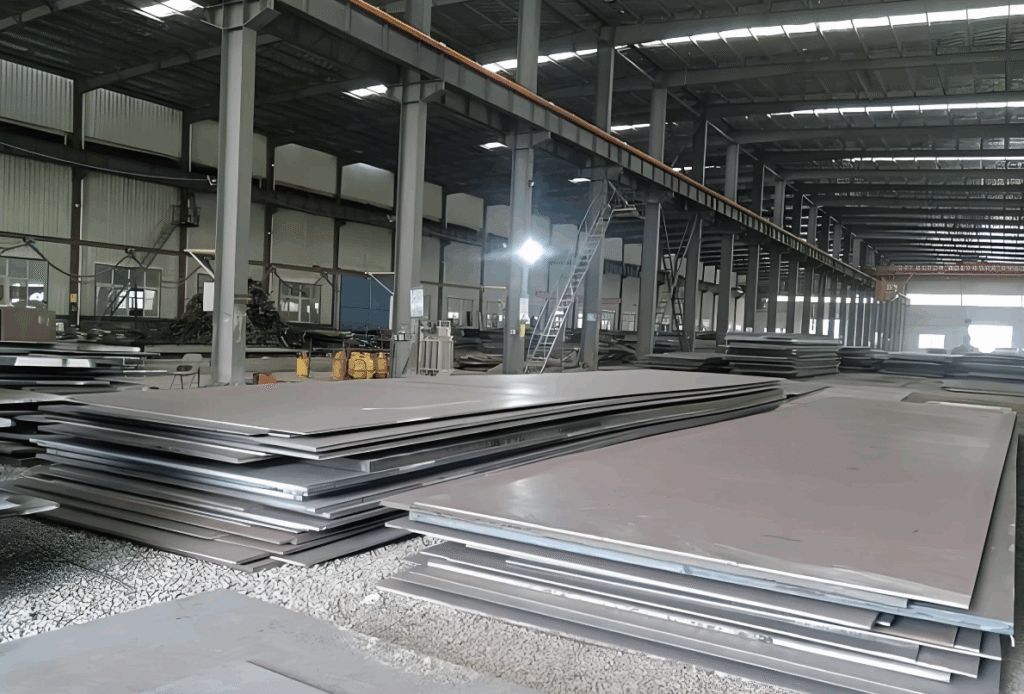
The most common material is ASTM A36 low-carbon steel, valued for its excellent weldability, machinability, and structural strength.
A standard A36 3/16 × 4×8 steel plate weighs approximately 150 lbs (68 kg). Note that weights listed by different retailers may vary slightly; for example, some suppliers calculate 7.65 lbs per square foot, resulting in a total weight of about 244.8 lbs per sheet, which may reflect different calculation standards or tolerances. Confirming weight is essential for estimating shipping costs and structural loads.
Typical Applications:
This size is widely used and can be described as an “industrial all‑rounder”:
- Manufacturing & Equipment: Machine parts, equipment guards, truck bodies, fixtures, and jigs.
- Construction & Structures: Structural supports, prefabricated wall panels, industrial flooring.
- Infrastructure: Used in emergency disaster relief for temporary bridges and modular shelters.
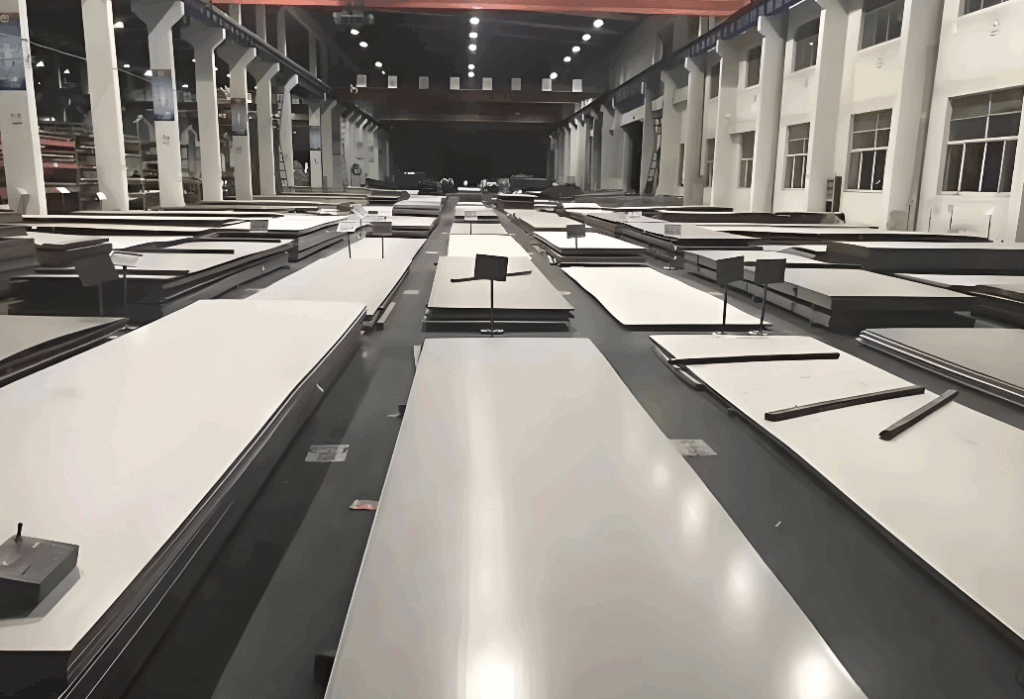
II. Price of 3/16-Inch 4×8 Steel Plate
2.1 Price Differences by Material
Prices vary significantly based on composition and performance. Carbon steel and 316 stainless steel are the most widely purchased:
- Carbon Steel Plate (Q235B/A36):The most common basic steel, suitable for structural construction, mechanical parts, and general supports, with outstanding cost‑effectiveness.Current market range: $420–650/ton, or roughly $12–18 per sheet (approx. 40 lbs / 18.14 kg per sheet).
- Direct factory prices in China: $420–500/ton (lower range).
- US local retail: $18–25 per sheet (higher, due to logistics and supply chain costs).Carbon steel prices are expected to remain stable in 2026, with a slight downward trend driven by lower iron ore prices.
- 316 Stainless Steel Plate:Offers excellent corrosion and heat resistance, ideal for chemical equipment, food machinery, humid environments, and marine engineering.Current market range: $1,130–1,900/ton, or $35–58 per sheet.
- 316L (low-carbon, better corrosion resistance): $1,200–2,000/ton.
- Chinese domestic supply (bulk): $1,130–1,300/ton.
- Imported 316: $1,700–1,900/ton.
- Specialty Materials:Such as 310S heat-resistant stainless steel and wear-resistant steel, priced at approximately $2,200–2,800/ton, used for high-temperature and high-wear environments with lower purchase volumes.
2.2 Price Differences by Order Quantity
Volume is a key pricing factor, with suppliers typically offering tiered pricing:
- Small‑batch (1–5 tons):For small projects, repairs, or samples. Higher unit price.Carbon steel: $580–650/ton.316 stainless steel: $1,700–1,900/ton.Most suppliers have a 1‑ton MOQ (about 55 sheets of 3/16 × 4×8 carbon steel).No volume discounts; delivery fees may apply.
- Bulk (10 tons+):For large projects and long‑term contracts. Significant discounts available.Carbon steel: $420–480/ton.316 stainless steel: $1,130–1,300/ton.Many large suppliers offer 5–8% bulk discounts plus free cutting and delivery.Under 2026 steel industry “anti‑involution” policies, bulk buyers often gain priority supply.
- Retail (single sheet / small quantity):For individuals and small workshops. Highest unit cost.Carbon steel: $15–20 per sheet.316 stainless steel: $40–58 per sheet.Available via retail platforms and local steel yards with no MOQ, ideal for urgent needs.
2.3 Price Differences by Region
Regional supply chains, logistics, and local demand create price gaps:
- Chinese Suppliers:Strong cost advantage, especially in bulk.Carbon steel ex‑factory: $420–500/ton.316 stainless steel ex‑factory: $1,130–1,300/ton.Major hubs include Chongqing, Wuxi, and Tianjin, with ample inventory and fast lead times.Remains cost‑competitive for international buyers despite slightly lower export volumes in 2026.
- US / European Suppliers:Higher prices.US local retail:
- Carbon steel: $18–25 per sheet.
- 316 stainless steel: $50–58 per sheet.Bulk carbon steel: $550–600/ton.Advantage: faster local delivery.Prices are more volatile due to anti‑dumping duties and carbon border taxes.
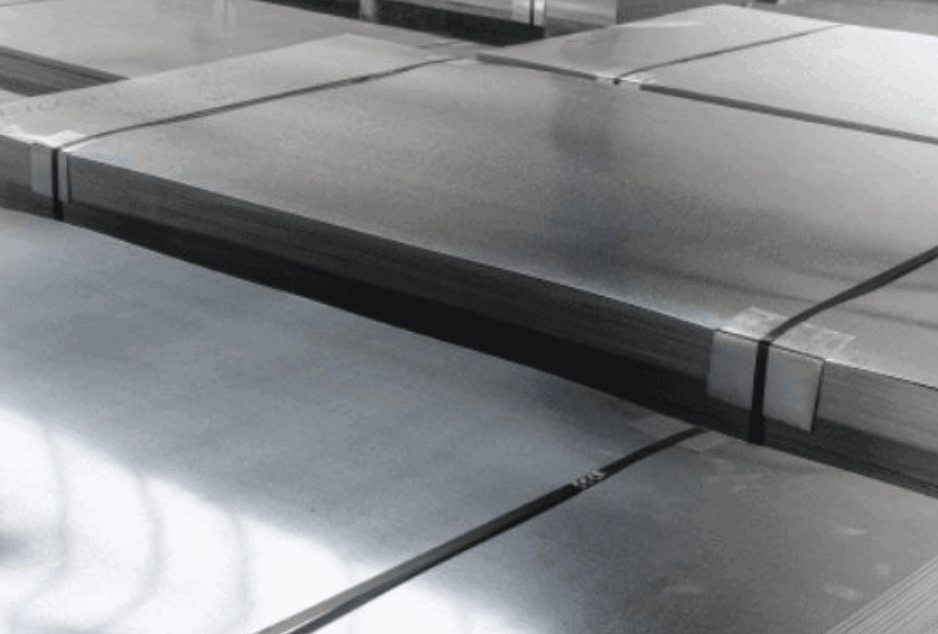
III. Factors Affecting 3/16-Inch 4×8 Steel Plate Prices
3.1 Material Grade
Material grade is the primary price driver. General price order:
310S stainless steel > 316L > 316 > carbon steel > mild steel.
Stainless steel prices are tied to nickel and chromium; 2026 volatility expected at 5–10%.
Carbon steel prices follow iron ore and coking coal, with downward pressure in 2026.
3.2 Purchase Volume & Partnership Model
Larger orders reduce per-unit production and logistics costs, lowering prices.
Long-term framework agreements often include better pricing, service, and even payment terms.
Small-batch and spot buyers pay more due to higher handling and distribution costs.
3.3 Surface Finish & Processing
- Untreated black plate: lowest cost.
- Galvanizing, painting, 2B finish, or polishing add 15–25% to carbon steel and 10–20% to stainless steel.
- Custom cutting, drilling, or fabrication adds roughly $5–10 per sheet.
3.4 Market Supply & Demand & Macro Policies
In 2026, the steel market remains in a balanced but weak supply‑demand environment.
Apparent crude steel consumption is projected to fall ~2.0% year-on-year; output to ~935 million tons (down 2.8%).
Construction steel demand remains weak, while manufacturing (automotive, shipbuilding) supports stability.
Environmental production restrictions and energy controls may cause short-term price increases.
3.5 Supplier Type
Price hierarchy (lowest to highest):
Direct mill > large distributor > small trader > retail store.
Direct mills offer the best prices for bulk; distributors provide flexibility; retailers offer convenience at a premium.
IV. FAQs
Q1: What is the average price of a 3/16-inch 4×8 steel plate?
A: For carbon steel, around $420–650/ton ($12–18/sheet). For 316 stainless steel, around $1,130–1,900/ton ($35–58/sheet). Bulk orders can reduce unit costs by 10–20%.
Q2: Can I buy just one sheet of 3/16 × 4×8 steel plate?
A: Yes. Retail platforms (e.g., Speedy Metals) and local steel yards sell single sheets with no MOQ.
Q3: What is the main difference between 316 stainless steel and carbon steel?
A: 316 contains nickel and chromium for corrosion/heat resistance and costs 2–3 times more. Carbon steel offers high strength and low cost but corrodes easily. Choose based on environment.
Q4: What is the typical lead time?
A: Stock items: 7–15 days; domestic China: 3–7 days. Custom or special materials: 15–20 days. Sea freight: 20–30 days. Expedited orders available for a fee.
Q5: How do I calculate total procurement cost?
A: Total cost = (unit price × tonnage) + processing + logistics + tariffs (if imported).
Q6: Will 3/16 × 4×8 steel prices rise in 2026?
A: Prices are expected to stay stable with limited upside. Bulk buyers may consider stocking moderately; small buyers can purchase as needed.
V. Conclusion
The 3/16 × 4×8 steel plate is a universal material across construction, machinery, chemical, and related sectors. Its price depends on material, volume, region, supply, and policy. To optimize cost and efficiency, buyers should select material based on application, compare quotes by volume, and partner with reliable suppliers.
Reference Source
- “Sheet Metal Weight Calculator”, core reference content: steel plate weight calculation formula, density parameters, size conversion methods, etc., providing professional basis for the weight calculation part of this article.
- ASTM A36 and GB/T 700 industry standards, core reference content: 3/16 inch 4×8 foot steel plate size tolerances, material requirements, etc., to ensure the professionalism and standardization of the specifications and parameters in this article.




 English
  Spanish
  Afrikaans