
Fish‑plate steel is widely applied in main‑line railways, urban light rails, factory crane tracks and mine tracks. This article gives a full overview of what fish‑plate steel is, its working principle, product classifications, application scenarios and selection guidelines.

1. What is Fish‑Plate Steel
1.1 Definition
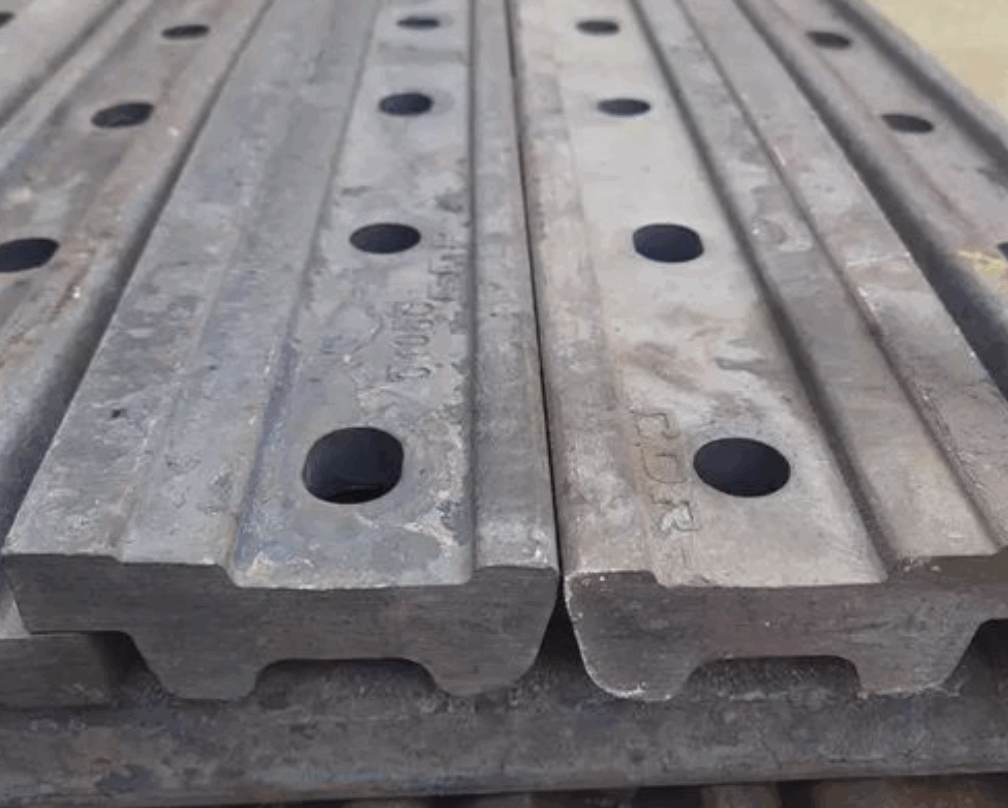
Fish‑plate steel refers to paired steel splice bars installed on both sides of rail joints. Together with fish bolts and spring washers, they firmly clamp the ends of two rails to achieve mechanical continuity of the rail. They are core connecting components for rail joints.
1.2 Working Principle
When trains pass by, wheels exert huge impact loads on rail joints. Fish‑plate steel closely fits the rail web with its inner profile and transfers loads from one rail segment to another. Meanwhile, it accommodates thermal expansion and contraction of rails caused by seasonal temperature changes. It maintains stable track geometry, prevents rail joint offset and misalignment, and ensures smooth and safe train operation.
Without qualified fish‑plate steel, rail joints will become weak points along the whole track. Problems such as rail‑end collision, loose bolts and track deformation are highly likely to occur, greatly raising the risk of track failures.
2. Classifications of Fish‑Plate Steel
2.1 Classification by Bolt Hole Quantity
4‑hole fish‑plate steel: It features fewer holes and smaller overall dimensions. It is mostly used for light‑rails, factory tracks and temporary mine tracks for low‑speed and low‑axle‑load working conditions. It allows convenient installation and delivers lower overall costs.
6‑hole fish‑plate steel: More bolt positions provide stronger clamping force and superior fatigue resistance. It is the mainstream choice for heavy‑rail and freight main‑line railways, suitable for heavy‑duty tracks with frequent traffic.
Compromise fish‑plate steel: Special profiled splice bars designed to connect rails of different profiles, for instance, joining 50 kg/m rails with 60 kg/m rails. Both ends of the bar are profiled to match respective rail web contours. It is commonly adopted in track renovation and connections between old and new rail sections.
2.2 Classification by Function
Standard non‑insulated fish‑plate steel: Made of carbon steel or alloy steel for mechanical rail connection. Used for factory tracks and mine tracks without signal circuits.
Insulated fish‑plate steel: Constructed with composite materials or composite insulating interlayers. While maintaining mechanical connection strength, it achieves electrical isolation. It is mainly used for automatic‑block railways to isolate track circuits and avoid signal‑system short‑circuits, so as to guarantee normal train‑detection signals. Strict requirements are imposed on its insulation resistance.
2.3 Classification by Manufacturing Process
Rolled fish‑plate steel: Formed by section‑steel rolling. It features high production efficiency and moderate cost. It fits ordinary lines under conventional working conditions and meets the requirements of most industrial tracks and branch railways.
Forged fish‑plate steel: Formed by forging. Its internal metal structure is dense, delivering better fatigue‑resistance and impact‑resistance than rolled products. It is suitable for heavy‑haul freight main‑lines with large axle loads, yet with higher processing costs.
3. What is Fish‑Plate Steel Used for?
- Heavy‑haul freight main‑line railways: Forged high‑strength 6‑hole fish‑plates are preferred to withstand large axle loads and repeated impact loads.
- Urban light‑rails and at‑grade metro tracks: Standard or insulated fish‑plates are selected according to signal‑system requirements.
- Factory crane tracks and yard tracks: 4‑hole or 6‑hole rolled fish‑plates are commonly used; insulated versions are unnecessary without signal circuits.
- Temporary mine tracks and construction access tracks: Cost‑oriented rolled carbon‑steel fish‑plates are adopted.
- Track signal‑section boundaries: Insulated fish‑plates must be deployed to keep track‑circuit systems functioning properly.
- Track renovation with old‑to‑new rail transitions: Special compromise fish‑plates are applied for connecting different rail profiles.
4. Fish‑Plate Steel Selection Guidelines
4.1 Confirm the Rail Profile
This is the primary selection factor. Measure the rail weight per meter or confirm the rail‑profile designation. The inner profile of the fish‑plate must perfectly match the rail web. Mismatched profiles will lead to severe safety hazards.
4.2 Select Manufacturing Process and Material Based on Track Load and Operating Speed
For low‑speed light‑load factory tracks, rolled Q235 or 55# carbon‑steel fish‑plates are sufficient. For heavy‑haul freight lines with frequent traffic, forged high‑strength alloy‑steel fish‑plates are recommended.
4.3 Determine Whether Insulation Is Required
Select insulated fish‑plates for tracks equipped with train‑detection or automatic‑block signal systems. Standard steel fish‑plates are used for ordinary factory crane tracks.
4.4 Consider Corrosive Operating Environments
Hot‑dip galvanized finishes are mandatory for coastal salt‑spray environments, chemical‑plant sites and humid tunnels. Oil‑dipped or painted finishes are acceptable for dry inland environments.
4.5 Key Parameter Checklist for Inquiries to Suppliers
When sending inquiries to suppliers, provide complete information as follows: rail profile, hole configuration (4‑hole / 6‑hole / compromise type), insulation requirement, manufacturing process (rolled / forged), material grade, surface treatment, matching bolt grade and applicable standards.
FAQ
Q: Are forged fish‑plates always better than rolled ones?
A: Forged fish‑plates offer superior fatigue resistance yet come at higher procurement costs. Qualified rolled fish‑plates fully satisfy working conditions for low‑speed light‑load factory tracks, so forged versions are not always necessary. Forged fish‑plates are preferred for heavy‑duty lines with frequent traffic.
Q: Can insulated fish‑plates be used for ordinary tracks?
A: They fit mechanically, yet composite insulated fish‑plates cost more and deliver slightly lower mechanical impact resistance than steel splice bars. They are not recommended where electrical isolation is not required.
Q: At what wear depth should fish‑plates be replaced?
A: Replacement is required when the surface crushing wear depth exceeds 2 mm, or the remaining plate thickness drops below 80 % of the original thickness. Continued service is prohibited.
Q: Can fish‑plates be directly used between rails complying with different standards?
A: No. Rails under different standards feature different rail‑web profiles. Standard fish‑plates cannot fit them. Special compromise fish‑plates must be used for transitions between dissimilar rail profiles.
Summary
Fish‑plate steel is a critical safety component for rail joints. The core selection principle is full profile matching between fish‑plates and rails. Manufacturing process, material grade and surface treatment shall be further determined according to track axle load, operating speed, signal requirements and corrosive conditions.
References
- GB/T 11265‑1989 Splice Bars for Light Rails
- UIC‑864‑2 Technical Specification for Railway Fish‑Plates
- AREMA American Railway Engineering and Maintenance‑of‑Way Association Track‑Fastener Standards




 English
  Spanish
  Afrikaans