
Galvanized Steel Plate is a type of metal sheet that achieves anti-corrosion and rust-proof functions by coating a layer of zinc on the steel surface. With excellent corrosion resistance, long service life and high cost-effectiveness, it has become an indispensable core material in construction, automotive, home appliance, agriculture, animal husbandry and many other industries.
This article provides a comprehensive and professional guide to galvanized steel plate, covering basic knowledge, product classification, specifications and standards, application scenarios, pricing, and practical Q&A.
1. What is Galvanized Steel Plate?
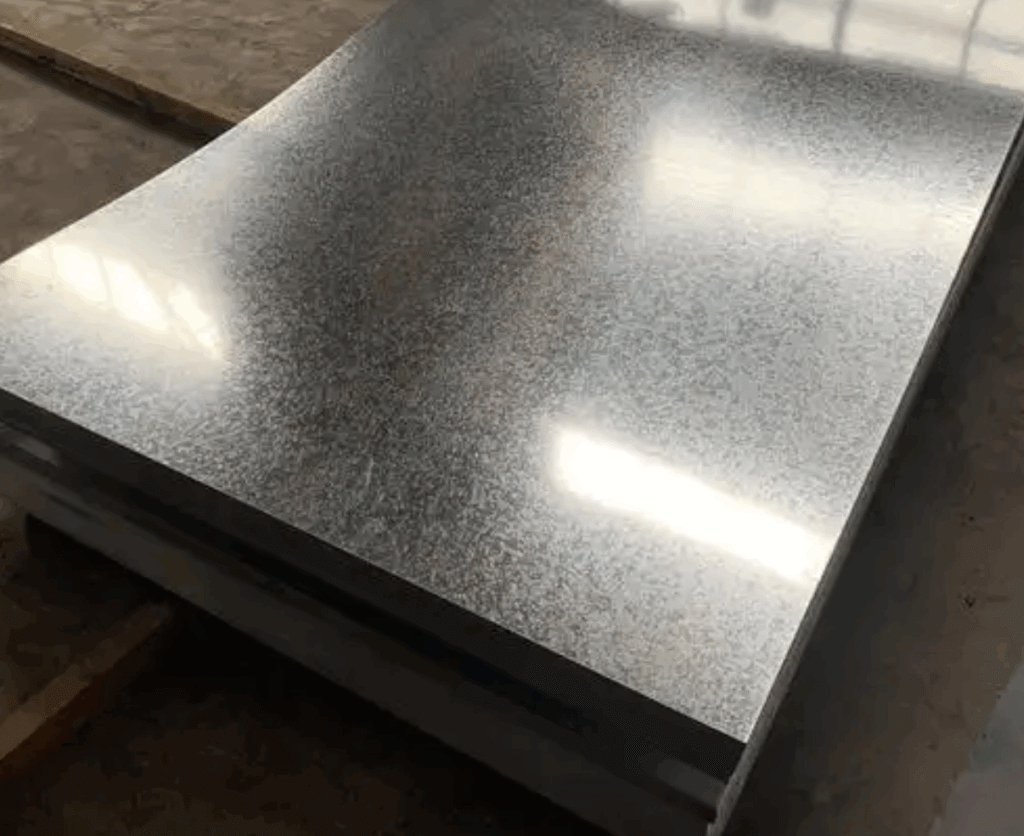
Galvanized steel plate, or galvanized sheet for short, refers to a metal product formed by uniformly coating a layer of zinc on ordinary carbon steel plate through a specific process. The electrochemical and physical isolation properties of zinc protect the steel substrate from corrosive media such as air and moisture, thus extending the service life of the steel plate.
Its anti-corrosion mechanism mainly includes two aspects:
- Physical barrier effect: The zinc layer tightly covers the steel surface, forming a dense protective film that isolates the steel from external corrosive media.
- Sacrificial anode protection: Zinc has a lower electrode potential than iron. When the zinc layer is damaged, zinc oxidizes preferentially and corrodes instead of the steel, indirectly protecting the steel substrate.
Recommended Reading:Galvanized Steel vs Zinc Plated: What’s the Difference?
2. Classification of Galvanized Steel Plate
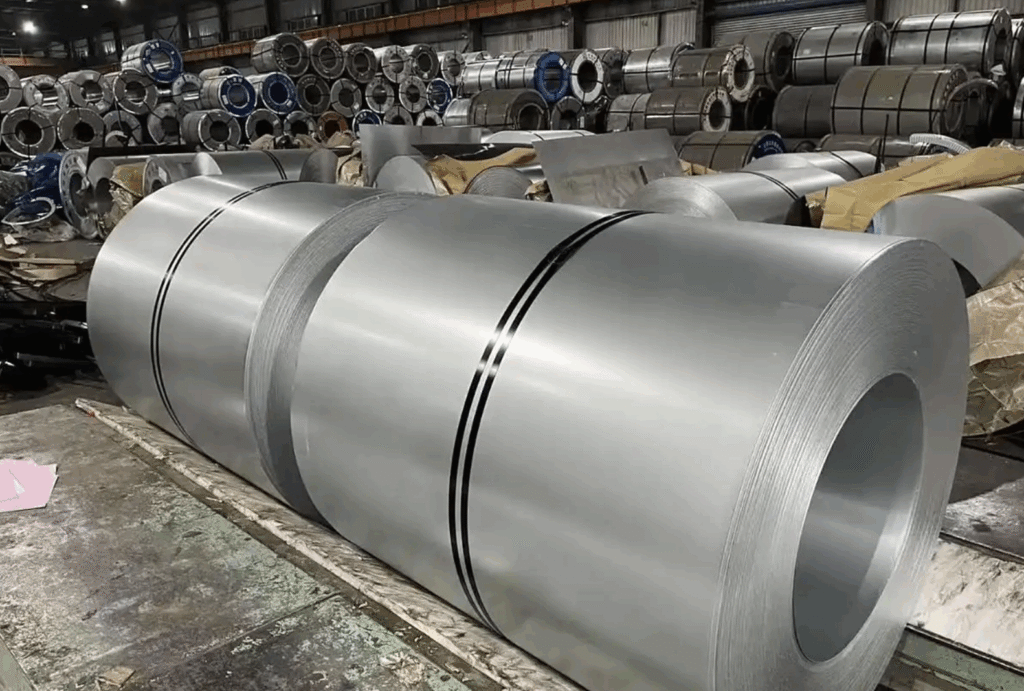
According to different galvanizing processes, mainstream galvanized steel plates on the market are divided into two categories: Hot-Dip Galvanized Steel Plate and Electro-Galvanized Steel Plate, with obvious differences in process, performance and application scenarios.
2.1 Hot-Dip Galvanized Steel Plate
Produced by hot-dip coating at approximately 450°C, forming a uniform zinc layer on the steel surface.
- Features: Thick zinc layer (usually 80–150μm), strong adhesion, excellent corrosion resistance and weather resistance.
- Applications: Outdoor, humid and highly corrosive environments, such as building roof panels, ventilation ducts, agricultural greenhouses, marine engineering equipment.
- Standards: Comply with ASTM A653, EN 10346 and domestic GB/T 2518-2019.
2.2 Electro-Galvanized Steel Plate
Produced by electrodeposition in an electrolytic cell.
- Features: Thin zinc layer (usually 10–30μm), smooth surface, high dimensional accuracy and clean appearance.
- Applications: Scenarios requiring high surface precision and aesthetics, such as automotive shells and parts, home appliance casings, precision instrument enclosures.
Note on Identification
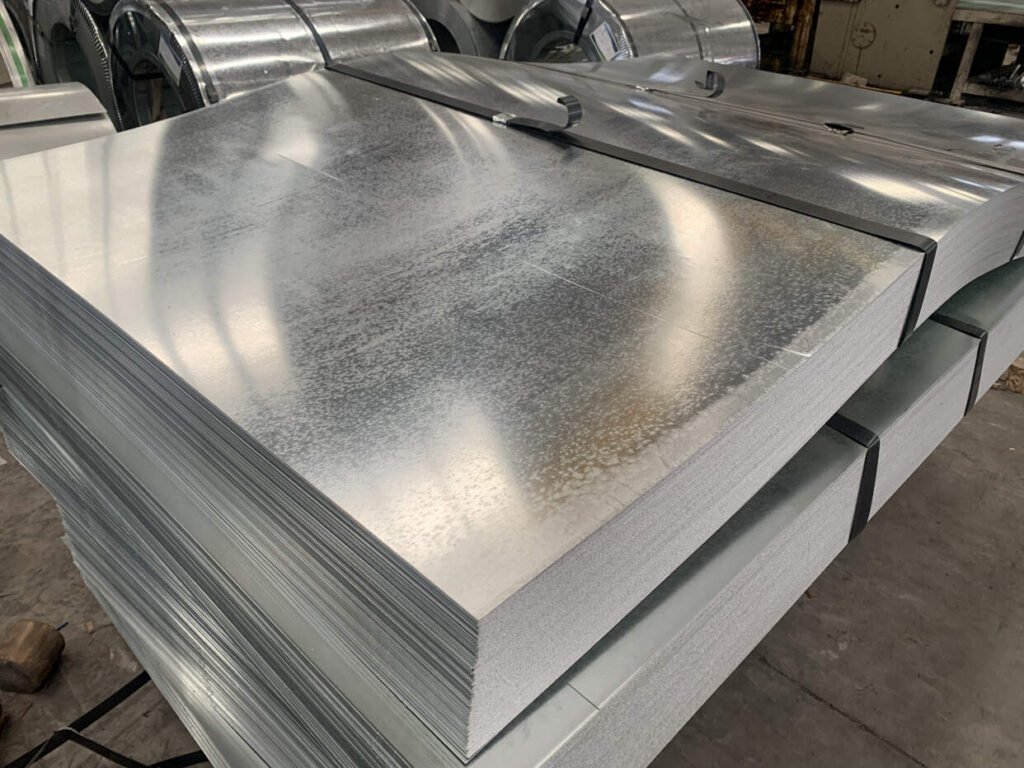
- Hot-dip galvanized: Obvious spangle (large, small or zero spangle), marked as Z275, Z400 (g/㎡).
- Electro-galvanized: Almost no spangle, finer surface, suitable for painting and stamping.
3. Advantages and Disadvantages of Galvanized Steel Plate
Advantages
- Outstanding corrosion resistance, service life of 20–50 years in normal environments with low maintenance.
- High cost-effectiveness, more affordable than stainless steel and aluminum alloy.
- Recyclable and environmentally friendly with high recovery value.
- Wide adaptability to various industries.
Disadvantages
- Low surface hardness, easy to scratch; local corrosion may occur if scratches are untreated.
- Limited aesthetics; hot-dip spangles affect flatness.
- Lower strength than stainless steel, not suitable for high-load applications.
- In high-salt marine environments, white rust (zinc oxidation) may appear, requiring extra protection.
4. Specifications of Galvanized Steel Plate
Key specifications for procurement:
4.1 Thickness
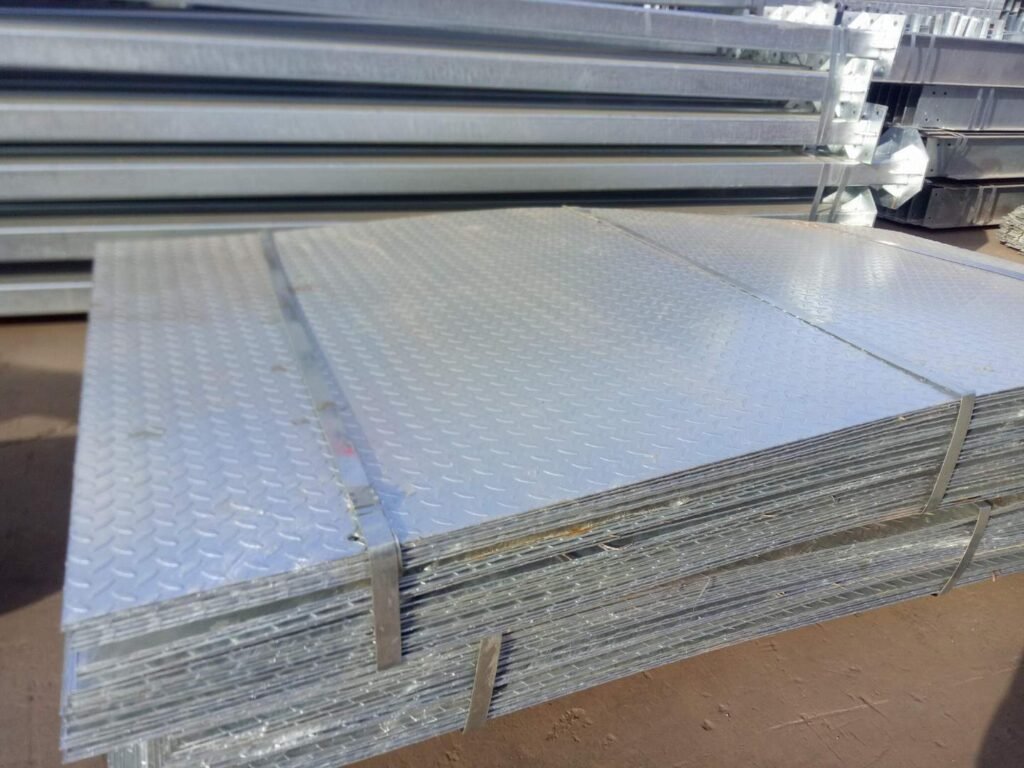
- Conventional range: 0.2mm–3.0mm; most commonly used: 0.3mm–1.5mm.
- Construction/ventilation: 1.0mm–2.0mm.
- Home appliances/automotive: 0.3mm–0.8mm.
- Greenhouses: 0.5mm–1.0mm.
- Custom range: Below 0.20mm or 3.0mm–6.5mm per EN 10346:2024.
4.2 Width & Length
- Regular widths: 914mm (36in), 1219mm (48in), 1524mm (60in).
- Regular lengths: 2438mm (96in), 3048mm (120in), 3658mm (144in).
- Available in coils or cut sheets; customizable sizes supported.
4.3 Zinc Coating
Expressed in g/㎡ or μm.
- Common grades: Z40, Z80, Z100, Z120, Z275, Z400.
- Z275 (≥275g/㎡) corresponds to ASTM A653 G90.
- Outdoor: Z275 or above; Indoor: Z100–Z120.
4.4 Material Grade
- DX51D: Commercial grade, general use.
- DX52D/DX53D: Deep-drawing grade.
- S350GD+Z: High-strength structural grade.
- ASTM A653: Commercial, forming, deep-drawing steels.
5. Price of Galvanized Steel Plate
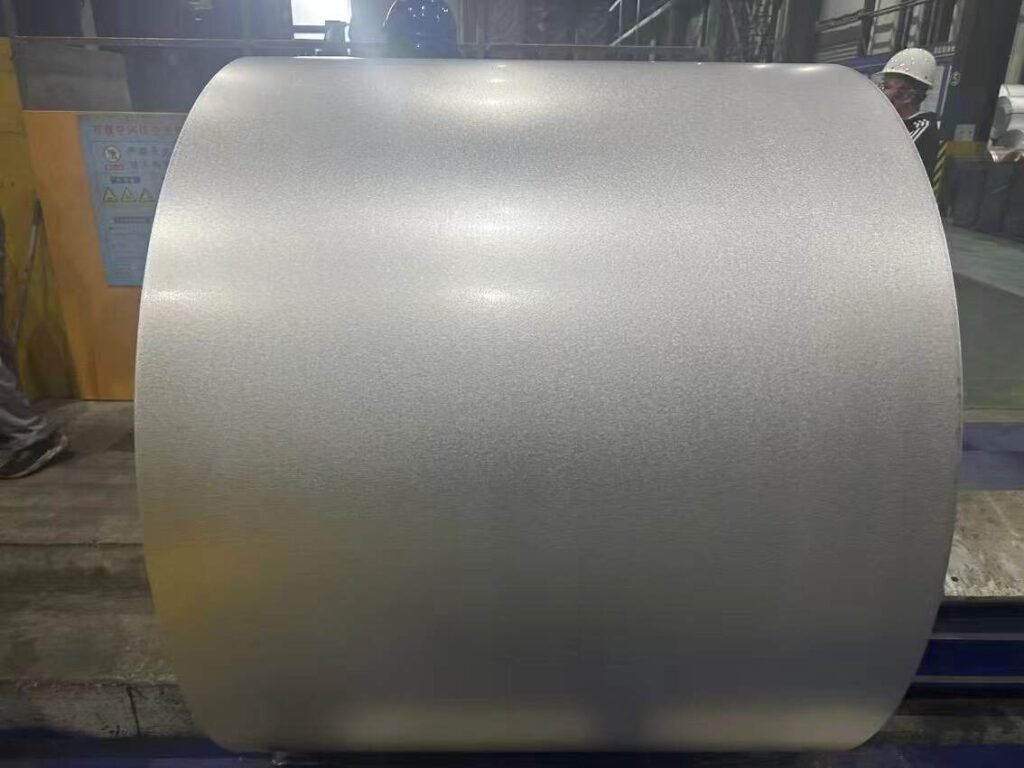
General price range: USD 399–900/ton (≈ RMB 2,850–6,500/ton).
Price Breakdown
- Electro-galvanized: USD 600–900/ton (higher).
- Hot-dip galvanized: USD 399–700/ton (lower).
- Typical 1.0mm Z275 hot-dip: USD 550–600/ton.
- Typical 0.5mm DX51D electro-galvanized: USD 700–750/ton.
Main Factors Affecting Price
- Specifications: Thicker plate, higher zinc coating and special grades increase price by 10%–20%.
- Order quantity: MOQ usually 5 tons; orders ≥50 tons enjoy 5%–10% discount.
- Region: Chinese mills offer 15%–30% lower price with shorter lead time (7–15 days).
- Market: Fluctuations in steel and zinc raw material prices.
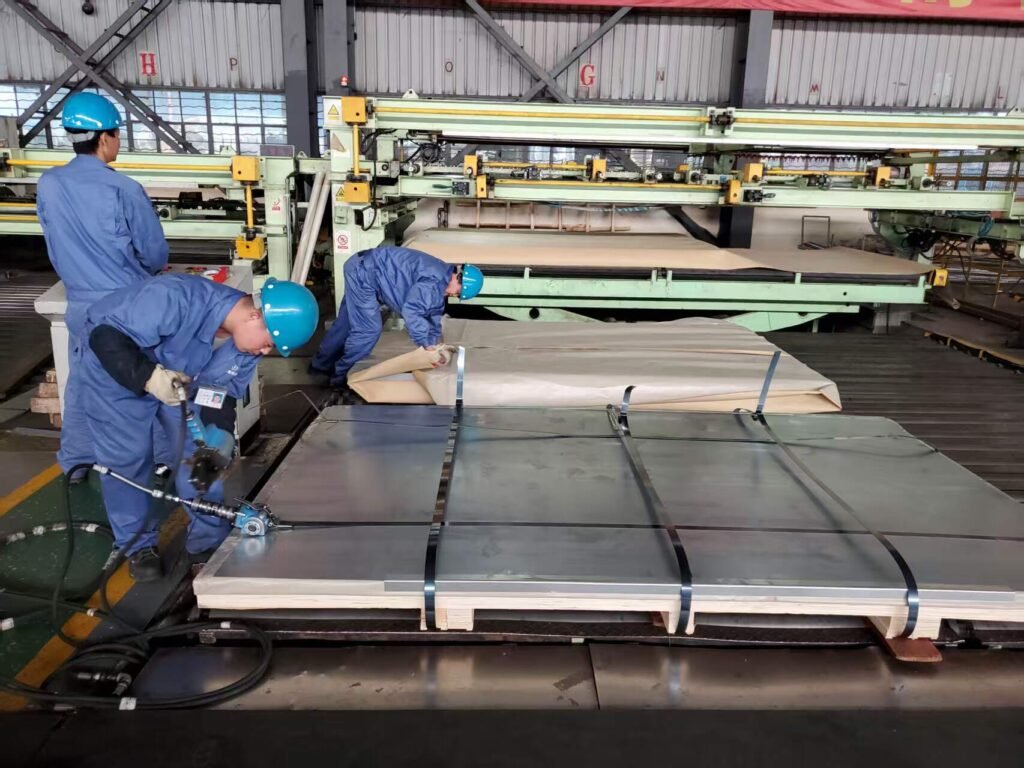
6. Applications of Galvanized Steel Plate
Construction (20%–25%)
Roof panels, wall panels, ventilation ducts, light steel structures, security doors, guardrails.
Hot-dip for outdoor; electro-galvanized for interior finishes.
Automotive (≈10%, growing)
Body shells, doors, engine compartment parts, chassis components.
Electro-galvanized for precision parts; hot-dip for under-chassis parts.
Home Appliances (≈30%)
Refrigerators, washing machines, air conditioners, microwave ovens, range hoods, kitchenware.
Mostly electro-galvanized for smooth surface and painting.
Agriculture, Animal Husbandry & Fishery (≈10%)
Granaries, greenhouses, breeding fences, refrigerated truck bodies, cold-chain equipment.
Hot-dip galvanized for outdoor and humid environments.
7. How to Choose the Right Galvanized Steel Plate
Step 1: Confirm Service Environment
- Outdoor exposure → Hot-dip galvanized (SGCC, Z275+)
- Indoor precision parts → Electro-galvanized (SECC) or fingerprint-resistant
- Industrial/coastal high-corrosion → Zn-Al-Mg or Z350+
Step 2: Confirm Processing Method
- Complex stamping / deep drawing → Electro-galvanized (SECC) or deep-drawing hot-dip
- Simple bending / roll forming → Structural hot-dip (SS Grade)
- Subsequent painting → Alloyed galvanized or passivated products
Step 3: Provide Clear Specifications
Thickness (with tolerance), width, length, zinc coating grade, material grade, surface treatment and packaging requirements.
8. FAQ
Q: What is the anti-corrosion principle of galvanized steel plate?
A: Physical barrier isolation and sacrificial anode protection.
Q: What is the main difference between hot-dip and electro-galvanized?
A: Hot-dip: thicker coating, better corrosion resistance for outdoor use.
Electro-galvanized: thinner, smoother, higher precision for indoor and precision parts.
Q: Can galvanized steel plate be painted?
A: Yes. Degrease and lightly abrade the surface first, and use paint specially designed for galvanized surfaces.
Q: How long is the service life of galvanized steel plate?
A: Indoor: 20–30 years.
Outdoor (Z275): 30–50 years.
Marine environment without extra protection: 10–15 years.
9. Conclusion
Galvanized steel plate is a high-performance, cost-effective material widely used in construction, automotive, home appliances and other industries. It provides long-term anti-corrosion protection at a reasonable cost, helping users reduce maintenance costs and extend service life.
- New users: Clarify application scenarios and distinguish hot-dip vs. electro-galvanized.
- Enterprise buyers: Focus on specifications, standards, supplier capacity, price and lead time.
- Engineers: Select thickness, zinc coating and grade according to design requirements.
- Exporters: Ensure compliance with local standards such as ASTM A653 and EN 10346.
For further inquiries, please consult Tonghui>>.
Reference Source
- ASTM A653/A653M-09 “Standard Specification for Hot Dip Galvanized or Zinc Iron Alloy Galvanized Steel Plates”, published by ASTM International on December 31, 2010, covers the technical requirements, mechanical properties, and other aspects of hot-dip galvanized and zinc iron alloy galvanized steel plates.
- EN 10346:2024 “Technical Conditions for Delivery of Continuously Hot Dip Plated Flat Steel Products for Cold Forming”, approved by the Gulf Cooperation Council Standardization Organization on October 14, 2024, adopts the EN 10346:2015 version without modification, and specifies the requirements for hot-dip plated flat steel products with multiple coating types.
- EN 10346:2015 “Technical delivery conditions for continuous hot-dip coated flat steel products for cold forming”, published by the European Committee for Standardization in 2015, specifies the requirements for hot-dip coated products such as low carbon steel and building steel for cold forming, with a thickness range of 0.20mm ≤ t < 3.0mm.




 English
  Spanish
  Afrikaans