
Steel tempering via controlled heating and cooling is a core process in metal heat treatment. Its fundamental function is to adjust steel’s mechanical properties through regulated heating, soaking and cooling cycles. It reduces the brittleness of quenched steel, balances hardness and toughness, and makes steel suitable for practical applications. It is indispensable for industrial mechanical parts, tool manufacturing, as well as knives and metal crafts in handmade production. This guide comprehensively breaks down the steel heating and cooling tempering process from basic definitions, operational procedures, key parameters and common troubleshooting.
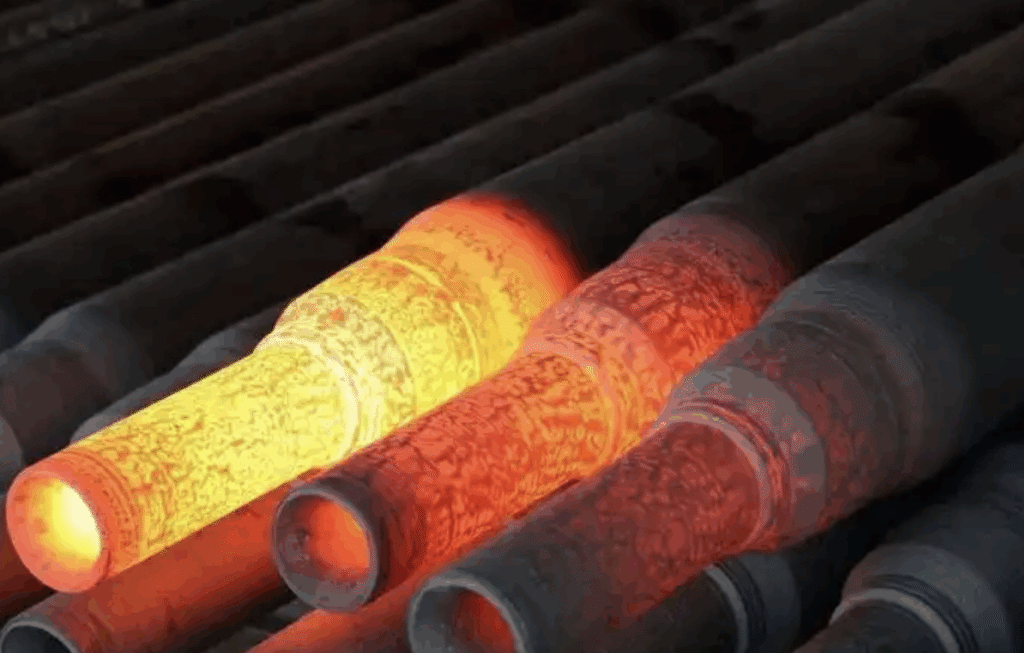
1. What Is Steel Tempering by Heating and Cooling?
1.1 Core Definition
Steel tempering by heating and cooling refers to a heat treatment process: quenched steel is heated to a controlled temperature below the critical temperature (approx. 727°C), held at that temperature for a certain period, then cooled down gradually in a specified manner. This process modifies the steel’s microstructure and optimizes its mechanical performance.
Essentially, it transforms hard yet brittle martensite formed after quenching into stable tempered martensite, relieves internal residual stress, and achieves an optimal balance between hardness and toughness. This prevents steel from cracking or fracturing during service.
Note: Tempering is generally performed immediately after quenching. Quenching boosts steel hardness, while tempering eliminates quenching brittleness. The two processes work in tandem and are inseparable to fully unlock steel’s performance potential.
1.2 Core Purposes of Tempering
Tempering optimizes steel properties to meet diverse application requirements, with three key objectives:
- Reduce quenching brittleness:Quenched steel features extreme hardness but high brittleness, prone to fracture under impact and load. Tempering refines the microstructure to mitigate brittleness and improve impact resistance.
- Balance hardness and toughness:Different applications demand different property combinations. Cutting tools require high hardness for sharpness; mechanical shafts need high toughness to withstand cyclic loading. Tempering allows precise performance tuning by adjusting process parameters to match specific usage scenarios.
- Relief internal stress and stabilize dimensional accuracy:Rapid cooling during quenching generates massive internal stress, leading to deformation and cracking. Controlled slow heating and cooling in tempering gradually release residual stress, stabilize dimensions, and improve machinability and service life.
1.3 Key Terminology Explanation
- Critical Temperature: Approximately 727°C, the threshold for steel crystal structure transformation. Tempering must be conducted below this temperature; exceeding it will revert the structure to austenite and nullify the tempering effect — a key temperature distinction from quenching.
- Quenching: The preceding process of tempering. Steel is heated above the critical temperature then rapidly cooled to form martensite, laying the foundation for high hardness before tempering.
- Martensite: The primary microstructure of quenched steel, appearing acicular or lath-shaped with ultra-high hardness but poor toughness. It transforms into tempered martensite, sorbite or troostite after tempering.
- Temper Color: Discoloration on steel surface during heating (straw yellow, pale yellow, light blue, etc.), corresponding to specific tempering temperatures. It serves as a practical temperature reference when precision thermometers are unavailable. For instance, pale straw color corresponds to around 204°C, and light blue to approximately 337°C.
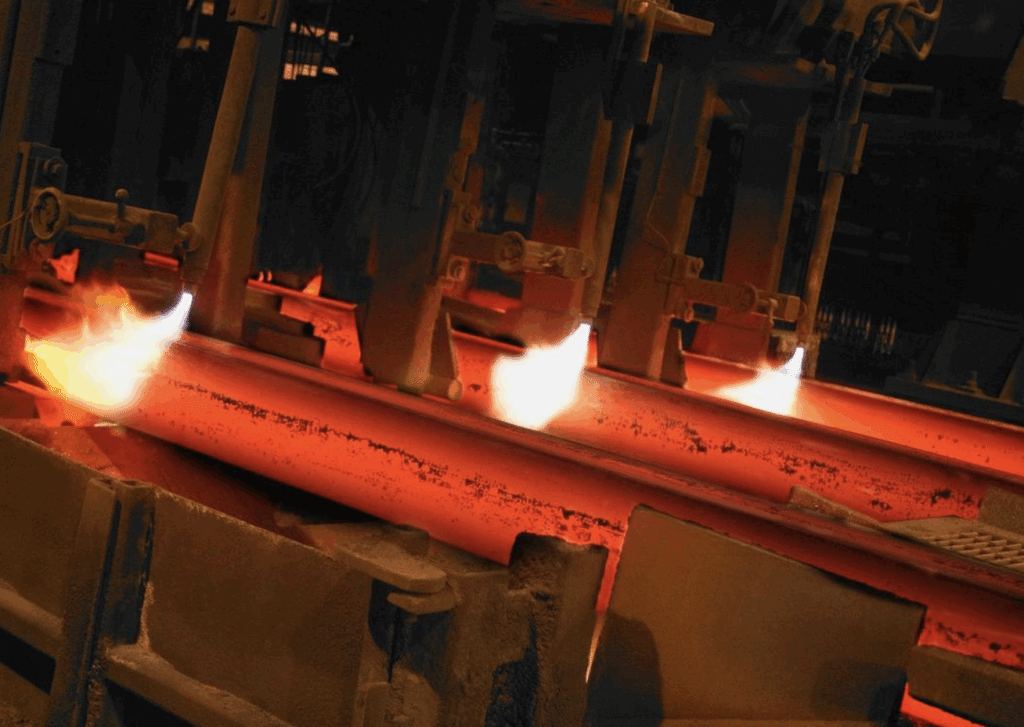
2. Practical Process of Steel Heating & Cooling Tempering
2.1 Preparations
Proper preparation ensures successful tempering for both industrial and handmade operations, covering materials, tools and safety:
- Material Preparation: Use fully quenched carbon steel, alloy steel or tool steel; different steel grades require customized tempering parameters. Remove surface oxide scale and oil contamination to ensure uniform heating and surface quality.
- Tool Preparation: Heating equipment (industrial: chamber furnace, salt bath furnace, vacuum furnace; handmade: blowtorch, small melting furnace); temperature measuring tools (industrial: thermocouple, infrared thermometer; handmade: temper color judgment); cooling media (air, oil, water selected per steel grade); auxiliary tools (industrial: furnace fixtures; handmade: high-temperature tweezers and brackets).
- Safety Preparation: Wear heat-resistant gloves and goggles to avoid burns. Inspect industrial heating equipment regularly; operate handmade tempering in a well-ventilated, fire-safe area with fire prevention equipment.
2.2 Step-by-Step Operation Guide
Complying with GB/T 16924-2008 national standard and industrial practice, tempering consists of three core steps with strict process control:
Step 1: Heating
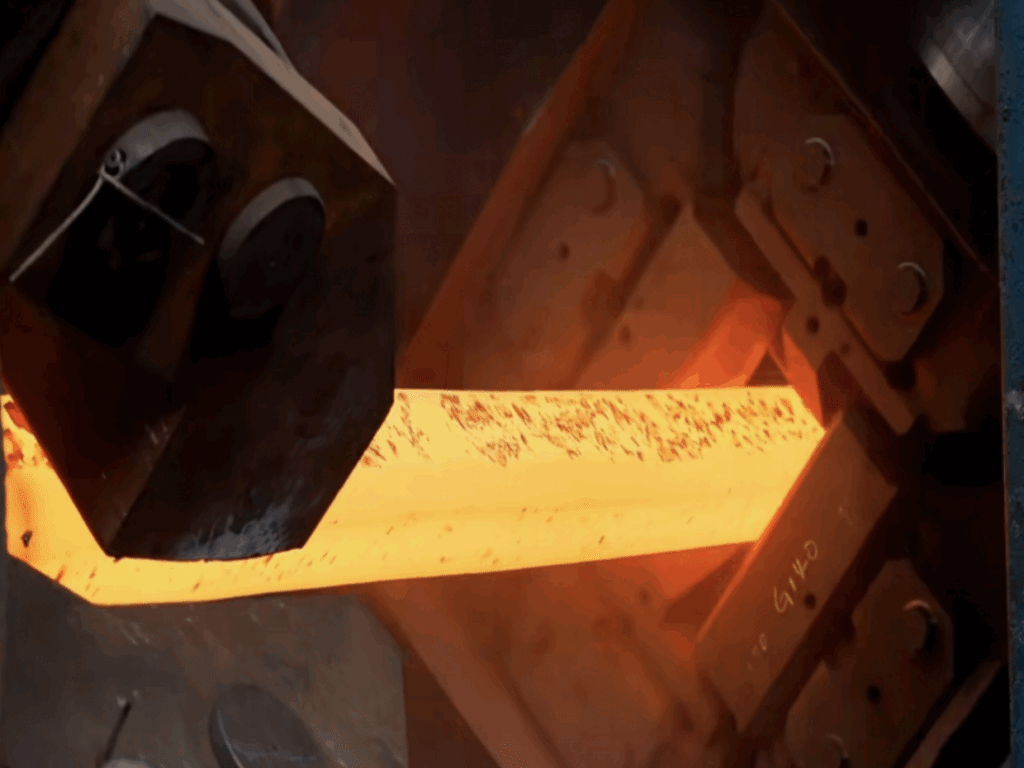
Place cleaned quenched steel into heating equipment and raise temperature slowly to the target tempering level. Excessively fast heating causes local overheating, deformation or cracking.
- Industrial standard: Heating rate ≤50°C/h for heavy thick parts, ≤100°C/h for regular parts.
- Handmade operation: Move the blowtorch evenly to ensure uniform heating across the steel.
Monitor temperature in real time with measuring instruments; rely on temper color for temperature estimation if no professional equipment is available.
Step 2: Soaking (Holding)
Maintain the target temperature once reached, allowing heat to penetrate fully into the steel core and complete the microstructural transformation of martensite.
General soaking rule: 1–2 hours per 25 mm of steel thickness. Adjust accordingly:
- 50 mm thick steel: 2–4 hours soaking time.
- Alloy steel: Extend soaking duration for complete structural transformation.
- Salt bath furnaces offer higher heat efficiency than chamber furnaces, allowing shorter soaking time.
Maintain stable furnace temperature during soaking; industrial furnace temperature uniformity is controlled within ±5°C ~ ±15°C according to equipment type to avoid inconsistent tempering results.
Step 3: Cooling
Cool the steel gradually to room temperature after soaking. The core principle is slow controlled cooling to prevent new residual stress and deformation.
- Air Cooling: The most common and safest method, suitable for most carbon steel and low-alloy steel. Leave steel in a ventilated area for natural cooling with gentle cooling speed to avoid deformation and cracking.
- Oil Cooling: Applied to certain alloy steel, with slightly faster cooling than air cooling to avoid temper brittleness. Control cooling oil temperature strictly for stable performance.
- Forbid Rapid Water Cooling: Ultra-fast water cooling induces severe internal stress and easily causes deformation and cracking. It is only allowed for special steel by professional operators and strictly prohibited for beginners.

2.3 Core Process Parameters
Tempering results are determined by three critical parameters: tempering temperature, soaking time and cooling method.
Tempering Temperature
Classified into low, medium and high tempering per application requirements (compliant with GB/T 16924-2008):
- Low-temperature Tempering (150–300°C):Retain high hardness and wear resistance while reducing brittleness (hardness: 58–64 HRC). Ideal for wear-resistant parts such as cutting tools, razor blades, bearings and molds. Industrial control: furnace temperature uniformity ≤±5°C, hardness fluctuation after cooling ≤2 HRC.
- Medium-temperature Tempering (300–500°C):Balance hardness and toughness (hardness: 35–45 HRC) with high elastic limit. Suitable for springs, hammers, gears and crankshafts. Avoid the 450–650°C range to prevent second-type temper brittleness; use accelerated cooling if necessary to bypass the brittle temperature zone.
- High-temperature Tempering (500–700°C):Maximize toughness and ductility (hardness: 220–250 HB). Also known as quenching and tempering, widely used for load-bearing components such as railway rails, structural steel, axles and connecting rods. Extend soaking time to 2–3 hours per 25 mm thickness for full microstructural transformation.
Soaking Time
Determined mainly by steel thickness and composition, following the formula: Soaking Time = Coefficient × Effective Thickness
- Carbon steel: 1–2 hours per 25 mm thickness
- Alloy steel: 2–3 hours per 25 mm thickness
- Small parts (<10 mm): 30–60 minutes
- Heavy thick parts (>50 mm): 4–6 hours for thorough heat penetration.
Cooling Method Selection
- Carbon steel & low-alloy steel: Priority to air cooling
- Alloy steel: Oil cooling or air cooling; use oil cooling for steel prone to temper brittleness
- High-precision parts: Furnace slow cooling to minimize deformation and ensure dimensional accuracy
2.4 Differences Between Handmade and Industrial Tempering
- Handmade Tempering: Uses simple tools for small-sized steel such as handmade knives and metal crafts. Relies on temper color for temperature judgment with no precision instruments; mainly adopts air cooling with simplified procedures focusing on safety and basic parameter control.
- Industrial Tempering: Equipped with professional furnaces and high-precision temperature measuring devices to strictly control heating rate, soaking time and cooling speed. Applied to mass production and high-precision components. Complies fully with GB/T 16924-2008, controlling furnace temperature uniformity, workpiece spacing (≥50 mm) and conducting hardness testing and metallographic analysis for consistent product quality. Fixtures are used to fix workpieces and reduce gravity deformation for thick parts.
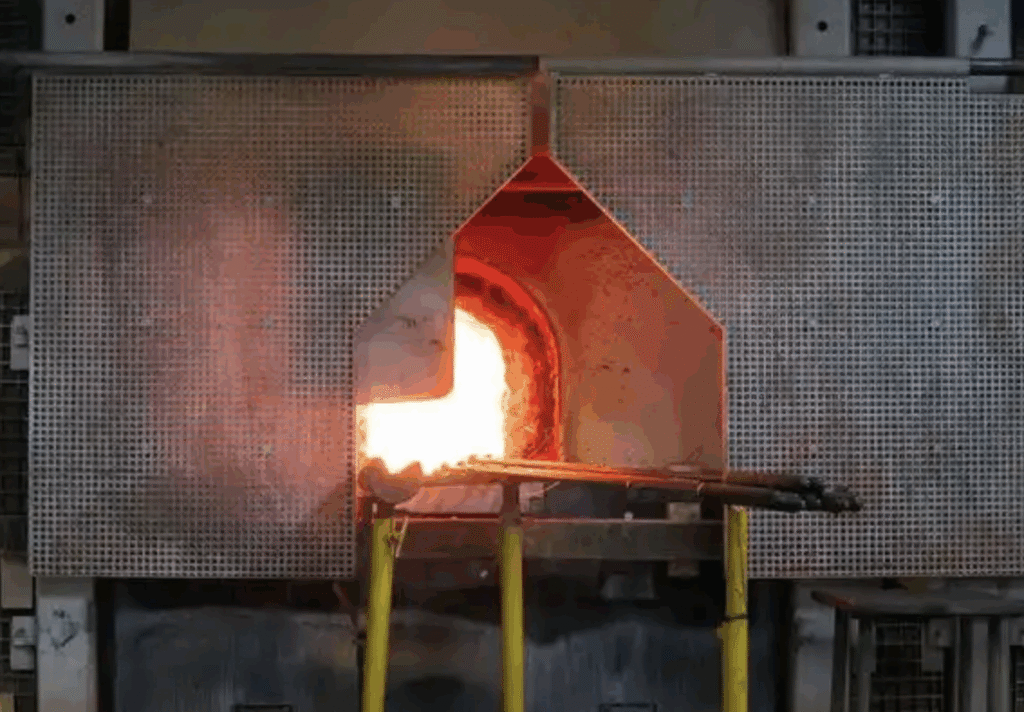
3. Common Tempering Types and Applications
3.1 Low-temperature Tempering (150–300°C)
Features: Retain high hardness and wear resistance, relieve brittleness and residual stress with stable dimensions; main microstructure is tempered martensite.
Applications: Kitchen knives, drill bits, milling cutters, bearings, razor blades and molds. For example, T10 tool steel after low-temperature tempering reaches 60–62 HRC, maintaining cutting performance while preventing fracture.
3.2 Medium-temperature Tempering (300–500°C)
Features: Balanced hardness and toughness with high elastic limit; microstructure is tempered troostite, resisting cyclic load and deformation.
Applications: Automotive and mechanical springs, hammers, gears and crankshafts. 65Mn spring steel after medium-temperature tempering achieves 40–45 HRC with elastic limit over 800 MPa, adapting to repeated impact loads.
3.3 High-temperature Tempering (500–700°C)
Features: Excellent toughness and ductility with relatively low hardness; microstructure is tempered sorbite with complete stress relief, suitable for heavy impact and load-bearing scenarios.
Applications: Railway rails, structural steel, axles, connecting rods and high-strength bolts. 45# steel mechanical connecting rods after quenching and tempering reach 220–250 HB with outstanding toughness for cyclic mechanical operation.
3.4 Special Tempering Methods
- Isothermal Tempering:Quenched steel is soaked in molten salt bath at a set temperature to transform austenite into bainite, then cooled slowly. Offers superior toughness and minimal deformation, ideal for high-precision gears and molds with higher production efficiency.
- Martensite Tempering:Cool quenched steel slowly in hot oil or molten salt to reduce internal stress and prevent deformation and cracking. Suitable for complex-shaped thin-walled parts and precision shaft components in mechanical manufacturing.
4. Difference and Correlation Between Quenching and Tempering
4.1 Core Differences
- Heating Temperature: Quenching is heated above 727°C (above Ac3/Ac1) for full austenitization; tempering is heated below the critical temperature (150–700°C) only to adjust martensite structure without changing the fundamental crystal phase.
- Cooling Mode: Quenching uses rapid water/oil cooling to form martensite and gain high hardness; tempering adopts slow air/oil/furnace cooling to release stress and balance performance.
- Core Purpose: Quenching improves hardness and strength but increases brittleness; tempering reduces quenching brittleness, balances hardness and toughness, relieves internal stress and stabilizes dimensions rather than increasing hardness.
4.2 Correlation
Tempering is an essential follow-up process to quenching. Quenching creates high-hardness martensite; tempering eliminates quenching defects and optimizes comprehensive performance. Quenched steel without tempering is overly brittle and unusable; tempering without prior quenching has no microstructural basis and loses its technical significance. Together they form the fundamental heat treatment workflow for steel strengthening.
5. Common Tempering Problems & Solutions
5.1 Persistent Brittleness After Tempering
Causes: Insufficient tempering temperature; inadequate soaking time; incomplete quenching with retained austenite; uneven heating due to surface contamination.
Solutions: Raise tempering temperature moderately; extend soaking time; re-quench before tempering; fully clean steel surface for uniform heating.
5.2 Insufficient Hardness (Overly Soft Steel)
Causes: Excessively high tempering temperature; overlong soaking time; low initial quenching hardness; improper cooling for alloy steel.
Solutions: Lower tempering temperature to the standard range; shorten soaking time; re-quench to ensure qualified initial hardness; adopt oil cooling for alloy steel.
5.3 Deformation & Cracking After Tempering
Causes: Overly fast heating causing thermal stress; improper rapid water cooling; uneven steel thickness; unreasonable furnace loading; inherent material defects.
Solutions: Slow down heating rate; use air/oil cooling only; inspect and select uniform-thickness workpieces; maintain workpiece spacing ≥50 mm in furnace; adopt staged or isothermal tempering for complex parts.
5.4 Uneven Temper Color
Causes: Non-uniform heating; residual surface oil and oxide scale; uneven furnace temperature distribution; overlapping loaded workpieces.
Solutions: Calibrate heating equipment regularly; fully clean steel surface; arrange workpieces with sufficient spacing; move blowtorch evenly in handmade operation.
6. Application Fields of Tempered Steel
6.1 Tool Manufacturing
Mainly low-temperature tempering: cutting tools, molds and bearings retain high hardness and wear resistance with improved service life and dimensional stability.
6.2 Mechanical Manufacturing
Medium and high-temperature tempering for gears, springs, crankshafts, axles, rails and fasteners. Balanced hardness and toughness withstand cyclic load, impact and heavy mechanical stress.
6.3 Handmade Production
Low and medium-temperature tempering for handmade knives, metal ornaments and hand tools. Optimized toughness facilitates shaping while avoiding fracture during processing and use.
7. Frequently Asked Questions
Q1: Is quenching mandatory before tempering?
A1: Yes for conventional tempering. Tempering is designed to modify quenched martensite and relieve residual stress. Without quenching, no martensite forms, making tempering meaningless. Only a few annealed steel grades use low-temperature stress-relief tempering as an exception.
Q2: What is the best cooling method for tempering?
A2: No universal best option. Air cooling is preferred for most carbon steel and low-alloy steel for simplicity and stability. Oil cooling is used for alloy steel to avoid temper brittleness. Furnace slow cooling is adopted for high-precision parts to minimize deformation. Beginners are recommended to start with air cooling.
Q3: How to judge tempering temperature without a thermometer?
A3: Use temper surface color as a reference:
Pale straw ~204°C | Pale yellow ~220°C | Golden yellow ~240°C
Deep yellow ~260°C | Purple ~280°C | Light blue ~337°C | Dark blue ~380°C
This method has minor errors and suits handmade operation; industrial production requires precision temperature measurement complying with GB/T 16924-2008.
Q4: Can all steel be tempered by heating and cooling?
A4: No. Tempering applies mainly to ferrous alloys including carbon steel, alloy steel, tool steel and cast iron, which form martensite after quenching. Non-ferrous alloys such as aluminum and copper alloys have different crystal structures, cannot form martensite, and adopt annealing or aging treatment instead of tempering.
Q5: Does tempering reduce steel hardness?
A5: Yes, slight hardness drop is normal. Tempering prioritizes reducing brittleness and balancing performance by restructuring martensite and releasing stress. Hardness decreases marginally while toughness improves significantly. Higher tempering temperature leads to lower hardness and higher toughness; low-temperature tempering retains almost all quenched hardness.
8. Summary
Steel tempering by controlled heating and cooling is a professional and practical heat treatment technology. Through standardized heating, soaking and cooling, it optimizes steel microstructure, relieves quenching residual stress, and balances hardness and toughness to fit diverse industrial and handmade scenarios. Mastering core parameters and operational details greatly improves product quality and service life for both mass industrial production and small-batch handmade processing.
Reference Standards
- GB/T 16924-2008: Quenching and Tempering of Steel Parts
- Heat Treatment Process and Technical Requirements





 English
  Spanish
  Afrikaans