
In sheet metal fabrication, building steel structures, industrial equipment manufacturing, hardware tooling and other fields, the American Steel Gauge is an internationally adopted thickness measurement standard. As a commonly used specification for medium and heavy-gauge plates, 10 gauge steel delivers a good balance of structural strength and machinability, boasting an extensive range of applications.
Complying with the Manufacturers’ Standard Gauge (MSG) and ASTM industry standards, this article elaborates on the precise thickness, tolerance range, weight indicators and physical properties of 10 gauge steel. It also includes comparisons with mainstream steel grades and application guidance, providing accurate references for steel selection, engineering construction and bulk procurement.

1. Official Standard Thickness of 10 Gauge Steel
The thickness of 10 gauge steel follows strictly the Manufacturers’ Standard Gauge (MSG), an authoritative norm widely applied in the production, trade and engineering use of carbon steel sheets across North America.
The standard thickness of 10 gauge mild carbon steel is specified as below:
- Inches: 0.1345 inch
- Millimeters: 3.416 mm
A reasonable tolerance is allowed in industrial production. Cold-rolled carbon steel sheets in 10 gauge feature a general tolerance of ±0.051 mm, which complies with North American industrial regulations and poses no impact on structural performance or assembly accuracy for conventional engineering and procurement.
Important Note: 10 gauge steel plates of different materials have slight differences in thickness, and the gauge standards are not interchangeable.
10 gauge stainless steel sheets adopt the independent Stainless Steel Numbering System (SSNS). Compared with carbon steel of the same gauge, stainless steel sheets have higher dimensional accuracy, smaller tolerances and marginally different thickness values. The MSG figures for carbon steel must never be applied to stainless steel. Material differentiation is essential to avoid dimensional errors during construction.
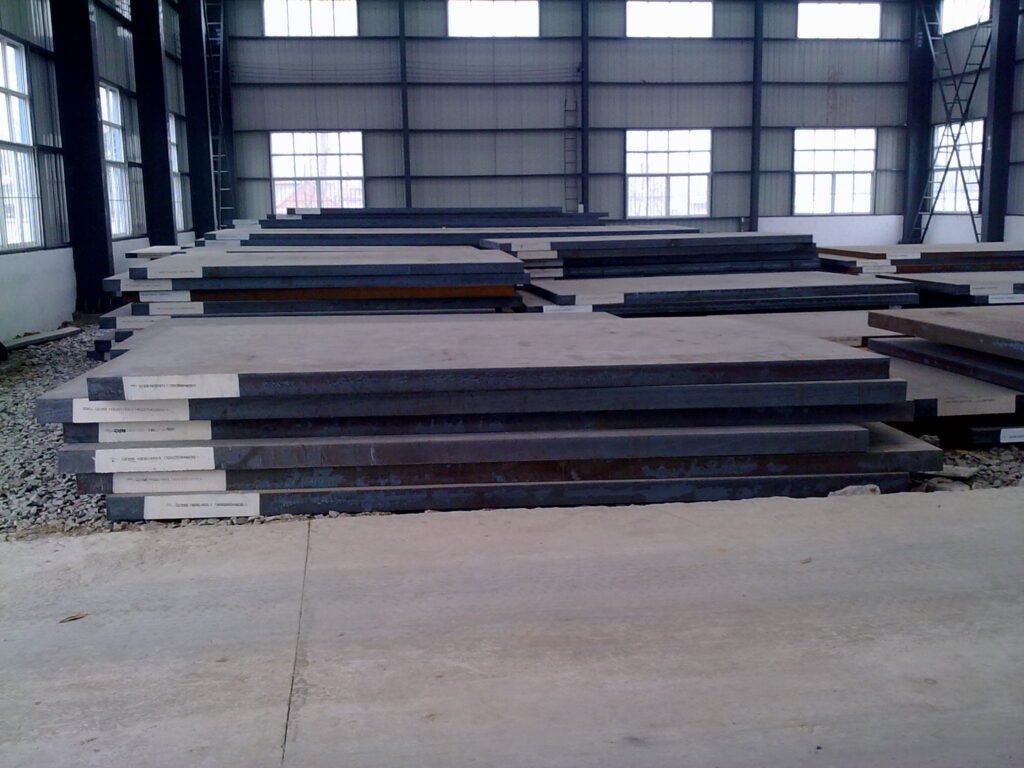
2. Weight and Core Physical Properties of 10 Gauge Steel
Steel weight, strength and toughness are key indicators for load-bearing calculation, cost estimation and material selection in engineering. Based on industry test data and standard specifications, the core parameters of 10 gauge steel are listed as follows:
2.1 Standard Weight Parameters
Calculated per standard thickness and steel density, 10 gauge carbon steel sheet weighs approximately 4.37 pounds per square foot, or 21.3 kilograms per square meter. Falling within the typical weight range for medium and heavy plates, it is ideal for most load-bearing structures.
2.2 Physical Properties and Grade Classification
Classified as a heavy-duty industrial plate, 10 gauge steel features high strength, excellent rigidity and balanced toughness. It offers far better resistance to bending, impact and load bearing than thinner sheets, while retaining good machinability for common processes such as cutting, bending and welding. It combines practicality and processing flexibility perfectly.
For structural applications, 10 gauge steel fully meets the requirements for general static load bearing, outdoor protection and equipment support. It is a cost-effective option between lightweight thin sheets and ultra-heavy thick plates.

3. Core Principles of the Steel Gauge System
The steel gauge system is a century-old standardized measurement method widely used in North America, which differs fundamentally from conventional dimensional measurements and is a common pitfall for beginners.
Core Rule: The higher the gauge number, the thinner the steel plate; the lower the gauge number, the thicker the steel plate.
Originating from traditional steel rolling processes, the gauge number indicates the number of rolling passes. More rolling passes result in thinner plates and higher gauge figures, which explains the inverse correlation between gauge number and thickness.
Another critical misconception to clarify: the steel gauge system is completely independent from those for non-ferrous metals such as aluminum and copper. Gauge numbers for steel cannot be used for reference on aluminum materials. Steel and aluminum of the same gauge differ greatly in thickness and strength, so cross-material reference is prohibited.
4. Comparison Between 10 Gauge Steel and Mainstream Steel Grades
In practical engineering selection, 8 gauge, 10 gauge, 12 gauge and 14 gauge are the most widely used steel specifications. A multi-dimensional comparison helps select the right material and avoid problems including insufficient strength or material waste.
| Thickness (Inches) | Thickness (Millimeters) | Relative Strength | Processing Flexibility | Core Application Scenarios |
|---|---|---|---|---|
| 0.1644 | 4.176 | Highest | Low, relatively rigid plate | Heavy-duty load-bearing brackets, large equipment frames, high-strength protective structures |
| 0.1345 | 3.416 | Medium to High | Balanced, compatible with most processing techniques | General steel structures, equipment enclosures, protective railings, vehicle-mounted accessories |
| 0.1046 | 2.657 | Medium | Good, easy to bend and process | Light sheet metal, standard cabinets, non-load-bearing decorative structures |
| 0.0747 | 1.897 | Low | Excellent, high plasticity | Thin decorative plates, simple protective panels, small hardware accessories |
Key Selection Conclusion: 10 gauge steel is thicker than 12 gauge and 14 gauge steel, yet thinner than 8 gauge steel. With the optimal balance between strength and machinability, it ranks among the most versatile specifications for industrial and construction purposes.
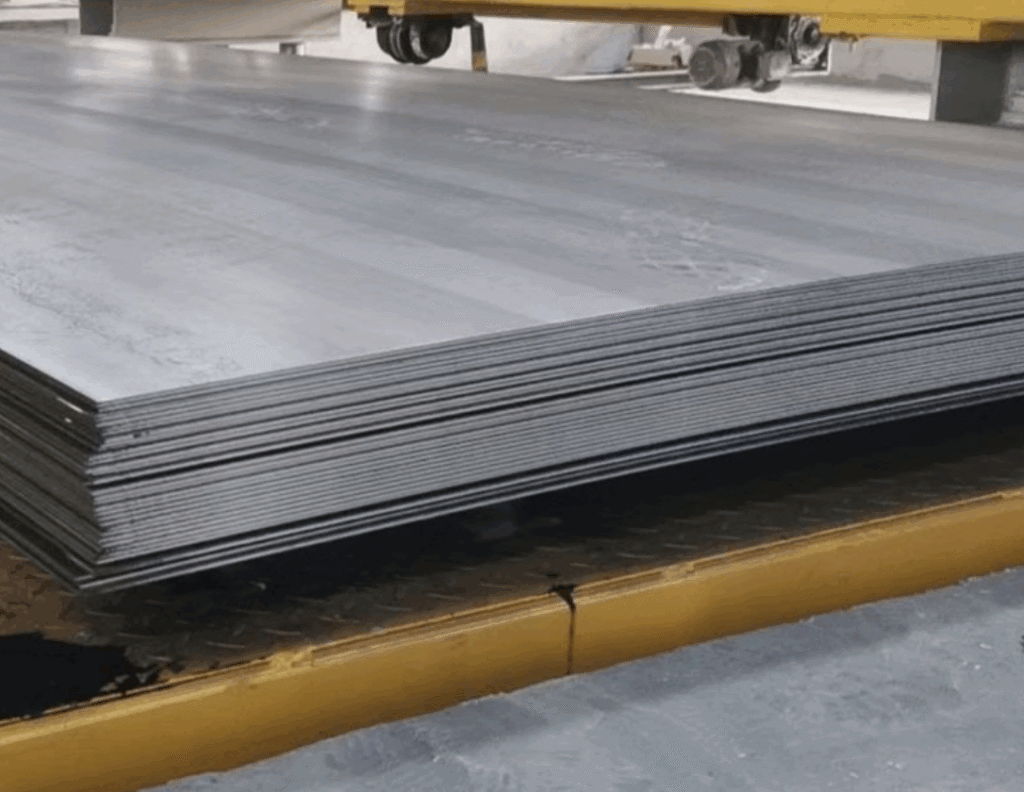
5. Main Application Scenarios of 10 Gauge Steel
Thanks to its well-balanced strength, weight and processability, 10 gauge steel is extensively used in construction, industrial manufacturing, transportation, hardware and many other sectors for medium and heavy-duty working conditions.
5.1 Building Steel Structure
It is commonly used for load-bearing wall panels, steel support brackets, floor guardrails and outdoor steel claddings. The material can withstand regular external impacts and resist deformation, complying with basic structural safety standards for civil and industrial buildings.
5.2 Industrial Equipment Manufacturing
It serves as the primary material for equipment frames, enclosures, sheet metal structural components and safety guards. It ensures structural stability of operating equipment and facilitates cutting, welding, grinding and other processes, suiting mass production requirements.
5.3 Transportation, Security and Hardware
It is widely applied to reinforcement parts for truck bodies, heavy-duty storage racks, security doors and machinery bases. Featuring outstanding wear and deformation resistance, it performs reliably under long-term frequent use.
5.4 General Sheet Metal Fabrication
For sheet metal products requiring both strength and ductility, 10 gauge steel is the top choice. It overcomes the drawbacks of thin sheets (insufficient strength) and thick sheets (high processing difficulty and cost), delivering prominent cost-performance advantages.
6. Frequently Asked Questions
6.1 What is the exact thickness of 10 gauge steel in millimeters?
In accordance with MSG standards, the standard thickness of 10 gauge mild carbon steel is 3.416 mm (0.1345 inch), with a general industrial tolerance of ±0.051 mm, which is a universally recognized standard dimension.
6.2 Which is thicker and stronger: 10 gauge steel or 12 gauge steel?
10 gauge steel (3.416 mm) is thicker than 12 gauge steel (2.657 mm), and provides higher load-bearing capacity and deformation resistance. It is recommended for scenarios demanding structural stability, while 12 gauge steel is more suitable for lightweight decoration and non-load-bearing applications.
6.3 Is 10 gauge steel applicable to load-bearing structural engineering?
Absolutely yes. As a heavy-duty plate with adequate structural strength, it satisfies static load-bearing requirements for most civil buildings, industrial equipment and storage structures, and is a mainstream material for small and medium-sized load-bearing structures.
6.4 Do 10 gauge stainless steel and 10 gauge carbon steel share the same thickness?
No. Carbon steel follows the MSG standard, while stainless steel complies with the independent SSNS standard. Stainless steel sheets of the same gauge have smaller tolerances and higher dimensional accuracy. The thickness parameters are not interchangeable, so material standards must be distinguished during procurement and construction.
6.5 Is 10 gauge steel classified as heavy steel?
It falls into the category of medium-to-heavy industrial steel. Compared with thinner sheets of 12 gauge and above, it has much higher strength and load-bearing capacity to cope with harsh working conditions, and is recognized as a practical heavy-duty plate specification in the industry.
7. Conclusion
As a universal medium-to-heavy plate under American standards, 10 gauge steel has a standard thickness of 3.416 mm (0.1345 inch). With standardized dimensions, balanced strength and processability, as well as reasonable weight parameters, it is a core material for building steel structures, industrial manufacturing and transportation hardware.
Unlike thinner plates with insufficient strength and thicker plates with high processing costs and difficulty, 10 gauge steel boasts excellent versatility and cost performance.
In material selection, procurement and construction, always distinguish between gauge standards for carbon steel and stainless steel. Compare with mainstream grades such as 8 gauge and 12 gauge steel based on actual application needs to formulate proper material solutions, so as to guarantee engineering quality and control production costs.
References
- Manufacturers’ Standard Gauge (MSG) for carbon steel sheet
- ASTM A568: Standard Specification for Steel Sheet, Carbon, Hot-Rolled and Cold-Rolled, General Requirements
- ASTM A480: Standard Specification for General Requirements for Flat-Rolled Stainless and Heat-Resisting Steel Plate, Sheet, and Strip




 English
  Spanish
  Afrikaans