
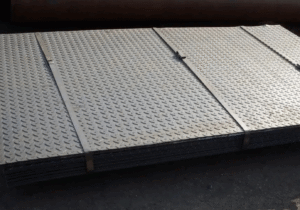
Chequered plate steel, also referred to as diamond plate or tread plate, is a hot‑rolled metal sheet with raised patterned surfaces. Thanks to outstanding anti‑slip performance, it is widely adopted in construction, shipbuilding, vehicle manufacturing, industrial plant facilities and other sectors. This article gives a comprehensive overview of chequered plate steel, covering its definition, categories, technical parameters, performance comparison, real‑world applications and procurement guidelines.
1. What Is Chequered Plate Steel
Chequered plate steel is a special steel sheet with raised patterns pressed onto one side by hot‑rolling rollers, using ordinary hot‑rolled steel as the base material. The patterns are integrated with the base substrate after rolling and will not peel off. Its core function is to increase surface friction for anti‑slip purposes.
Naming conventions vary across regions. It is commonly called diamond plate or tread plate in North America, while the term chequered plate is widely used in Commonwealth countries. In China, it is known as patterned steel plate, lentil‑pattern plate and five‑rib patterned plate. Although these names overlap, do not select products based solely on naming during procurement. Always confirm the pattern style and base material grade.
Basic properties: anti‑slip and wear‑resistant, high structural strength, workable for cutting, welding and bending. It is suitable for open‑air, damp and slip‑prone working environments.

2. Types of Chequered Plate Steel
2.1 Classification by Pattern Style
- Five‑rib patterned plate: The mainstream type in China. Five staggered raised ribs deliver balanced anti‑slip performance. It is widely used for factory walkways and stair treads with good cost‑performance.
- Lentil‑pattern plate: Features lentil‑shaped raised grains with higher protrusion for superior anti‑slip capacity. It is frequently applied on ship decks and truck floors with relatively heavier self‑weight.
- Diamond‑pattern plate: Continuous diamond‑shaped mesh patterns. Popular in overseas markets, it balances decorative appearance and anti‑slip function for vehicle bodies and equipment platforms.
2.2 Classification by Base Material
- Carbon steel chequered plate: The most common option made of low‑carbon hot‑rolled substrate with moderate cost and reliable strength. It tends to rust in outdoor conditions and requires anti‑rust painting treatment.
- Stainless steel chequered plate: Rust‑proof and corrosion‑resistant with no painting required. It fits food processing workshops, chemical plants and humid outdoor scenarios at a higher procurement cost.
- Aluminum chequered plate: Light‑weight with excellent anti‑corrosion performance yet relatively low strength. It is preferred for lightweight scenarios such as vehicle interiors and light‑duty walkways.
2.3 Classification by Manufacturing Process
- Hot‑rolled chequered plate: Market mainstream. Formed under high‑temperature rolling with stable mechanical properties and abundant thickness options, suitable for most industrial projects.
- Cold‑rolled chequered plate: Features flatter surface and thinner gauges, mostly used for decoration rather than heavy‑load conditions.
3. Specifications and Technical Parameters
Key selection factors include steel grade, base plate thickness, sheet dimension and theoretical weight as well as load‑bearing capacity. Major applicable standards are ASTM A36, S235JR, Q235B and Q355B.
3.1 Common Steel Grades
- Q235B / ASTM A36: General‑purpose carbon steel grade, the first choice for ordinary factory buildings, staircases and platforms.
- Q355B: High‑strength chequered plate for heavy‑duty platforms and truck floors requiring high load capacity.
- 304 / 316 stainless steel: For corrosive and humid working conditions.
3.2 Standard Thickness and Dimensions
Base plate thickness normally ranges from 2.0 mm to 12 mm. Pattern protrusion height is excluded from base plate thickness. Popular sheet sizes are 1220 × 2440 mm and 1500 × 6000 mm. Custom cutting is available for project‑specific requirements.
3.3 Theoretical Weight
Chequered plate weighs more than plain steel sheet of identical base thickness. Different pattern styles result in different weight per square meter. Weight is calculated by adding extra pattern weight to the theoretical weight of the base plate. For material estimation and procurement, refer to manufacturer‑issued theoretical weight tables.
Note: Anti‑slip performance improves with higher pattern protrusion, yet load‑bearing capacity cannot be enhanced infinitely by patterns alone. Overall load capacity is mainly determined by base plate thickness and supporting steel frame.
4. Advantages and Disadvantages of Chequered Plate Steel
Advantages
- Excellent anti‑slip performance: Raised patterns increase friction coefficient and reduce slip risks under wet, rainy or snowy conditions.
- Good workability: Supports cutting, welding and bending for convenient on‑site installation.
- High structural strength and impact‑resistant for heavy‑duty pedestrian loads.
- Distinct visual appearance for decorative purposes on machinery and vehicle exteriors.
Disadvantages
- Higher unit cost compared with plain steel sheets.
- Carbon steel versions are prone to rust outdoors and demand anti‑corrosion coating.
- Indented pattern surfaces make dust and grease cleaning more difficult.
- Anti‑slip performance gradually declines as patterns wear down over time.
5. Application Scenarios of Chequered Plate Steel
- Construction engineering: Stair treads, factory walkway platforms, equipment ramps and anti‑slip floor covers.
- Ship‑building and port industries: Ship decks and port operation platforms resisting humid marine environments.
- Transportation: Cargo truck floors, trailer beds and access steps for construction vehicles.
- Industrial plants: Workshop flooring, equipment operation platforms and maintenance walkways.
- Special working conditions: Stainless‑steel grade for chemical and food‑processing facilities; aluminum grade for lightweight projects.

6. Price and Procurement Guidelines
Market prices of chequered plate fluctuate dynamically. Clarify price‑driving factors and define acceptance criteria before bulk purchasing.
6.1 Key Price‑Influencing Factors
- Base material: Carbon steel carries the lowest cost; stainless steel and aluminum command significantly higher prices.
- Base plate thickness and pattern type: Lentil patterns consume more raw material than five‑rib patterns, bringing higher weight and price for identical base thickness.
- Order quantity: Unit price drops for large‑volume orders; small‑batch cutting orders incur extra costs.
- Delivery requirements: Custom cutting, sandblasting and anti‑corrosion painting add extra expenses.
6.2 Notes for Bulk Procurement
- Clearly specify base plate thickness in contracts and distinguish base thickness from total thickness including patterns to avoid supply discrepancies.
- State pattern style and steel grade. For export orders, confirm compliance with ASTM or EN international standards.
- Inspect delivered sheets: ensure complete patterns without broken ribs, flat surfaces free of warping and cracks, and obtain material test certificates for carbon‑steel products.
- Apply proper packaging during transportation to prevent surface dents and scratches.
7. Frequently Asked Questions
7.1 Is chequered plate stronger than plain steel sheet?
Patterns only improve surface friction. Overall mechanical strength depends mainly on base material grade and base plate thickness. Patterns themselves do not substantially increase structural strength.
7.2 Can chequered plate be cut and welded?
Both carbon‑steel and stainless‑steel chequered plates support regular cutting and welding. Patterns will be damaged at welding joints, and anti‑corrosion treatment shall be applied after welding.
7.3 Which pattern type is most widely used?
Five‑rib patterned plate delivers optimal cost‑performance and dominates domestic engineering projects, while diamond‑pattern plate is more common in overseas orders.
Summary
With prominent anti‑slip properties, chequered plate steel serves as a mainstream anti‑slip sheet for industrial use. Do not rely merely on product names during selection. Clarify base metal grade, base plate thickness and pattern style, and select carbon‑steel, stainless‑steel or aluminum grades according to operating environments. Carbon‑steel plates deployed outdoors must receive proper anti‑corrosion treatment. For export projects, align technical requirements with corresponding international standards to guarantee project quality.
References
GB/T 3277‑2015: Chequered steel plates
ASTM A36/A36M: Standard Specification for Carbon Structural Steel
EN‑S235JR: European standard for non‑alloy structural steel




 English
  Spanish
  Afrikaans