
As a core basic raw material for construction infrastructure, machinery manufacturing, shipbuilding, energy equipment and other sectors, fluctuations in steel plate prices directly affect project budgets, corporate procurement costs and overall industry profitability. In 2026, the global steel market is impacted by volatile raw material prices, regional supply-demand imbalance, the EU Carbon Border Adjustment Mechanism (CBAM), fluctuating shipping and logistics costs, as well as geo-economic factors. Consequently, steel plate prices show obvious regional divergence and category differentiation. Based on the latest global steel market data of 2026, this article comprehensively sorts out the price standards of steel plates by category, specification and region, analyzes the key cost drivers in depth, and provides professional market forecasts and cost-effective procurement solutions.

I. Latest Global Steel Plate Prices in 2026
Compiled based on real-time quotations from major global steel trading markets as of June 2026, the below standardized unit prices apply to general steel plates. Covering commonly used pricing units, mainstream categories and major regional markets, these figures are tailored for foreign trade procurement, project budgeting and bulk quotation. All prices are spot base prices, excluding costs for special customization, expedited logistics and additional taxes and fees.
1.1 Benchmark Prices by Common Pricing Units
Ton, kilogram and square foot are the three prevailing pricing units for international steel plate trade, adopted for different business scenarios. The following are the 2026 global standard spot prices (tax-inclusive base prices):
| Pricing Unit | Mild Steel Plate (Benchmark Price) | Stainless Steel Plate (304 Grade Benchmark Price) | Application Scenarios |
|---|---|---|---|
| Per Metric Ton (MT) | USD 650-720 | USD 1850-2100 | Large-batch procurement, full foreign trade orders |
| Per Kilogram (KG) | USD 1.65-1.72 | USD 1.85-2.10 | Small-batch procurement, retail inquiry, sample purchasing |
| Per Square Foot (Sq Ft) | USD 0.85-0.95 | USD 2.40-2.70 | Engineering area calculation, refined budget estimation |
1.2 Price Differences Across Steel Plate Categories
Steel plates of different materials and applications vary greatly in production processes and raw material requirements, leading to distinct price tiers. The market quotations for mainstream steel plate categories in 2026 are listed below:
- Mild Carbon Steel Plates: The most affordable and cost-effective option on the market, with a benchmark price ranging from USD 650 to 720 per metric ton. Widely used in civil construction, general mechanical parts and conventional steel structure projects, they boast the largest market circulation volume.
- Structural Steel Plates: Subject to quenching and tempering for enhanced compression resistance and load-bearing capacity, these plates are ideal for large-scale infrastructure, bridges and load-bearing structures of factory buildings. Their unit price is 8% to 12% higher than that of ordinary carbon steel plates, with the latest quotation standing at USD 700 to 790 per metric ton.
- Marine-Grade Steel Plates: Certified by classification societies, they feature excellent corrosion resistance, impact resistance and stability under extreme temperatures. Rigorous production standards result in significant price premiums, with current quotations between USD 780 and 880 per metric ton. They are primarily used in shipbuilding and marine engineering equipment.
- 304 Stainless Steel Plates: Renowned for superior rust and corrosion resistance, they serve the chemical, food processing and outdoor engineering sectors. Driven by high costs of nickel and chromium alloy raw materials, their prices are far higher than carbon steel plates, stabilizing at USD 1,850 to 2,100 per metric ton throughout 2026.
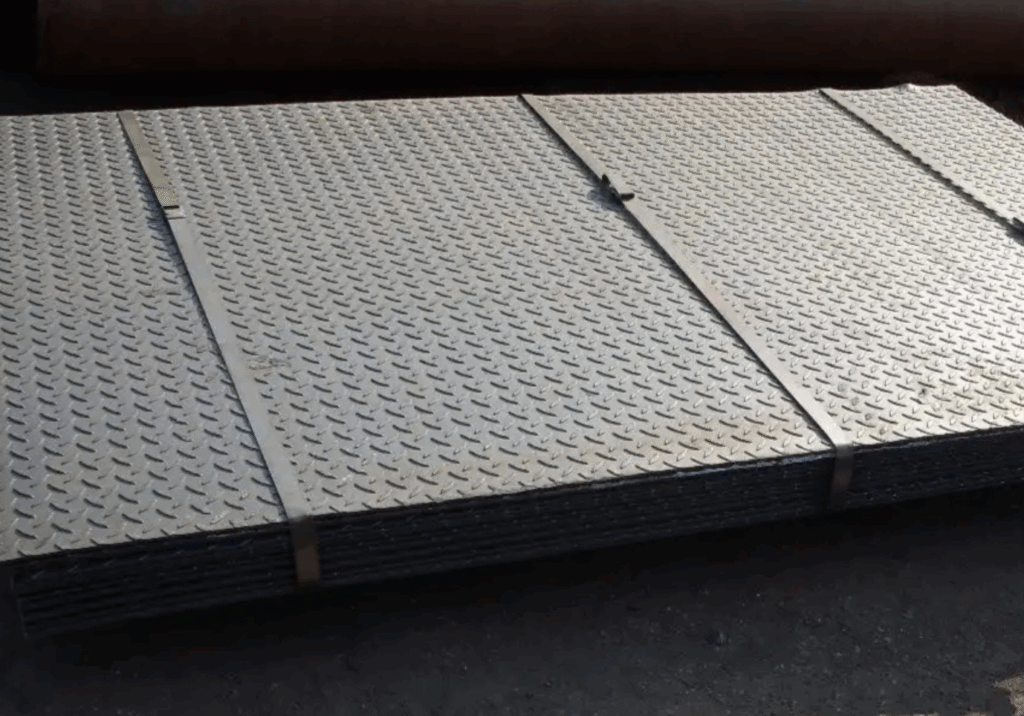
1.3 Price Comparison Across Major Global Regions
Steel plate prices differ substantially across regions due to disparities in production capacity, policies, energy costs and supply-demand relations. The price gaps in key markets in 2026 are as follows:
- Northeast Asia: Abundant production capacity and high operational efficiency deliver prominent cost advantages. The average price of carbon steel plates hits USD 1.69 per kilogram, making this region the global price lowland. Supported by mature long-process steelmaking technology, its production cost per ton is 20% to 30% lower than that of European and American markets.
- Europe: Affected by the EU CBAM and surging energy costs, steel prices have kept climbing, with an increase of over 100 euros per ton so far in 2026. The average price of carbon steel plates reaches USD 2.8 per kilogram, ranking among the highest globally.
- North America: Sustained by domestic production capacity controls and trade protection policies, market prices remain firm. The spot price of medium and heavy plates stays steady at USD 730 to 800 per metric ton amid a tight supply-demand balance.
- Southeast Asia & the Middle East: These regions rely heavily on imported steel plates, with prices ranging between Northeast Asia and Europe and North America at USD 680 to 750 per metric ton. Their prices are highly susceptible to fluctuations in ocean freight rates.
II. Key Factors Affecting Steel Plate Costs in 2026
Steel plate prices are not static. Their ups and downs are jointly determined by production, market, policy and logistics factors. A clear understanding of core influencing variables helps purchasers accurately predict price trends, avoid high-cost procurement and effectively control project expenses.
2.1 Raw Materials and Production Costs
Raw materials constitute the largest share of steel plate costs, accounting for more than 70% of total production expenses. In 2026, coking coal prices have continued to rise, with the year-on-year growth rate exceeding 12% in May. This pushed up coking costs by approximately RMB 80 per ton compared with late 2025, continuously squeezing steel mills’ profit margins. Meanwhile, monthly price fluctuations of iron ore and alloy additives are directly passed on to finished steel plates.
In addition, production processes play a notable role. Hot-rolled steel plates feature mature techniques and sufficient capacity with relatively low costs. In contrast, cold-rolled plates and customized special steel plates involve complex procedures and higher energy consumption, resulting in obvious cost premiums. Regional gaps in production equipment also lead to cost differentiation: mainstream steel mills with updated facilities and lower energy consumption enjoy distinct advantages over outdated production lines in Japan and South Korea.
2.2 Steel Plate Specifications and Customization Requirements
Thickness, dimensions, precision standards and customized demands are major causes of quotation differences for end products. Standard-sized steel plates with regular thickness support large-scale mass production, featuring the lowest production costs and transparent market prices. By contrast, non-standard plates with extra thickness, ultra-thin gauge or extra width require dedicated equipment commissioning and have lower yield rates, incurring a process premium of 10% to 20%. Furthermore, secondary processing services such as polishing, cutting, bending and anti-corrosion coating will raise procurement costs according to process complexity.
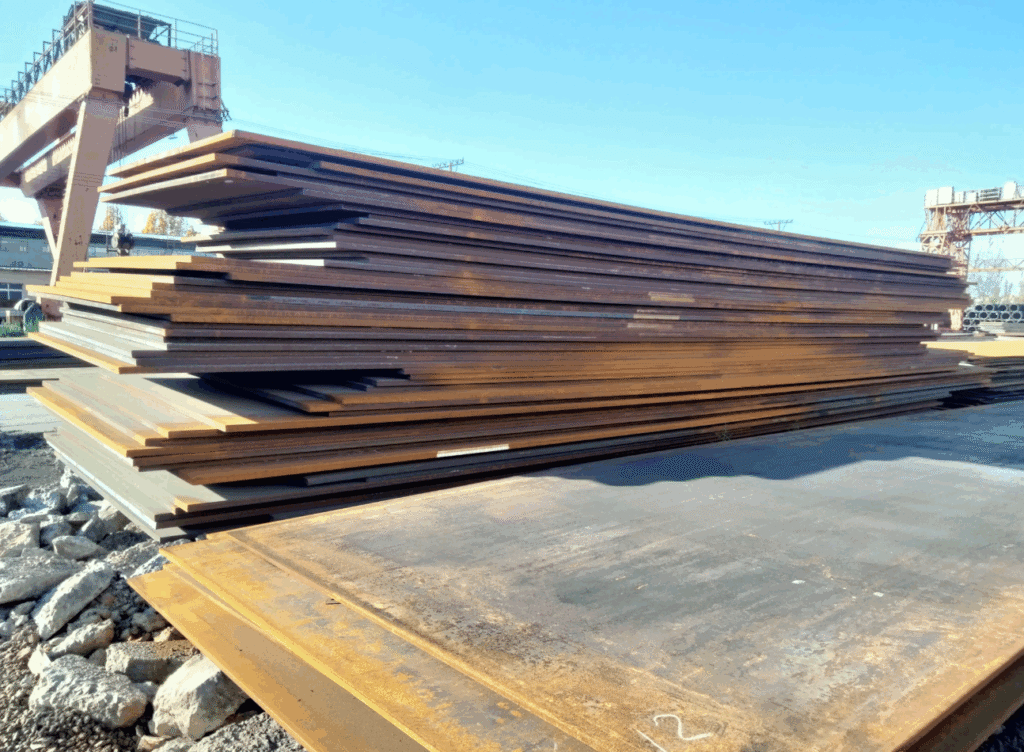
2.3 Market Supply, Demand and Inventory
The global steel market faced structural supply-demand imbalance in 2026. In Q1, global steel mills steadily ramped up production, and inventory levels rose moderately across major markets, curbing price hikes. In Q2, demand from downstream sectors including infrastructure, shipbuilding and machinery manufacturing recovered steadily. Coupled with production restrictions in some regions, the supply-demand balance gradually tightened.
Although plate prices in major exporting regions such as Brazil edged down slightly, they remained at a two-year high, providing solid support to the overall market. When inventories are low, steel mills gain stronger bargaining power, making steel prices prone to rises rather than falls. When inventory accumulates, intensified market competition leads to periodic price corrections.
2.4 Logistics and International Policies
Logistics costs are a vital component of total landed costs for cross-border procurement. In 2026, international ocean and land freight rates fluctuated sharply due to shipping disruptions caused by geopolitical issues. Turbulence in shipping through the Strait of Hormuz drove up global energy and transportation costs, greatly increasing premiums for cross-regional procurement.
Policies exert far-reaching impacts. The full implementation of the EU CBAM imposes carbon compliance duties on imported steel products, directly lifting procurement costs in Europe. Anti-dumping measures and trade barriers adopted by various countries have reshaped steel circulation patterns and triggered local price swings. Domestically, ongoing ultra-low emission upgrades for environmental protection have restricted output from substandard production lines, indirectly regulating total market supply.
2.5 Exchange Rates and Macroeconomic Environment
Global exchange rate volatility, inflation levels and macroeconomic policies significantly influence quotations for international steel trade. Fluctuations in the US dollar, the dominant pricing currency for bulk commodities, combined with differences in infrastructure investment policies and industrial recovery paces among countries, have resulted in regional price divergence.
The global economy achieved moderate recovery in 2026, with improving demand from manufacturing and construction sectors. This underpinned steel prices and prevented drastic declines.

III. 2026 Steel Plate Market Trend Forecast
Combining market performance since Q4 2025 and developments in the first half of 2026, as well as analyzing raw material trends, supply-demand relations, policies and macroeconomics, steel plate prices are expected to move sideways at a low level and rebound moderately throughout the year, without sharp surges or slumps.
In the first half of the year, the market saw weak sideways adjustments. Price hikes of raw materials lagged behind the recovery of downstream demand, putting overall pressure on steel prices. Prices in major production areas including Northeast Asia dipped slightly, while European and American prices stayed firm backed by relevant policies.
In the second half of the year, large-scale launch of global infrastructure projects and the peak season of manufacturing will continuously release downstream demand. Together with scheduled maintenance and production cuts at steel mills and accelerated inventory destocking, steel plate prices are poised for a moderate rally.
By product category: Ordinary carbon steel plates will witness mild fluctuations and stable performance. Special steel plates for shipbuilding and engineering will see expanding premiums driven by growing demand from marine engineering and infrastructure projects. Stainless steel plates will fluctuate at high levels, supported by elevated prices of nickel alloy raw materials.
Regionally, prices in Europe and North America will remain higher than those in the Asia-Pacific, and such regional price gaps are unlikely to narrow in the short term.
IV. Cost and Application Comparison of Main Steel Plate Categories
Selecting appropriate steel plates matching actual application scenarios helps control procurement costs and avoid performance over-specification. Below is a comparison of costs and applicable scenarios for mainstream steel plate products in 2026:
- Mild Carbon Steel Plates vs. Stainless Steel Plates: Carbon steel plates cost roughly one-third of stainless steel plates and deliver outstanding cost performance, suitable for conventional projects with no special anti-corrosion or weather resistance requirements. Stainless steel plates offer excellent corrosion and oxidation resistance yet come with higher procurement costs, and are mainly used in chemical facilities, outdoor structures and humid or corrosive environments.
- Steel Plates vs. Steel Coils: Finished cut steel plates undergo secondary shaping and cutting, hence costing slightly more than steel coils. They are preferred for construction projects requiring fixed dimensions. Steel coils skip the flattening process and have lower unit prices, ideal for on-site customized processing and large-scale continuous manufacturing.
- Standard Plates vs. Specialized Plates: Structural plates and marine-grade plates feature superior load-bearing, impact resistance and fatigue resistance compared with ordinary plates, but cost more. They are exclusively used for high-end projects such as large-scale infrastructure and marine engineering. Ordinary civil projects have no need to pay extra for such premium products.

V. Practical Cost-Saving Tips for Steel Plate Procurement
Based on the 2026 market conditions and cost structure of steel plates, combined with practical experience in foreign trade and project procurement, we have sorted out actionable cost-reduction strategies to help enterprises optimize budgets and cut overall procurement expenses.
- Optimize procurement volume and timing: Avoid purchasing during peak seasons with high prices. Place bulk orders in the off-season when prices fluctuate at low levels. Large consolidated orders qualify for tiered pricing from steel mills to reduce per-unit premiums and cut additional logistics costs from scattered purchases.
- Adopt standard specifications to minimize customization costs: Prioritize steel plates of standard dimensions and regular thickness widely available on the market. Reduce non-standard customization, secondary cutting and special coating work to eliminate extra process fees.
- Source cost-effective products from premium production areas: Give priority to qualified supplies from Northeast Asia. Thanks to sufficient capacity and low costs, purchasers can save 15% to 25% on procurement compared with sourcing from Europe and North America. Cooperate directly with reputable original steel mills with long-term supply qualifications to avoid markups from intermediaries.
- Integrate shipments to streamline logistics: Plan delivery routes in advance and consolidate goods for consolidated shipping to lower unit logistics costs. For export orders to Europe, fully calculate CBAM-related expenses in advance and lock in prices to hedge against policy-driven cost volatility.
- Track market trends and lock prices flexibly: Keep a close eye on raw material prices, inventory data and policy updates. Lock in prices and build up stock when the market is at a low point to prevent expensive restocking amid price hikes and mitigate procurement risks.

VI. Frequently Asked Questions
Q: What is the regular procurement price of standard steel plates in 2026?
A: As of June 2026, the average spot price of standard carbon steel plates worldwide ranges from USD 650 to 720 per metric ton, equivalent to USD 1.65 to 1.72 per kilogram. The average price of 304 stainless steel plates is USD 1,850 to 2,100 per metric ton. Exact prices vary by specification, purchase volume and sourcing region.
Q: What is the core reason for frequent steel plate price fluctuations recently?
A: Four primary drivers are rising prices of raw materials such as coking coal, volatile international logistics costs, full implementation of the EU Carbon Border Adjustment Mechanism, and structural global supply-demand imbalance. Exchange rate swings also exacerbate market volatility.
Q: Will steel plate prices rise or fall in the next six months?
A: Prices will trend moderately upward. In the second half of the year, recovering demand from infrastructure and manufacturing, together with production controls and inventory destocking at steel mills, will push steel prices steadily higher, with no significant downside risk.
Q: Which type of steel plate delivers the best cost performance for construction projects?
A: Ordinary carbon steel plates are the top choice for general civil construction and steel structure projects due to low costs and proper performance. Economic structural steel plates are recommended for large load-bearing infrastructure projects to balance performance and costs.
Q: Does steel plate thickness have a major impact on overall procurement costs?
A: Yes, the impact is significant. Non-standard plates with extra thickness or ultra-thin gauge are difficult to produce with low yield rates, leading to substantial process premiums. Standard-thickness plates for mass production have the lowest costs and represent the most cost-effective option.

Conclusion
The 2026 global steel plate market is characterized by regional price divergence, tiered product pricing and a general upward trend after consolidation. Prices are driven by multiple factors including raw material costs, supply-demand relations, policies and logistics. From a procurement perspective, ordinary carbon steel plates remain the most cost-effective general-purpose option. The Asia-Pacific region holds distinct price advantages, while European and American markets maintain high prices supported by relevant policies.
Demand will pick up steadily in the second half of the year, and steel prices are likely to rise moderately. Procuring enterprises are advised to seize opportunities during market lows to build inventory, and cut overall costs through standardized selection, bulk purchasing and logistics optimization.
Should you have steel plate procurement needs, feel free to contact Tonghui for professional services.
Reference Documents
- IndexBox: Global Steel Plate and Steel Billet Price Report, May 2026
- Thynktales: Global Steel Plate Price Index & Market Trend White Paper, 2026
- International Iron and Steel Institute (IISI): Global Steel Supply and Demand Statistics, H1 2026




 English
  Spanish
  Afrikaans