
Steel floor plate, also commonly known as checkered plate or tread plate, is a widely used structural anti-slip building material in industrial and construction projects. Combining industry standards and practical engineering experience, this article comprehensively introduces its categories, standard specifications, core advantages, applicable scenarios, selection methods, as well as installation and maintenance tips, providing professional and practical references for engineering procurement, construction and equipment matching.
1. Definition and Core Characteristics of Steel Floor Plate
Steel floor plate is an integrated steel plate formed by hot rolling with regular raised patterns on the surface. Different from ordinary flat steel plates, it is a functional flooring material featuring both structural load-bearing capacity and anti-slip performance. Its mainstream production complies with GB/T 3277-2022 Checkered Steel Plates, and it also conforms to ASTM, ISO and other international standards to meet acceptance requirements of domestic and overseas projects.
Compared with common metal plates, steel floor plate has four irreplaceable core properties, making it ideal for complex industrial environments:
- Excellent anti-slip performance: The raised surface patterns greatly increase friction. It effectively reduces slipping risks for personnel and vehicles on wet, oily or dusty surfaces, complying with industrial safety regulations.
- High structural strength: Hot-rolled as a single piece without splicing gaps, it boasts superior mechanical properties. Plates made of Q235B and Q345B deliver a tensile strength of over 370 MPa, capable of bearing heavy loads and resisting deformation and fracture.
- Superior weather resistance and durability: The steel substrate is wear-resistant and impact-resistant. With anti-corrosion treatment, it withstands outdoor exposure and mild acid-base corrosion indoors, enjoying a far longer service life than wooden floors and ordinary composite floors.
- High adaptability: The plate can be freely cut, bent and welded for customized sizes and shapes. It is suitable for indoor and outdoor use with easy installation and low subsequent maintenance costs.
2. Main Types of Steel Floor Plate
In engineering and procurement, steel floor plates are classified by material, surface pattern and load-bearing grade. Types vary greatly in performance, application and cost, so correct classification is the premise of proper selection.
2.1 Classification by Material
- Carbon Steel Floor Plate: Mainly made of Q235B and Q345B, it is the most widely used type in industrial fields. Q235B features good toughness and cost-effectiveness for regular heavy-duty passage. Q345B has higher strength and better anti-deformation performance for ultra-heavy load scenarios. The downside is that untreated carbon steel is prone to rust, so galvanizing or anti-rust coating is recommended.
- Stainless Steel Floor Plate: Common grades include 304 and 316 stainless steel. It is corrosion-resistant, rust-proof and easy to clean with no extra anti-corrosion treatment required. Though more expensive than carbon steel, it is widely applied in chemical, food processing, marine engineering and other highly humid or corrosive environments.
2.2 Classification by Surface Pattern
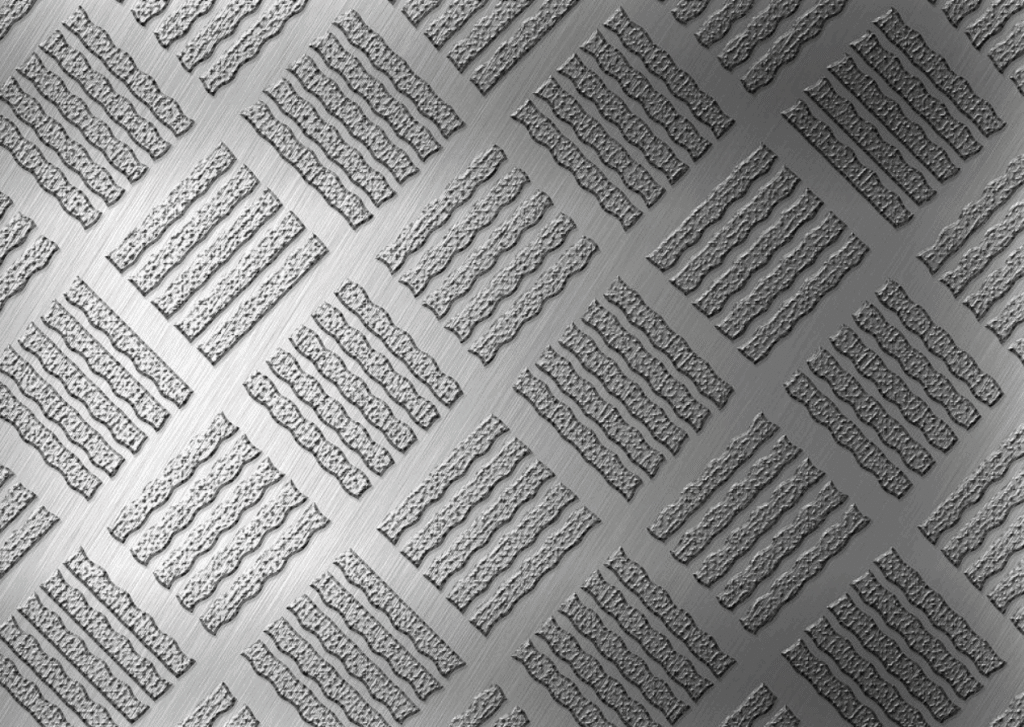
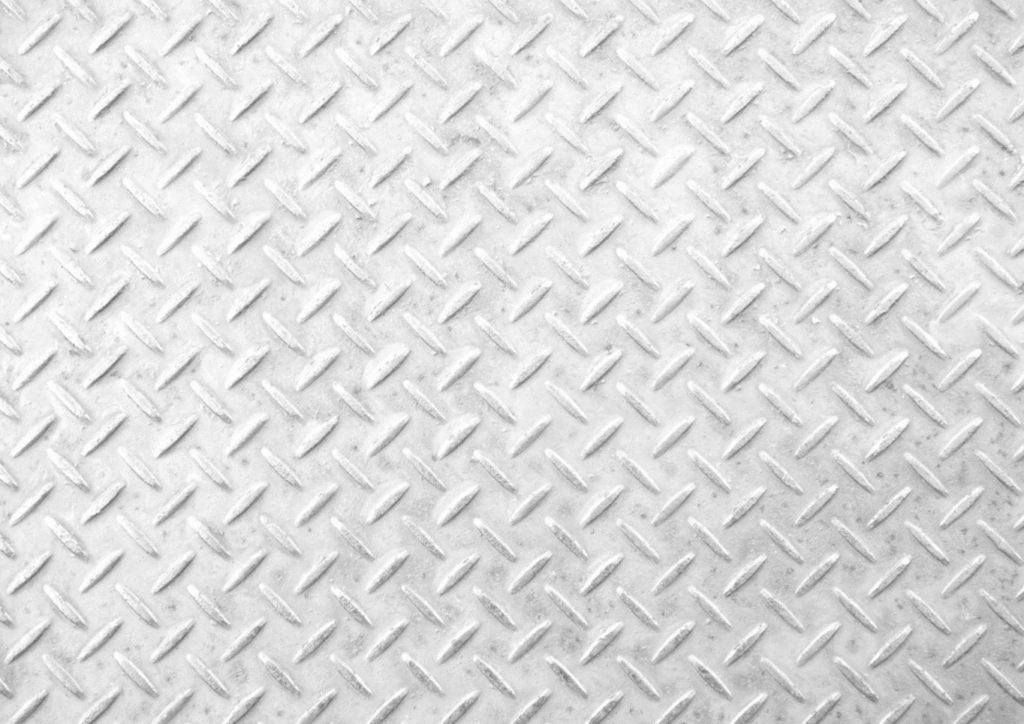
- Diamond Pattern Plate: Featured with continuous uniform diamond-shaped protrusions, it delivers balanced anti-slip performance and even force bearing. It is ideal for large-area paving in warehouses and workshops.
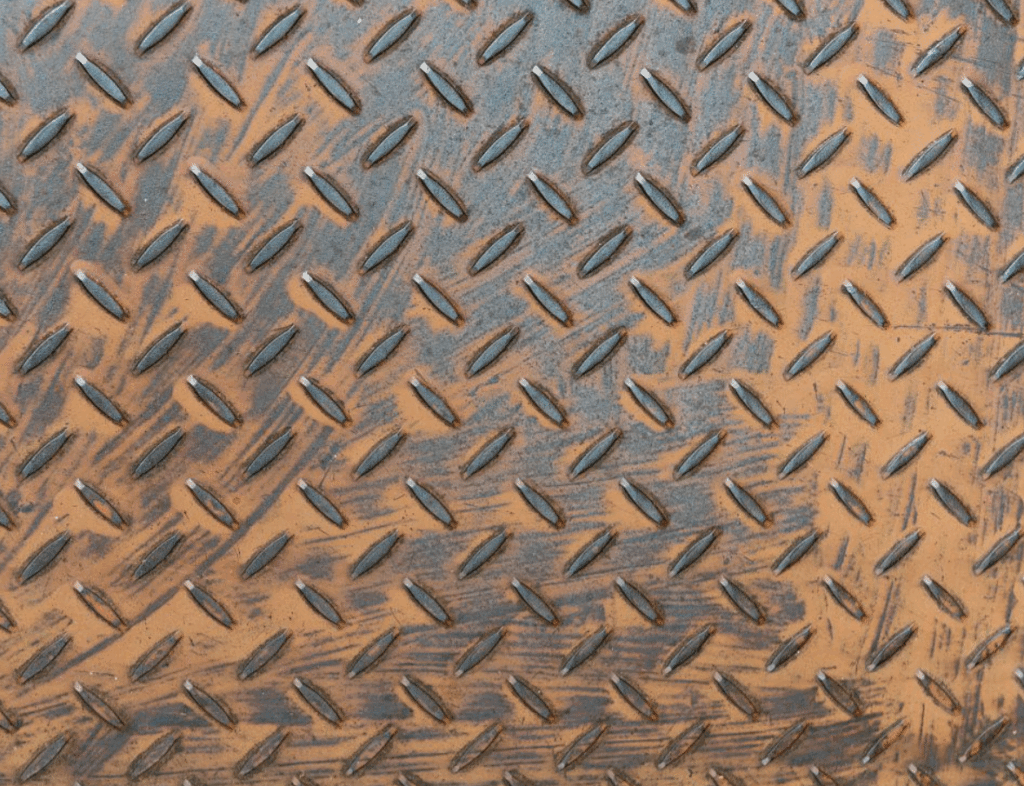
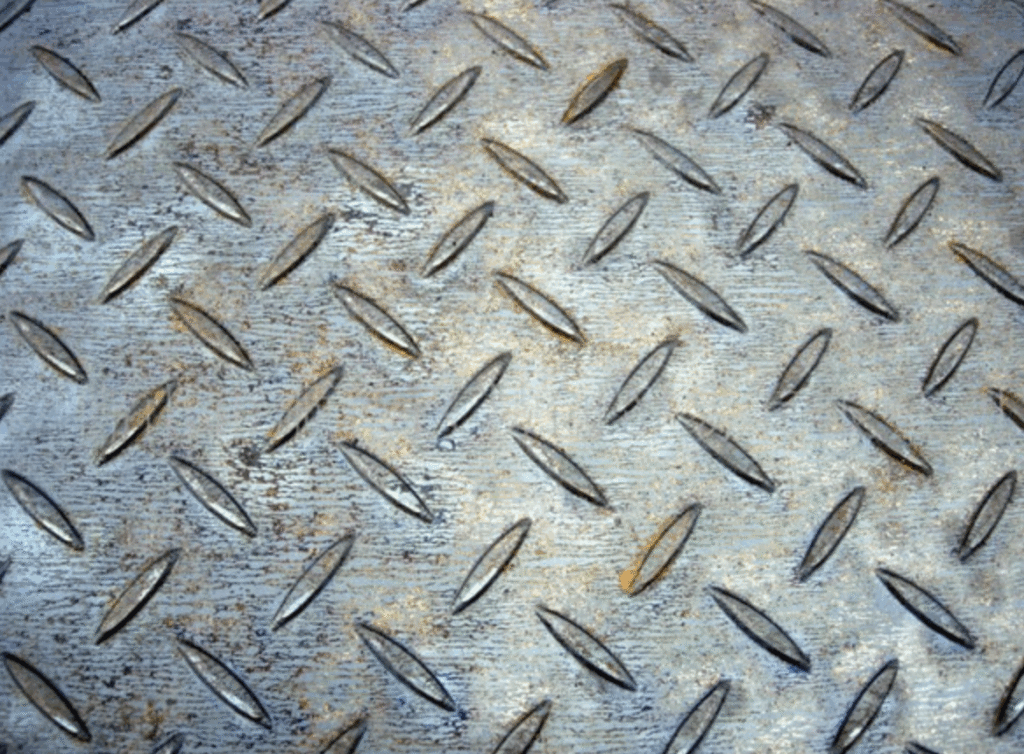
- Lentil Pattern Plate: The oval lentil-shaped protrusions are higher, providing better anti-slip effect and stronger resistance to dust and water accumulation. It is the top choice for stair treads and operating platforms with heavy oil, high humidity and strict anti-slip requirements.
2.3 Classification by Load-Bearing Grade
- Standard Load Type: Thickness ranges from 2.5 mm to 4.0 mm. Designed for pedestrian traffic and light trolley movement, it applies to auxiliary walkways and small workshop passages.
- Heavy-Duty Type: Thickness ranges from 4.5 mm to 8.0 mm. With thickened plates and high-strength substrates, it withstands forklifts, small equipment and stacked heavy materials, dedicated to industrial warehouses, production lines and equipment platforms.
3. Size and Thickness Specifications of Steel Floor Plate
Specifications directly determine load-bearing capacity and application suitability. Domestic products follow GB/T 3277-2022, while export products comply with international standards.
3.1 Standard Thickness and Corresponding Loads
Mainstream standard thicknesses: 2.5 mm, 3.0 mm, 3.5 mm, 4.0 mm, 4.5 mm, 5.0 mm, 6.0 mm and 8.0 mm. Rigidity and load-bearing capacity increase with thickness:
- 2.5–3.5 mm: Light load, for pedestrian walkways and small guardrail treads
- 4.0–5.0 mm: Medium load, for regular workshops, light-duty warehouses and stairways
- 6.0–8.0 mm: Heavy load, for heavy-duty warehouses, forklift lanes and large equipment platforms
3.2 Standard Length and Width
- Width: 600 mm to 1800 mm, adjustable in 50 mm increments
- Length: 2000 mm to 12000 mm
- In-stock standard sizes: 1500 mm (width) × 6000 mm (length). Custom cutting is available to fit various site dimensions.
3.3 Compliance Standards
Domestic projects adopt GB/T 3277-2022 Checkered Steel Plates and GB/T 700 Carbon Structural Steels for mechanical properties. Export products meet relevant ASTM and ISO steel standards. Qualified plates have tensile strength, yield strength and elongation fully complying with engineering acceptance criteria to avoid deformation and fracture risks.
4. Core Advantages of Steel Floor Plate
Superior overall performance in safety, durability and cost makes steel floor plate a better alternative to wooden floors, plain steel plates and steel gratings for industrial use.
- Reliable anti-slip performance: The raised patterns enhance friction effectively in dry, wet and oily conditions, eliminating slipping and falling hazards and meeting industrial safety standards.
- High load-bearing capacity and rigidity: The integrated hot-rolled structure has no weak splicing points. Heavy-duty plates sustain long-term loads from heavy equipment, forklifts and goods without bending or sagging.
- Long service life with high wear resistance: The steel substrate resists abrasion, impact and frequent trampling. Its normal service life exceeds 10 years, cutting replacement costs significantly.
- Wide application and flexible construction: Suitable for indoor, outdoor, dry, wet and mildly corrosive environments. It can be cut, welded, bent and drilled for various paving and renovation projects.
- Easy maintenance and low overall cost: The smooth surface resists dirt buildup and only needs simple cleaning. Unlike anti-corrosion wood and plastic floors, it requires no frequent renovation, ensuring excellent long-term cost performance.
5. Main Application Scenarios of Steel Floor Plate
Thanks to its anti-slip, heavy-duty and durable features, steel floor plate is widely used across industrial, construction, logistics and mechanical sectors.
- Industrial Workshops: Production line operation platforms, workshop passages, equipment maintenance platforms and oily work areas with frequent personnel and equipment movement.
- Logistics & Warehousing: Warehouse floors, sorting platforms, forklift lanes and cargo stacking areas bearing heavy goods and transport vehicles.
- Construction Projects: Stair treads of factory buildings, outdoor corridors, temporary construction walkways and aerial working platform treads.
- Mechanical Equipment: Operation and maintenance treads for machine tools, engineering machinery and special equipment.
- Special Working Environments: Humid, dusty and mildly corrosive sites in chemical, metallurgical, port and municipal engineering fields.

6. Selection Guide of Steel Floor Plate
There is no need to blindly choose over-thick or high-grade materials. Select plates according to working conditions, load requirements, environment and budget to balance performance and cost.
- Select by working environment: Choose economical Q235B carbon steel plates for dry indoor environments. Use galvanized anti-corrosion plates for humid and outdoor sites. Opt for 304 stainless steel plates for chemical, marine and highly corrosive conditions.
- Select by load requirements: 2.5–3.5 mm plates for pedestrian-only areas; 4.0–5.0 mm plates for light-duty warehouses and workshop passages; 6.0–8.0 mm heavy-duty plates for forklift lanes, heavy cargo areas and equipment platforms.
- Select by anti-slip requirements: Diamond pattern plates for ordinary dry sites; lentil pattern plates for areas with excessive oil and water and strict anti-slip standards.
- Select by budget and maintenance needs: Galvanized carbon steel plates are preferred for regular industrial projects for cost control. Stainless steel plates are recommended for high-end special scenarios for long-term service and low maintenance.
7. Installation and Daily Maintenance of Steel Floor Plate
7.1 Installation Guidelines
Two mainstream fixing methods are adopted for simple and efficient installation:
- Welding: Preferred for large-area paving to ensure overall flatness and stability.
- Bolt fastening: Suitable for small platforms and temporary paving for easy disassembly and replacement.
Ensure tight joints and flat surface without warping during installation to eliminate potential safety hazards.
7.2 Daily Maintenance and Anti-Rust Measures
- Cleaning: Regularly remove dust, oil and water to keep the surface dry and clean, and prevent long-term adhesion of corrosive substances.
- Anti-rust treatment: Inspect and touch up anti-rust paint on ordinary carbon steel plates every 1 to 2 years. Galvanized and stainless steel plates only need routine cleaning with no extra anti-rust work.
- Damage prevention: Avoid long-term impact or cutting by sharp hard objects to prevent plate deformation and coating damage.
8. FAQ
8.1 Does steel floor plate have anti-slip effect?
Yes. The raised surface patterns greatly increase friction and prevent slipping effectively in dry, wet and slightly oily environments. It fully meets safety standards for industrial passages and is an ideal anti-slip flooring material.
8.2 What is the optimal thickness for warehouse paving?
4.0–5.0 mm plates for pedestrian traffic and light-duty warehousing. 6.0–8.0 mm thick plates are recommended for warehouses with forklifts and heavy cargo to resist long-term heavy loads without deformation.
8.3 How to choose between carbon steel and stainless steel floor plates?
Q235B carbon steel plates are cost-effective and competent for regular indoor industrial and warehouse use. Stainless steel plates are suitable for humid outdoor areas, chemical corrosive environments and food processing sites for its corrosion resistance and easy cleaning.
8.4 What is the service life of steel floor plate?
Under normal working conditions, galvanized carbon steel plates last 8 to 12 years, while stainless steel plates can serve more than 15 years. Standard maintenance and regular cleaning and anti-rust work will further extend the service life.
Conclusion
With outstanding anti-slip performance, high load-bearing capacity, long service life, wide adaptability and low maintenance cost, steel floor plate has become an indispensable functional building material for industrial, construction and logistics industries. Reasonable selection based on material, specification and working conditions, together with standard installation and maintenance, can maximize material performance, reduce engineering costs and eliminate safety risks. It delivers stable and long-lasting solutions for both small-scale renovations and large-scale industrial paving projects.
For customized products, please feel free to contact Tonghui.
References
- GB/T 3277-2022 Checkered Steel Plates
- GB/T 700 Carbon Structural Steels
- GB/T 228.1 Metallic materials — Tensile testing — Part 1: Method of test at room temperature




 English
  Spanish
  Afrikaans